Launched just weeks apart in late summer of 1977, NASA’s twin Voyager 1 and Voyager 2 spacecraft set out on an ambitious 12-year Grand Tour of the outer Solar System, transforming our understanding of Jupiter, Saturn, Uranus and Neptune before continuing outward into interstellar space.
Nearly half a century later, both probes remain active and are the farthest human-made objects in existence, with Voyager 2 currently cruising roughly 21.7 billion km (13.5 billion miles) from Earth and Voyager 1 pushing beyond 25.9 billion km (16 billion miles) away.
On November 18, 2026, Voyager 1 reaches an unprecedented cosmic milestone by reaching one full 'light-day' from home, meaning it's so far away, it would take light from the spacecraft one whole Earth day to reach us.
When eventually the Voyager no longer have enough power to communicate with Earth, it will mark the end of a mission unlike no other that came before it.
More on Voyager
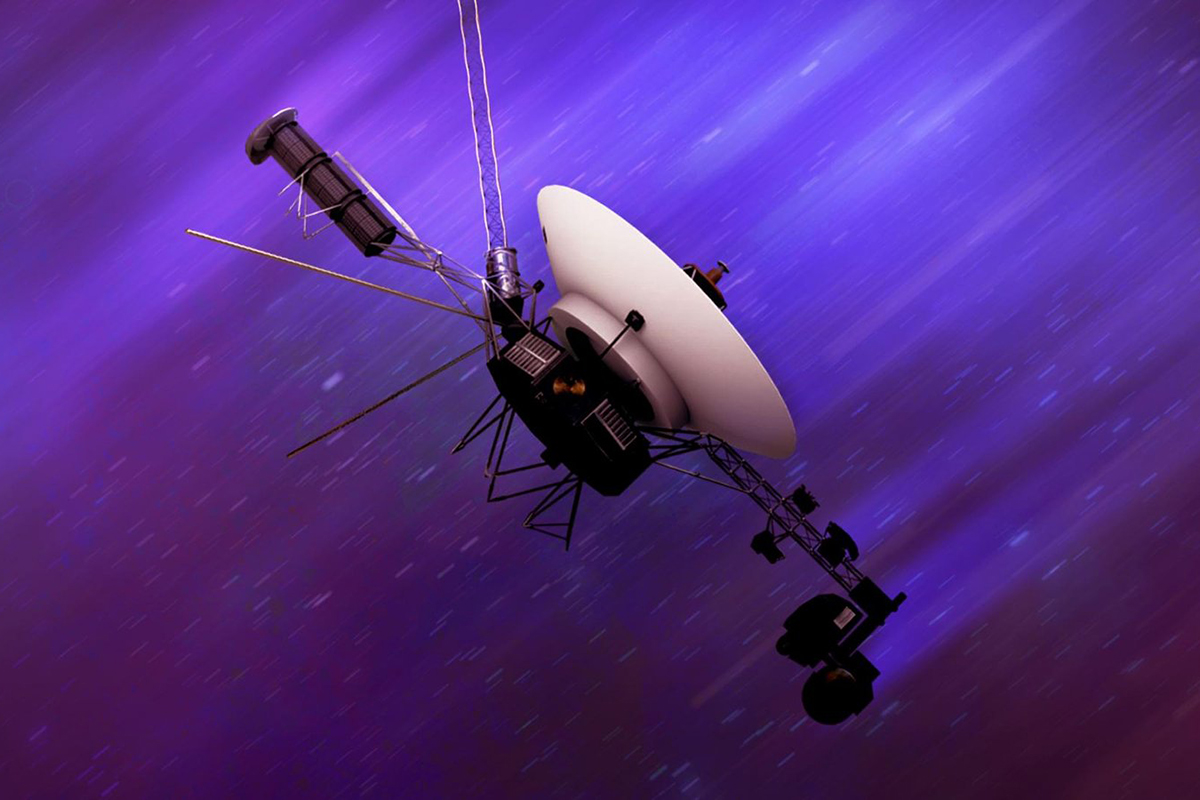
But even though regular signals to and from Earth will cease, the hope remains that one final message will be received.
The message in question is not intended for anyone at NASA or on Earth, but for an advanced extraterrestrial civilisation.
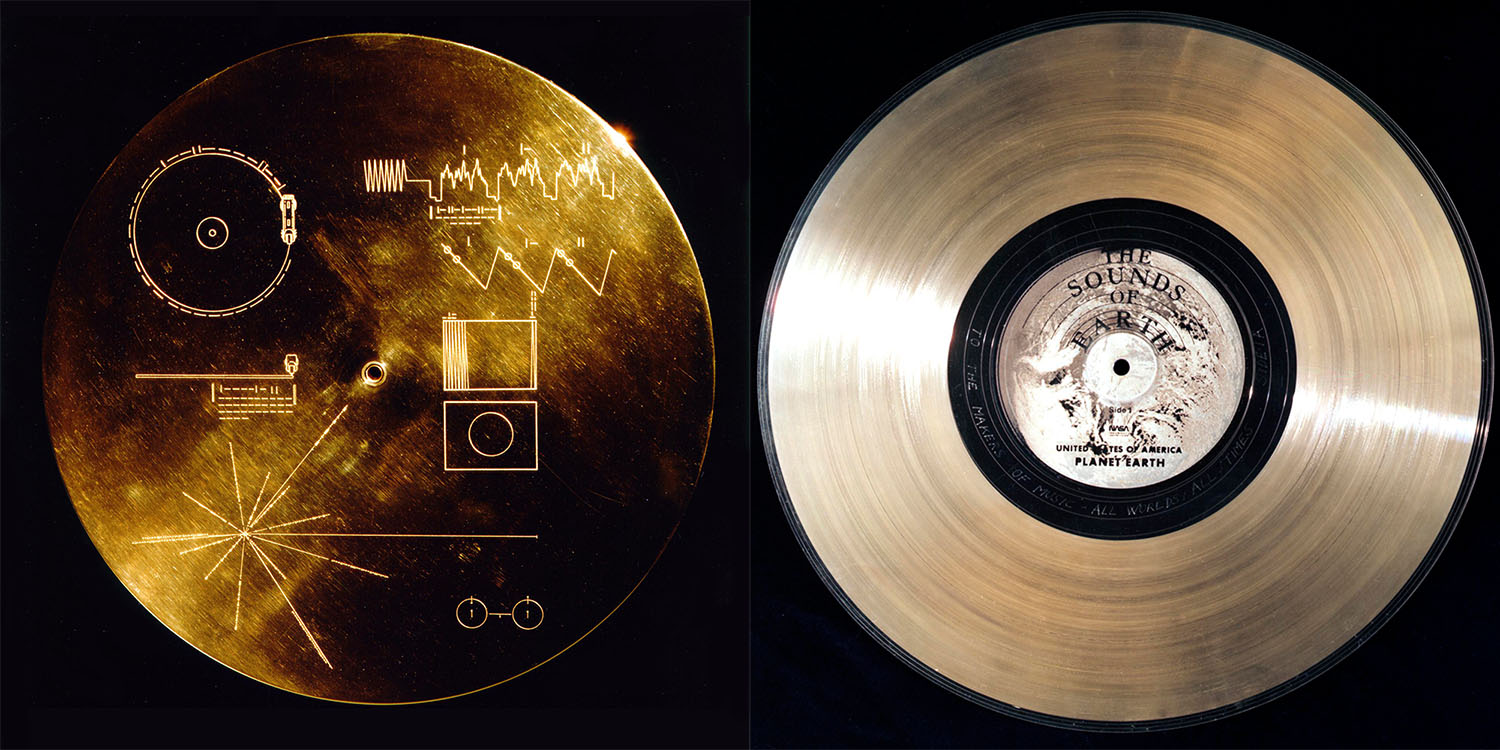
Perched on each of the Voyager spacecraft is a time capsule from 1977 in the form of a 12-inch gold-plated copper disc, a phonograph record containing a glimpse of our planet as it was then.
The technology behind these ‘Golden Records’ might be antiquated by modern standards, but it is a simple one, and NASA believed that an advanced civilisation would be able to comprehend it easily enough.
What the Golden Records contain
Each Golden Record carries a wealth of information, including 116 analogue-encoded images, greetings in 55 languages, a 12-minute montage of natural sounds from Earth and 90 minutes of music.
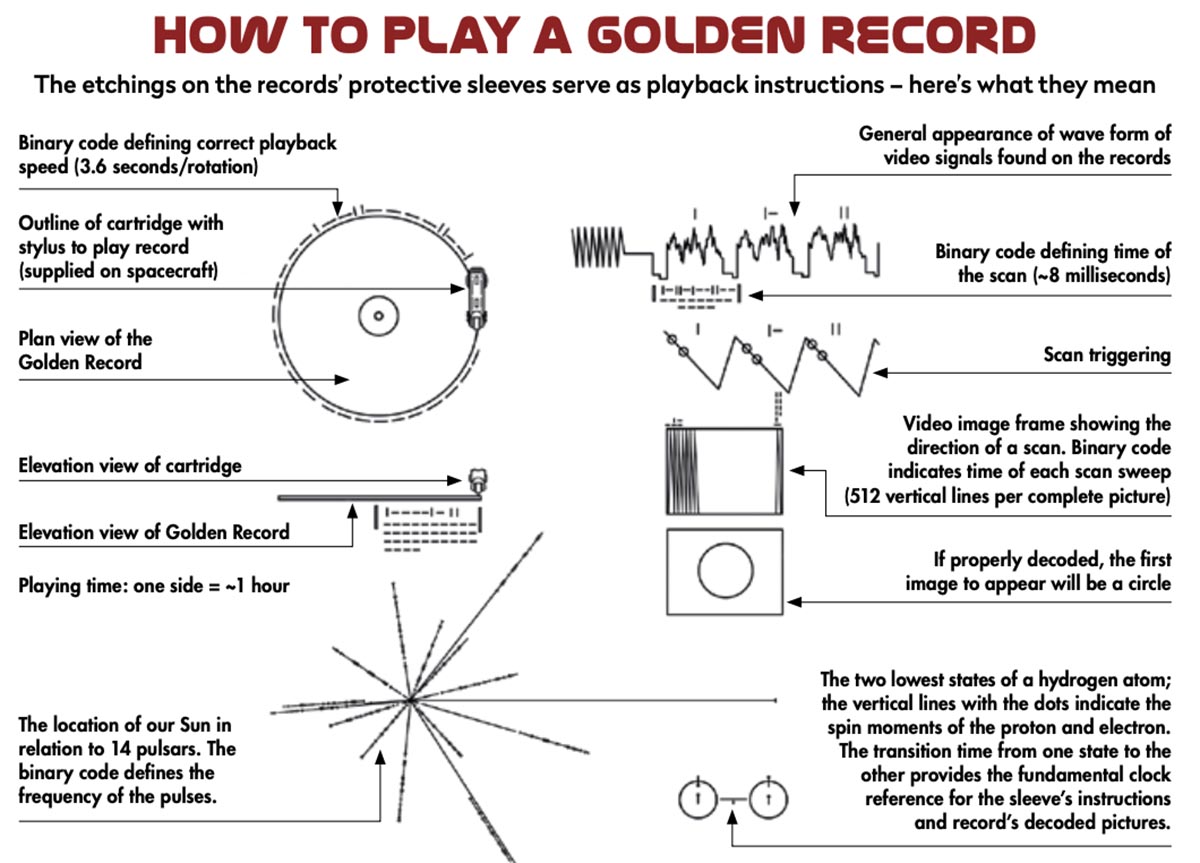
The records are mounted in protective sleeves made from aluminium, into which are etched diagrams and binary code containing all the information needed to play them.
Also inscribed on them is the location of the Sun in relation to 14 known pulsars so that the origin of the records can be deduced should anyone find either one of them.
The packages are completed by ultra-pure samples of the isotope uranium-238, allowing the age of the Voyagers to be determined through radioactive dating, and a stylus to play back their message.
Portraying the diversity of life and culture on Earth on a record was no mean feat, but luckily NASA had two astronomers experienced in sending physical messages into space: famed astrophysicist and science populariser Carl Sagan and SETI founder Frank Drake.
Sagan and Drake had designed the plaques used for the earlier Pioneer mission – a pair of gold-anodised aluminium panels that pictured a nude man and woman, along with symbols providing information about the origin of the two spacecraft.
Earth in a groove
It was Sagan and Drake who first suggested a more ambitious message for the Voyager probes during a meeting of the American Astronomical Society in January 1977.
Soon after, NASA approved the idea and tasked Sagan, Drake and a committee that included artists and authors to depict as much of our existence as possible on the record in a matter of months.
The team set to work, talking to historians, folklorists, artists and ethnomusicologists, as well as consulting with political groups and documentarians.
Artist Jon Lomberg selected the pictures of Earth, which were highly diverse: from an image of the Taj Mahal to a picture of fallen leaves.
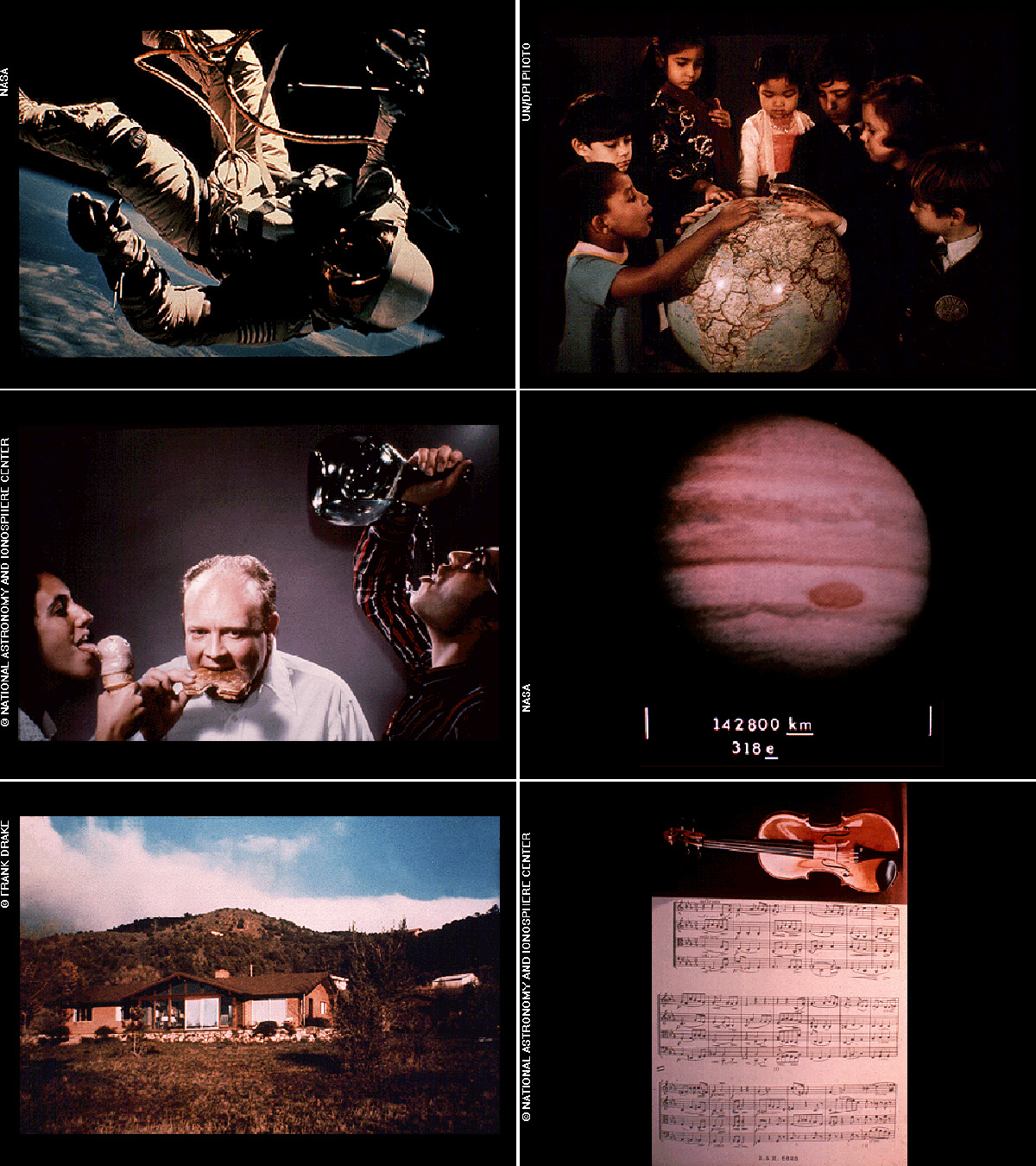
The images came from various sources, including NASA, National Geographic and Sports Illustrated, but if Lomberg couldn’t find an appropriate image or diagram, he or Drake simply drew it themselves.
Meanwhile, Sagan’s then-wife, artist and writer Linda Salzman, was in charge of acquiring greetings in various languages.
Due to the time constraint, many of the speakers were from Sagan’s university Cornell and the surrounding communities.
Given little instruction on what to say, results were eclectic – ranging from Sagan’s six-year-old son Nick saying in English “Greetings from the children of planet Earth” to the one-word, minimalism of “peace” in Aramaic or the Amoy greeting that translates as “Friends of space, how are you all? Have you eaten yet? Come visit us if you have time.”

Sounds and music
Of course, greetings were not the only audio sent into the heavens.
Ann Druyan, the project’s creative director and later Sagan’s third wife, oversaw the ‘Sounds of Earth’ recordings, which include thunderstorms, erupting volcanoes and crashing ocean waves, as well as human and animal noises such as a baby’s cry, a chimpanzee’s call and a dog’s bark.
Responsibility for the music fell to science writer and Rolling Stone editor Timothy Ferris.
Classical music features prominently, with excerpts from Mozart, Bach and Beethoven among others, but to give a sense of the range of music humanity has to offer, traditional songs from various cultures and even Chuck Berry’s ‘Johnny B Goode’ were also included.
Sagan also requested The Beatles’ ‘Here Comes the Sun’, but EMI, the band’s record company, refused to grant NASA permission to use it, despite the Beatles themselves being in favour of its inclusion.
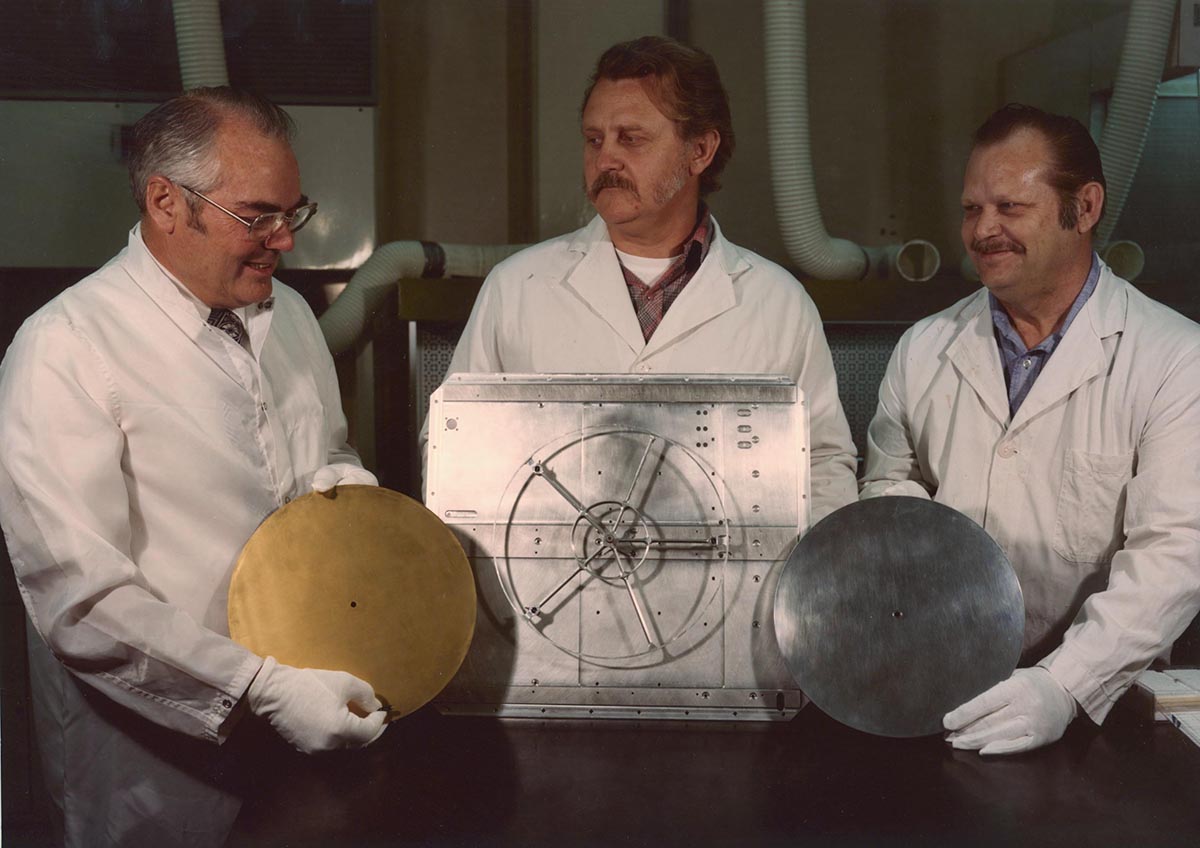
Once the content was assembled, the team thought the hard part was over.
But Ferris threw a spanner in the works just after they had finished cutting the master by adding the inscription ‘To the makers of music — all worlds, all times’ in the space between the grooves and the label.
NASA quality control rejected the record as with the inscription it no longer matched the design specifications.
If Sagan hadn’t hastily produced a waiver for the NASA administrator to sign, the records would have to have been replaced with blank discs.
Including the records transformed the Voyagers from robotic explorers into interstellar ambassadors.
The probes will likely never reach alien hands, but the fact that the Golden Records were sent anyway speaks volumes for the hope humanity harbours of one day discovering that we are not alone.
Messages from Earth
A snapshot of the contents of the Golden Records, the time capsules carried on the Voyager probes
Greetings
If this selection of greetings were truly intended to be understood by anyone, Sagan’s team would have sent one language with a key to decipher it. But it was more an exercise in keeping people on Earth happy and so it included a Swedish message from a computer programmer in New York.
Scenes
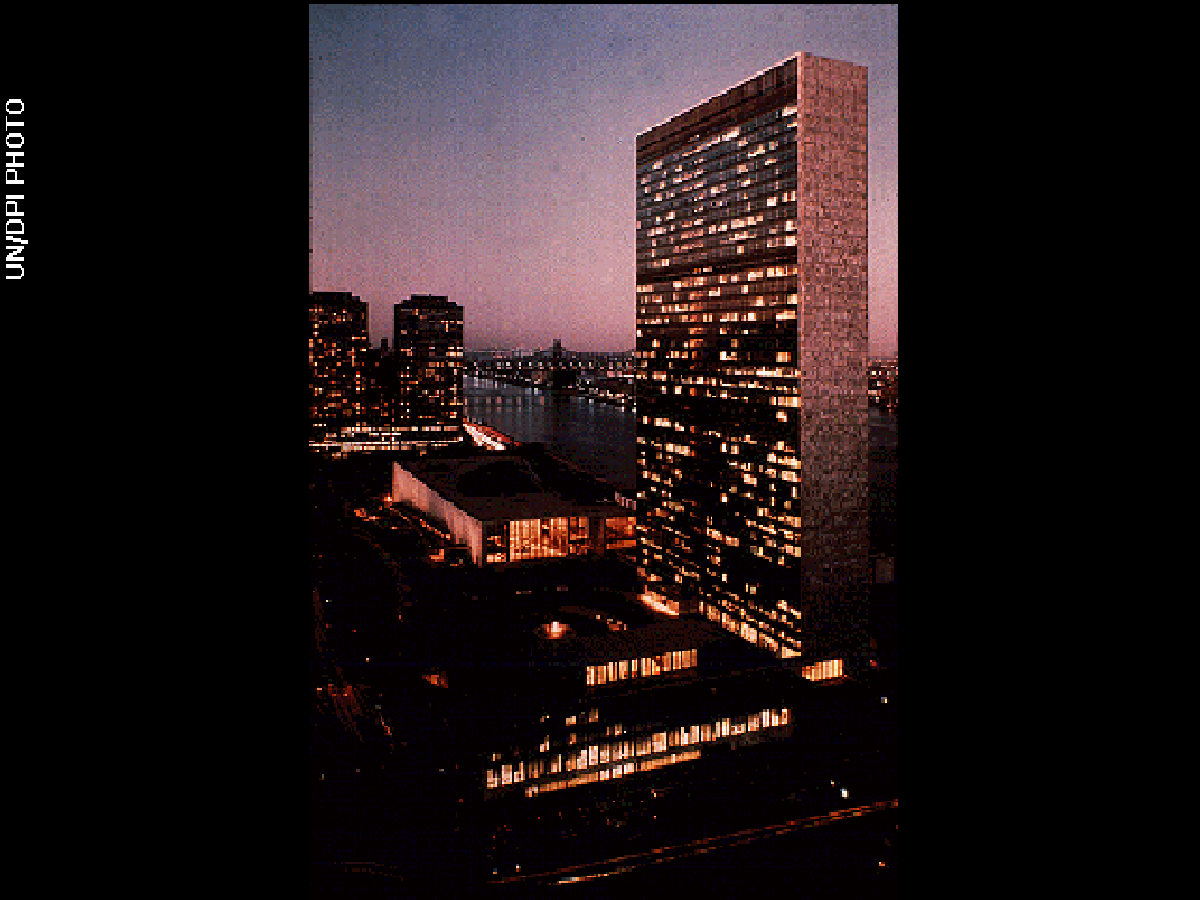
Shots of Earth’s deserts, mountains, seas and cities appear, but what’s not included is just as interesting. Images of war were left out due to concerns they could be interpreted as a sign of aggression. Politics and religion were also omitted for reasons of inclusivity.
Music
The Golden Record holds all sorts of music: from Beethoven and Bach to Sengalese percussion and traditional Georgian music. Translating the lyrics of this latter piece, ‘Tchakrulo’, to ensure there were no offensive associations, the team found that the song is about a peasant revolt.
A thought experiment
An unexpected inclusion was the sound of Ann Druyan’s brainwaves. Druyan had wondered if a civilisation with the technology to decode thoughts could exist; Sagan and the other team members liked the idea, and so Druyan volunteered to undergo an EEG scan.
What are your thoughts on or memories of the Voyager missions and the Golden Records? Let us know by emailing contactus@skyatnightmagazine.com