Black holes are the weirdest concept in astrophysics. But do they really exist?
Back in the 18th century, natural philosopher John Michell suggested there could be stars so massive that light would be slowed to a stop by gravity, but the present concept emerged from Karl Schwarzschild’s 1915 solution to Einstein’s general theory of relativity.
Schwarzschild worked on a uniform, non-rotating spherical body to make the notoriously complex equations more accessible.
His solution showed that a sufficiently dense object could warp spacetime so much that even light could not escape.
More on black holes
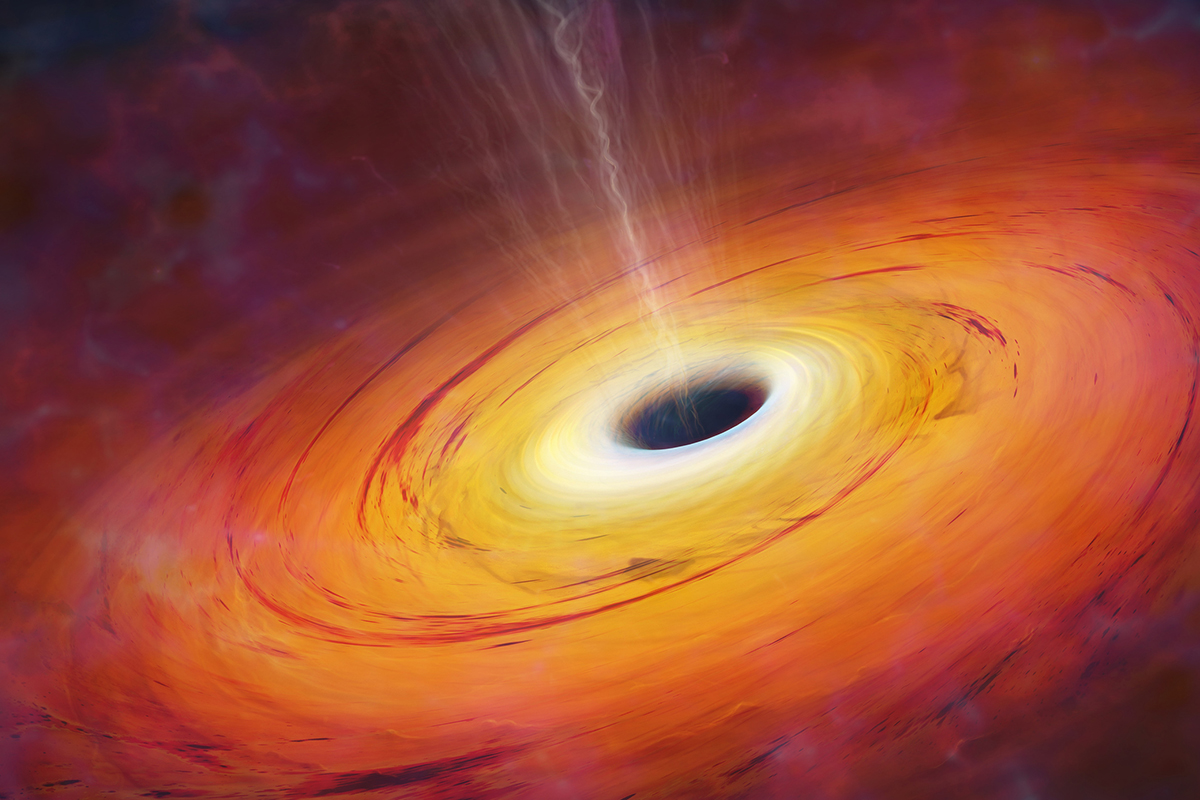
Astrophysicists later realised there was a physical situation where this could happen in nature, when a massive star at the end of its life collapsed under a gravitational field so intense that no physical force could resist it.
The end result would be a singularity – a dimensionless point in space where the gravitational field strength became infinite.
This hypothetical body was given the name ‘black hole’ at an American Association for the Advancement of Science meeting in 1964.
Although often attributed to physicist John Wheeler, who certainly publicised it, we don’t know who coined the term.
In the same year, astronomers discovered X-ray source Cygnus X-1, which by the early 1970s was widely accepted to be a black hole, as it was far too small for a star of that mass.
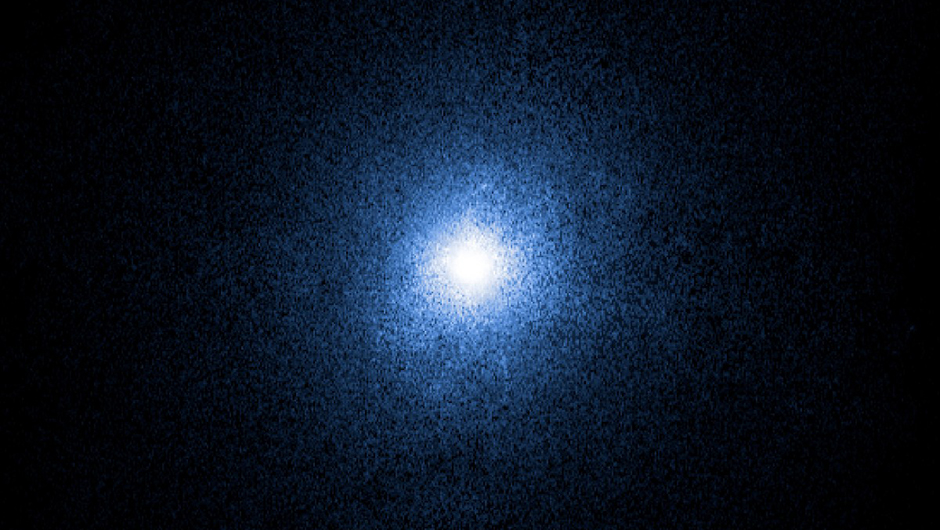
Credit: NASA/CXC/SAO
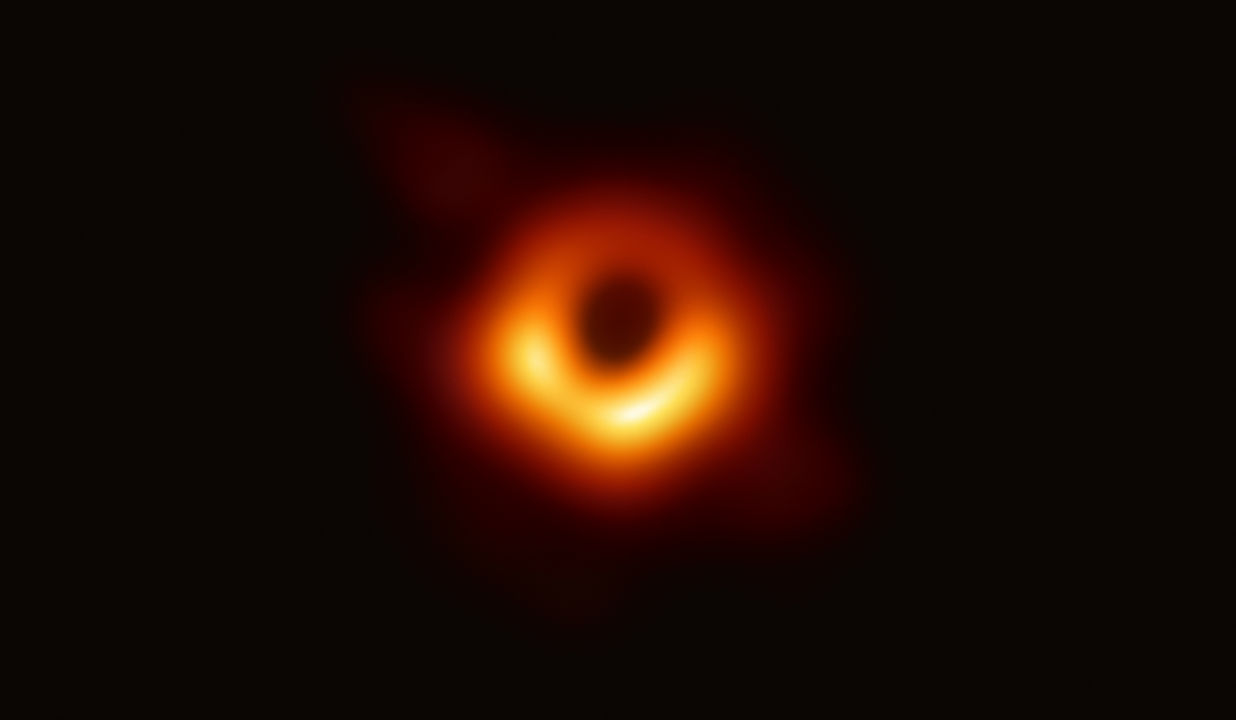
Since then, we have made more direct observations, primarily from gravitational waves and the behaviour of nearby stars.
Although our Galaxy alone may contain 100 million black holes, only a few hundred have been identified.
Given these observations, it seems strange to suggest we’ve never seen a black hole. But all we can really say is that we detect objects that behave like one.
Without a singularity at its heart, it isn’t really a black hole – and this is a gravitational extreme that breaks current physics.
When a theory predicts such an outcome, the honest assessment is that we don’t know what’s really happening.
How we would really study black holes
To get any further, we would need to see into a black hole. I got excited when writing this after seeing a teaser for a magazine article saying ‘We’re finally about to discover what’s lurking inside a black hole’.
I thought I’d have to tear up my article and start again. But looking at the detail, it was a hypothetical experiment that may not even be physically possible.
First, we must fly to a black hole – the nearest known one is 1,560 lightyears away.
For scale, our most distant probe, Voyager 1, has covered 0.0027 lightyears in around 49 years.
We then would surround the black hole with supersensitive detectors to know the exact state of each photon of Hawking radiation emitted from the black hole at every moment in time (something quantum physics suggests is pretty much impossible)
Finally, with this information we could work out exactly what a ‘black hole’ really is.
In reality, we are limited to saying “there are amazing objects that are black hole-like, but we won’t ever know for sure what is happening in their innards”.
Admittedly, it’s more convenient to simply say ‘black hole’ than to go through that every time. But it is what it is.