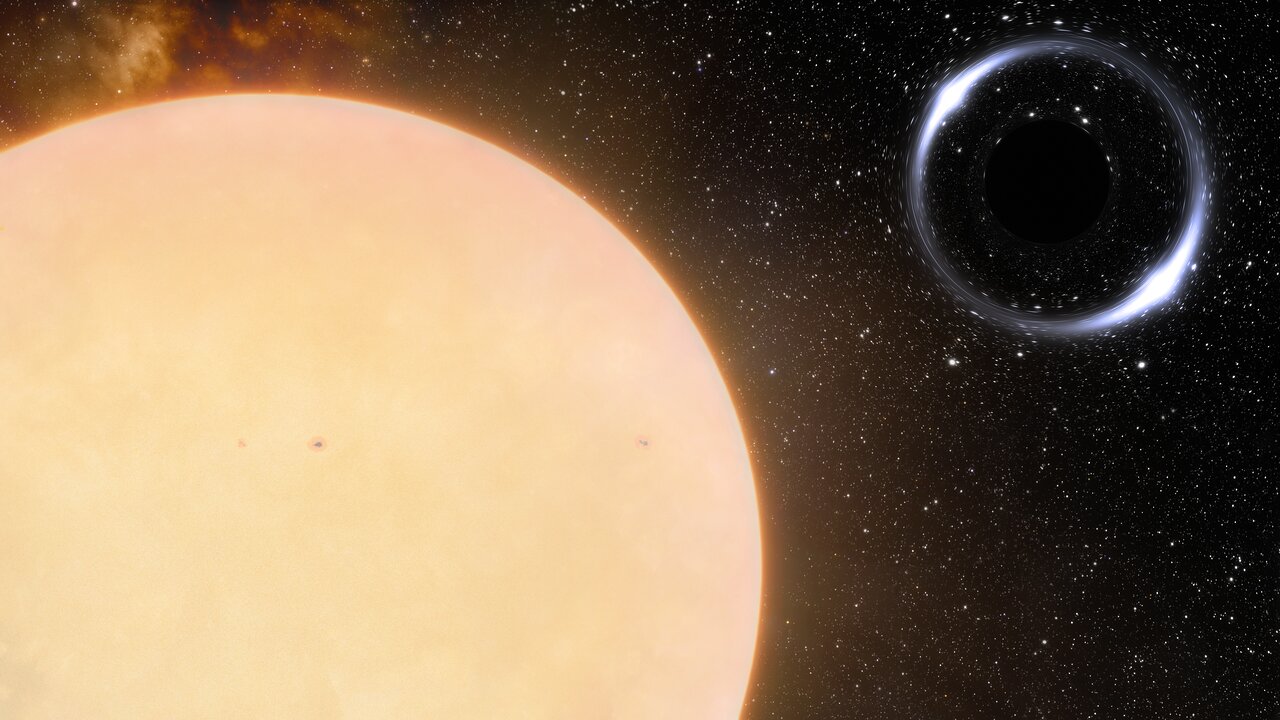
The closest confirmed black hole to our Solar System lies roughly 1,560 lightyears away.
It belongs to a binary system known to its friends as Gaia BH1, orbiting a shared centre of gravity with a main-sequence G-type star, similar to the Sun.
The light we see from this system today began its journey to Earth around the time the legendary King Arthur was supposedly born.
In human terms, that’s reassuringly distant. Cosmically speaking, however, it’s not.
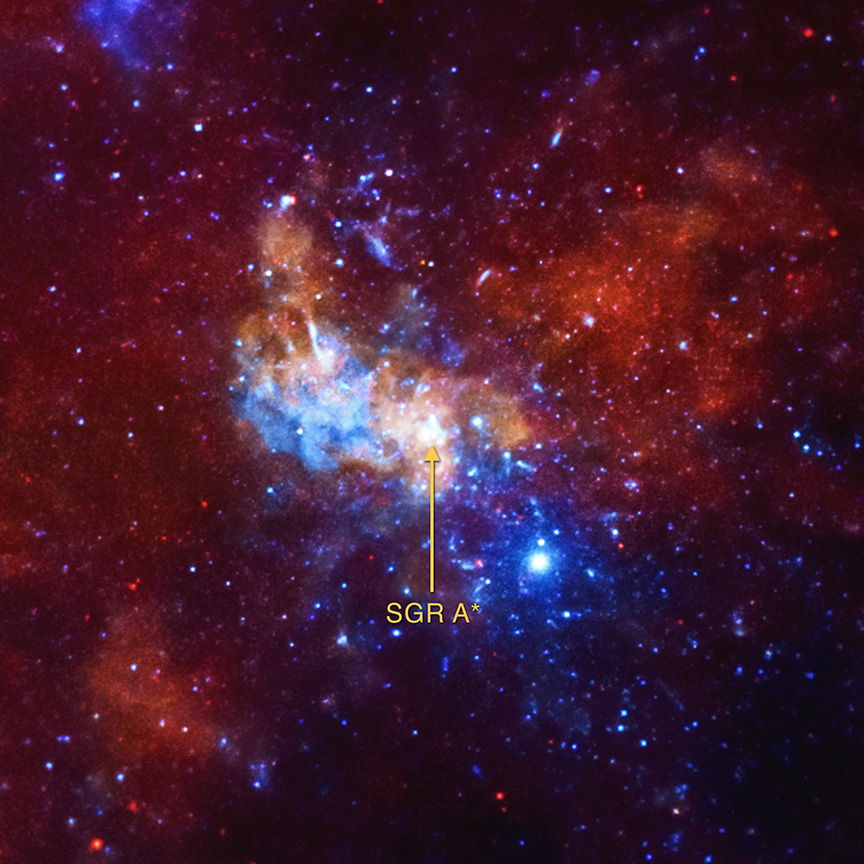
Sagittarius A*, the massive black hole at the Milky Way’s core, is more than 16 times farther away (around 26,000 lightyears).
There are plenty of images that show the exact location of Sagittarius A*.
Our nearest neighbouring galaxy, Andromeda, is over 1,600 times farther away at 2.5 million lightyears – albeit hurtling towards us at about 110km/s (25,000mph), on course for a possible galactic collision in 4.5 billion years.
Space and time are, obviously, really big.
However, if you sighed in relief that the closest black hole is 1,560 lightyears distant, then we’re sorry: we can’t say for certain that there aren’t more – in fact, many more – black holes much, much closer.
An absence of evidence, in this case, is definitely not evidence of absence.
Types of black holes and how they form
Dr Kazunori Akiyama knows a thing or two about finding and observing black holes.
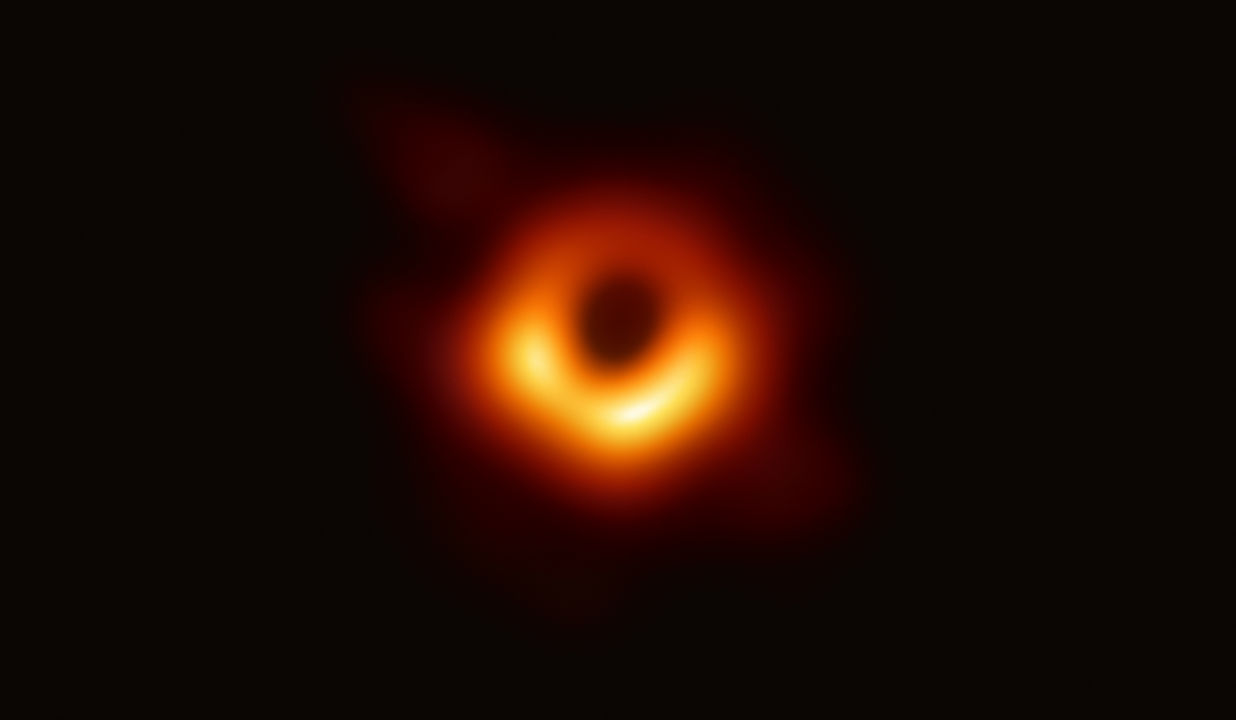
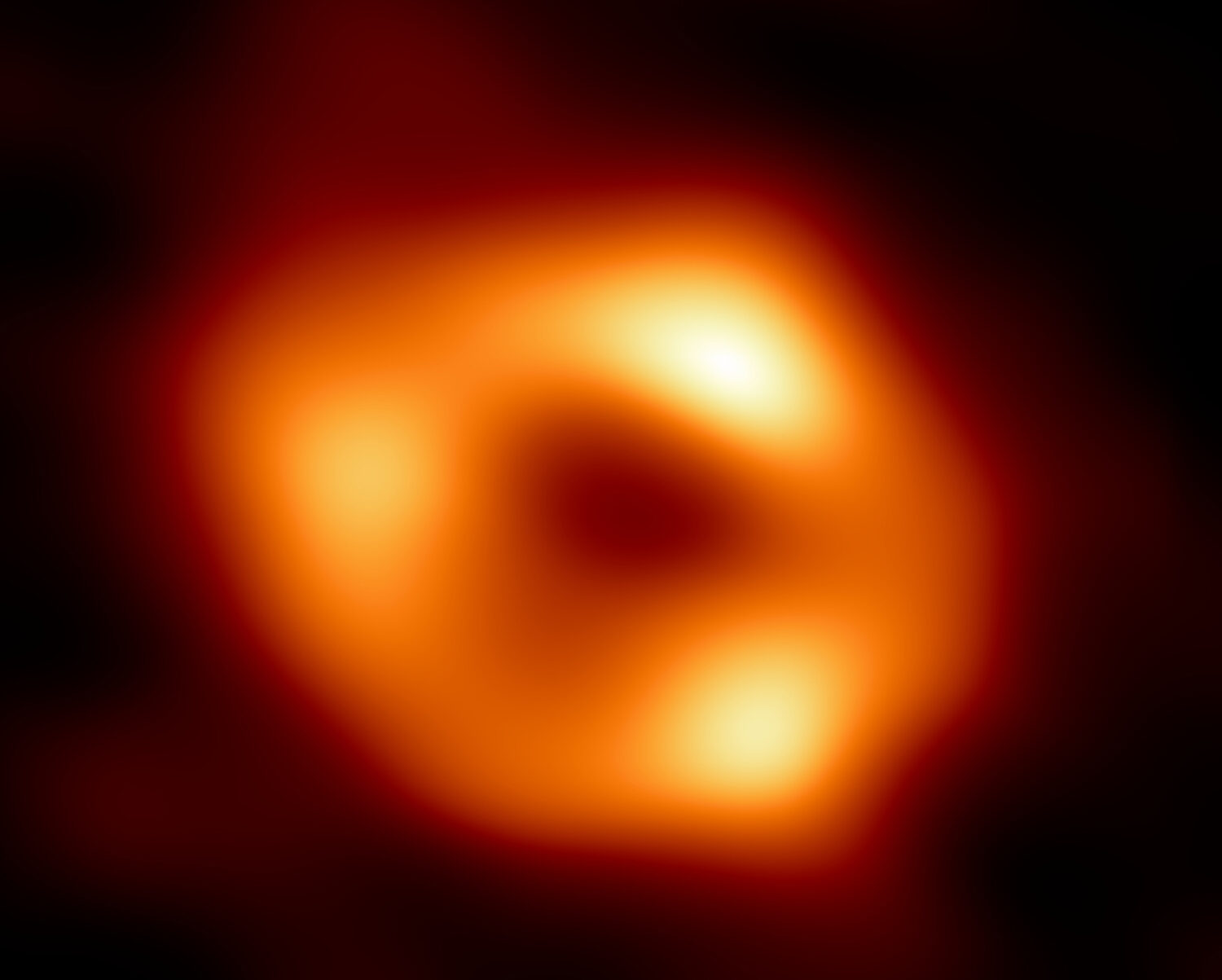
He co-led the entire imaging team of the Event Horizon Telescope (EHT) collaboration, which successfully generated the first images of the supermassive holes at the heart of galaxy M87 (in 2019) and the Milky Way (in 2022).
His latest project, hosted by Heriot-Watt University in Edinburgh, aims to create the first-ever ‘3D movies’ of black holes, combining revolutionary black hole imaging with cutting-edge AI to help transform our understanding of the Universe’s most extreme environments across time.
"The most common kind are ‘stellar-mass’ black holes, weighing roughly three to 100 times the mass of our Sun," he says.
"Born from the violent supernova explosions of dying massive stars, they are scattered throughout galaxies, either orbiting a living companion star or drifting silently alone through the spiral arms.
"At the other extreme are supermassive black holes – staggering giants millions to billions of times the mass of our Sun.
"Rather than wandering, these behemoths anchor the centres of almost all large galaxies, including Sagittarius A* in our own Milky Way and the black hole in M87 that we imaged with the EHT.
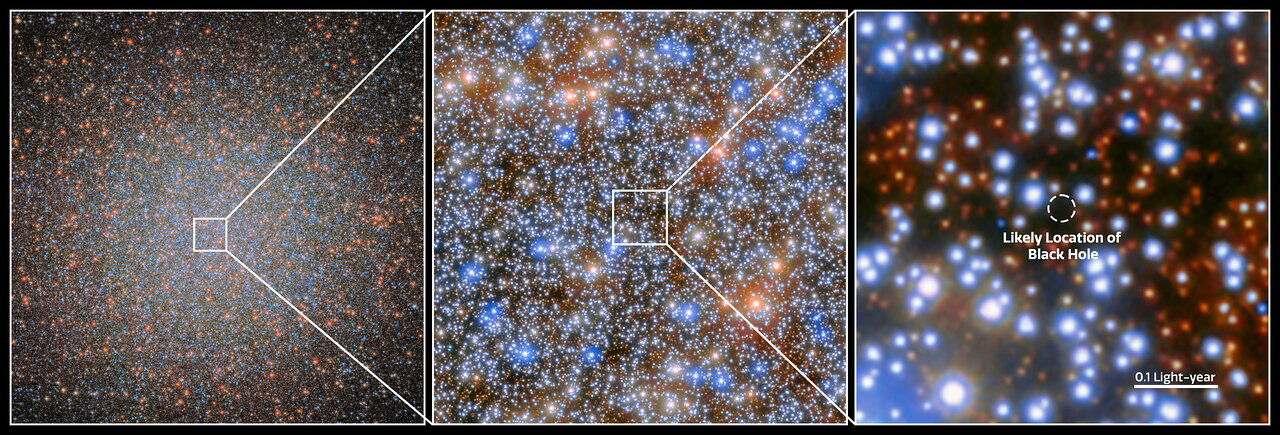
“Bridging this massive gap are intermediate-mass black holes, containing 100 to 100,000 solar masses.
"While astronomers postulate their existence as a crucial piece of the cosmic black hole evolutionary story, they are notoriously difficult to detect, and we do not yet have conclusive evidence for them."
Crucially, that is not to say we have conclusive evidence that there aren’t any black holes of that size considerably closer to us than Gaia BH1.
In fact, Dr Akiyama is pretty sure there must be.
Finding hidden black holes
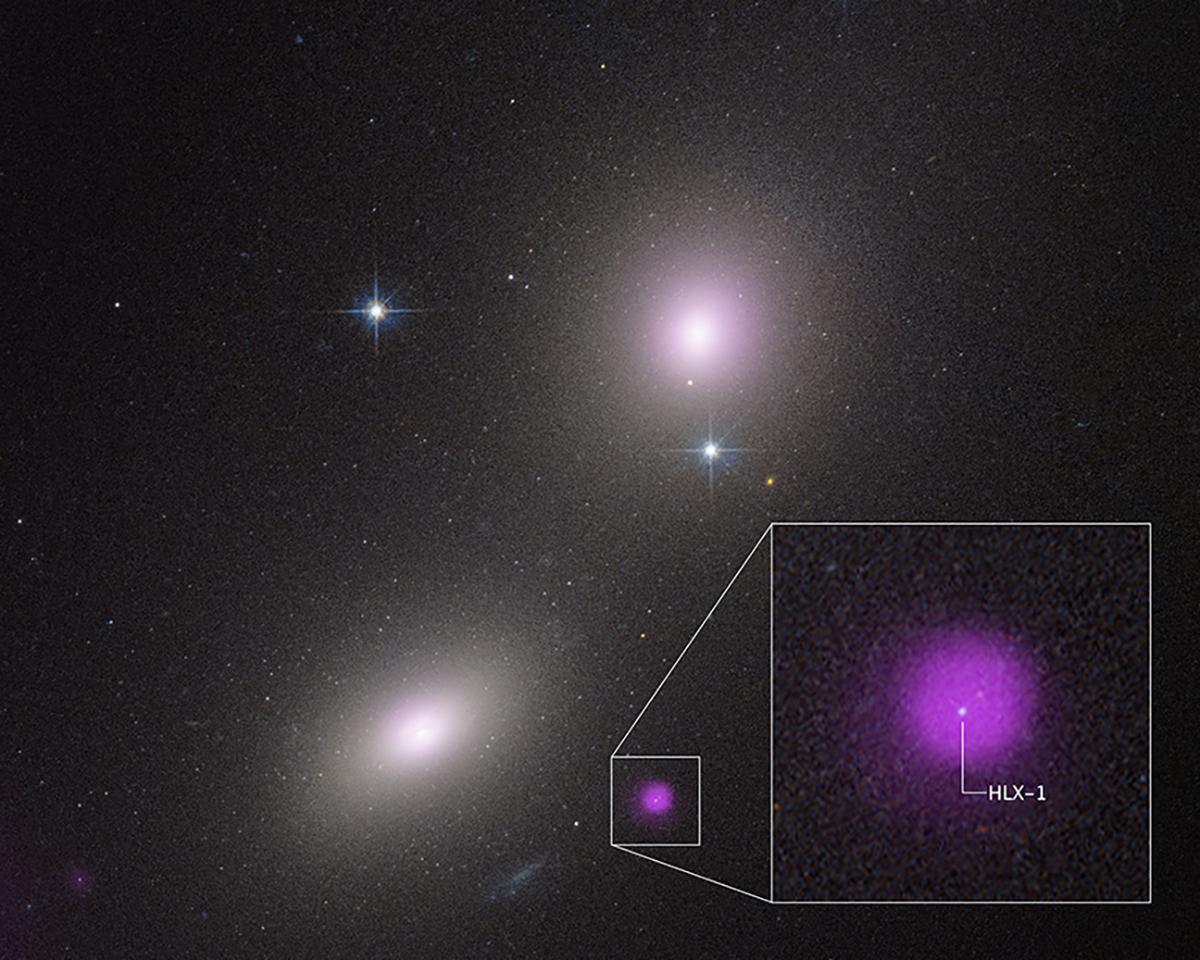
"Our current methods for finding black holes rely entirely on the fortuitous chance that they leave observable traces of their gravitational influence," he says.
"The vast majority of stellar-mass black holes in our Galaxy are isolated and dormant.
"Because they are not actively consuming surrounding material, they emit no detectable radiation and remain practically invisible.
"Therefore, it is highly probable that closer, completely ‘silent’ black holes exist, waiting to be discovered."
Dr Andrew Lawrence, Regius Professor of Astronomy at the University of Edinburgh, agrees.
"Within the Milky Way, there should be millions, maybe hundreds of millions [of black holes].
"Basically, we think it’s what happens to stars, in a certain mass range, at the end of their lives: one way or another, the core of the star collapses and, if those cores are more than a certain mass, they become black holes.
"We expect that this is happening all the time, so there ought to be loads of black holes out there that we’ll just almost never see."
Should we be worried about nearby black holes?
To borrow a phrase from The Hitchhiker’s Guide to the Galaxy: don’t panic.
Crucially, despite their immense gravity, none of the black holes we know about has any measurable effect on Earth.
"A black hole’s gravity follows standard physical laws. At such vast distances, their gravitational pull on our Solar System is effectively zero,” insists Dr Akiyama.
Gaia BH1 was detected, as its name suggests, by the now-retired European Space Agency’s Gaia space observatory in 2022.
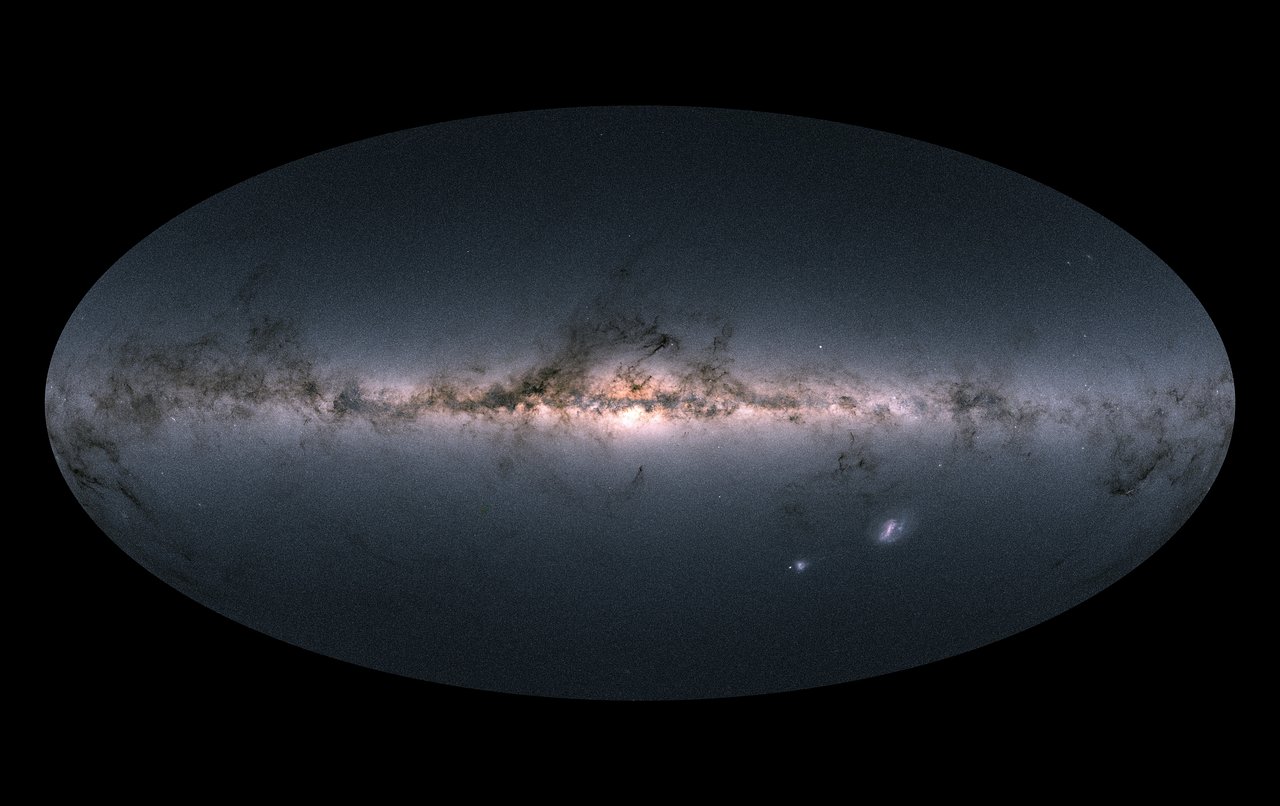
It was the first black hole detected during the course of its 12-year mission, which measured the positions, distances and motions of millions of stars with unprecedented precision.
In this particular case, observations of the Gaia BH1 system enabled astronomers to calculate – using Newton’s laws of gravity – the mass of the unseen object that was clearly influencing the visible star’s movement; the calculations estimated it at about 9.6 solar masses.
"If the dark thing is one or two solar masses, you think: 'Right, it’s probably a neutron star'," says Professor Lawrence.
"But if you see a dark thing that you reckon is 10 solar masses, then you think: 'Wow, it’s gotta be a black hole'."
More giants under our nose
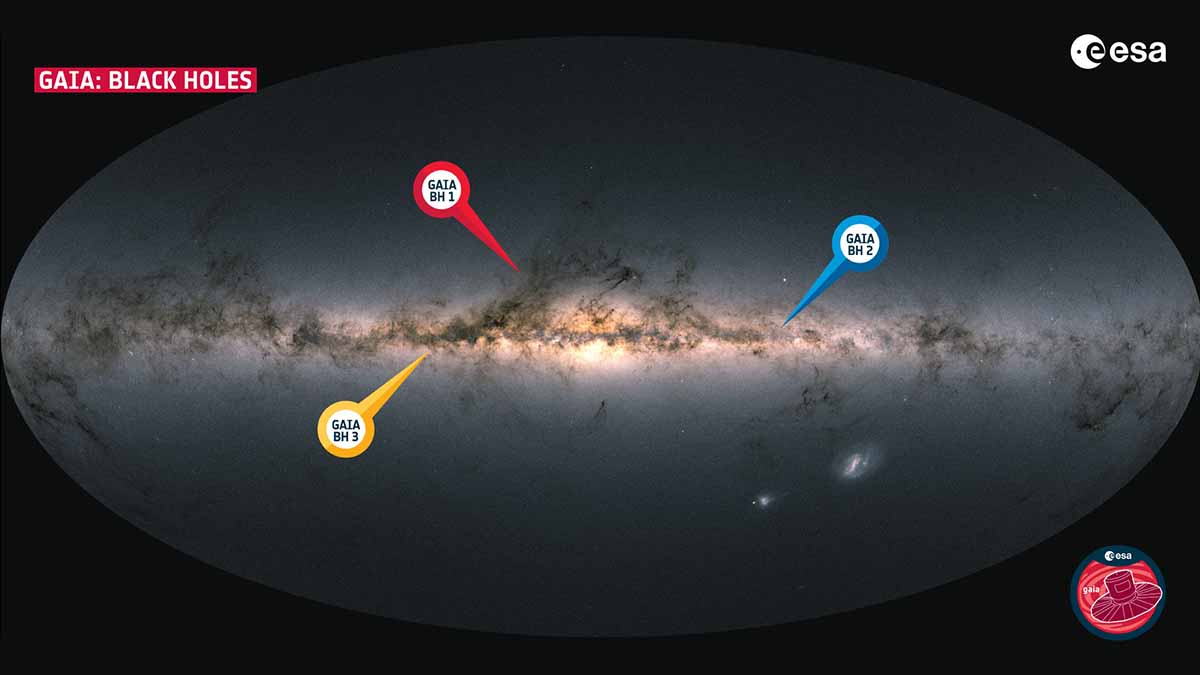
Although black hole Gaia BH2, some 3,800 lightyears away, was confirmed in 2023 – not long after Gaia BH1 – there was great excitement around the surprise confirmation in 2024 of Gaia BH3, even closer to us at just 1,926 lightyears distant, in the equatorial constellation of Aquila.
This system consists of what is termed a metal-poor giant star (one significantly lacking in elements other than hydrogen and helium) and what is currently the second-closest and by far the largest black hole to Earth – coming in at a massive 32.7 solar masses.
Because this sleeping giant is not consuming energy or matter from its companion star, it had been previously undetected and was only noticed by chance when astronomers noted the ‘wobble’ in a companion star in an 11.6-year orbit around it.
Before the discovery of Gaia BH1, the longstanding record-holding black hole (since 1986) in terms of proximity to Earth was part of the binary system A0620-00, in the constellation of Monoceros – though still a reassuring 3,300 lightyears from Earth.
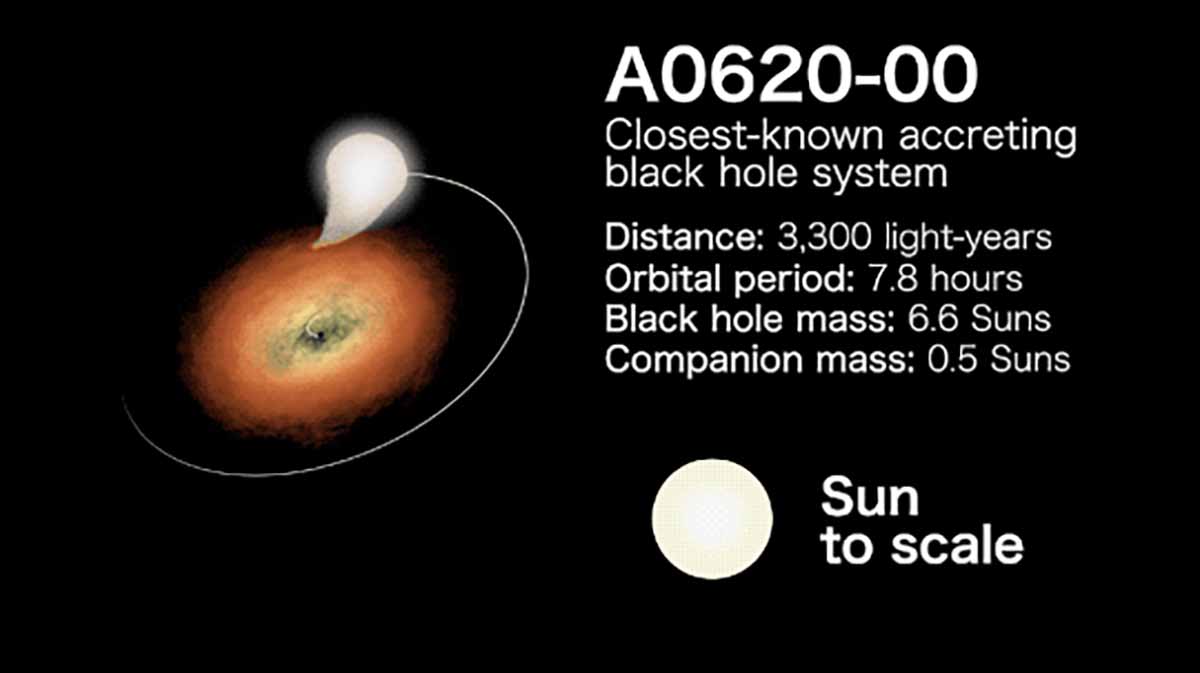
This binary system features an unseen companion estimated to be around six solar masses.
Unlike some of the binary systems confirmed by the Gaia observatory, the star and black hole orbit one another both closely and very quickly – roughly every 7.75 hours. (For comparison, the pair of objects making up Gaia BH1 orbit each other in just over 185 days.)
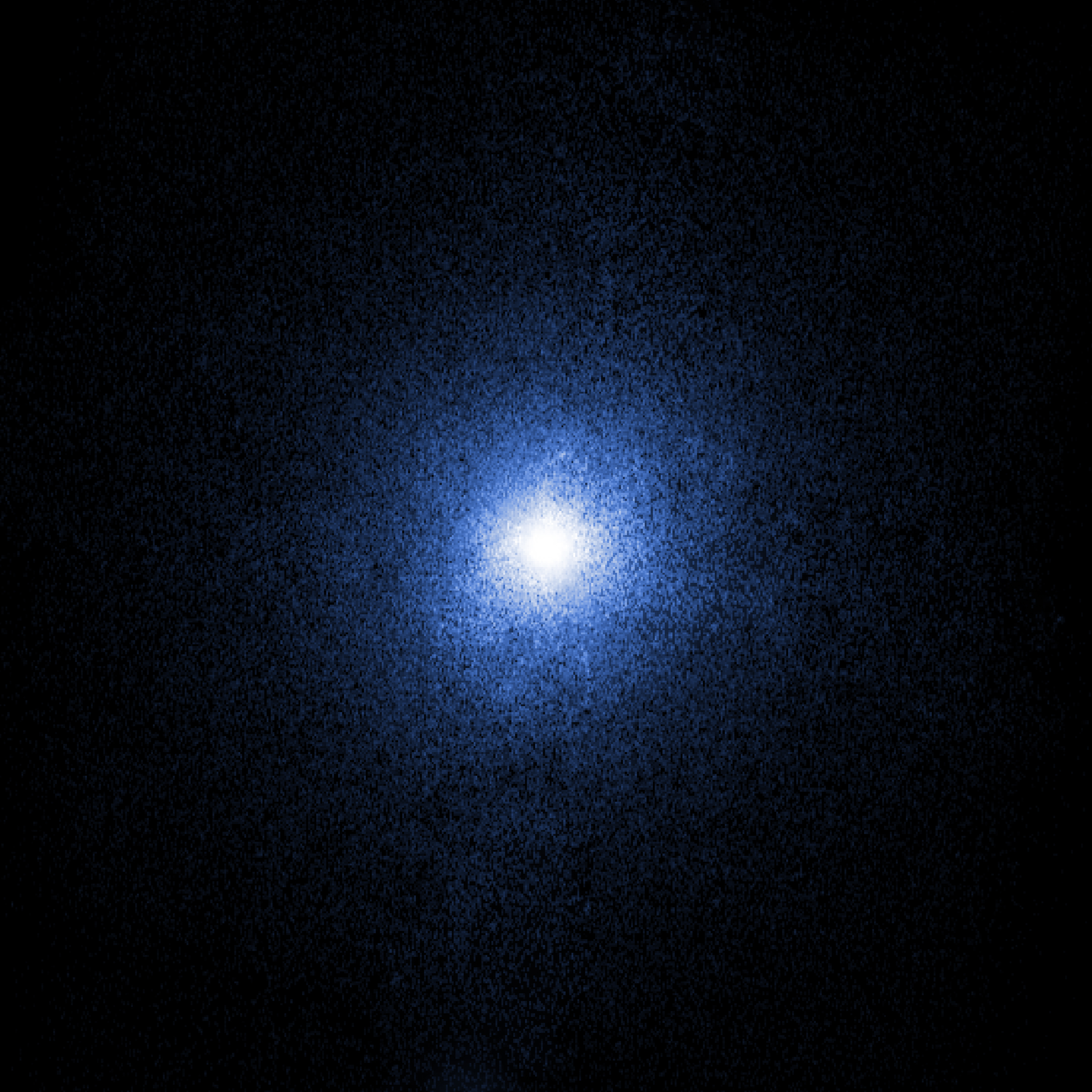
The black hole is consequently pulling matter from the star, with the resulting accretion disc emitting significant levels of visible light and X-rays, to the extent that it was classified as an X-ray nova and was – during an X-ray burst in 1975 – the brightest X-ray source in the sky for a time.
The first confirmed black hole
Among the strongest X-ray sources detectable from Earth remains Cygnus X-1, in the constellation Cygnus, first discovered in 1964 and widely considered from the 1970s onwards to be a black hole of around 21 solar masses.
It and its accompanying blue supergiant orbit their centre of mass every 5.5 days, with the star’s solar wind supplying an accretion disc which generates the observed X-rays.
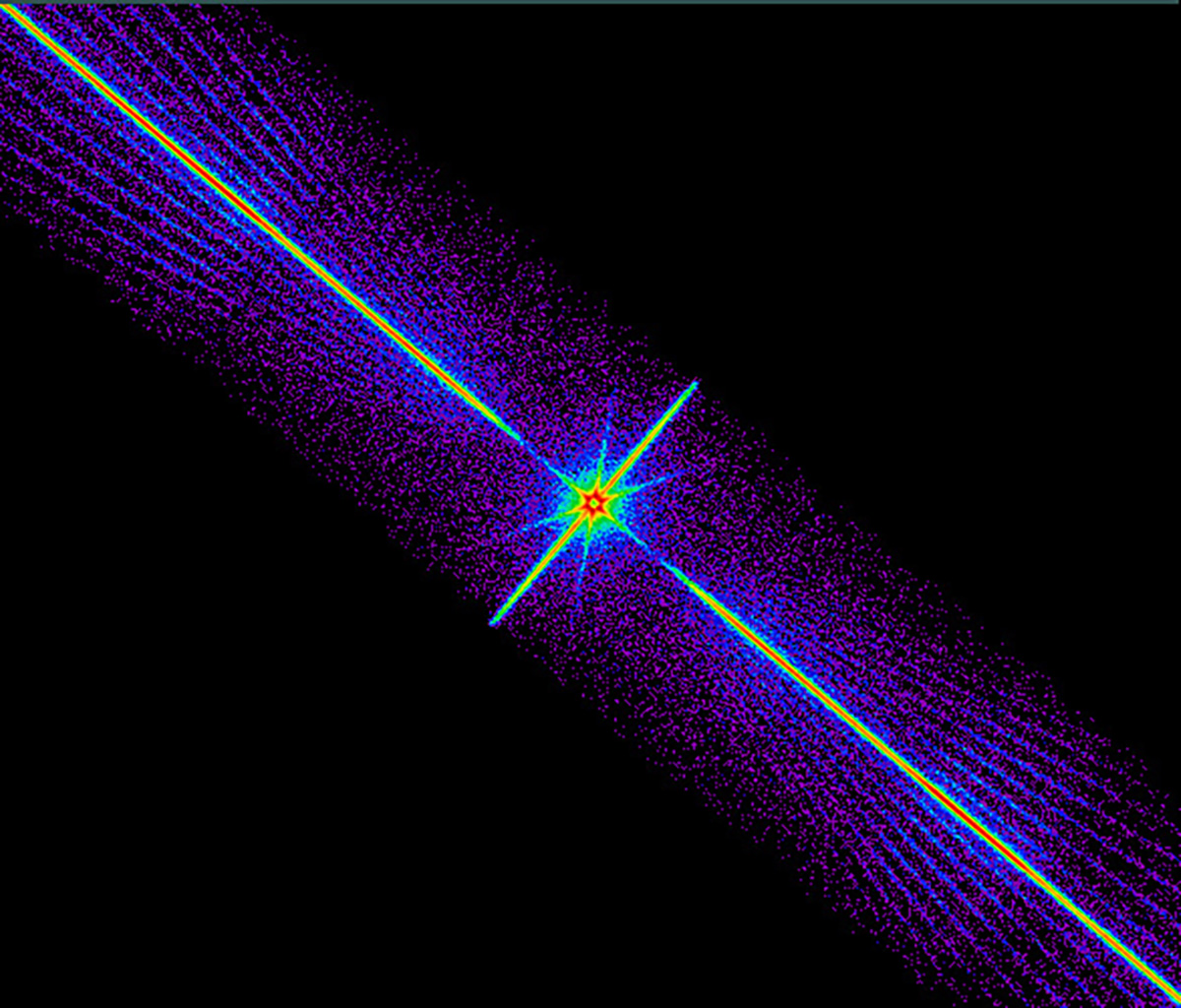
Two beams of ionised matter, shooting out perpendicularly above and below the accretion disc, successfully expel some of the energy from the material falling into the black hole.
An X-ray binary in the constellation Ursa Major, XTE J1118+480 may not be the closest black hole to Earth, at around 6,200 lightyears distant, nor the biggest at around six solar masses, but it’s certainly unusual in its position.
It and its companion star are found ‘above’ the disc of the Milky Way, within the galactic halo.
It’s not thought that the two formed together; instead, it’s possible that the black hole got a kick from the supernova explosion of a massive star and travelled through the Galaxy into its current position with its present companion.
There’s no getting around the fact that this and the other closest black holes to Earth are all inferred – there’s still room to doubt that these are all definitely black holes, despite the exquisite precision of Gaia’s observations. Seeing is believing, after all.
Here, Professor Lawrence cites the Milky Way’s own black hole, Sagittarius A*, and the black hole in M87 as the two most important examples.
"They’ve actually been imaged by the Event Horizon Telescope," he says.
“You’re not seeing the black hole itself, but you’re seeing light that’s been distorted near the black hole.
"The resolution is such that you can do that right down to where the physics is different, and you get very close to the event horizon.
"They’re really the only two black holes where a really sceptical physicist would say: 'Yes, I believe it: that is a black hole'."