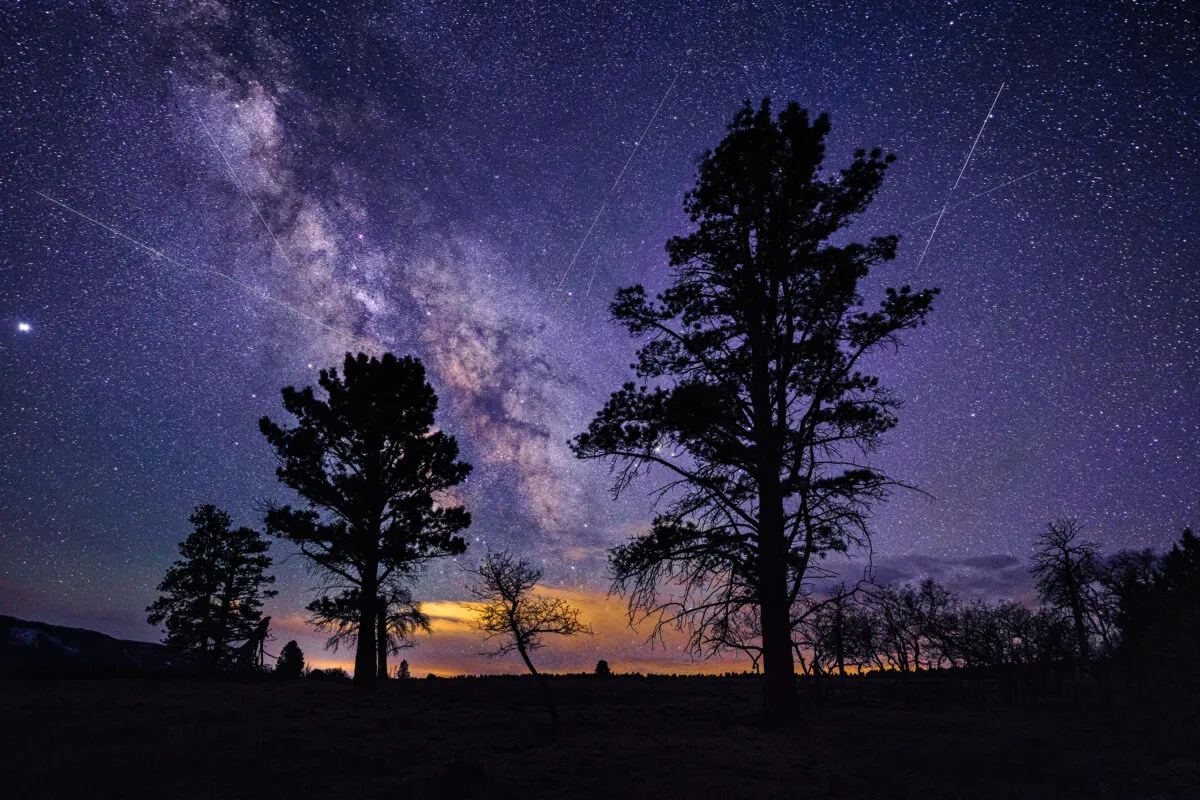
The Lyrid meteor shower brings several months of lean meteor activity to an end. This year it’s active on 15–25 April, peaking around 20:00 BST (19:00 UT) on 22 April.
That means the best views of the Lyrid meteor shower 2026 should be on the nights of 21/22 and 22/23 April.
Get weekly Moon phases and times delivered directly to your email inbox by signing up to receive the BBC Sky at Night Magazine e-newsletter

What causes the Lyrid meteor shower
The Lyrid meteor shower occurs when Earth passes through the dust debris stream strewn around the orbit of comet C/1861 G1 Thatcher.
Initially, the density of this dust is low, so just a few meteors spread across the night. As Earth reaches the denser part of the stream, the zenithal hourly rate (ZHR) climbs to around 18 meteors per hour.
When observing meteor showers, the Moon is key. If the Moon is big and bright, it will diminish the amount of meteors you can see.
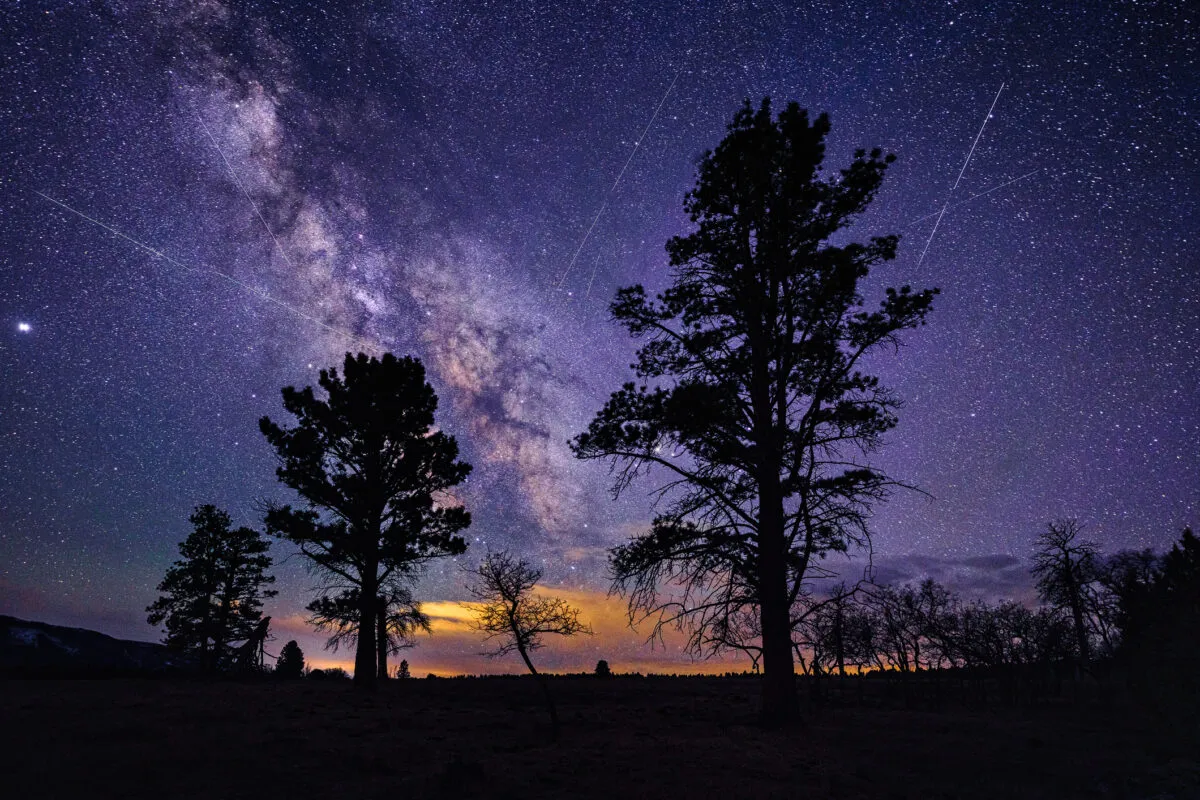
A meteor shower’s visual hourly rate is affected by the altitude of the shower radiant (the area of sky from which the shower’s trails appear to emanate).
For the Lyrids, this reaches a peak altitude at dawn, rising over 60° above the southern horizon.
Unusually, the Lyrid peak doesn’t actually occur within the constellation Lyra, but rather within neighbouring Hercules.
The apparent misnaming occurs because the shower was named before the modern official constellation borders were drawn up by the International Astronomical Union, the peak originally being associated with Lyra.
More advice

The Lyrids and the Moon in 2026
The good news in 2026 is that the Moon won’t really interfere with the Lyrid meteor shower, being at a 35%-lit waxing crescent phase and setting in the early hours of 23 April.
The Lyrid radiant rises to a peak altitude as dawn approaches, so a watch into the morning of 23 April should deliver the best rates.
The Lyrid radiant doesn’t actually lie in modern Lyra, but in the adjacent constellation of Hercules.
The reason the shower is called the Lyrids and not ‘the Herculids’ is that its location was plotted before the modern official constellation boundaries were drawn.
Observing the Lyrid meteor shower
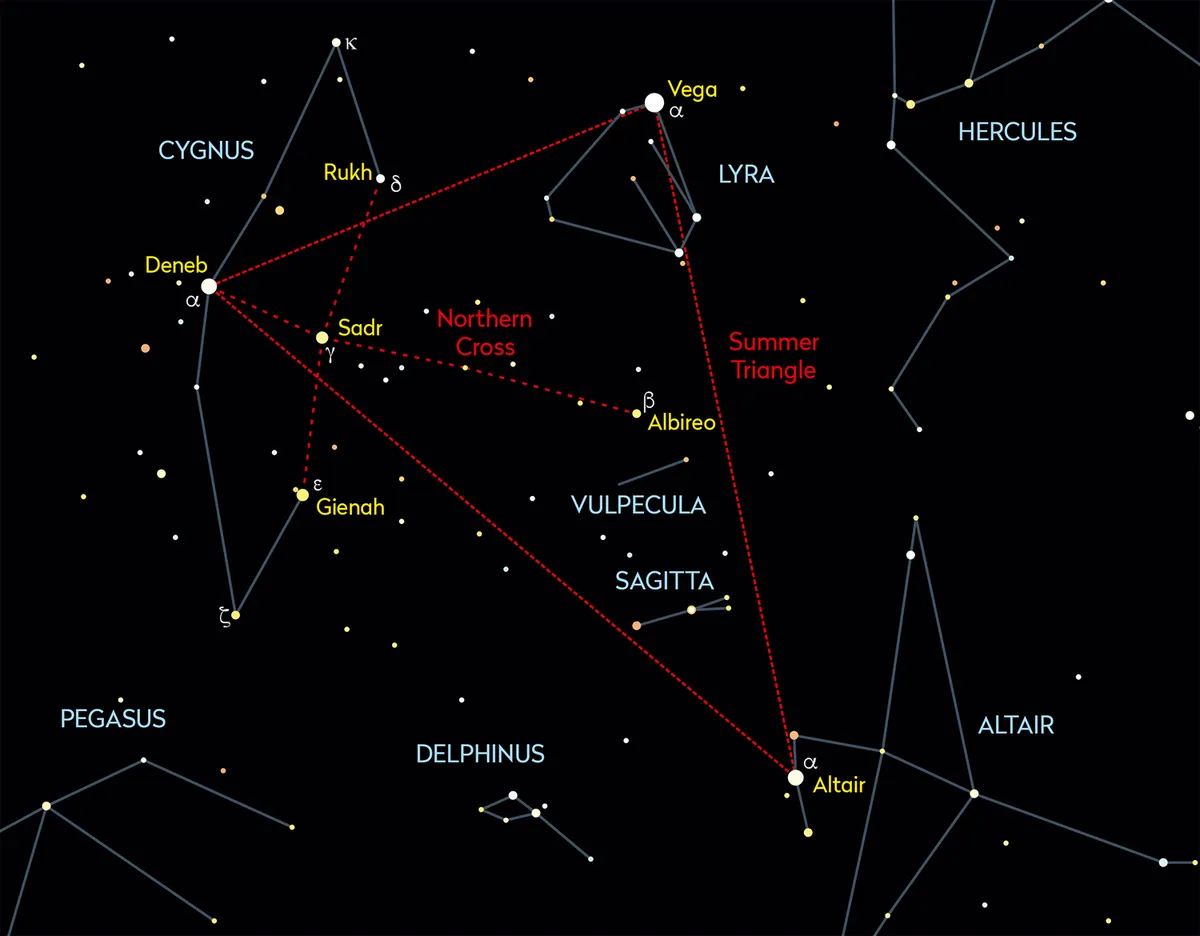
When talking about meteor showers, the 'radiant' is the point in the sky from which the meteors appear to emanate.
The Lyrid meteor shower's radiant is in the constellation Lyra, and you can find it between the Summer Triangle asterism and the constellation Hercules.
Lyrid meteors appear to emanate from the radiant position, southwest of bright star Vega (Alpha (α) Lyrae), which can be found in the constellation Lyra.
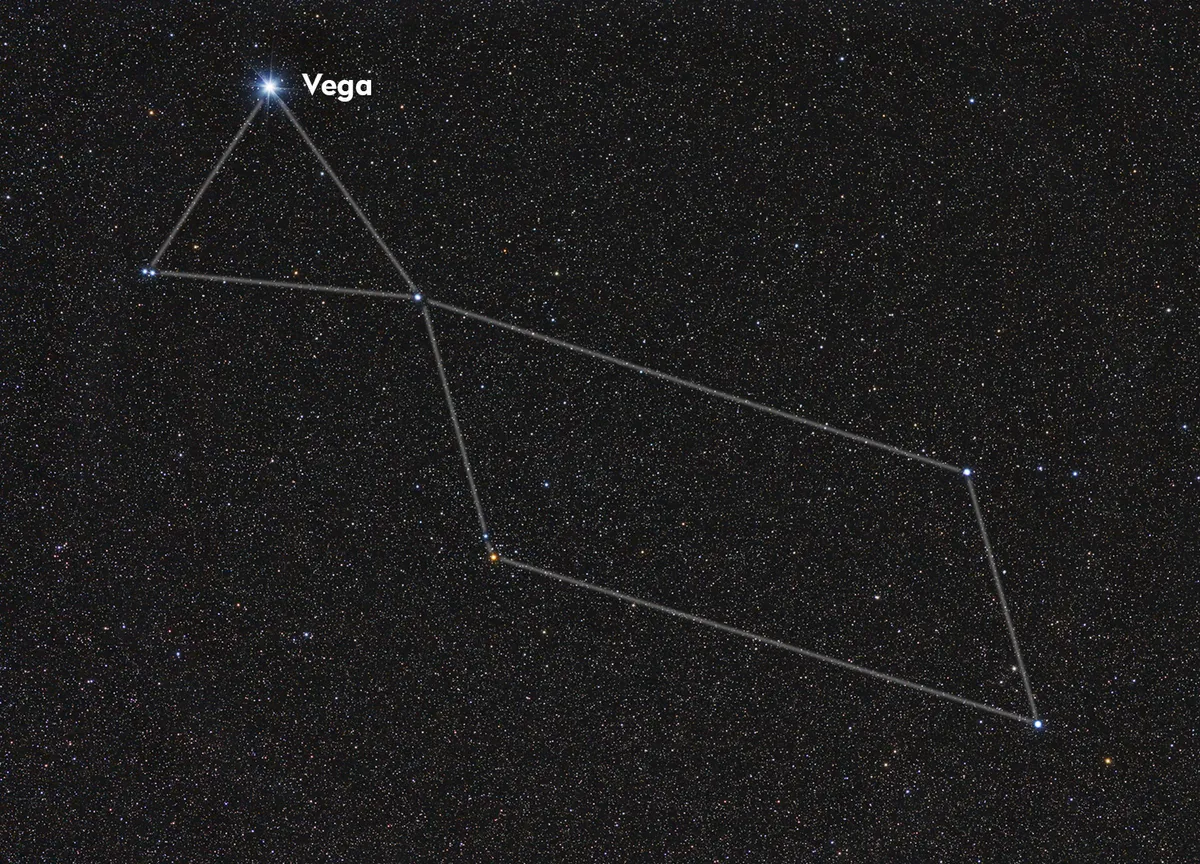
Vega is also part of the star pattern - or asterism - known as the Summer Triangle.
This makes it particularly easy to trace a trail back to see whether it did indeed come from the radiant location.
Technically, the radiant sits in Hercules at the time of peak activity.
Zenithal Hourly Rate explained
While you can predict when a shower’s peak period of activity will occur, you cannot specify exactly when and where individual meteor trails will be seen.
The number of trails expected during a shower’s peak period is expressed by a quantity known as the Zenithal Hourly Rate (ZHR).
A ZHR value is calculated by noting the number of shower meteors seen in a set period of time. Shower trails emanate from a small area of sky known as the shower radiant.
However, the ZHR value assumes perfect placement of the radiant, overhead at the zenith.Among other things, it also assumes perfect skies and your ability to see the entire sky in one view.
It varies depending on sky quality, date and time of day.
In practice, few of these conditions is met, so the experienced visual hourly rate (VHR) will be less than the quoted ZHR.

How to see a Lyrid meteor
To observe the Lyrid meteor shower:
- Find a place away from any stray lights
- Give yourself at 20 minutes in total darkness for your eyes to dark adapt
- Avoid looking at bright light sources such as a mobile phone
- Use a garden recliner or an astronomy chair that avoids you straining your neck to look upwards
- Stare up at an angle of about 60˚, two-thirds up the sky from horizon to zenith
- Look in any direction, but preferably the one in which the sky looks darkest.
- Aim to observe for periods of at least 30–60 minutes between short breaks.
- If you spot a meteor whose trail heads back towards the radiant point, you've seen a Lyrid!
What is a meteor shower?
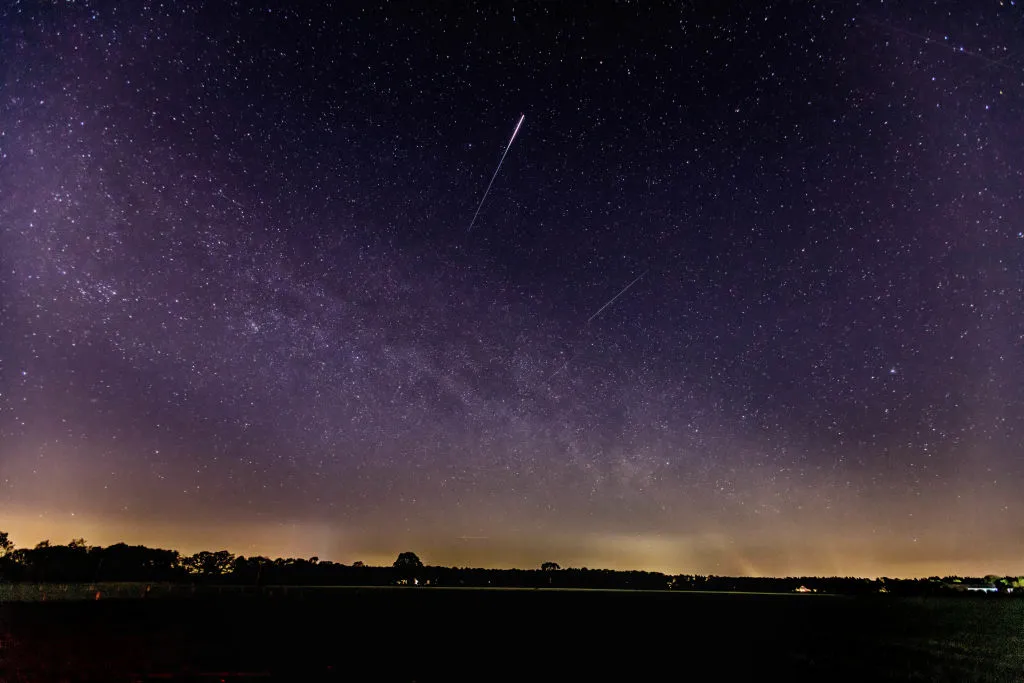
We see a meteor in the sky when a small particle - on average about the same size as a grain of sand - vaporises in Earth's atmosphere. The path of light across the sky is known as a meteor trail.
Most meteor showers are associated with comets, but some are linked with asteroids, such as the Geminid meteor shower, which is associated with 3200 Phaethon.
As a comet repeatedly orbits the Sun, it spreads dust around the orbit.
Earth passes through these dust streams as it orbits the Sun, causing particles to vaporise in the atmosphere. When this happens, the number of trails we can see increases.
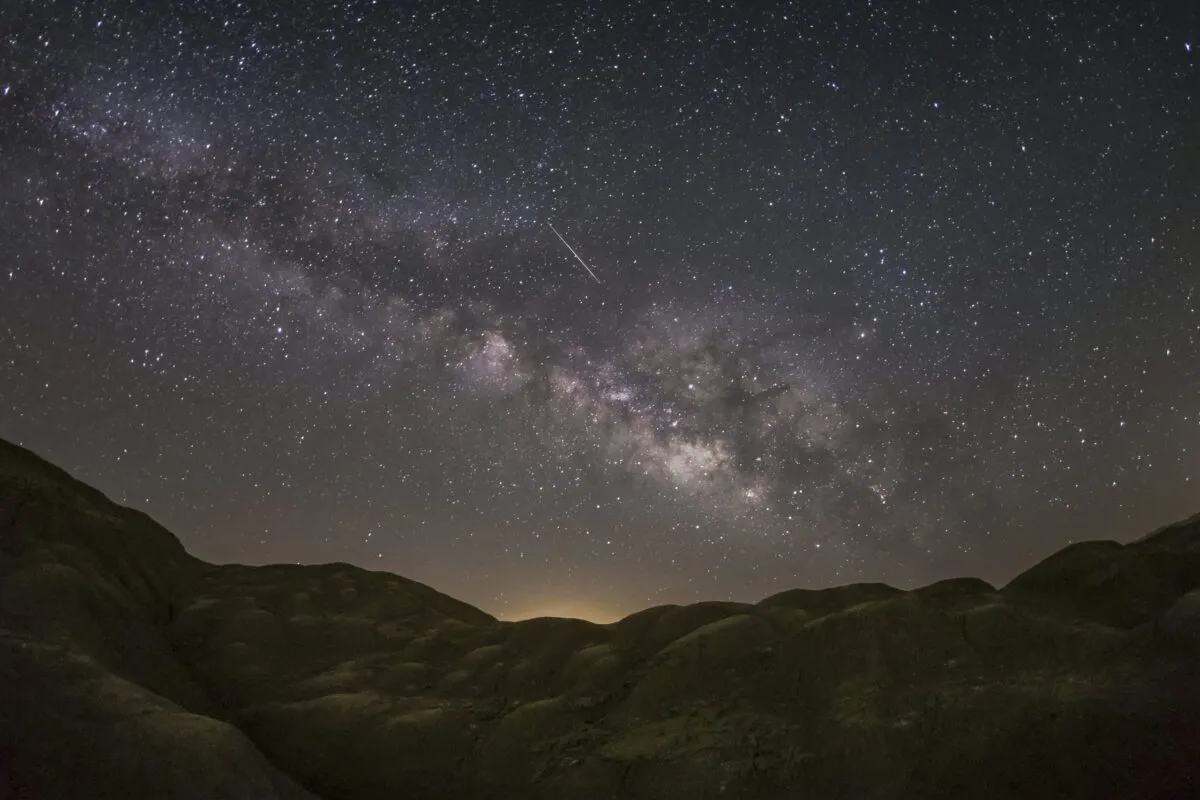
We experience peak activity of meteor showers when Earth is passing through the most dense section of the stream.
Meteor trails appear to come from a specific area of the sky, which is known as the 'radiant'. This slowly moves over the duration of the shower.
The constellation in which peak activity appears to occur is what gives each meteor shower its name.
You might have heard of the Perseid meteor shower, for example, which shows peak activity when the radiant is in the constellation Perseus.
Share your Lyrid meteor shower experiences and images with us by emailing contactus@skyatnightmagazine.com