November 2026 is set to be a great month for stargazers, offering long, dark nights packed with planetary dances, a stunning supermoon, deep-sky galaxies and meteor shower displays.
Whether you're bundling up for an early morning session or tracking objects in the night sky after sunset, here's your ultimate roundup of things to see in the sky in November 2026.
Mars and Jupiter's morning dance
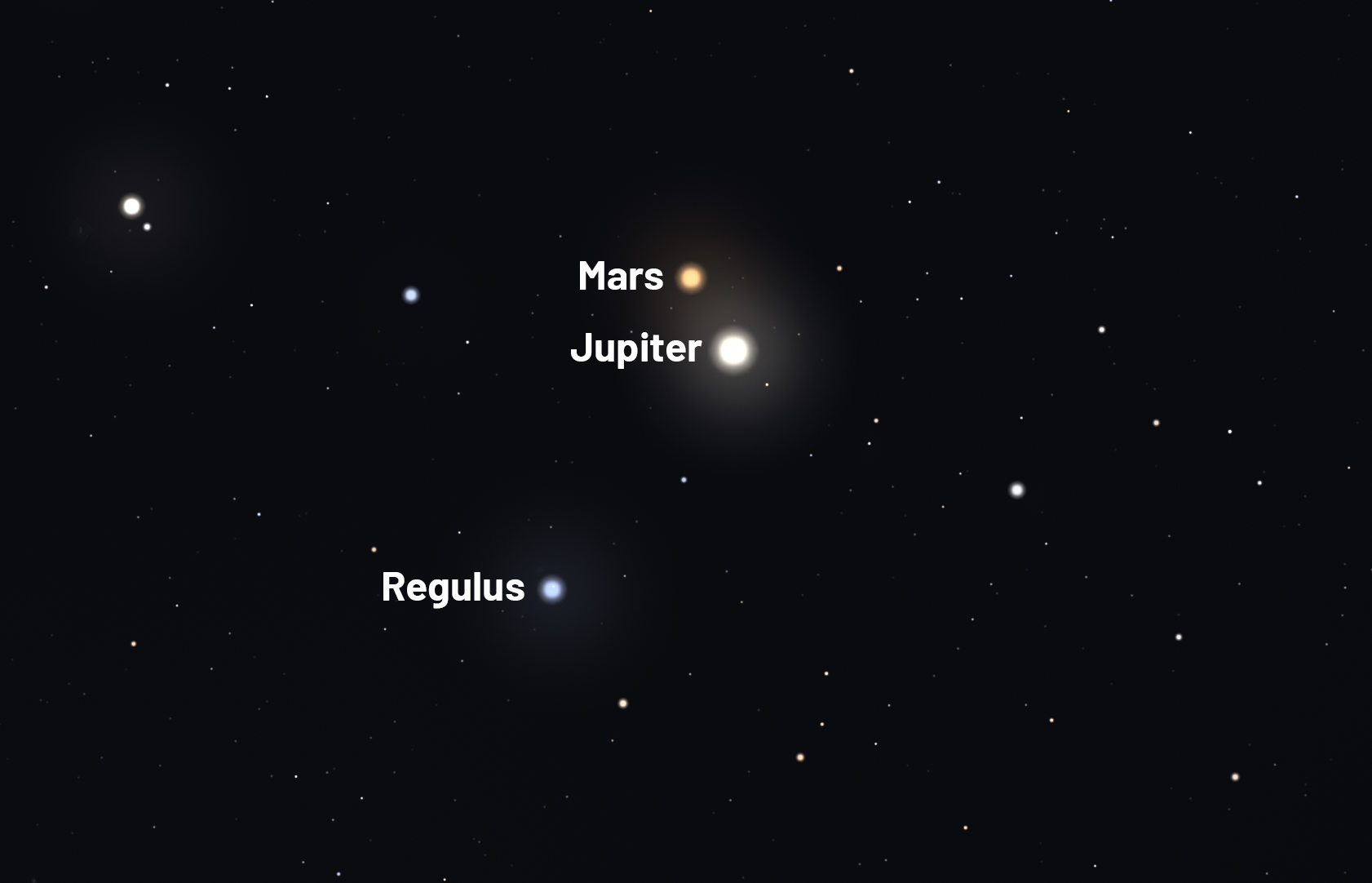
If you've been watching two bright stars in the southeast before sunrise over the past few weeks, what you've actually been looking at is Mars and Jupiter.
These two planets get closer and closer throughout November 2026, culminating in their closest approach on 14–17 November when Mars passes around a degree north of the gas giant.
At the start of November 2026, Mars and Jupiter form an impressive morning line-up with Regulus – the brightest star in Leo – and the Moon.
By mid-month, both planets brighten, Jupiter shining at mag. –2.0 and Mars at mag. +0.7, creating a dramatic, tight planet pairing that continues to change as we move into December 2026.
Read our full guide to observing Mars and Jupiter in November 2026.
Supermoon
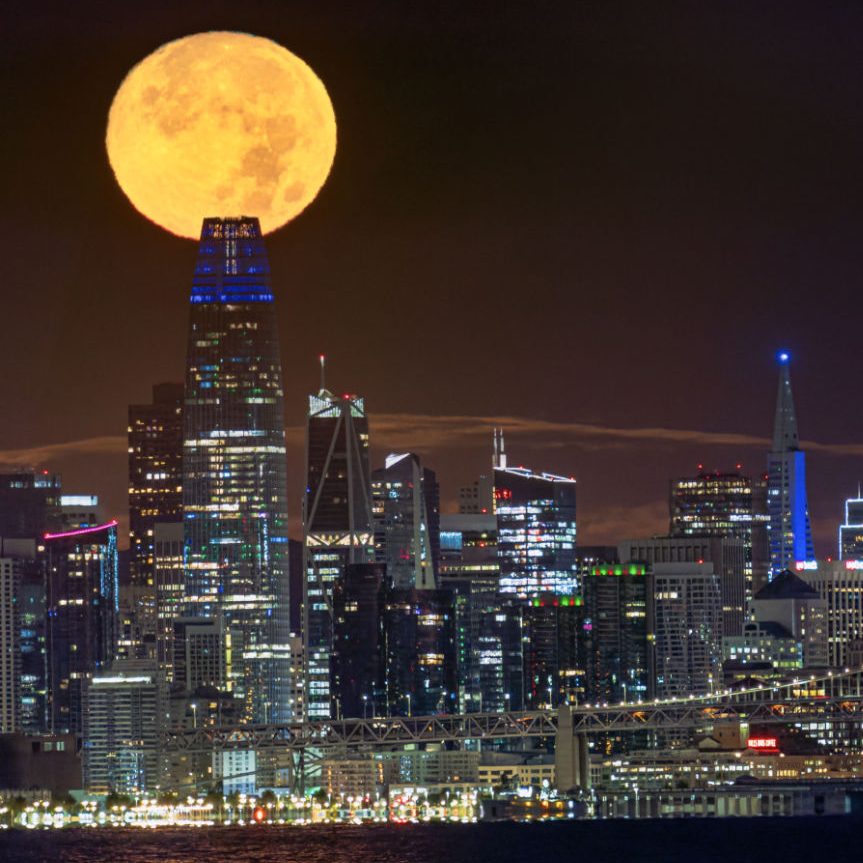
On 24 November 2026 the full Moon is a perigee full Moon, which means the Moon is full at the point in its orbit when it's closest to Earth.
As a result, the full Moon will technically appear bigger and brighter than other full Moon of the year, which is why it's informally known as a supermoon.
The November full Moon is the Beaver Moon, so-called because November is the time when beavers are most active, preparing for winter.
As a result, you're likely to hear the 24 November full Moon referred to as the Beaver Supermoon!
But don't restrict your Moongazing in November 2026 to the date of the supermoon.
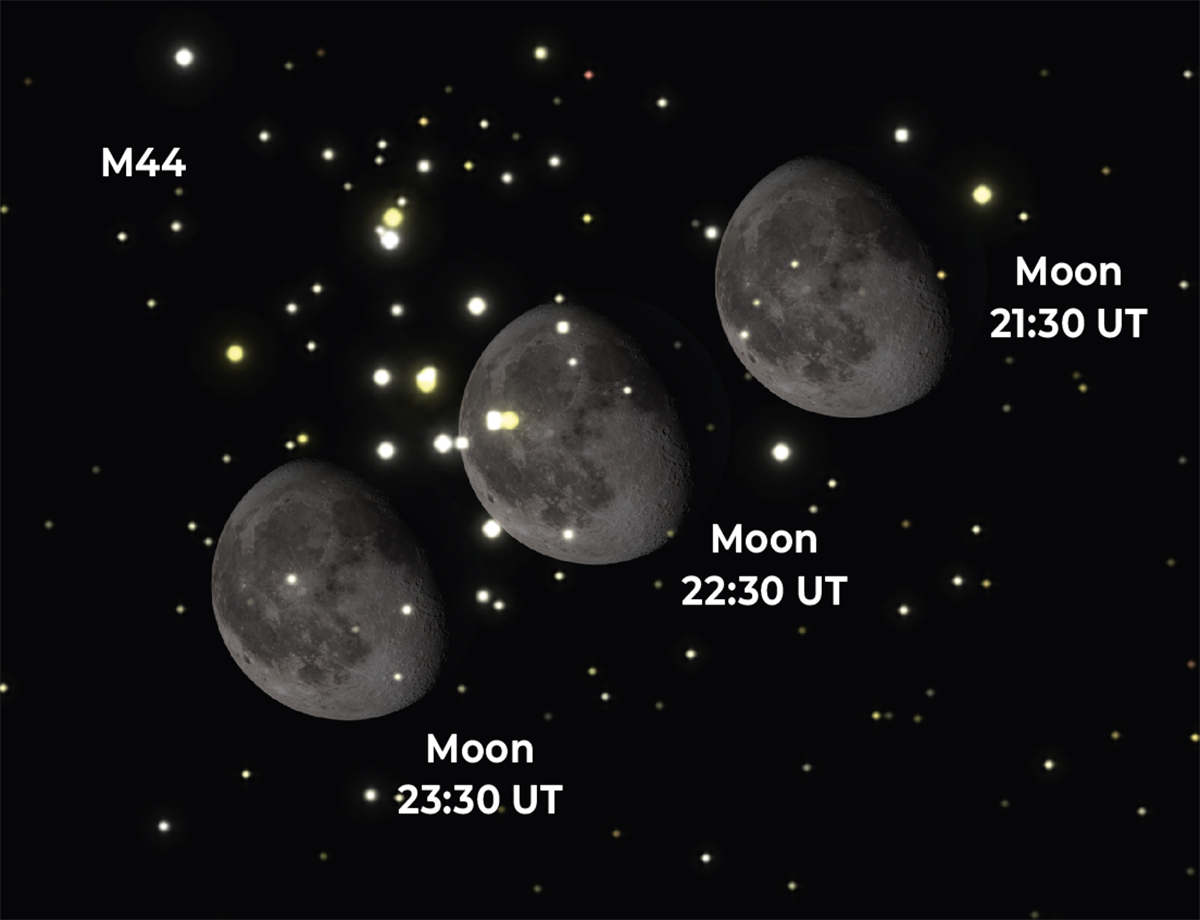
Earlier in the month, the Moon visits Venus and Spica in daylight on 7 November and passes in front of – or 'occults' – the star cluster known as the Beehive Cluster (M44) on 28 November.
Winter’s Orion constellation takes centre stage
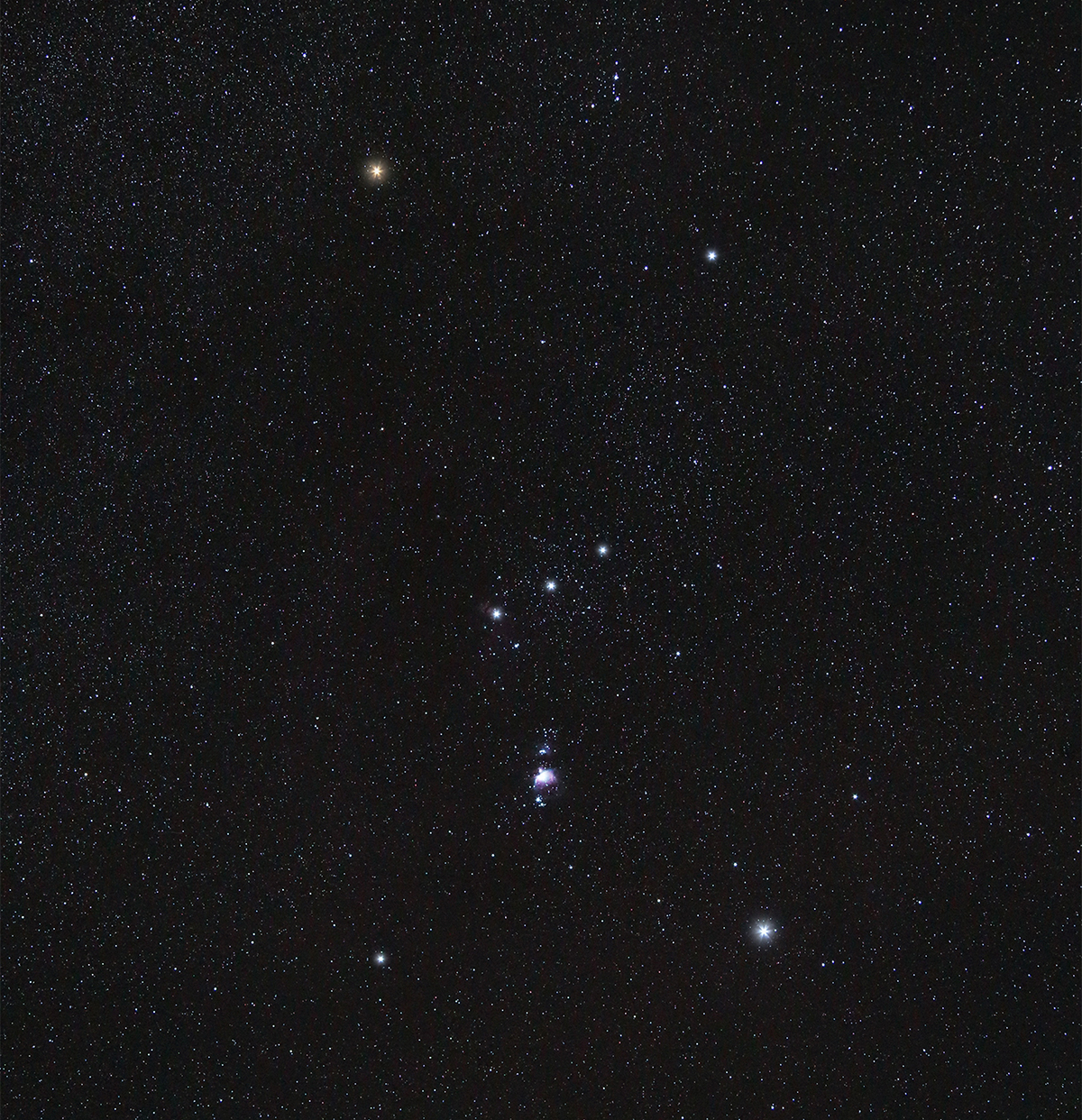
It may still be autumn, but the glorious winter constellation of Orion reaches peak altitude due south at 02:00 UT by mid-November.
Featuring the red giant star Betelgeuse and the three stars of Orion's Belt, it's a great constellation to see with the naked eye.
If you have binoculars or a telescope, seek out the famous Orion Nebula, which is one of the closest star-forming regions to Earth.
And as if that wasn't enough, to the east of Orion you'll find Mars and Jupiter together and Saturn setting to its west.
Uranus at opposition
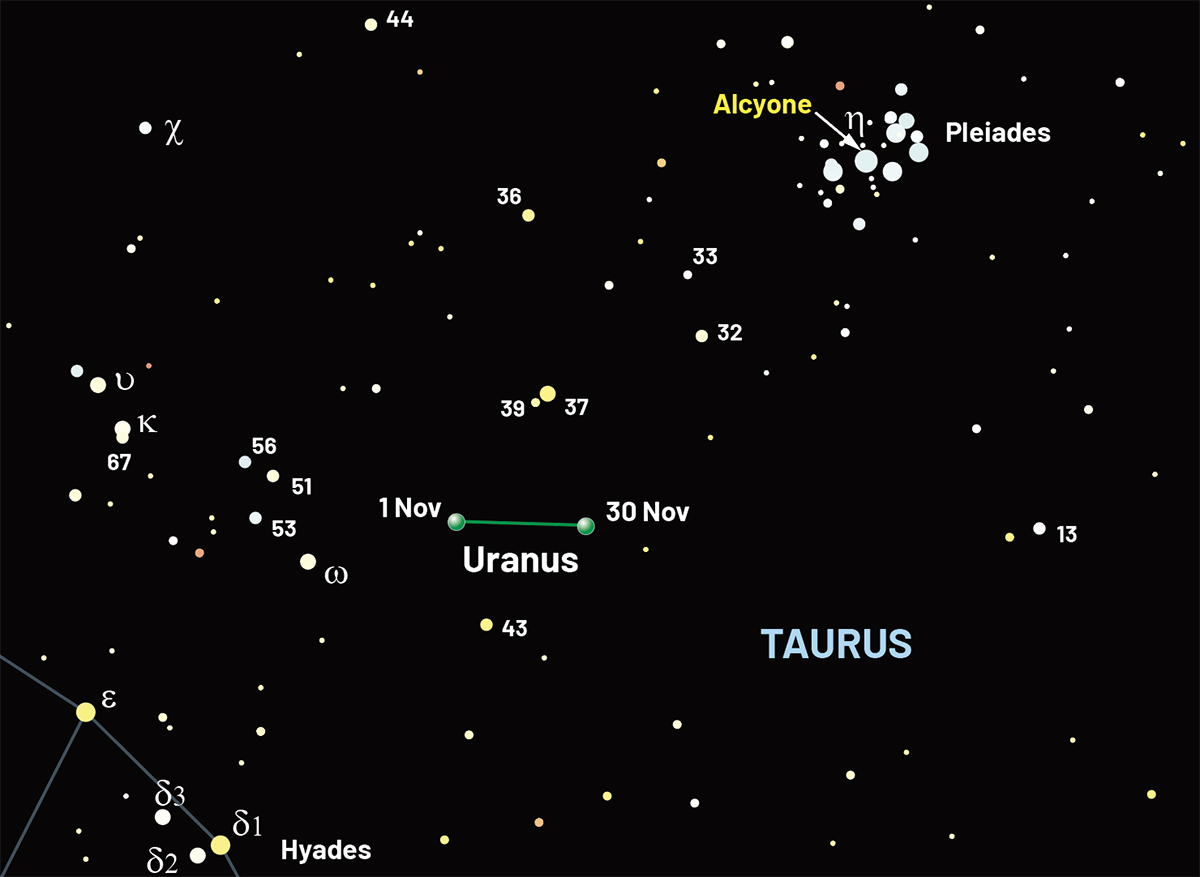
Uranus reaches opposition on 25 November, shining at magnitude +5.6 and located midway between the Pleiades and Hyades open clusters in Taurus, making it visible all night long.
For more advice on spotting the planet, read our full guide to observing Uranus in November 2026.
November meteor showers
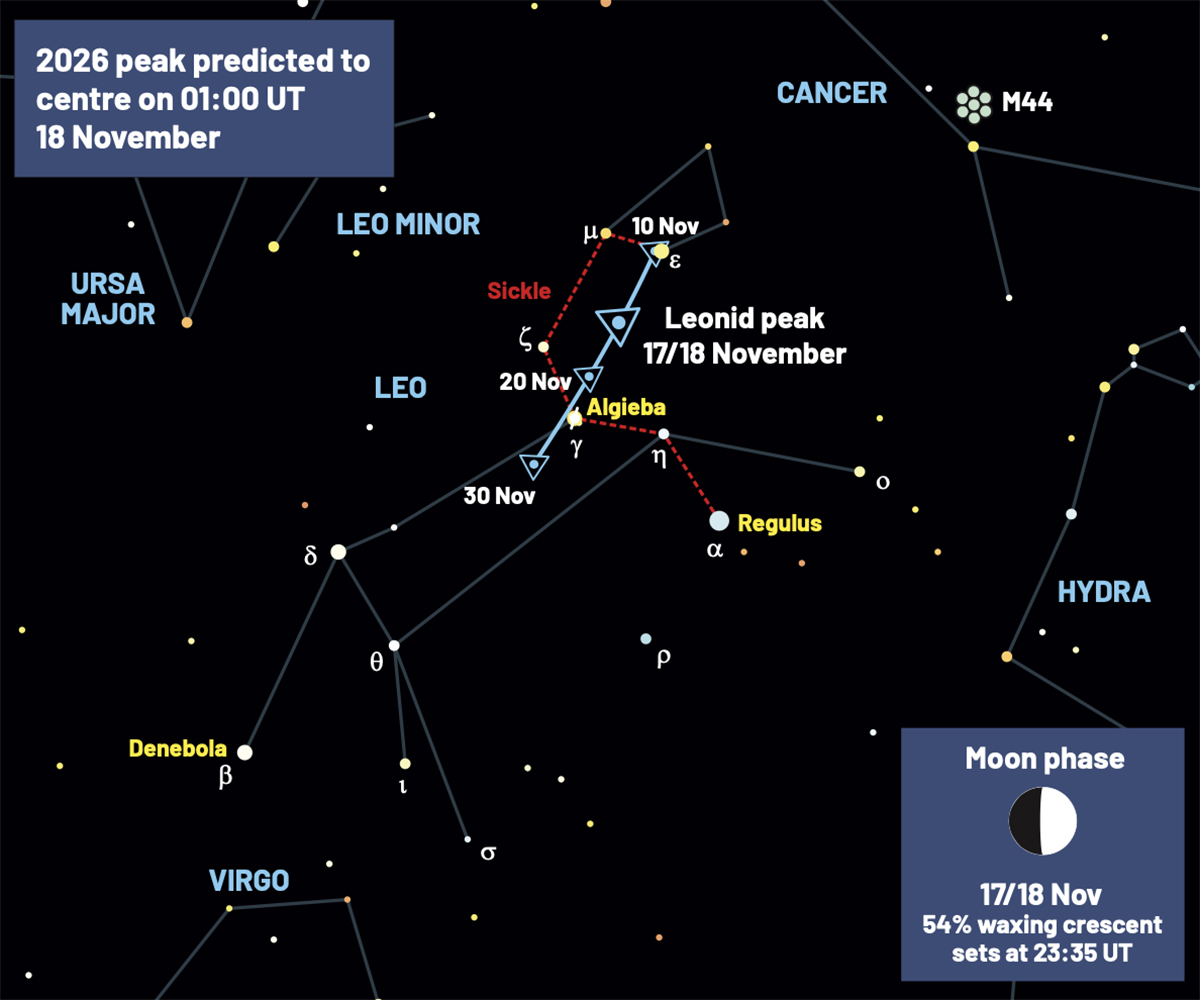
If you like spotting shooting stars, November has two notable meteor showers worth keeping an eye on.
The Northern Taurid meteor shower peaks around 12 November under favourable dark skies.
The Leonid meteor shower peaks on the night of 17/18 November. Once the Moon sets on that date, the rest of the night will be nice and dark for observing the Leonids' peak.
Deep-sky galaxy hunting
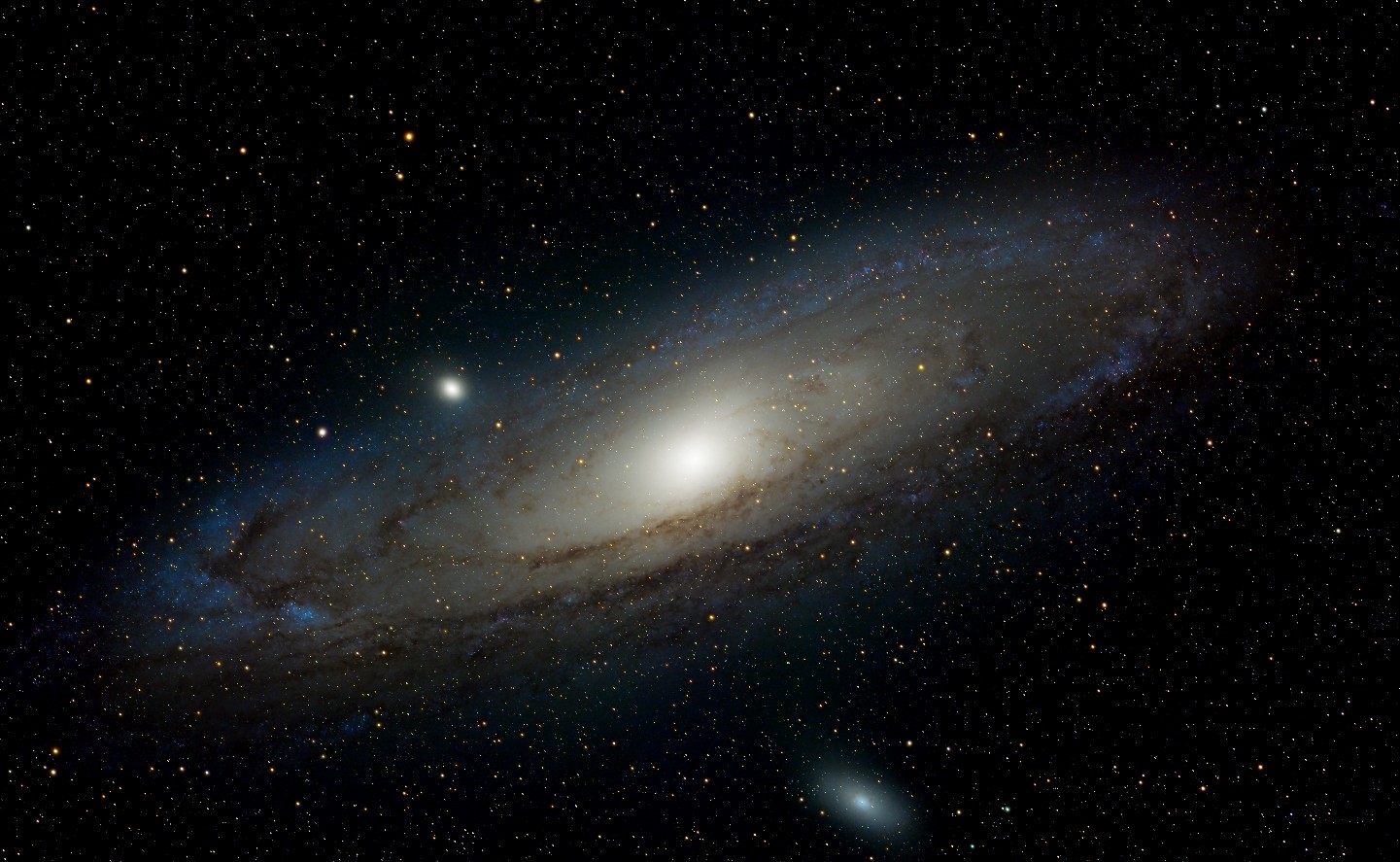
Because early November features the darkest skies before the full Moon arrives later in the month, it's a good time to observe galaxies through your telescope.
Head out to find the Andromeda Galaxy (M31), its two satellite companions M32 and M110 and the Triangulum Galaxy (M33).
M31 is easy to locate using the Great Square of Pegasus and Mirach, and it's even visible to the naked eye from a reasonably dark location.
Binoculars will bring out its elliptical core, while M32 and M110 can be spotted nearby as you worky your way towards M33.
Also in the sky this month
- 7 November – Venus, Spica and crescent Moon dawn conjunction: Under brightening dawn twilight and low in the southeast, Venus sits between star Spica and a thin crescent Moon.
- 16 November – The Lunar X and V on the Moon: The Lunar X and V are clair-obscur effects on the Moon caused by the play between light and shadow.
- 20 November – Mercury at greatest western elongation: See the planet very low in the southeast before sunrise. It will now begin to improve as a morning object.
- 28 November – Lunar occultation of the Beehive Cluster: See the Moon pass in front of the cluster from around 21:40 UTC.
Share your observations and images with us by emailing contactus@skyatnightmagazine.com