If you've been observing two bright stars in the southeast before sunrise recently, what you've actually been looking at is Mars and Jupiter, two planets that are absolutely beautiful right now.
The two planets will continue to get closer and closer together throughout November 2026, culminating in their closest approach on 14-17 November.
And they'll be visited by the Moon at the beginning and the start of the month, too.
Here's our guide to observing Mars, Jupiter and the Moon in November 2026.
More planet-spotting
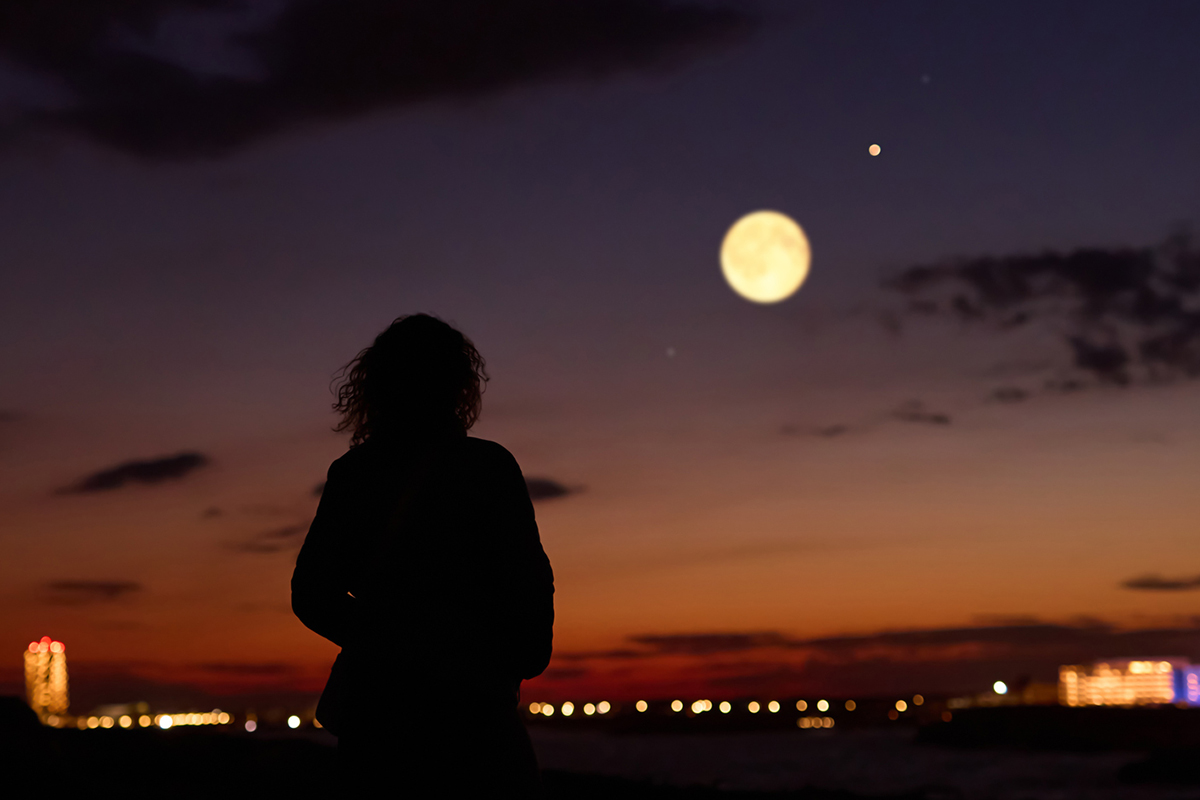
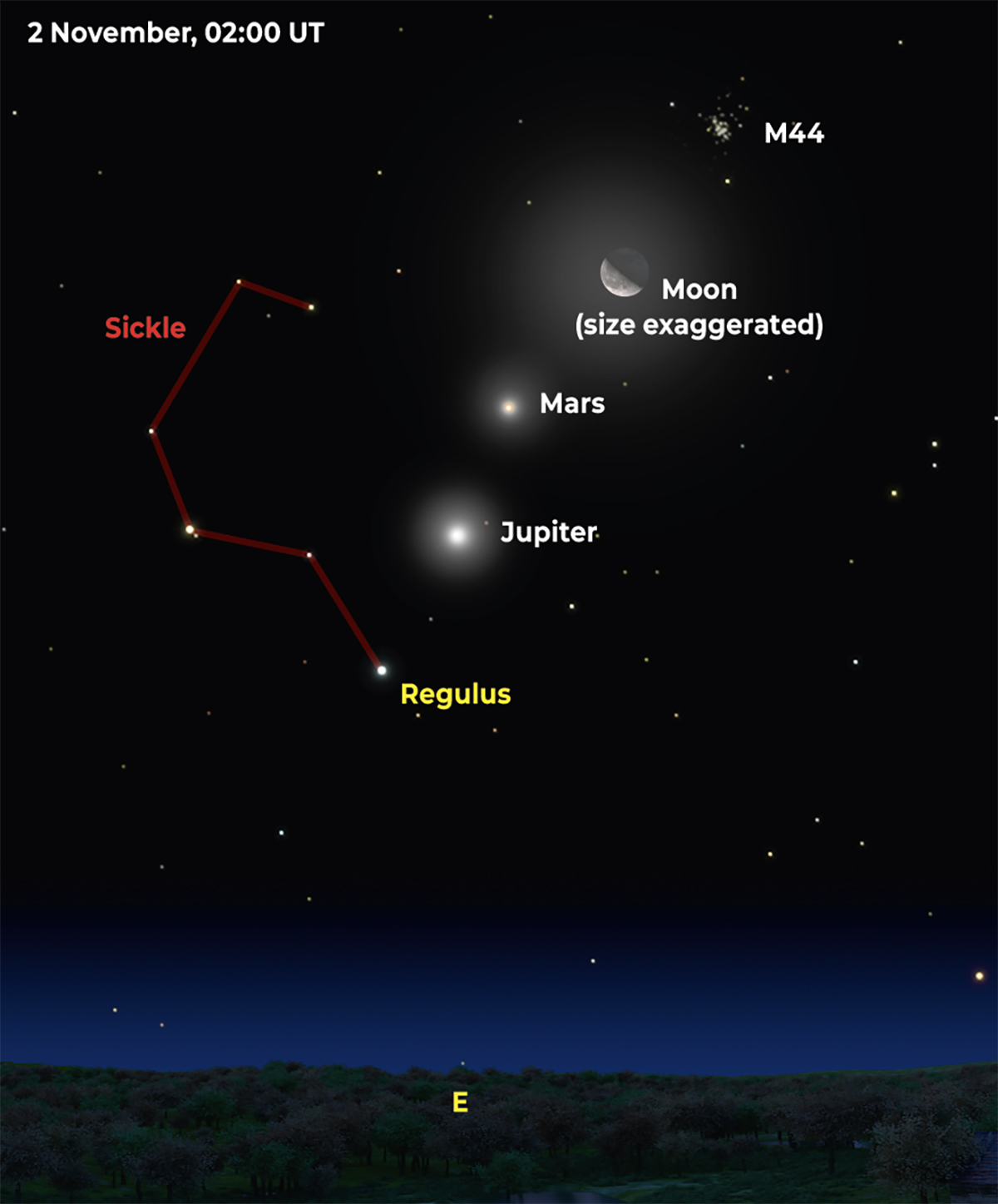
There’s been an impressive morning line-up building for a few weeks now, thanks mostly to Mars catching up with Jupiter.
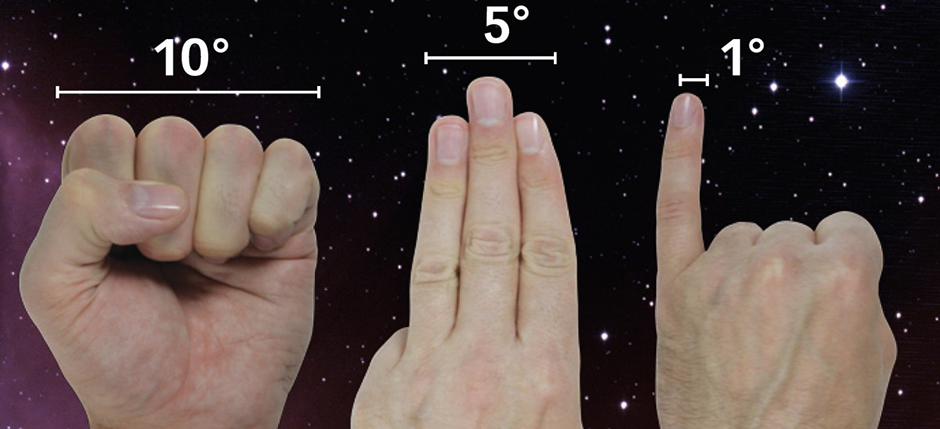
At the start of November 2026, the pair are 5.7° apart, which is about the width of your middle three fingers held together at arm's lenght.
Mars and Jupiter form – along with Regulus, the brightest star in the constellation Leo – the western half of an odd Orion’s Belt-type configuration.
That's to say, all three objects appear in a line, roughly equally spaced.
Here are the key dates.
On 1 November, the Moon will be in line with Mars and Jupiter.
With a 57%-lit gibbous phase, in the early hours the Moon will dominate the view, but Jupiter won’t be far behind, shining at mag. –1.9. Mars will be dimmer at mag. +0.9, with Regulus the dimmest at mag. +1.3.
Also on the morning of 1 November, the Moon sits 7.5° west of M44, the Beehive Cluster, occulting the cluster later that afternoon after the pair have set (as seen from the UK).
However, there’s a second, better chance to see a lunar occultation of this cluster on the night of 28 November.
On the morning of 2 November, the waning Moon, now 46% lit, will have slid closer to Mars, the line-up of Regulus, Jupiter, Mars and the Moon forming quite an impressive straight line, again of roughly equally spaced objects.
On the morning of 3 November, the Moon, now a 35%-lit crescent, will sit just south of the mid-point between Jupiter and Regulus.
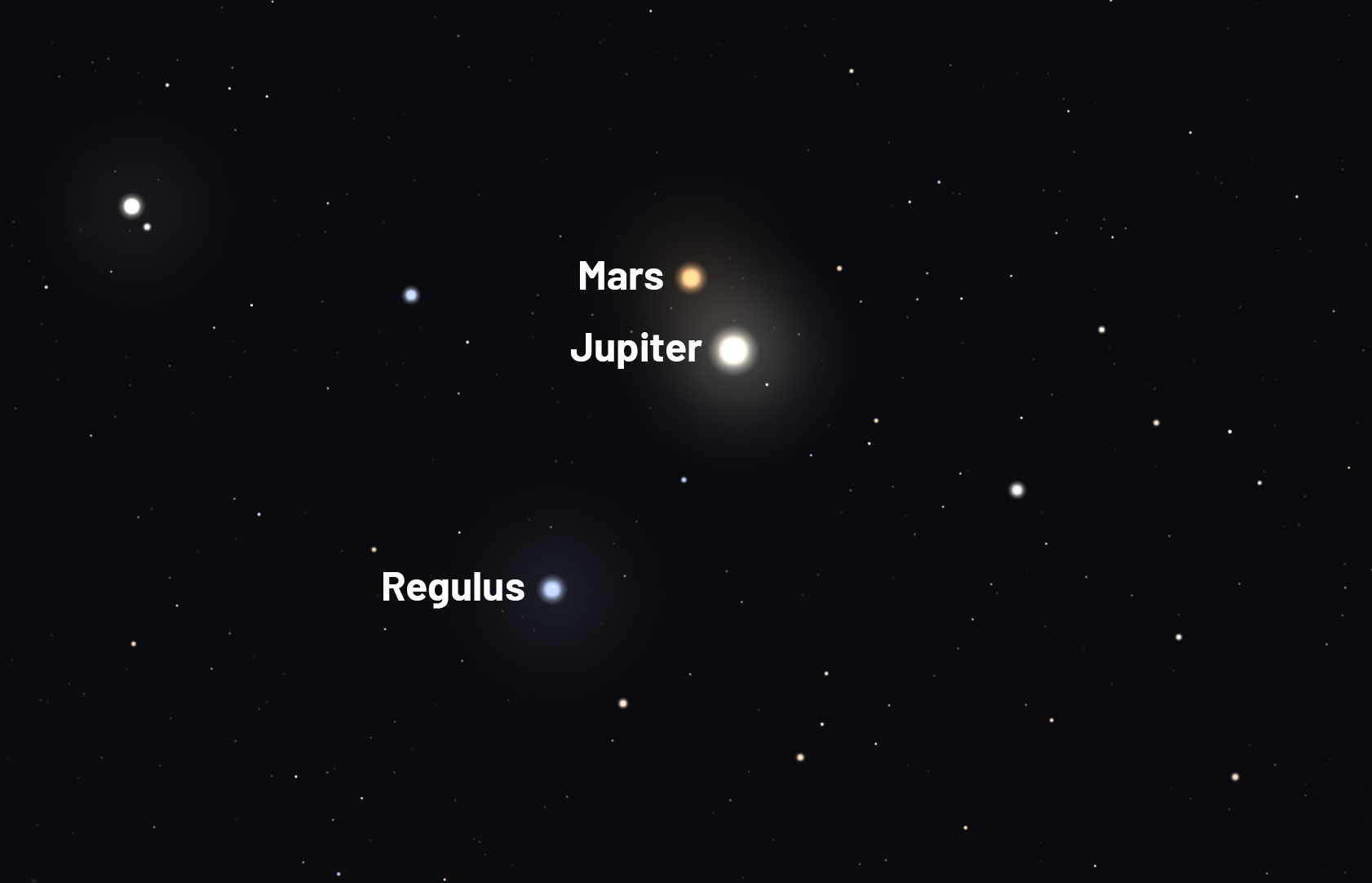
Mars and Jupiter's closest approach this month
On the morning of 4 November, as the Moon starts to move out of the group, Mars seizes the opportunity to slide ever closer to Jupiter, passing around a degree north of the gas giant on the mornings of 14–17 November.
On these dates, Mars will be a tad brighter at mag. +0.7. Jupiter too will have brightened, now shining to mag. –2.0, both increases adding to the drama of the scene.
The tight isosceles triangle formed mid-month changes shape quite rapidly over the days that follow, as Mars continues to slip east past Jupiter and closer to Regulus.
On the morning of 22 November, the triangle formed by all three objects fits inside a circle less than 4° across.
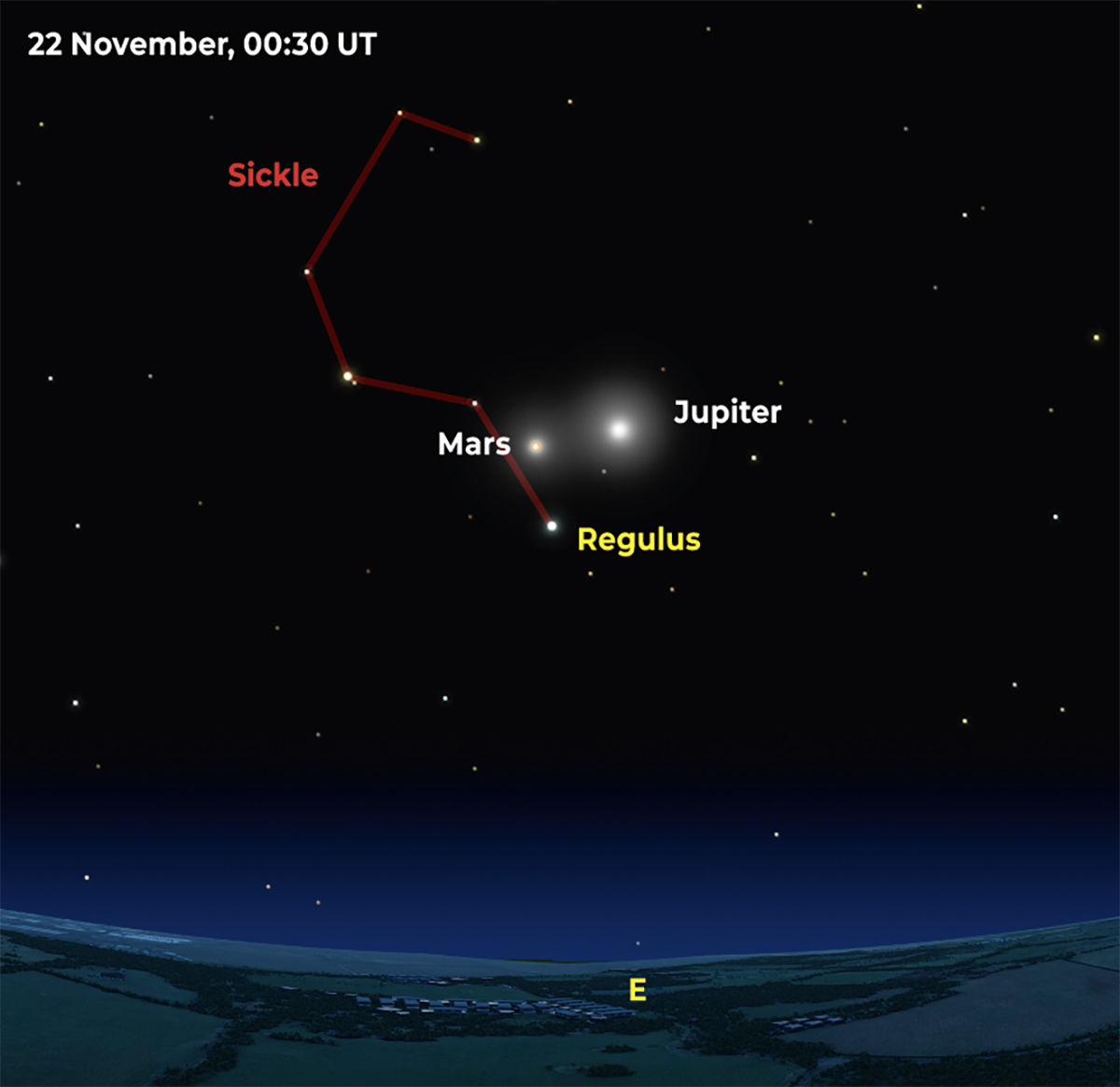
On 26 November, Mars has switched sides completely, now forming the narrow base of another isosceles triangle, this time with Regulus.
This fascinating pattern continues to entertain right into the beginning of December 2026, when it can be seen rising before midnight UT.
If you get clear mornings during November, try to capture a few photos of the arrangement.
If you compare your photos over the days, you’ll see just how much things change from one morning to the next.
Share your Mars, Jupiter and Moon images and observations with us by emailing contactus@skyatnightmagazine.com