
Full Moon fans are in for a treat in 2026, as we'll see a total of three supermoons over the coming 12 months.
In 2026 we'll also see lunar eclipses, a blue Moon and a Christmas Eve Cold Moon (more on these in our guide to 2026 full Moon highlights).
Here we'll focus on the supermoons, revealing exactly what a supermoon is, what makes them special (or not), plus dates and timings so you can see every single one.
For weekly stargazing advice, including moonrise and set times, sign up to the BBC Sky at Night Magazine e-newsletter.
2026 supermoons
The three supermoons in 2026 are the full Moons in January, November and December.
'Supermoon' is a term used to describe when the Moon is both full, and at – or near – the closest point in its orbit to Earth.
As well as this, each monthly full Moon throughout the year has acquired a number of informal nicknames over the centuries, each of which describes significant cultural or natural events occurring during the month in question.
Historically, these full Moon nicknames were a way for our ancestors to mark specific times of year, by naming them after annual rituals or seasonal changes.

The January 2026 supermoon is the Wolf Moon, rising on 3 January.
It's so-called because wolves don't hibernate during winter, and so the cold, quiet January months were notable for the distinct howling of wolves, while many other wild animals were resting.
On 24th November, the second of 2026's supermoons rises, and this full Moon is known as the Beaver Moon.
This nickname refers to heightened activity among beavers around November, building dams and stocking up on food before winter
On 24th December, we mark the final full Moon – and third and final supermoon – of 2026, this full Moon also known as the Cold Moon.
December marks the oncoming of the coldest, darkest months, so the Cold Moon rising would have been a reminder of the harsh weeks ahead.
In short, here are the dates for the 2026 supermoons:
- Wolf Moon – 3rd January
- Beaver Moon – 24th November
- Cold Moon – 24th December
Now let's take a look at why these full Moons are called supermoons, and what this actually means.

Supermoons explained
Putting the word 'super' in front of anything is immediately going to make it sound like something extraordinary.
In a way, the Moon is already 'super' enough as it is, and perhaps something we take for granted.
For those of us living in cities, it might even be something we don't always notice.
Perhaps it's too often hidden behind tall buildings, its thinner phases drowned out by clouds and light pollution.
A big, bright full Moon really is a startling sight, and if you manage to see one away from light pollution, it's amazing just how much light it provides.

It's easy to see why the full Moon would have commanded so much attention before the advent of mass artificial lighting.
This is likely why each monthly full Moon has acquired a nickname. Clearly, the full Moon has historically been of major cultural importance.
The Moon's orbit around Earth, and Earth's orbit around the Sun, is what causes the phases of the Moon.
Our Moon is tidally locked with our planet, which means the same side of the Moon always faces Earth.
And throughout the course of a month, sunlight falls on different portions of the Moon, taking it from a thin crescent Moon to a large gibbous Moon and, eventually, a full Moon.
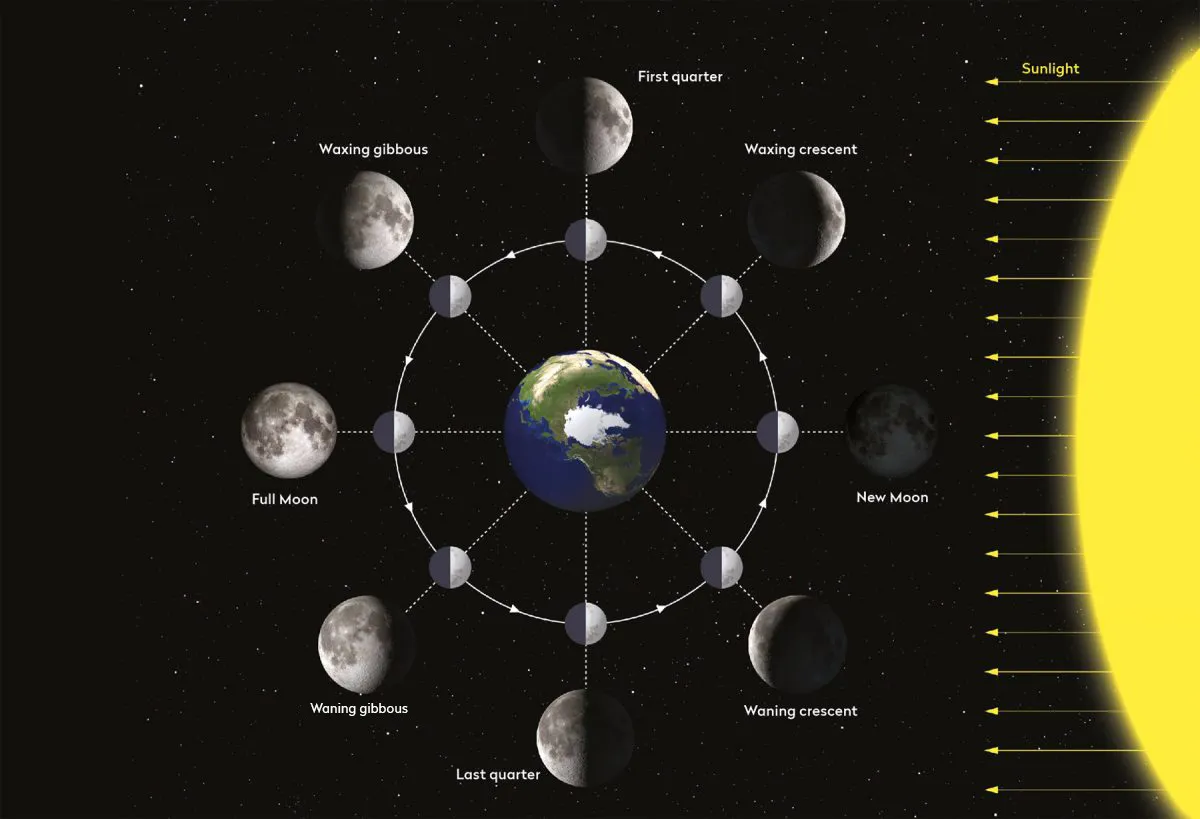
Supermoons occur at full Moon when the Moon is closest to Earth in its orbit.
The Moon doesn't orbit Earth in a perfect circle; instead its orbit is elliptical, or slightly egg-shaped.
That means sometimes the Moon is closest to Earth – known as perigee – and sometimes the Moon is farthest from Earth – known as apogee.
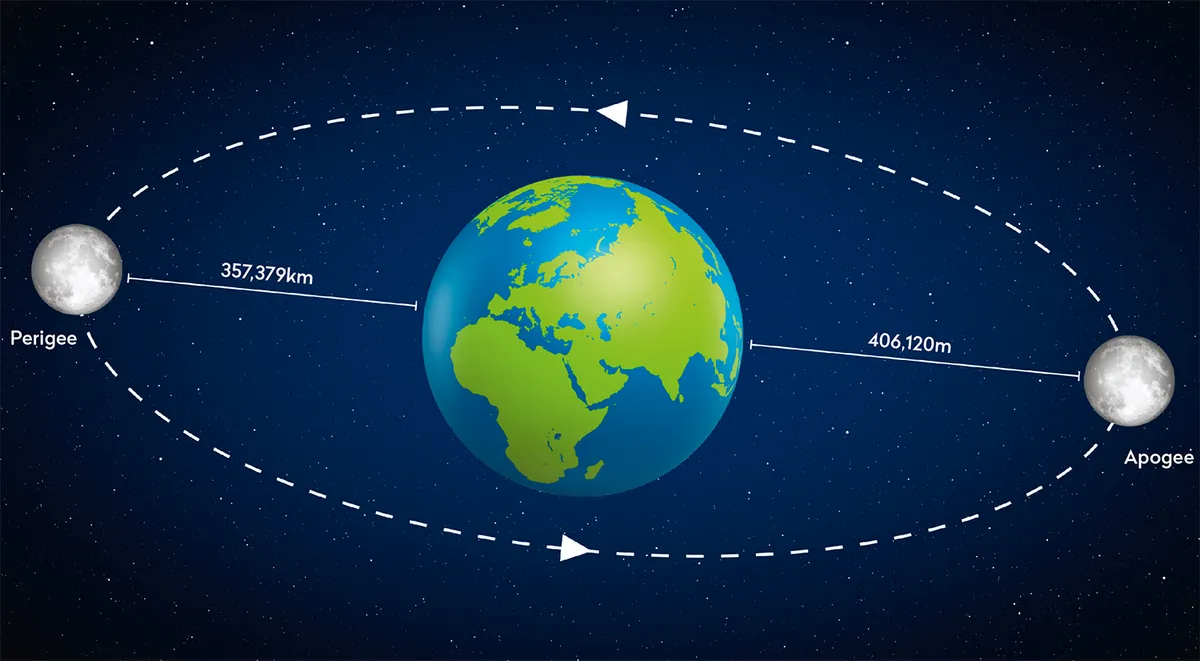
As you can see from the diagram above, this means that each full Moon isn't exactly the same distance from Earth.
When the Moon is full and at (or close to) perigee, we call it a perigee Moon.
Another important astronomical term is 'syzygy' (pronounced SIZ-eh-gee), and that means three or more celestial bodies in alignment.
So a full Moon at perigee is a 'perigee syzygy Moon', which is also known as a supermoon.

Supermoons – worth the hype?
So are supermoons really worth all the fuss? It depends who you ask.
Many seasoned practical astronomers will tell you that a supermoon isn't anything to get worked up about.
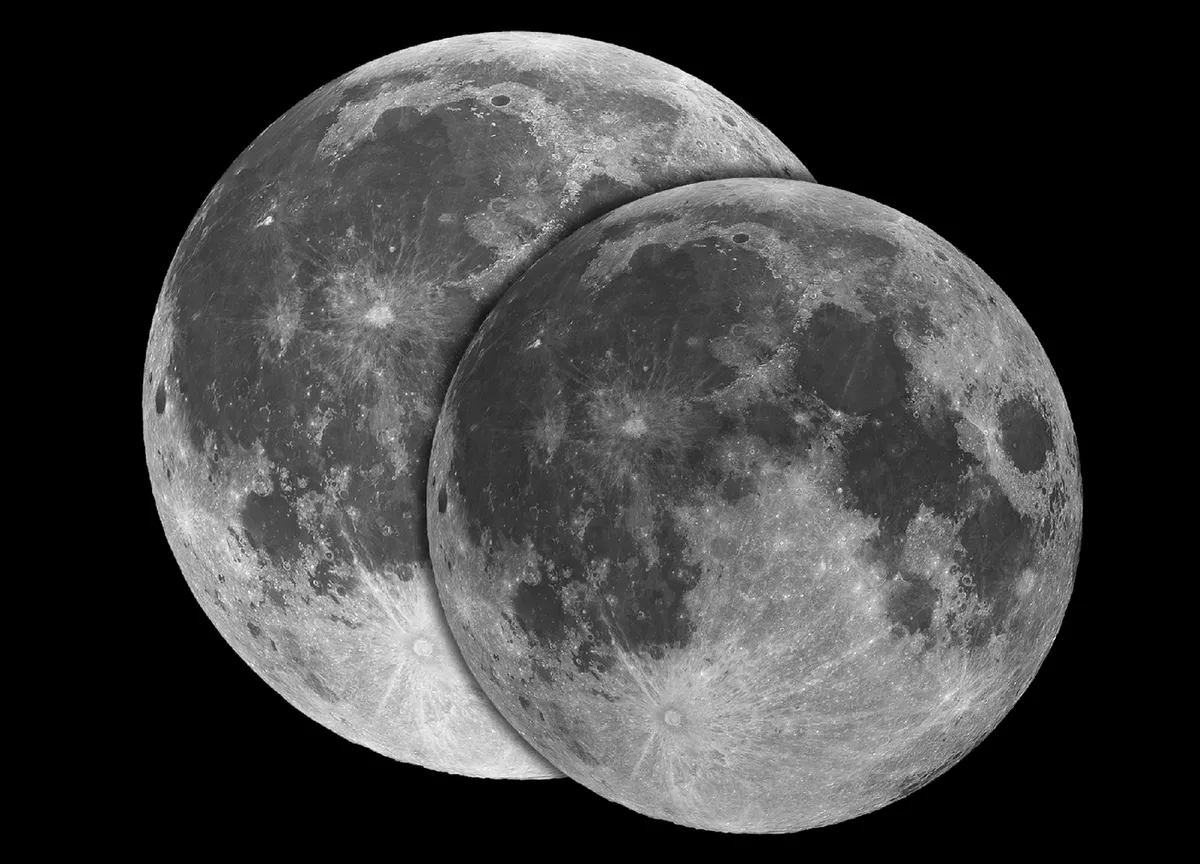
The difference in size between a supermoon and a 'regular' full Moon the month before or after is imperceptible to the naked eye.
But a photo showing the Moon at perigee versus the Moon at apogee does reveal the difference, as you can see below.
The other disadvantage of a bright full Moon is that its glare washes out the sky, making other celestial objects harder to see.
So if you want to observe a meteor shower or look at planets or deep-sky objects like galaxies through your telescope, you'll probably regard a full Moon as a nuisance.
Yet others love the bright, naked-eye spectacle of a full Moon.
It goes without saying that the full Moon is by far the brightest, easiest thing to see in the night sky. It truly is a mesmerising sight.
And even if a supermoon doesn't really appear any bigger in the sky than a regular full Moon, it's still a great excuse to get out and looking up at the night sky.
It's perfect even for beginners and kids, because it's easy to find, easy to see and immediately spectacular.
For more advice, read our guide on how to make the most of a full Moon or supermoon.
January 2026 supermoon

The January 2026 supermoon rises around sunset on 3 January.
It rises in the northeast just after sunset and sets in the northwest just before dawn.
The January 2026 supermoon will appear close to the planet Jupiter, as well as Castor and Pollux, the twin stars of Gemini.
See if you can spot Jupiter below the Wolf Moon supermoon.
You can then observe Jupiter through a telescope over the coming evenings as the Moon moves out of the way.
The gas giant planet is approaching opposition on 10 January 2026, which is the best time to observe it.
November 2026 supermoon

The November 2026 supermoon rises in the northeast before sunset on 24th November, then sets in the southwest before sunrise.
By November, the evenings will really be drawing in, so it will be nighttime by the time the Moon is above the horizon.
When the full Moon rises, it will be close to two beautiful star clusters: the Pleiades and the Hyades.
The Pleiades is a prominent star cluster in the winter night sky, well-known for its beautiful blue stars and surrounding blue glow.
It's a fantastic target to explore with binoculars, and you'll easily see it even through a modest pair.
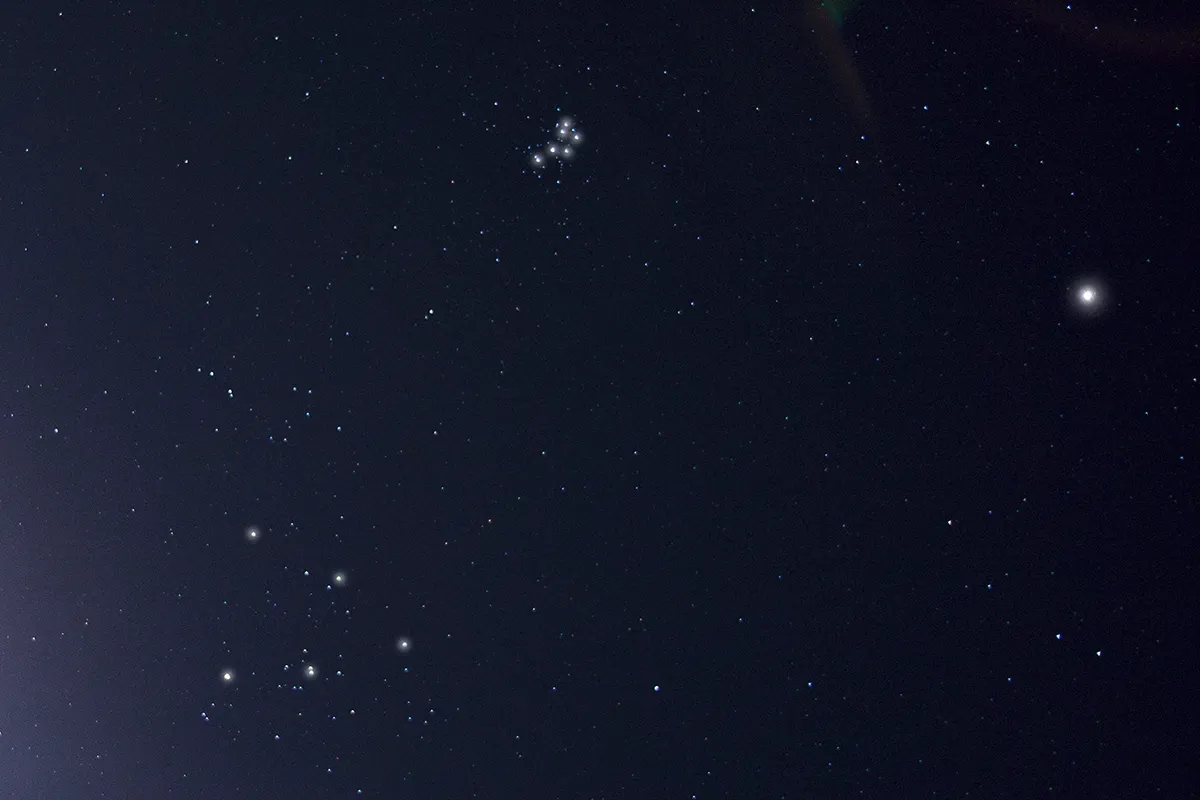
The Hyades is another famous star cluster, appearing like a sideways 'V' shape punctuated by bright orangey-red star Aldebaran.
Aldebaran is the brightest star in the constellation Taurus, and marks the 'red eye' of the bull.
The November 2026 supermoon being close to these two clusters will make for a beautiful observing – and photographic – opportunity.
As the full Moon climbs higher and midnight approaches, look to the east and you'll see Jupiter and Mars climbing above the horizon.
Meanwhile, the constellation Orion will be in the southeast, a sign that we're truly approaching the depths of the winter stargazing season.
December 2026 supermoon

The last supermoon of 2026 rises on 24 December – Christmas Eve – in the northeast just before sunset, then sets in the northwest as dawn is breaking.
This supermoon will climb much higher than the previous two, and as it does so, it will be joined by some of the best things you can see in the winter night sky.
The December supermoon will be located to the west (left) of the constellation Orion, and will form a triangle with stars Castor and Pollux.
Orion is one of the best-known winter constellations, and in December is easily seen before midnight.

As the full Moon climbs higher towards the southeast and midnight is approaching, low in the east you'll see Jupiter and Mars.
This will make for a wonderful evening of stargazing, the supermoon surrounded by some of the most beautiful winter jewels the Northern Hemisphere night sky has to offer.
Share your stargazing adventures and images with us by emailing contactus@skyatnightmagazine.com

