
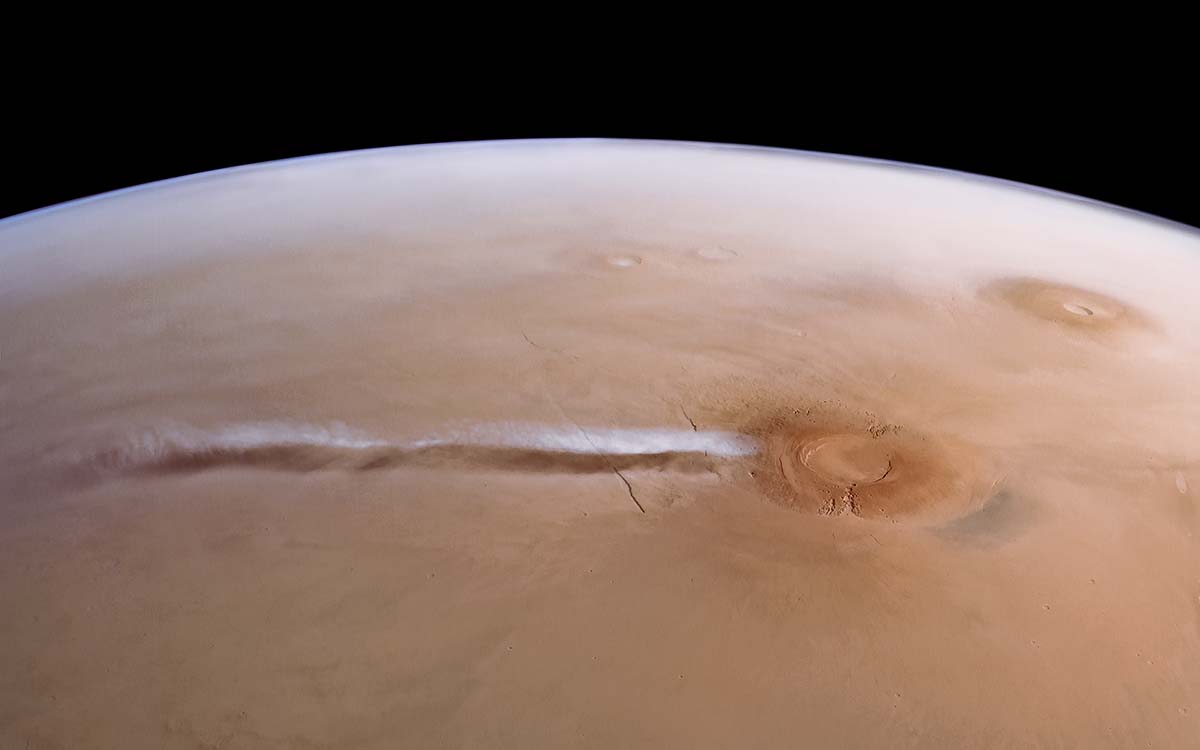
There's a strange cloud that emerges on Mars every year in the spring and summer of the planet's southern hemisphere.
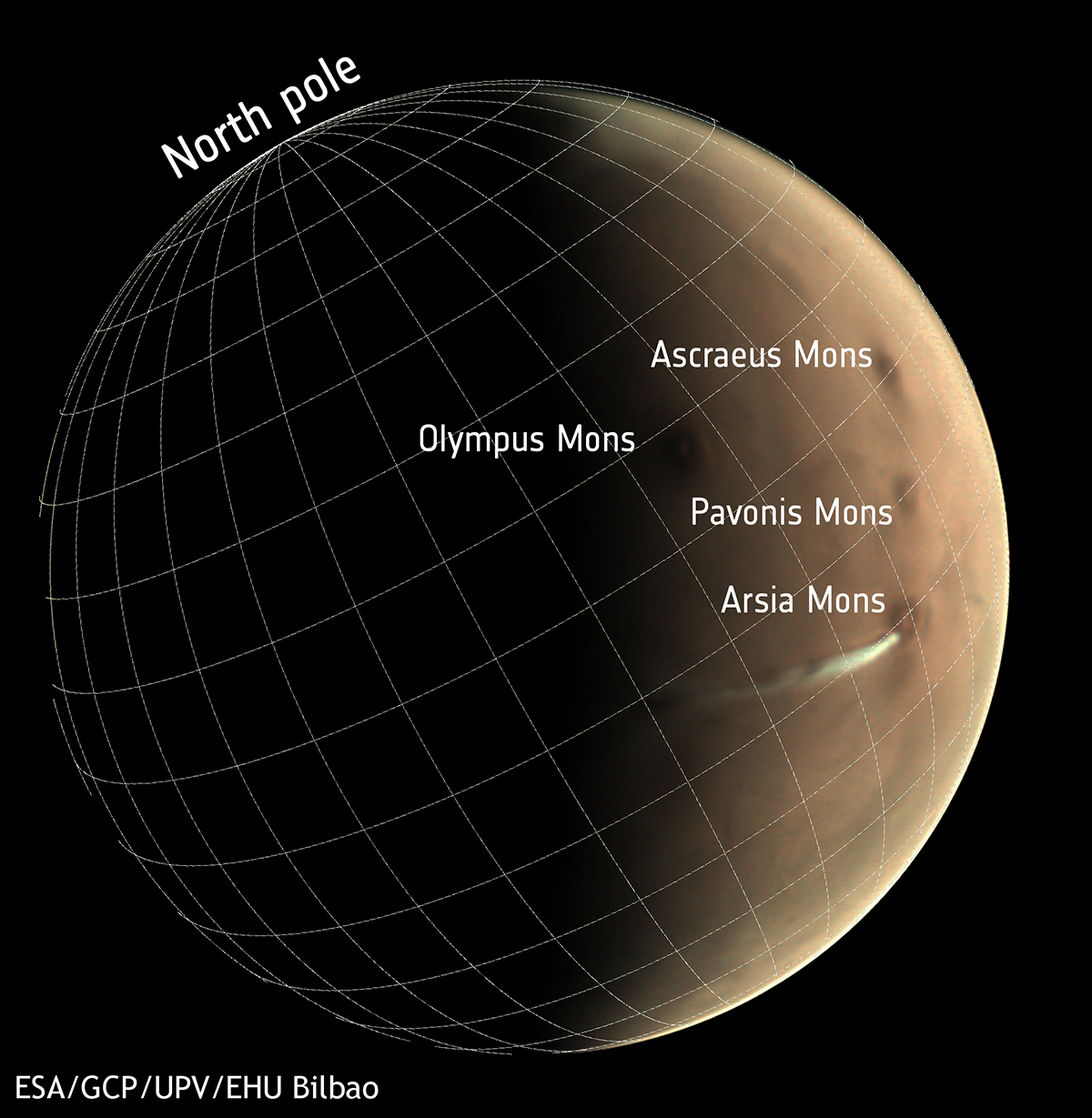
Known as the Arsia Mons Elongated Cloud, it stretches nearly twice the length of the UK, measuring a whopping 1,800km (1,120 miles) long.
Formed from water ice, it emerges near the Arsia Mons volcano, grows and fades on a daily basis. This happens every morning for several months.
Planetary scientists have been baffled as to what's causing this strange cloud to form on Mars, some even arguing that it may require an 'exotic' form of physics to explain it.
But a team of scientists think they've solved the mystery.
More Mars weirdness
The discovery – and hitting a brick wall
The Arsia Mons Elongated Cloud was first seen by the European Space Agency's Mars Express spacecraft, which orbits the planet, in 2018.
Mars Express has observed the cloud repeatedly ever since, giving scientists the chance to explore its evolution, dynamics and behaviour.
These observations have revealed the cloud to be an 'orographic' cloud, which is a type of cloud we see on Earth, forming when wind flows past a craggy volcano or mountain.
But when scientists used computer models to simulate the cloud's formation, they couldn't get the simulations to match what they were seeing in the Mars Express images.
"To create the Arsia Mons Elongated Cloud in our modelling, we found that we needed to include some exotic physics… physics that, while included in textbooks, is treated as theoretical and usually thought not to happen in nature. It certainly hasn’t been seen in action before," says Jorge Hernández-Bernal of LMD/CNRS/Sorbonne Université in Paris, lead author of the study.
"Once we included this physics in our simulations, the Arsia Mons Elongated Cloud emerged just as we hoped."
Why the Arsia Mons Elongated Cloud is so strange
Clouds form when moist air cools, causing water vapour to change into condensed liquid or ice crystals.
The vapour clings to other elements in the atmosphere like salt, soot or dust. On Mars, it's thought that the cloud-forming vapours cling to dust.
"For the Arsia Mons Elongated Cloud, it seems that cloud formation takes place without needing any of this 'stuff’'" says Jorge.
"Water vapour turns directly into icy cloud particles without any middle step. It’s akin to droplets of condensation appearing in the middle of a room, rather than on a window.
"We call this homogeneous nucleation, and we’ve never seen it before in a planetary atmosphere. It’s wholly unexpected."
So what's going on?
Scientists say this process would require "exceptional circumstances" such as humidity levels over 100,000 times those usually seen on Earth.
"We’ve not seen these conditions on Mars before, but our finding now strongly suggests that the planet’s humidity can indeed reach these extreme levels," says Jorge.
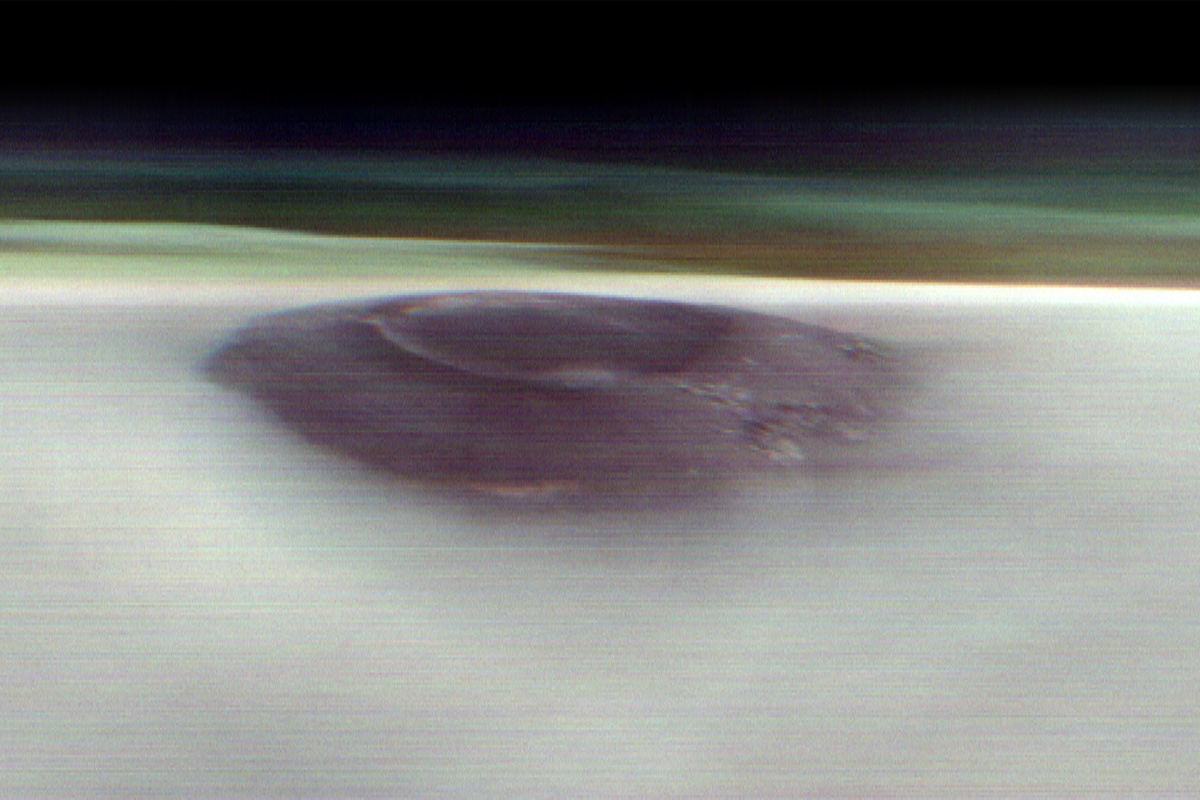
The team found found that the Arsia Mons Elongated Cloud sits such a position that Mars’s thin atmosphere and the height of the Arsia Mons volcano together produce the conditions needed to see the rare process in action.
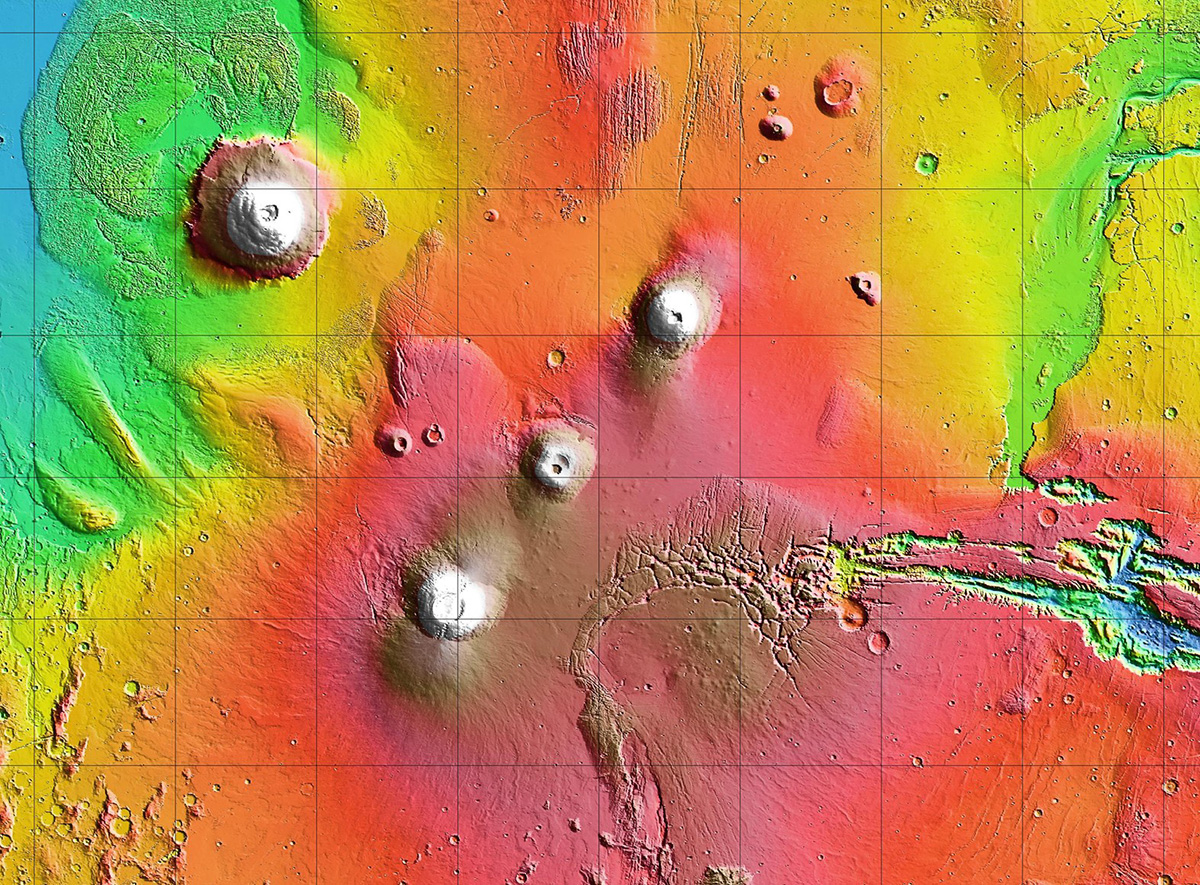
As winds flow past Arsia Mons, the volcano’s enormous size generates a powerful wave that pushes the moist air upwards very quickly: several kilometres upwards in a few minutes.
That causes rapid cooling, causing temperatures to fall by 30 degrees in just 10 minutes.
The water vapour freezes directly into cloud particles, forming the Arsia Mons Elongated Cloud.

