
A Near Earth Asteroid named 2026 JH2 is going to fly past planet Earth tonight, 18 May 2026, briefly making it bright enough to be visible in the night sky with small telescopes.
Asteroid 2026 JH2 was discovered on 10 May 2026 by astronomers at the Mt. Lemmon Survey in Arizona, USA.
But how unusual is this, and is it dangerous? And will we really be able to see it?
Dr Mark Norris is a Senior Lecturer in Astronomy at the University of Lancashire in the UK. Here, he answers some of the most-asked questions about 2026 JH2.
More on asteroids


How unusual is the close approach of 2026JH2?
The asteroid 2026JH2 is making an exceptionally close pass by Earth in astronomical terms. It will come within around a quarter of the distance to the Moon, placing it only about two-and-a-half times farther away than our geostationary satellites.
Encounters this close are genuinely rare. Only five known asteroids are expected to pass inside the Moon’s orbit over the next year, and just one is predicted to come even closer to Earth than this object."
Is 2026JH2 dangerous?
"While 2026JH2 poses absolutely no impact risk to Earth, it is still classified as a potentially hazardous object because of its size and proximity. Determining the exact size of asteroids can be difficult, but current estimates suggest it is likely a few tens of metres across.
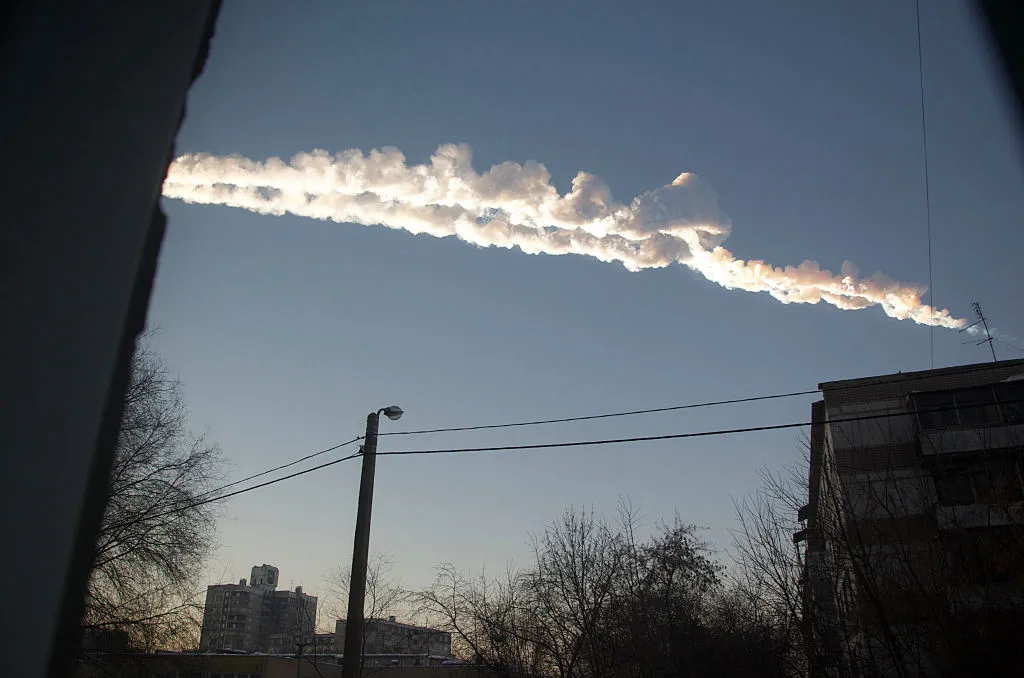
"If it entered Earth’s atmosphere, an asteroid of this scale would still be capable of causing serious regional damage.
"For example, the Chelyabinsk meteor that exploded over Russia in 2013 was thought to be of a similar size, and despite breaking apart before reaching the ground, it damaged buildings across hundreds of square miles."
Will we be able to see 2026 JH2?
"The asteroid will brighten significantly as it approaches Earth. Unfortunately for observers in the Northern Hemisphere, it will transition into southern skies around sunset on 18 of May 2026, just as it becomes easiest to observe.
"It won’t be visible to the naked eye, so telescope users in the Southern Hemisphere should have the best chance of seeing it when it is at its closest, particularly if they use motorised tracking systems.
"2026 JH2 will appear to move extremely quickly across the sky, roughly a third of a degree per minute, so without tracking it would streak straight through a telescope’s field of view in seconds."
If you manage to observe or photograph asteroid 2026 JH2, share your observations and images with us by emailing contactus@skyatnightmagazine.com

