
August 2026 is proving to be a spectacular month for astronomy.
Following the 12 August total solar eclipse across Spain, which gave viewers in the rest of Europe, the UK and North America a beautiful partial solar eclipse (plus the peak of the Perseid meteor shower), the summer 2026 stargazing calendar culminates this week with a dramatic lunar event: a deep partial lunar eclipse.
Here's everything you need to know to view this week's Blood Moon eclipse on the night of 27/28 August 2026.
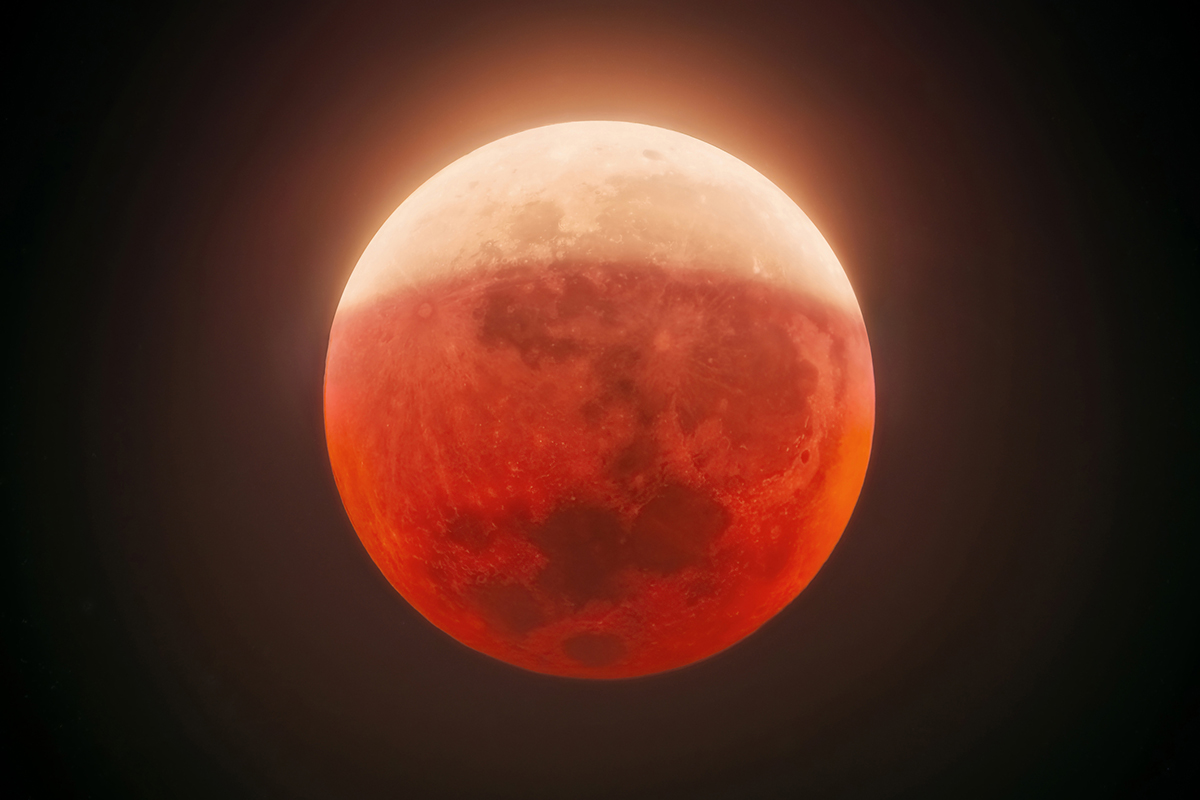
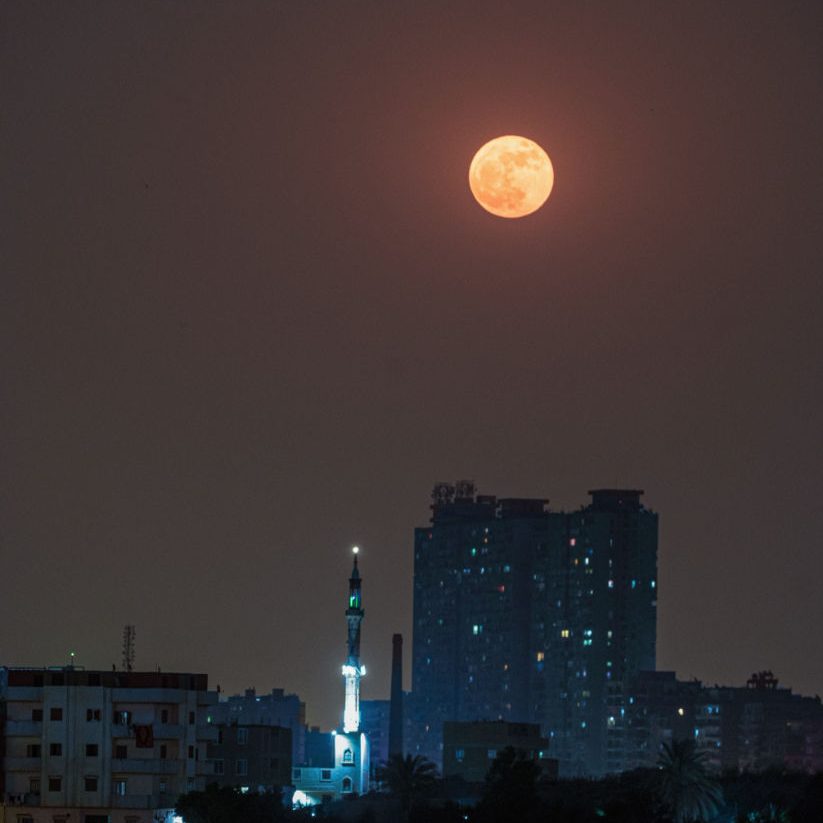
It coincides with the Sturgeon Moon
Lunar eclipses occur at full Moon, and August's full Moon is known as the Sturgeon Moon.
The nickname originated in North America, marking the time of year when sturgeon fish were historically most plentiful in the Great Lakes.
Other traditional names for August's full Moon include the Lynx Moon and the Grain Moon.
Full Moon nicknames don't have any bearing on what that Moon will look like. Some observers may look up at June's Strawberry Moon, for example, expecting it to be redder than usual – like a strawberry?! – when in fact that nickname is a reference to June being the time when wild strawberries are normally abundant.
However, this August 2026 Sturgeon Moon will in fact be redder than usual...
Earth’s shadow will turn the Moon red
A lunar eclipse occurs when the Sun, Earth and the Moon align, causing Earth to block sunlight from hitting the lunar surface.
But Earth doesn't stop all of the Sun's light from hitting the Moon.
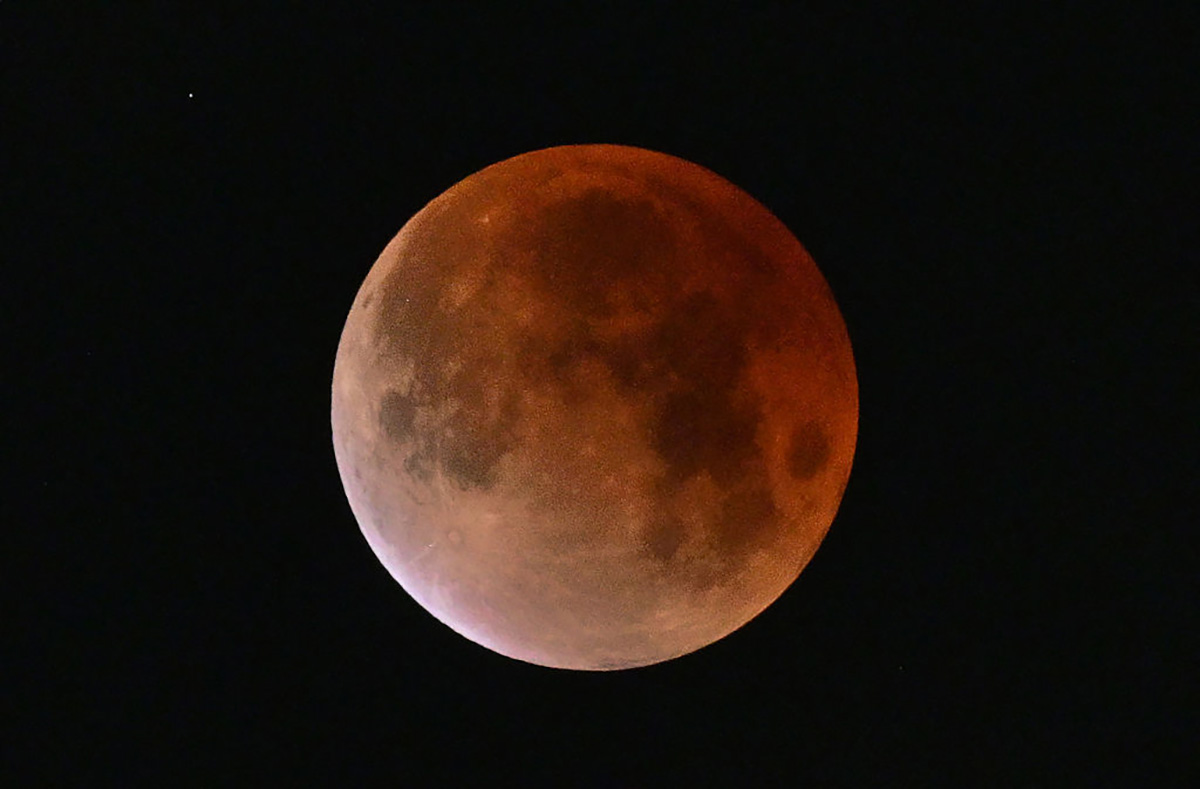
As sunlight passes through Earth's thick atmosphere, blue wavelengths are scattered, while longer red wavelengths are bent and refracted towards the Moon.
This filtered light gives the shadow a yellow-red, copper or deep orange hue, giving rise to the popular nickname 'Blood Moon'.
Earth's shadow will cover 96% of the lunar disc
While nowhere on Earth will experience a total lunar eclipse, the August 2026 Blood Moon will be an exceptionally deep partial eclipse.
At peak coverage, Earth's central core shadow (the umbra) will cover up to 96% of the Earth-facing side of the Moon, meaning almost the whole of the full Moon will display a rich, rusty red hue.
The eclipse unfolds in three main phases
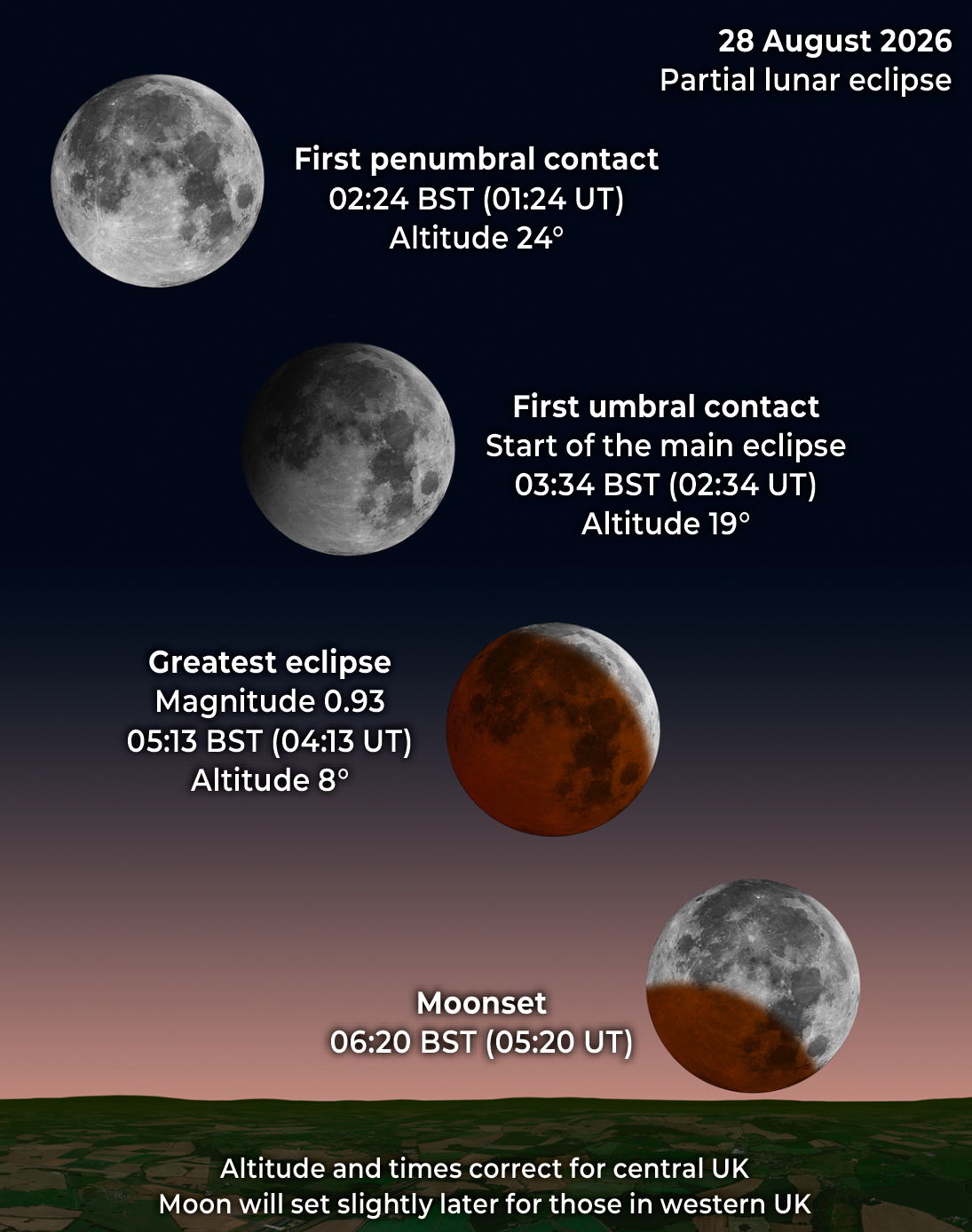
As the lunar eclipse progresses, observers will be able to see the Moon move through distinct phases:
- Penumbral phase: The Moon enters Earth's outer penumbral shadow. You'll observe a subtle dimming or darkening on one edge of the Moon.
- Partial (umbral) phase: The Moon touches Earth's dark inner shadow (the umbra). A dark 'bite' appears on the lunar disc and the Moon begins to turn a deep red.
- Greatest (maximum) eclipse: The peak moment when up to 96% of the Earth-facing side of the Moon is covered in Earth's shadow.
Timings for North America (evening, August 27 / morning, August 28)
For observers in the USA and Canada, this eclipse offers a remarkably deep view.
Peak viewing (greatest eclipse) occurs before or after midnight depending on your time zone, with the umbral phase beginning about 1 hour 40 minutes prior.
| Region | City | Time Zone | Greatest Eclipse |
| USA | New York, NY | EDT | 00:12 (Aug 28) |
| Chicago, IL | CDT | 23:12 (Aug 27) | |
| Houston, TX | CDT | 23:12 (Aug 27) | |
| Denver, CO | MDT | 22:12 (Aug 27) | |
| Los Angeles, CA | PDT | 21:12 (Aug 27) | |
| Canada | Halifax, NS | ADT | 01:12 (Aug 28) |
| Montreal, QC | EDT | 00:12 (Aug 28) | |
| Toronto, ON | EDT | 00:12 (Aug 28) | |
| Winnipeg, MB | CDT | 23:12 (Aug 27) | |
| Calgary, AB | MDT | 22:12 (Aug 27) |
Timings for the UK and Europe (early morning, 28 August)
For UK and European viewers, the event takes place in the early hours of Friday, 28 August. Again, the umbral stage begins about 1 hour 40 minutes prior to greatest eclipse
- 01:24 UT (02:24 BST / 03:24 CEST): First penumbral contact begins
- 02:34 UT (03:34 BST / 04:34 CEST): First umbral contact begins
- 04:13 UT (05:13 BST / 06:13 CEST): Greatest eclipse
The Moon will be low in the west-southwestern sky under brightening dawn twilight. In the UK, the Moon sets about an hour after maximum eclipse, before the partial phase fully finishes.
Look out for the Moon illusion
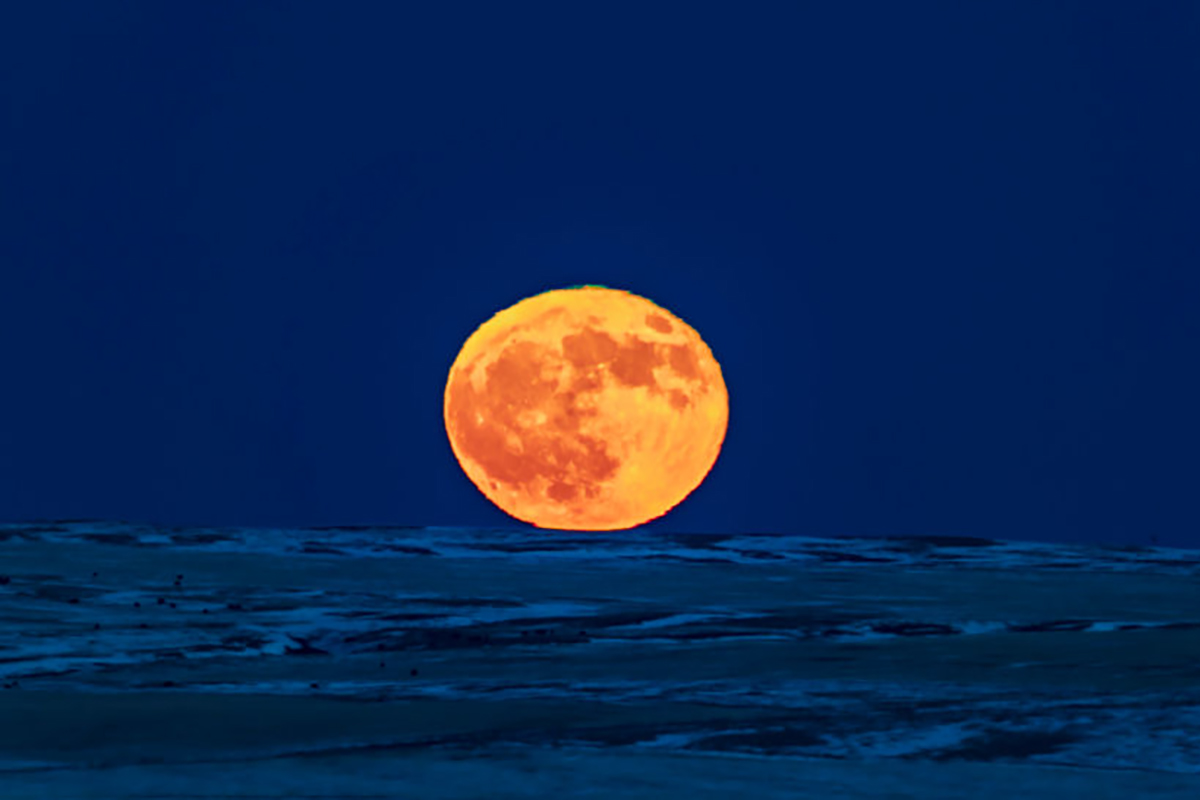
Because the full Sturgeon Moon tracks relatively low across the southern sky in summer, it will remain positioned close to the horizon, compared to much higher winter full Moons.
This means you'll need a clear southerly horizon to see the lunar eclipse, but also means you'll be treated to a pretty startling optical illusion.
It's known as the Moon illusion and describes how the full Moon appears disproportionately huge when viewed near foreground landscape objects.
It's safe to see with the naked eye
Unlike a solar eclipse, a lunar eclipse requires no special filters or solar eclipse glasses. It's completely safe to observe with your naked eye.
And while you can enjoy the entire event with the naked eye, a standard pair of binoculars or a small backyard telescope will reveal crater rims and lunar rays slipping in and out of Earth's shadow.
Simple tips for observing
- Find a clear horizon: Because the Moon will be low in the sky (setting in the west-southwest for the UK, or rising in the east for western North America), a location with an unobstructed horizon will give you the best view.
- Escape light pollution: While a full Moon is bright enough to see from city centres, finding a dark location away from heavy street lighting will make the subtle red hues much easier to appreciate as the shadow deepens.
- Get your timings right: The timings for this lunar eclipse mean either a very early start or a very late night will be required. If you're a casual stargazer, you may only want to look 30 minutes or so either side of greatest eclipse, meaning you don't need to stay awake for hours in the middle of the night!
- Make yourself comfortable: Yes, it's late summer, but standing still in an open location for an hour in the middle of the night can still make you feel the cold. Wrap up warm, bring a camping chair and a hot drink and snacks.
Share your lunar eclipse stories and images with us by emailing contactus@skyatnightmagazine.com

