
On 30th and 31st May, when the full Moon rises above the horizon, it will mark the appearance of the 2026 Blue Moon.
But that's not the only reason the late May 2026 full Moon will be something of a celestial rarity.
It will also be a 'micromoon', a term that relates to the Moon's elongated orbit around our planet and how that causes its apparent size to shift over the course of a year.
Here, we'll look at what the Blue Moon is and why the 31st May 2026 full Moon might more accurately be called a 'Blue Micromoon'.
More on the Moon
A Blue Moon primer
Before we get onto the 'micromoon' definition, a quick primer on what makes a 'Blue Moon'.
The late-May 2026 full Moon is known informally as a 'Blue Moon' because it's the second full Moon in a calendar month.
However, that's not the true astronomical definition of a Blue Moon.
The true astronomical definition of a Blue Moon relates to the division of a year into the astronomical seasons, which are the periods between the equinoxes and solstices, for example from the spring equinox to the summer solstice.
Normally there are three full Moons within one solstice. A astronomical Blue Moon occurs when there are four full Moons in a solstice, and the Blue Moon is the third full Moon of the four.
So the 31st May full Moon is technically a 'monthly Blue Moon', and the name only refers to the fact that this is an 'extra' full Moon. It doesn't mean the Moon will actually look blue!

Mechanics of the Blue Micromoon 2026
So what is a micromoon?
The reason why the May 2026 Blue Moon will technically appear smaller than usual is because of the shape of the Moon's orbit around Earth.
The Moon doesn't orbit Earth in a perfect circle; instead its path is an ellipse (an oval shape). This means the Moon's distance from Earth changes continuously.
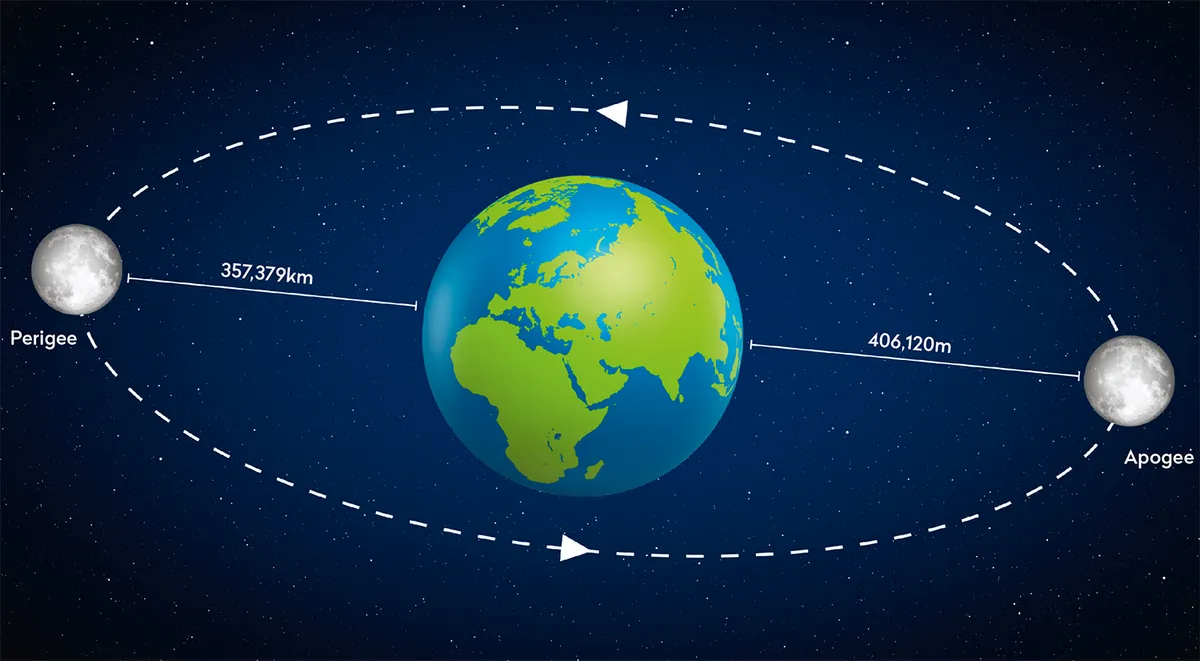
Perigee is the closest point to Earth in the Moon's orbit. A full Moon near perigee is popularly called a supermoon.
Apogee is the farthest point from Earth in the Moon's orbit. A full Moon near apogee is known as a micromoon.
The full Moon peaks – i.e. becomes truly 'full' – at 08:45 UTC on 31st May 2026, which is just before the Moon reaches apogee.
On 1st June 2026, the Moon will reach its closest point to Earth – apogee – at a distance of 406,366km (252,504 miles), according to TimeAndDate.com.
So a micromoon only occurs when these two things happen at around the same time: when the Moon is full, and when the Moon is furthest from Earth.
At absolute apogee, a micromoon may appear up to 14% smaller than a supermoon, and about 6% smaller than an average full Moon.

Stargazing advice – observing the Blue Micromoon
There are two key points to remember when observing the 31st May 2026 Blue Micromoon.
The first is, as stated above, that the Moon won't look any more blue than usual.
And the second is that, despite its name, the 'micromoon' is unlikely to actually appear noticeably smaller than usual. You're not likely to observe the 31st May full Moon and think it looks tiny.
In fact, you may think it looks larger than usual. That's because the full Moons of late spring and summer don't rise as high in the sky as autumn and winter full Moons.
And a full Moon close to the horizon may appear larger than normal, as a result of an optical effect known as the Moon illusion.
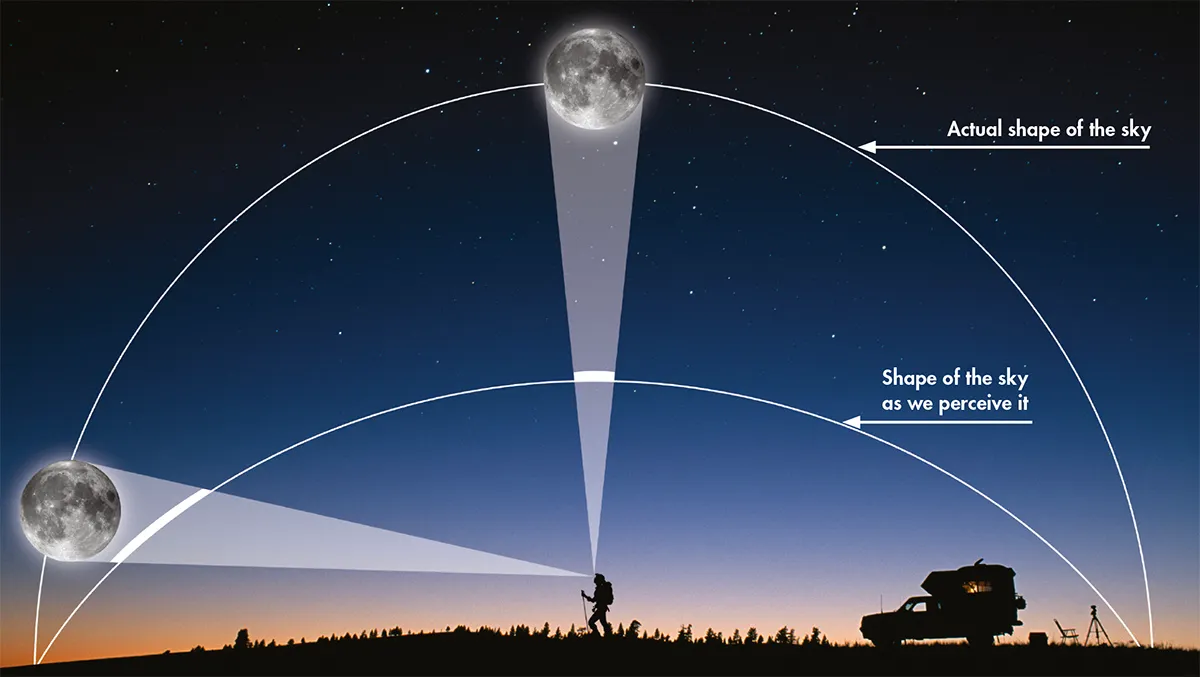
Because this full Moon will be low and close to the horizon, you'll need a clear southern horizon to see it.
The Moon will rise just after sunset in the southeast and work its way across the southern sky, setting in the southwest before dawn.
In other words, the Blue Micromoon will be visible in the south around midnight.
It may even look orange or slightly red, as a result of moonlight being scattered by the thicker part of Earth's atmosphere, which is another effect of the Moon being close to the horizon.
Coupled with the aforementioned Moon illusion, that could mean the 31st May Blue Micromoon actually appears large and red!
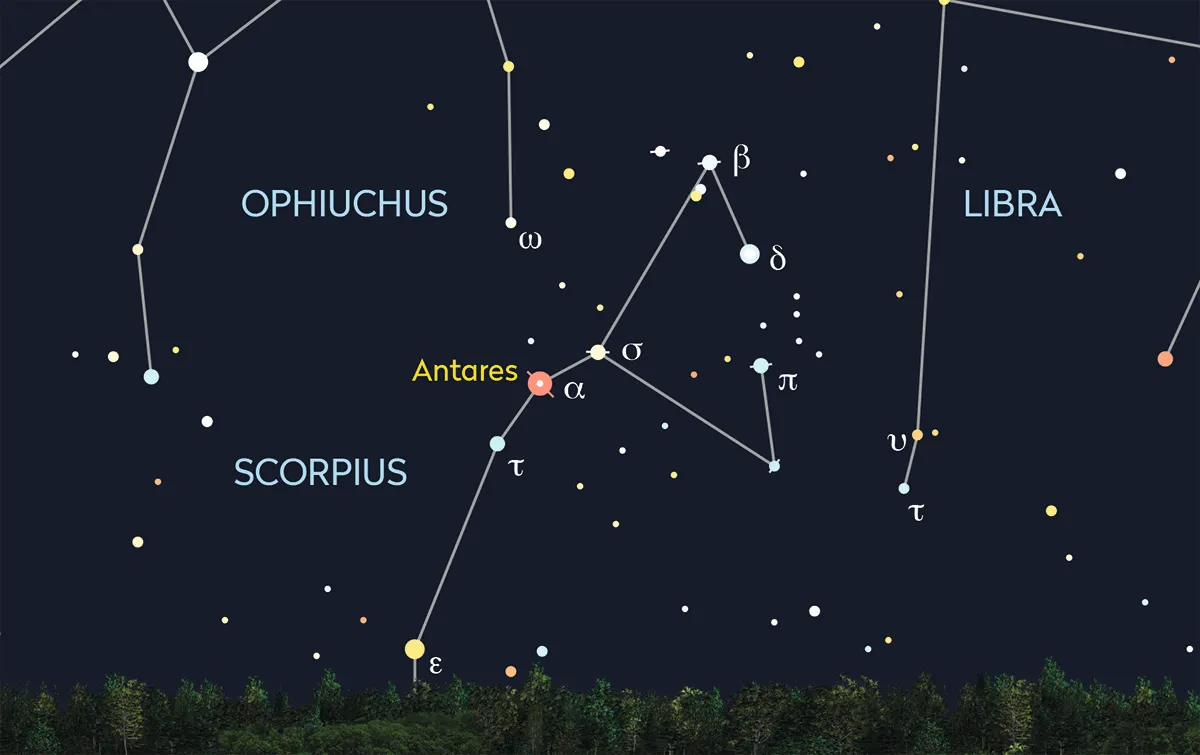
It will be accompanied by a beautiful red star to its right. That's Antares, a red supergiant and the brightest star in the constellation Scorpius.
31 May 2026 blue Moon rise times
| Region | City | Moonrise (local time) |
|---|---|---|
| North America | New York City | 21:12 |
| Toronto | 21:49 | |
| Los Angeles | 20:51 | |
| UK & Ireland | London | 22:05 |
| Edinburgh | 22:08 | |
| Cardiff | 22:17 | |
| Belfast | 22:55 | |
| Dublin | 22:45 | |
| Europe | Paris | 22:40 |
| Berlin | 22:18 | |
| Madrid | 22:18 | |
| Australia | Sydney | 16:30 |
| Asia/Middle East | Dubai | 19:34 |
| Singapore | 19:08 | |
| New Delhi | 19:31 |
Share your observations and images of the Blue Micromoon by emailing contacts@skyatnightmagazine.com

