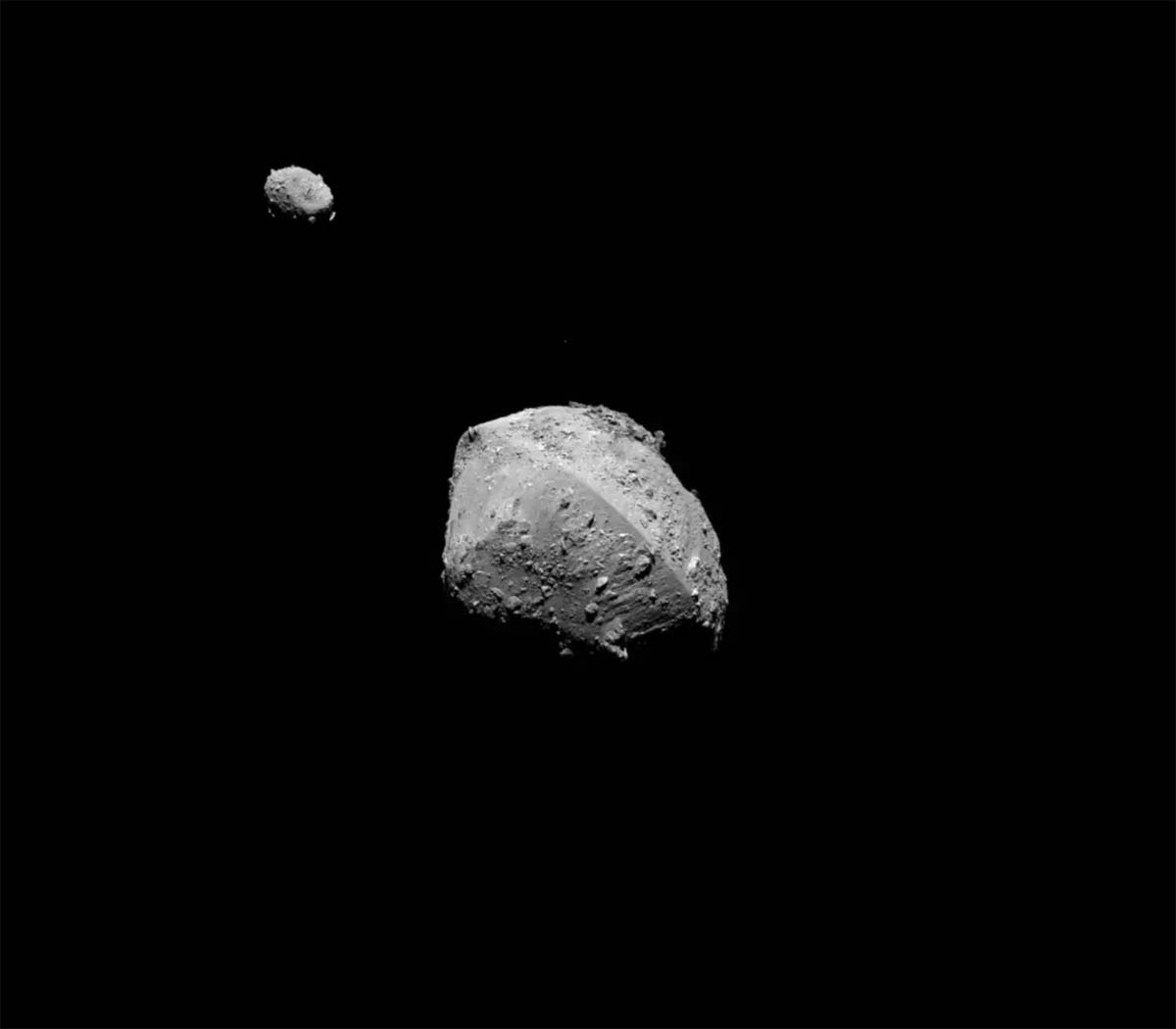
The European Space Agency’s Hera mission has sent back its first images of Dimorphos, the asteroid that NASA deliberately crashed a spaceship into four years ago.
The pictures reveal a space rock that now has a vast crater on one side, and that is now tumbling through space surrounded by a flotilla of boulders.
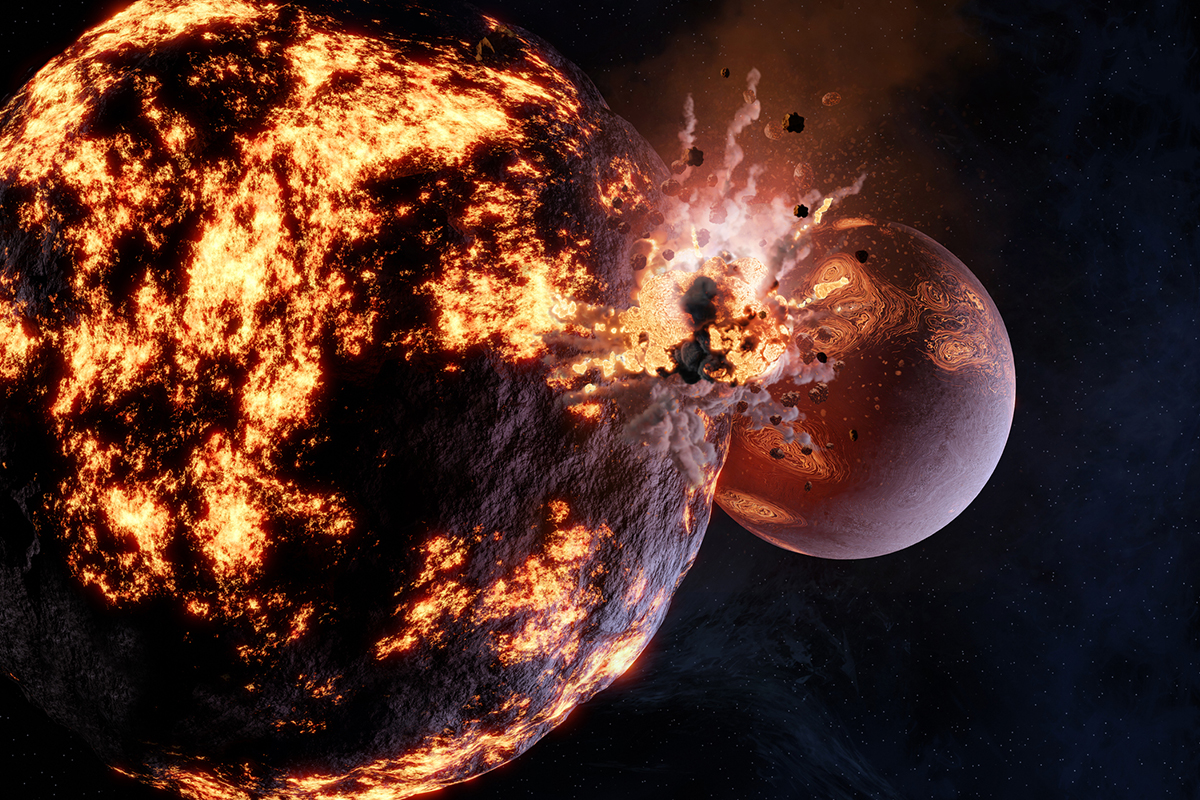
Dimorphos was selected by NASA as a target for its Double Asteroid Redirection Test (DART) mission, which sought to determine if we can deflect an asteroid from its course by crashing into it – a potential method for defending Earth from asteroid strikes in the future.
The science behind the collision
Dimorphos and its larger companion Didymos – which measure 151m (495ft) and 730m (2,395ft) across, respectively – presented no threat to Earth themselves, but were chosen as a suitable target as they were of similar size to the kinds of asteroid we may need to deflect one day, and because they were close enough to be visible through ground-based telescopes.
The fact that they form a binary system was also important: this meant that, post-impact, scientists could observe changes to Dimorphos’ tight orbit around its larger companion, rather than having to detect minute changes to a solitary asteroid’s vast orbit around the Sun.
Accordingly, DART was deliberately crashed into Dimorphos on 26 September 2022, at a speed of around 23,000 km/h (14,000 mph).
On 7 October 2024, ESA then launched its Hera spacecraft, whose mission was to travel to the Didymos system and survey the damage.
Read more
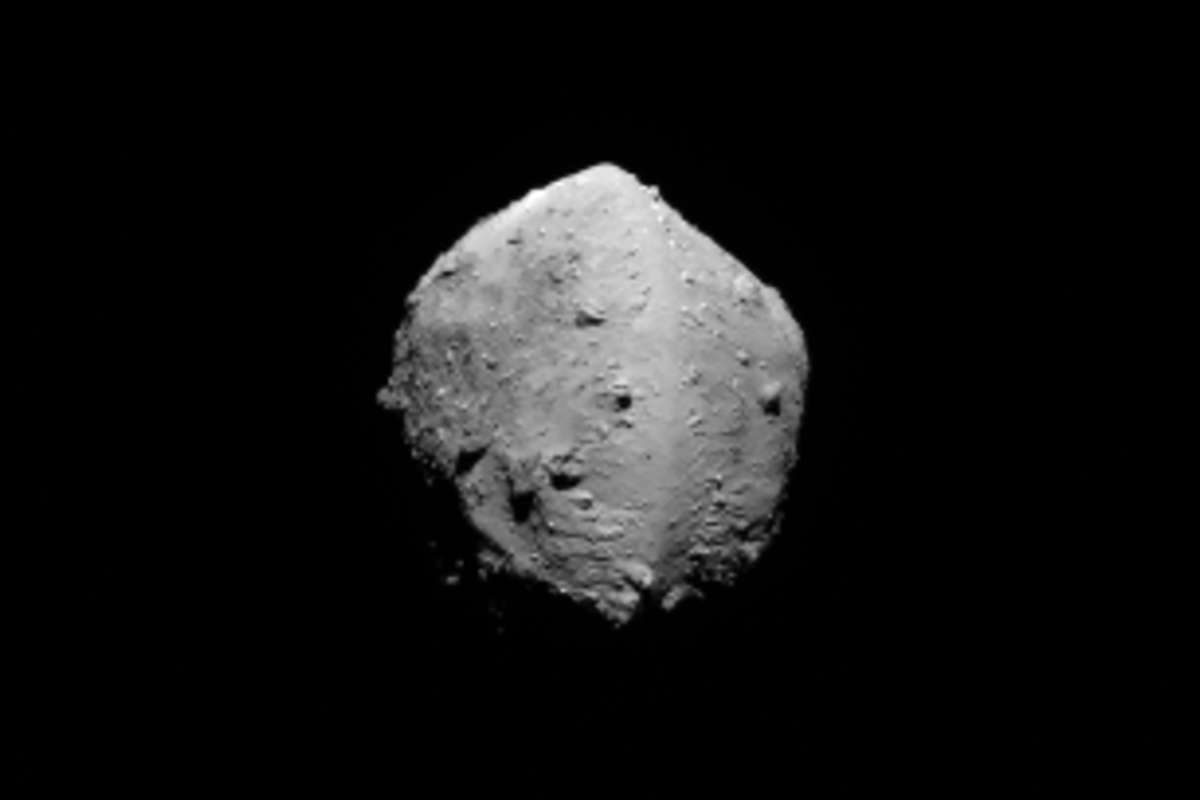
Hera arrived at Didymos and sent back its first images of the larger asteroid in early November 2026.
Now the first Hera images of a post-impact Dimorphos have been received, and they show that the impact by DART has affected the morphology of the asteroid significantly.
"Scientists debated whether Dimorphos had sustained an impact crater, changed its shape or stayed the same," says Hera principal investigator Patrick Michel, from France’s National Centre for Scientific Research (CNRS).
"Much to our surprise the answer turns out to be all three at once! The face struck by DART has been flattened into an impact crater the size of a sports stadium, which extends across the asteroid’s entire width."
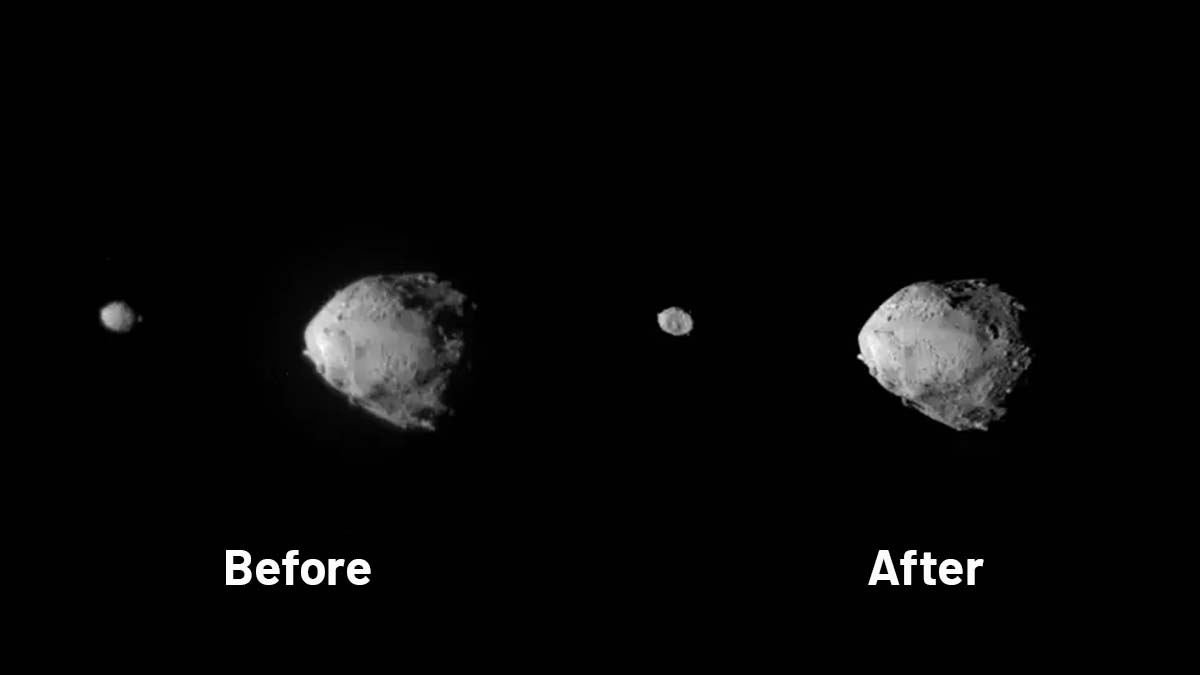
The rest of Dimorphos’s surface appears much the same as it did before – but the crater isn’t the only sign of DART’s impact.
Where Dimorphos was previously tidally locked to Didymos, and so orbited it with the same side always facing towards its host, the smaller body is now tumbling along its orbit in seemingly haphazard fashion.
What’s more, its orbital period has been reduced by 33 minutes, and the asteroid is now surrounded by a swarm of boulders, each measuring a few metres across, that have never been seen previously.
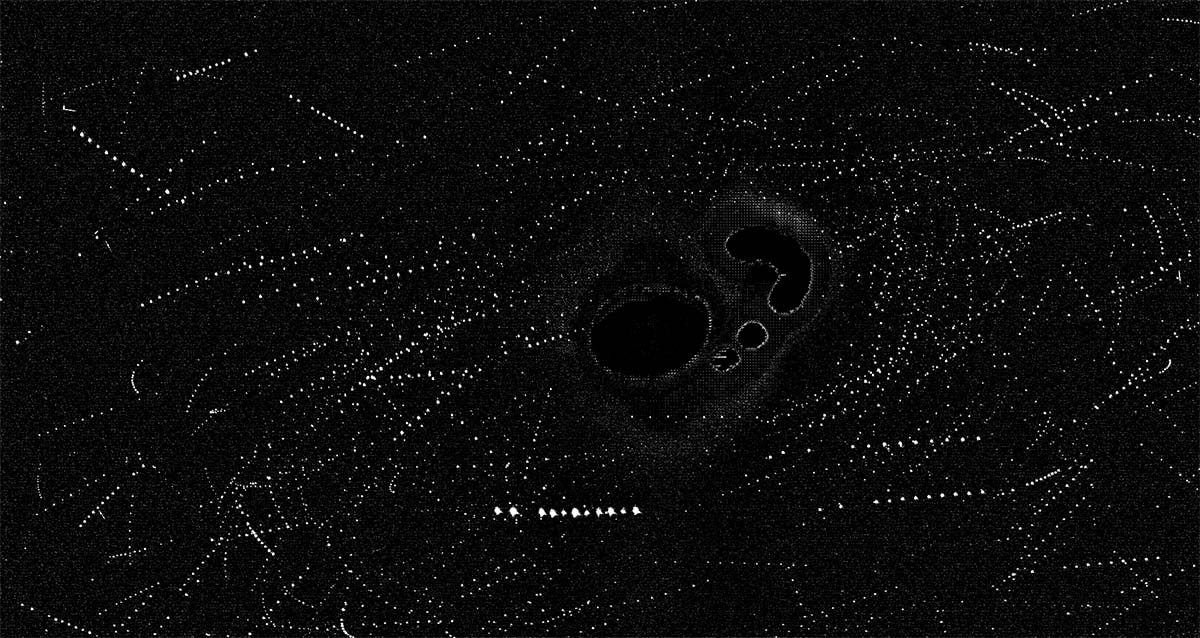
All of this suggests that the impact knocked Dimorphos off its orbital path and ejected a huge volume of material; that ejected material is now orbiting Didymos alongside Dimorphos, whose reduced mass has caused it to migrate inwards slightly.
Announcing Hera’s findings, ESA Director-General Josef Aschbacher says: "This is international collaboration at its best: NASA having demonstrated that an asteroid can be deflected, ESA is now providing the detailed scientific investigation needed to understand how that deflection worked, along with valuable contributions from international partners, including Japan’s JAXA.
"Together, we are transforming a successful experiment into the scientific knowledge needed to develop a reliable planetary defence capability."
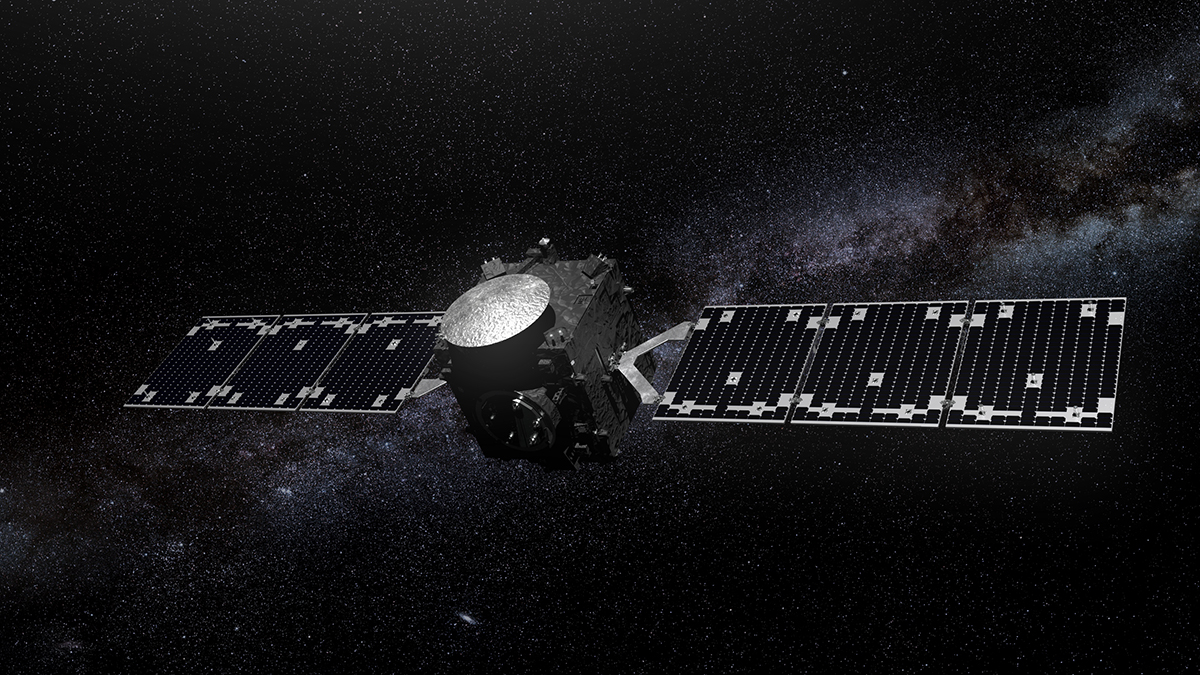
Hera currently remains in orbit around the Didymos-Dimorphos system, at a distance of around 25-30km (15-18 miles), but its investigations are not yet complete.
It will move closer to the system in December, in order to capture higher-resolution images, before deploying two shoebox-sized CubeSats in January that will venture even closer.
One of those CubeSats, Juventas, is under the control of a team from Luxembourg, and will probe the interior of Dimorphos using low-frequency radar before attempting a landing.
The other, Milani, is there to study the geological makeup of the asteroid, and of the boulders and dust that now surround it.