
It's long been a favourite did-you-know? fact for astronomers: there are no green stars in the cosmos.
Stars appear to glow different colours depending on various factors relating to their size, age and chemistry.
They can glow white, yellow, red and blue, but never green – or so we thought.
A team of astronomers say their study demonstrates the myriad of different colours present in stars across the Universe including pink, purple and green.
More amazing Chandra observations


Why stars glow different colours
The team behind the study say their observations show that white dwarf stars – the dense husks left behind when ageing stars run out of fuel – can glow in a range of colours.
In essence, stars glow different colours due to their temperature, from the cool, red glow of older stars to the scorching pale blue of new-born stars.
It was thought that white dwarf stars followed the same rule. Indeed, white dwarfs are so-called because they're generally seen to glow a fiercely hot-white.
But astronomers say orange, white and blue are not the only colours a star can be.
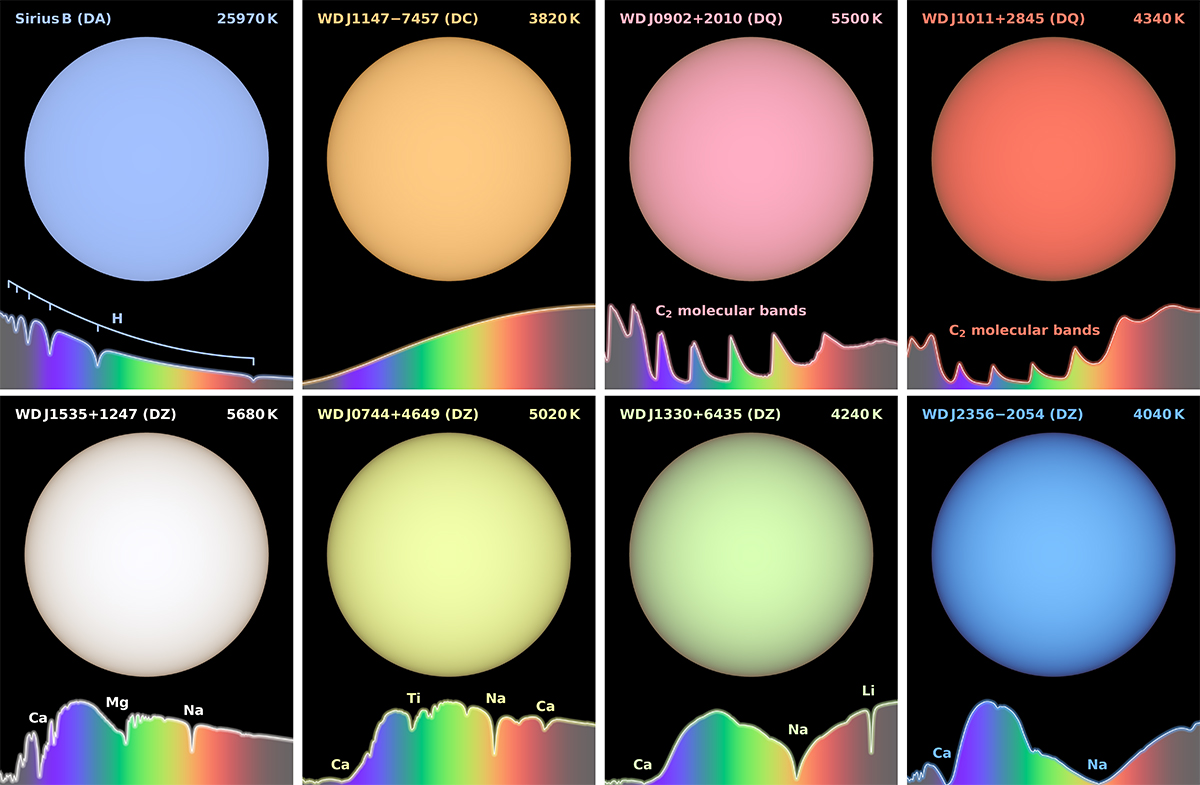
Their study shows that, if we could observe certain white dwarf stars up close, we'd see them glow yellow, purple, pink, cyan and green.
"Most stars, including most white dwarfs, behave like ‘perfect radiators,’ so their colour is set almost entirely by temperature. But nobody had really looked into what else might be possible for white dwarfs," says Dr Mark Hollands, an astronomer at the University of Warwick in the UK.
"It turns out these incredibly dense stars can produce colours nobody expected, and some of them genuinely surprised me."
What makes white dwarfs so colourful?
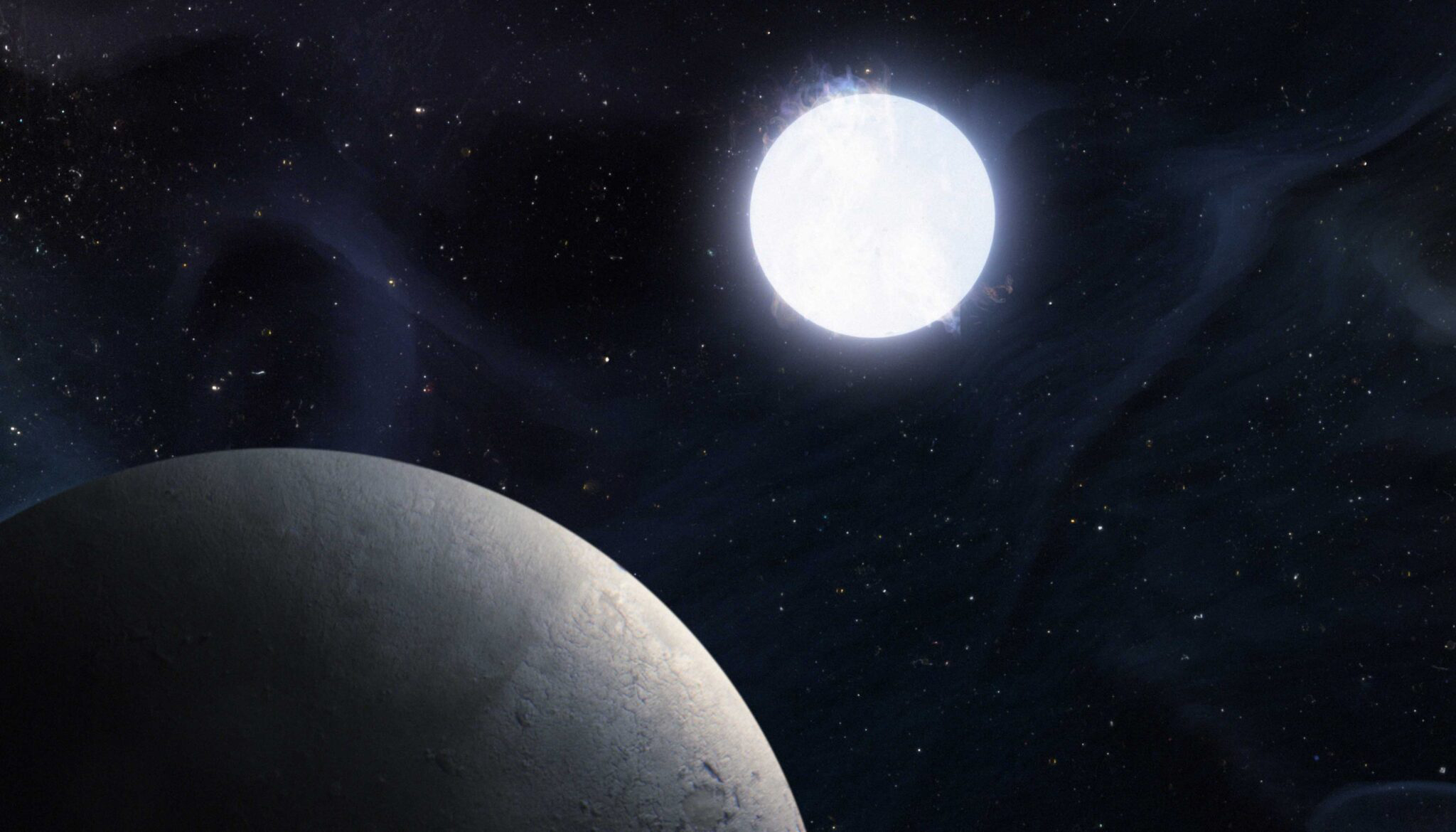
The team behind the study say it's all down to the density of the stars.
The coolest white dwarf atmospheres reach about 1 gram per cubic centimetre, which is about the same density as water and millions of times as dense as our Sun's photosphere.
At this density, trace elements like carbon, calcium and sodium interact with the surrounding helium plasma.
That makes the elements absorb a wider range of colours of light than they would at lower densities.
There are no white dwarf stars close enough for the team to have observed them directly, so instead they calculated the colours using the stars' spectra.
A spectrum is the fingerprint produced when light from a star is split into its constituent colours.
Astronomers can learn a lot about the chemistry of celestial objects by observing them in this way.
The team ran spectra through a model of human colour vision to find out what colour each star would appear to the human eye.
The star that glows green
The team found that each star fell into distinct colour groups depending on what's in its atmosphere.
Carbon-rich white dwarfs are typically pink or purple.
White dwarfs that have swallowed debris from asteroids and comets tend to be more yellow.
Cooler white dwarfs with mixed hydrogen and helium atmospheres are often cyan or pale blue.
Star WD J1330+6435, which is about 4,000°C (7,200°F), has swallowed rocky debris from its orbiting planets.
That, say the team, has enriched its atmosphere with calcium, lithium, and sodium, causing it to glow green – according to models.
They say no other star has ever been 'credibly' reported as green, making it the first known genuinely green star in the Galaxy.
"The traces of sodium in the atmosphere of this white dwarf absorb the orange part of the spectrum, leaving behind a ghostly green glow," says Dr Hollands.
"Imagine standing on a planet and looking up at a green star. It feels like something out of science fiction."
The reddest star
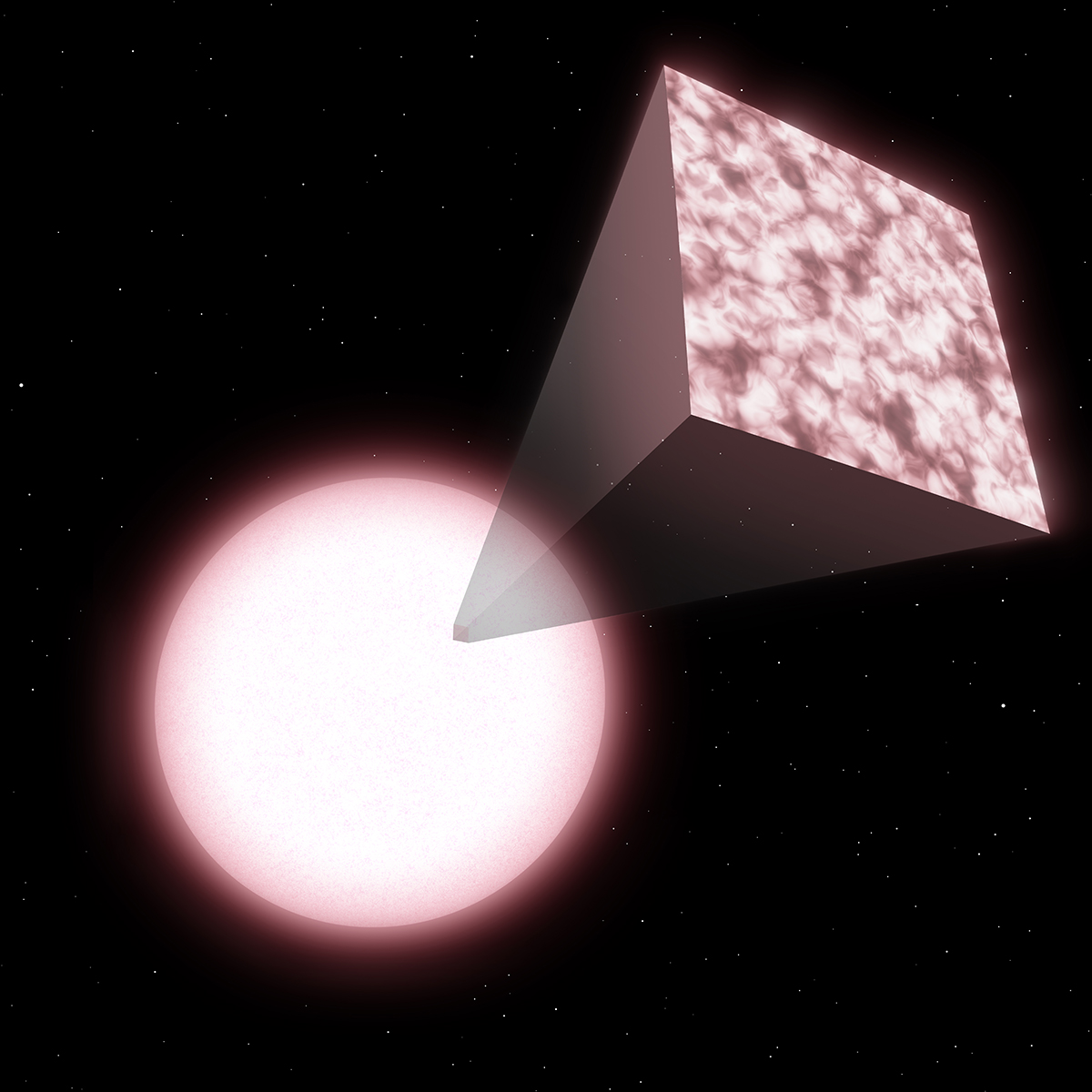
The astronomers say they've also found what could be the reddest star ever recorded: WD J1011+2845, a white dwarf star 48 lightyears from Earth.
This star has a deep convection zone that has brought carbon from its core to its surface.
The carbon molecules distort the star’s light to produce a deep salmon-pink glow.
But white dwarfs are still white (mostly)
The team looked at 151 white dwarfs within about 65 lightyears of Earth.
They say five showed strange colouring, with two glowing yellow and three pink. That could mean one in 30 white dwarfs in the Universe shines with a strange colour.
However, the remaining 146 glow in the warm white of a light bulb which, the team say, corrects a misconception that white dwarfs are typically blue.
"One in thirty might not sound like a huge fraction, but across the entire population of white dwarfs in the Universe, that is still a lot of oddly coloured stars out there," Professor Boris Gänsicke, Department of Physics at the University of Warwick.
"Yet if we take the median across a representative population of white dwarfs, we found that the average white dwarf really is white."
Read the full paper via Oxford Academic

