
Tonight, Thursday 4 December 2025, the full Moon will rise, bringing with it the last chance to see a supermoon in 2025.
December's full Moon is known as the Cold Moon, a nickname that reflects how this is the first full Moon of winter, rising during the darkest, coldest period of the year.
Here we'll go through the best ways to see tonight's full Moon supermoon, including tips on how to make the most of it.
For regular stargazing advice, sign up to the BBC Sky at Night Magazine e-newsletter and subscribe to our YouTube channel.
What makes tonight's full Moon special
The full Moon of December 2025 rises on the evenings of Thursday and Friday, 4 and 5 December.
It's the December Cold Moon, signifying the arrival of winter and marking the final full Moon of the year.
But as well as being the final full Moon of the year, tonight's Cold Moon is also the final supermoon of year.
There were three supermoons in 2025, all of which came at the end of the year: in October, November and December.
A supermoon is the common name given to the Moon that's full when it's at its closest point to Earth in its orbit.
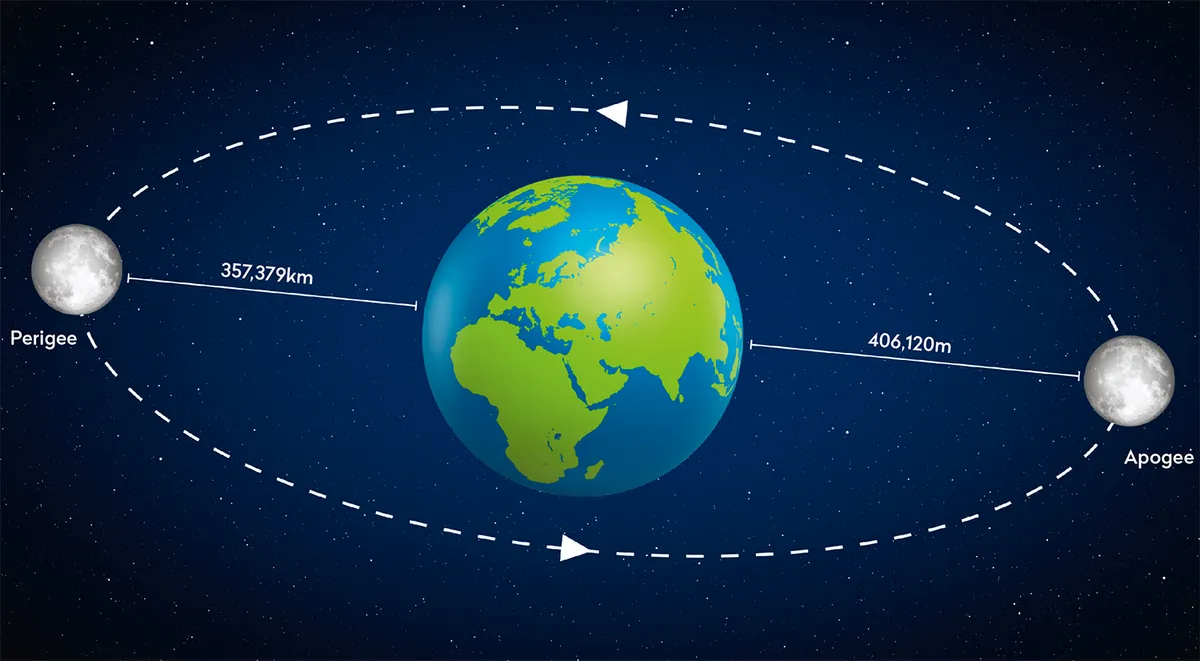
This happens because the Moon doesn't orbit Earth in a perfect circle; it has an elliptical – or egg-shaped – orbit.
That means sometimes the Moon is closer to Earth than other times. When the Moon is closest to Earth, it's at 'perigee'. When it's furthest from Earth, it's at 'apogee'.
A supermoon is technically bigger and brighter than a 'regular full Moon', and can be 14% bigger and 30% brighter than the smallest - i.e. furthest – full Moon of the year.
Tonight and Friday night are the best times to see it. Here are the key facts you'll need to know when observing tonight's supermoon, including a few useful tips for getting the most out of it.
Observing tonight's Cold Moon Supermoon – key tips
These tips are based on observing the full Moon on Thursday 4 December, but will still largely be accurate for Friday night's observing too. However, the Moon will rise about an hour later on Friday.
The Cold Moon Supermoon will rise in the northeast between 3pm – 5pm, depending on where in the world you're observing from.
If it's dark enough for you to see the full Moon rise above the horizon, you may notice it looks enormous. This is nothing to do with it being a supermoon, and is instead a phenomenon known as the Moon illusion.
The full Moon close to the horizon may also look slightly orange, which is to do with moonlight being dispersed by Earth's thick atmosphere.

December's full Moon rises in the constellation Taurus, and by early evening it will be located in the east.
That bright star to the right of the full Moon tonight is Aldebaran, the brightest star in Taurus. It's known as the 'red eye of the bull' because it forms the eye of the constellation.
To the right of Aldebaran, through binoculars you may be able to see a sideways V-shaped cluster of stars. This is the Hyades star cluster, although the bright glare from the full Moon may make it hard to see.
Above the Hyades is another star cluster, known as the Pleiades. It's easier to see than the Hyades, but again that bright moonlight may make its bright blue stars trickier to see than normal.
Can you see a halo around the Cold Moon Supermoon? That's another effect caused by the interplay between moonlight and Earth's atmosphere.
The Moon will continue climbing higher in the sky, and by midnight will be in the southeast.

By now you should be able to see the constellation Orion below the Moon. Look out for the three stars that make Orion's Belt, and also its bright star Betelgeuse.
Across to the left of Orion, you'll see another bright 'star', which is actually the planet Jupiter. It's one of the best planets to see in December 2025.
If you're still observing the full Moon past midnight, it will now be in the southwest and heading towards the western horizon, which it will dip below just as the Sun is rising.
That also means that, if you're an early riser who's setting off before sunrise, you may be able to see the full Moon low on the horizon, provided you have a clear view of the west.
If you manage to observe the Cold Moon Supermoon tonight, and capture any images of it, send us your images and they could appear in a future issue of BBC Sky at Night Magazine.

