
There's a total lunar eclipse visible over North America, East Asia and Australia on March 3, 2026.
You can get all the info you need in our guides to the March 2026 blood Moon, our March 2026 lunar eclipse quick tips and March blood Moon key locations and timings.
But while you're observing with friends and family, you might like to pull out some of these interesting facts about the March 2026 lunar eclipse, and show you've done your research!
It's the Worm Moon

This is one of those full Moons with multiple names available to describe it, depending on what aspect of the Moon's visibility you want to focus on.
It's a full Moon. But it's also 2026's Worm Moon.
'Worm Moon' is one of many nicknames given to the monthly full Moons throughout the year.
These nicknames have been adopted over time in reference to what's happening in nature during the month in question.
The Worm Moon is visible in March, which is the time when the earth begins to thaw out after winter and earthworms become active again.
But this Worm Moon is also a 'blood Moon' – if you're observing from the right location – which is another name for a total lunar eclipse, because the Moon turns a rusty red colour.
So, if you really wanted to give the March 2026 lunar eclipse the most unwieldy nickname possible, you might call it the 'Full Worm Blood Moon total lunar eclipse'!
You'll be able to see Earth's shadow

Normally when the Moon is visible in the sky, it – or part of it – appears bright because sunlight is bouncing off the Moon and reflecting towards Earth (this is also why we see the phases of the Moon).
During a lunar eclipse, Earth is positioned exactly between the Sun and the Moon.
So the darkening that you observe on the lunar surface is Earth's shadow, blocking out sunlight.
Lunar eclipses nearly happen every month

A lunar eclipse occurs when Earth is between the Sun and the Moon.
But isn't that what causes a full Moon, too? If so, why do we see a full Moon every month, but not a lunar eclipse every month?
Lunar eclipses only happen at full Moon when the Sun, Earth and Moon are lined up in the exact orientation.
Most months, the Moon moves above or below Earth’s shadow. An eclipse doesn't happen, but we see a full Moon instead.
The Moon will turn rusty red
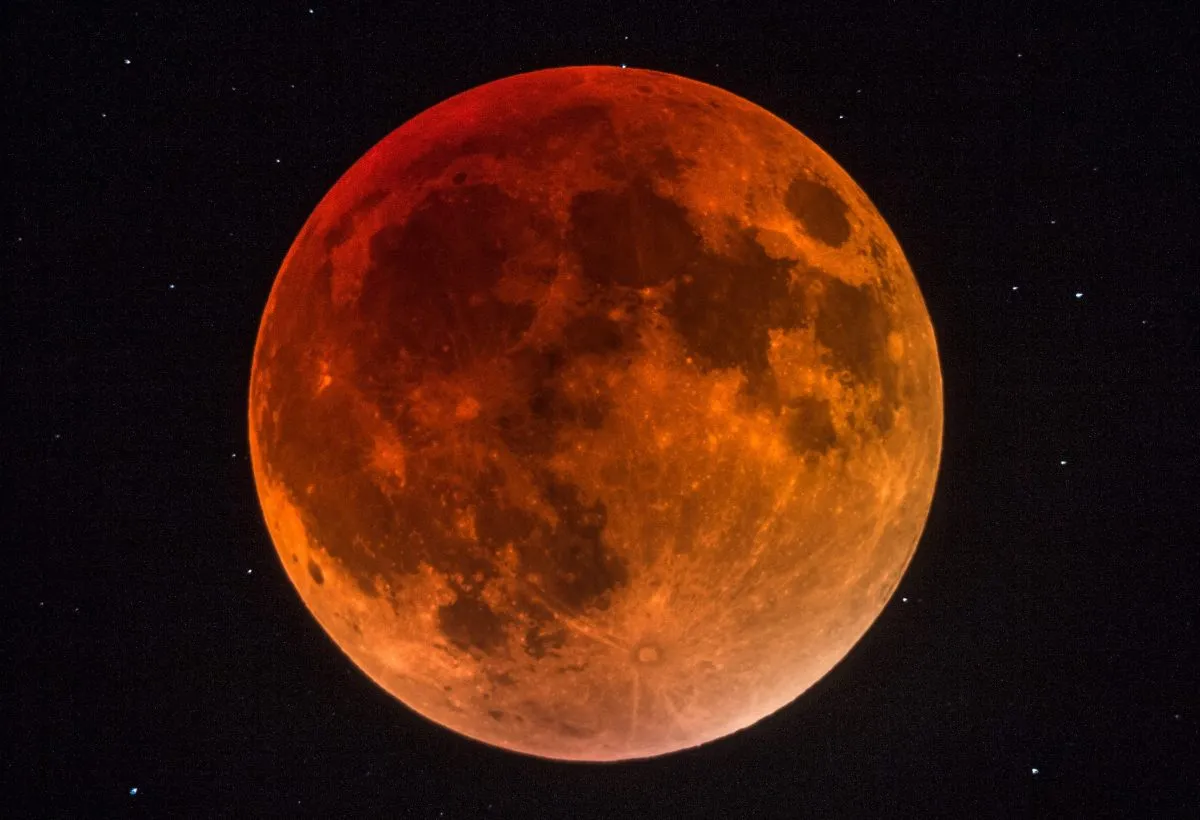
Ever noticed how a sunset makes the Sun – the whole sky even – appear so much redder and more dramatic?
This is to do with the 'scattering' effect of Earth's atmosphere.
When the Sun is low down in the sky, sunlight has to pass through a thicker part of our planet's dense atmosphere.
Blue light is scattered more than red light, and so we see more red light as a result.
Roughly the same thing is happening during a lunar eclipse.
Sunlight travels towards the Moon and hits its surface. But during a total lunar eclipse, Earth is in the way, and that sunlight is bent – or refracted – as it passes through Earth's atmosphere.
Only light that is bent inwards by Earth’s atmosphere makes it to the Moon.
Our atmosphere filters out blue light and leaves red light, giving a total lunar eclipse its rusty red colour.
This is why some call it a 'blood Moon'.
You don't need any fancy equipment

During a solar eclipse, the Moon passes in front of the Sun, and so observing a solar eclipse means looking at the Sun. As a result, eclipse glasses or solar filters must be used to protect your eyesight.
During a lunar eclipse, we're observing the Moon, so no protective gear needs to be worn.
You can observe a total lunar eclipse with the naked eye, but binoculars or a telescope will give you a better look.
It's one way to prove Earth isn't flat
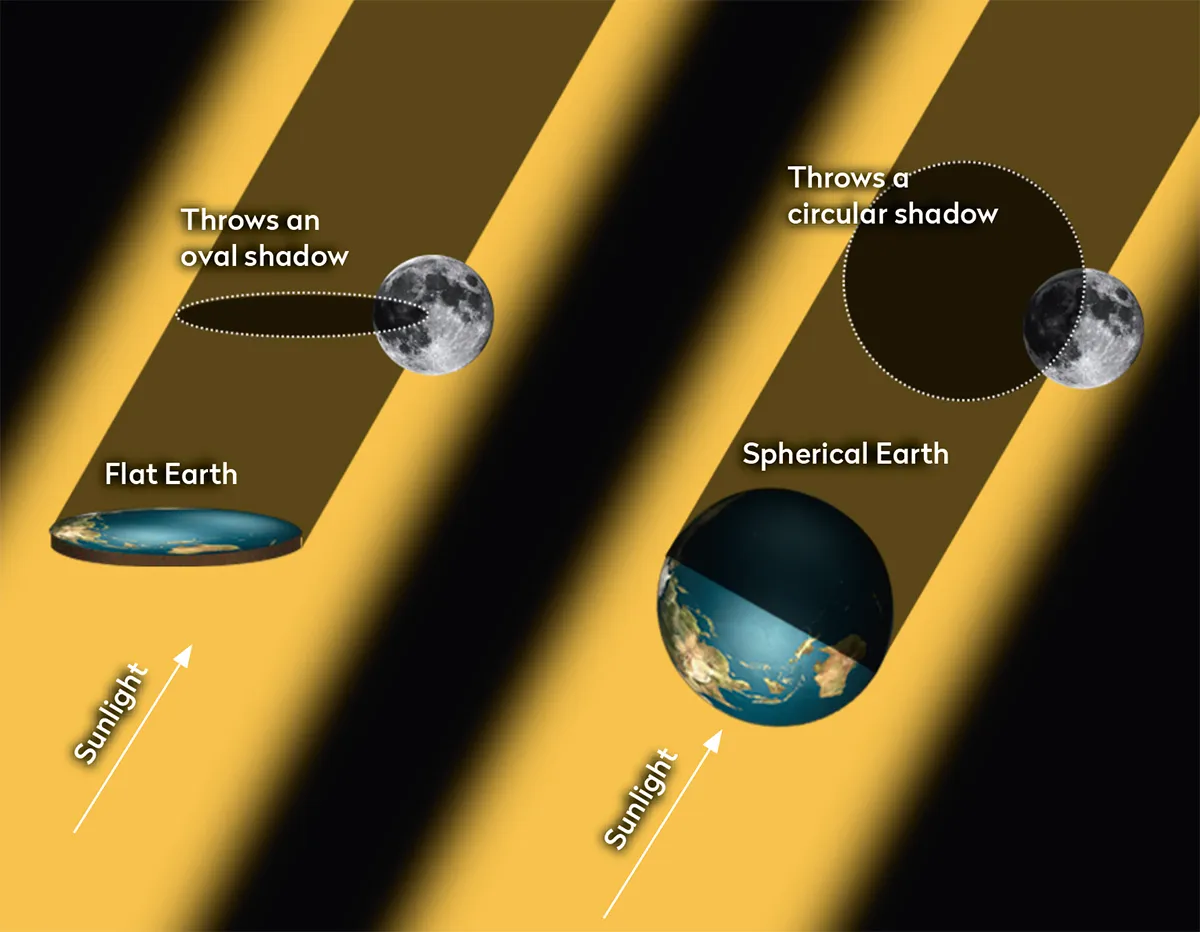
We live in a time in which the claim that Earth is 'flat', and not spherical, seems to be gaining popularity.
Earth is not flat; it's spherical. And one way of proving this is to look at Earth's circular shadow on the Moon during a lunar eclipse.
But couldn't Earth be round and flat, like a disc, and still throw a circular shadow during a lunar eclipse?
The only way a lunar eclipse shadow could always be round is if Earth is spherical, and not flat like a disc.
Hence, the circular shadow of a lunar eclipse is one way of proving Earth is spherical
There's a key to categorising its darkness
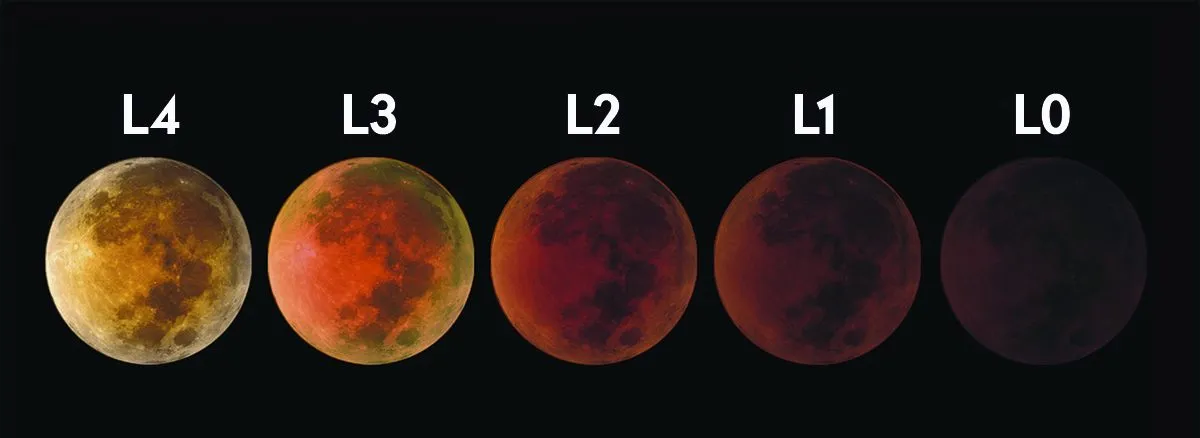
You can describe the colour and darkness of the Moon during a lunar eclipse by using the Danjon Scale.
It's named after its creator, the French astronomer André-Louis Danjon, and measures the darkness of an eclipse from L0 through to L4.
If you observe the March 2026 total lunar eclipse, see if you can pinpoint what 'L' value it is.
Find out more via NASA's guide to the Danjon Scale.
6 billion people will see it

One of the best resources online for getting accurate advice on location-specific astronomical events is TimeAndDate.com
They estimate that 5,580,000,000 people will be able to see at least part of the March 2026 lunar eclipse.
That means they're located somewhere along the path where the eclipse will be visible.
TimeAndDate.com say about 176,000,000 will be able to see the whole eclipse from start to finish.
If you observe any stage of the March 2026 lunar eclipse, or photograph it, share your images and experiences with us by emailing contactus@skyatnightmagazine.com

