
At first glance this may look like a close-up of a cappuccino or a bowl of chocolate chip ice cream, but it is in fact a view of Mars's south pole captured by a spacecraft orbiting the planet.
Smooth, creamy plateaus are surrounded by cocoa-coloured ridges, interspersed with lighter, caramel-hued streaks.
The image is a window into an alien world captured by the European Space Agency’s Mars Express, which has been exploring and imaging the Martian surface and atmosphere since 2003.
We may be accustomed to seeing images of red and brown soil, ruddy landscapes and cratered terrain on Mars, but this view shows the Red Planet isn't always so red.
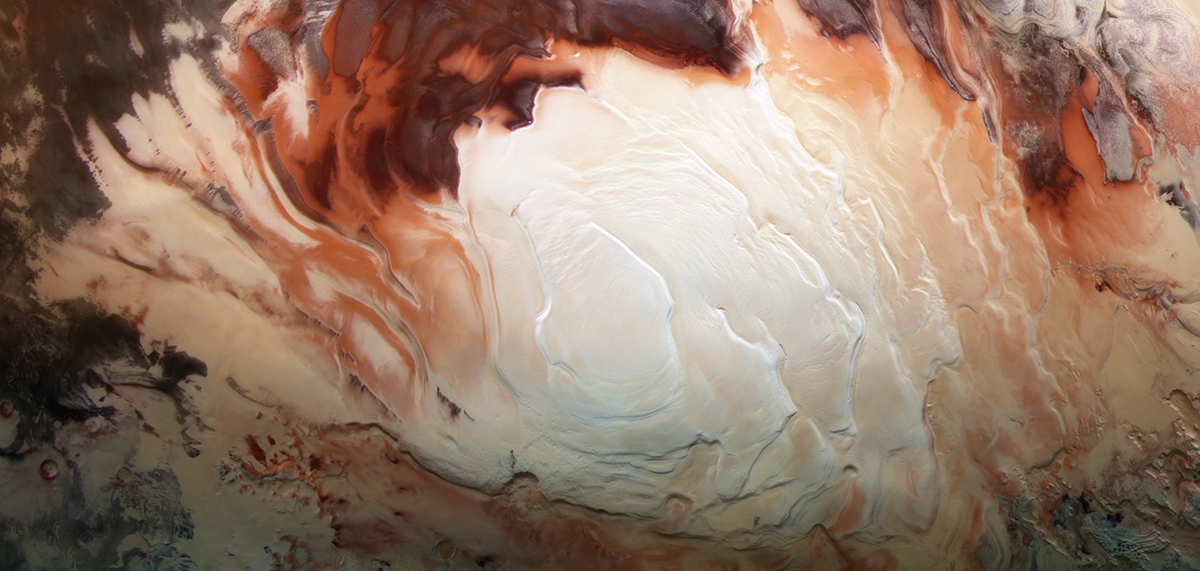
Mars's bright white south pole
The brilliant white region dominating this image is a permanent ice cap that covers the south pole of Mars. The cap is made up of a mixture of frozen water and carbon dioxide.
While it appears relatively smooth from this orbital perspective, close-up views of the cap have revealed a complex, layered mix of peaks, troughs and flat plains.
The southern cap is enormous, stretching roughly 3.7 kilometers (2.3 miles) deep in places and spanning 350 km (218 miles) in diameter.
NASA says Mars's south polar cap is so big, if it completely melted it would cover the whole planet in an ocean of liquid 11 metres (36 feet) deep.
More Mars images
Why the ice cap is lopsided
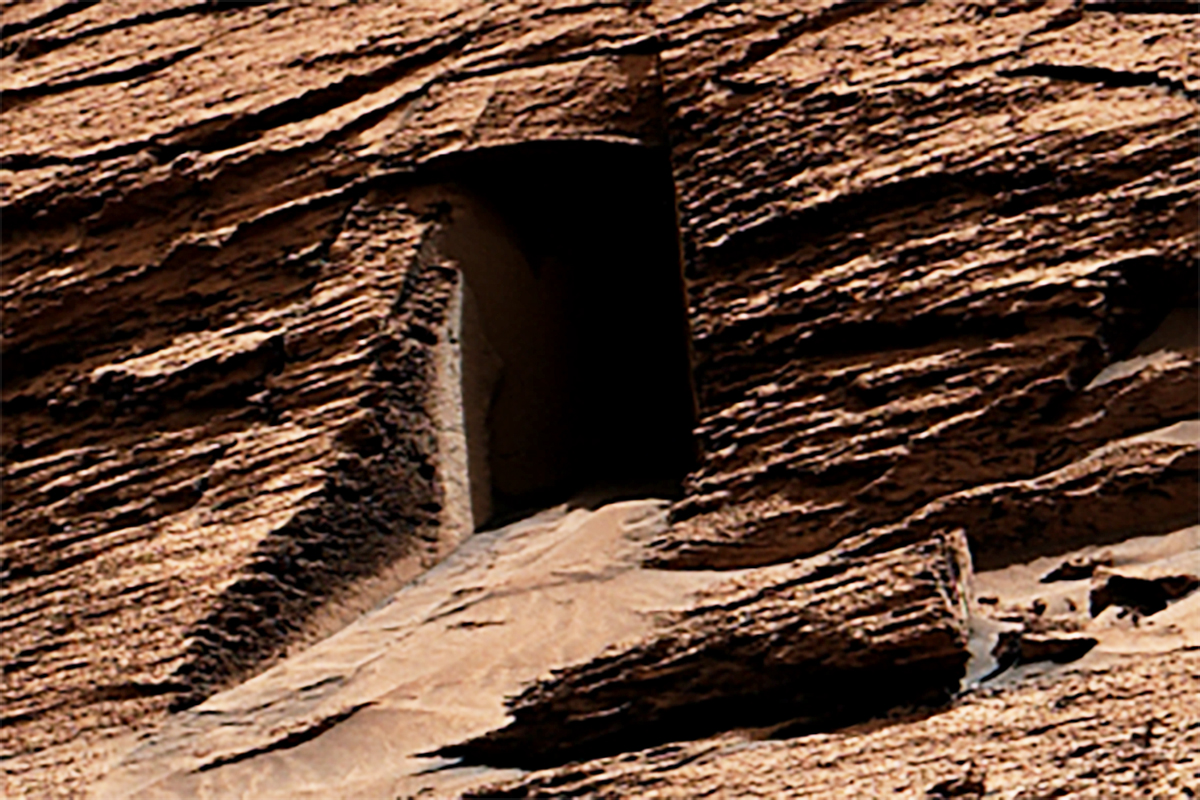
The Mars Express image reveals the south polar cap is not centred, but instead appears lopsided.
In fact, the cap is located about 150 km (93 miles) north of Mars’ geographical south pole.
The lopsided cap is a result of Mars's topography. Deep impact craters – most notably the Hellas Basin, which is the largest impact structure on the planet – act as giant funnels directing strong winds that blow across Mars straight toward its southern pole.
These winds create a mix of low- and high-pressure systems. And because the carbon dioxide in the polar cap sublimates at different rates in these regions, the result is the cap’s lopsided structure.

