
On Monday night, 29 June 2026, the full Moon rises, marking the appearance of the 2026 Strawberry Moon, the seventh full Moon of the year.
This June full Moon in is a micromoon and will rise low in the sky, late in the evening, perhaps making it one of the most challenging full Moons of the year.
More on the full Moon
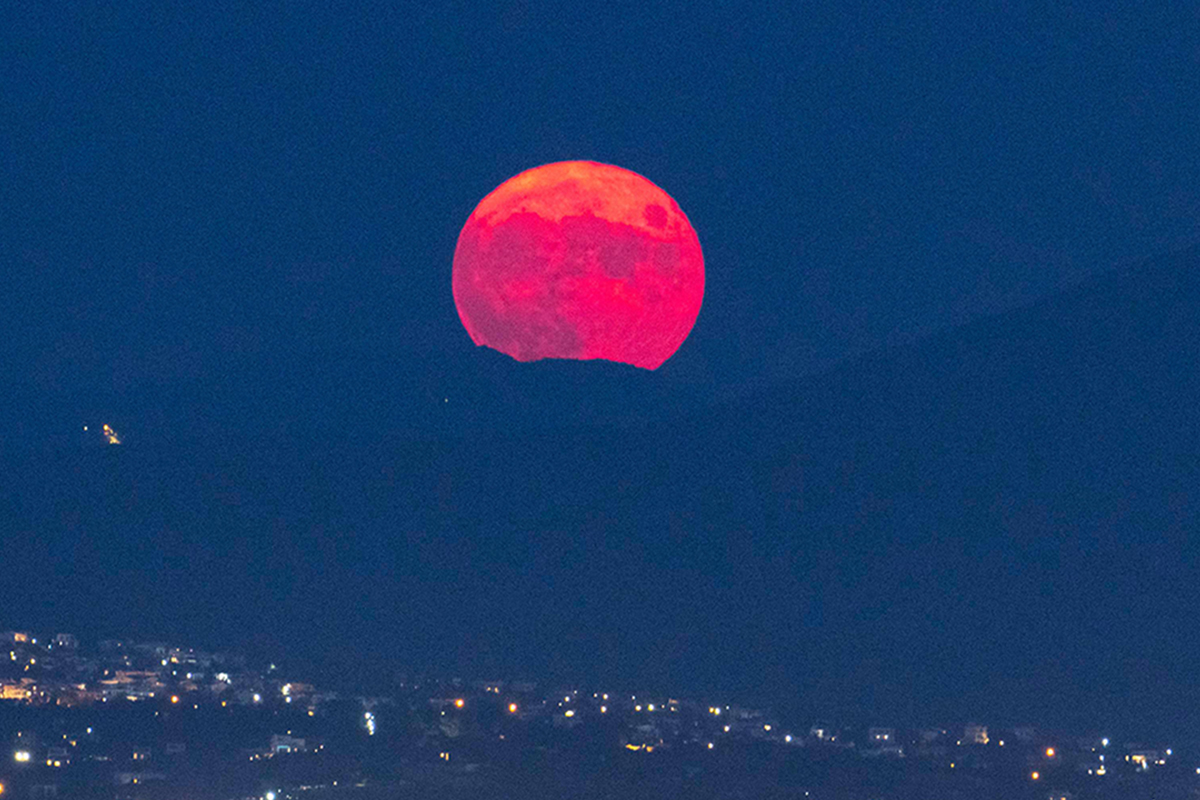
But it will be worth it because, if you can get a clear, flat southern horizon, the full Moon will act as a marker to pinpoint a region of the sky you may not have taken time to notice before.
That's what's happening this weekend, as the nearly-full Moon tracks low across the southern portion of the sky and meets a bright red star that's known as the 'scorpion's heart'.
Here, we'll reveal where to look and when.
Strawberry Moon explained
The 2026 Strawberry Moon rises on the evenings of 29 and 30 June and is the seventh full Moon of the year.
Normally the Strawberry Moon is the sixth full Moon of the year, but this year, because we had a second full Moon – a Blue Moon – in May 2026, that means we're getting an extra full Moon over the course of the year.
Consequently, this year the Strawberry Moon is the seventh full Moon of the year.
The Strawberry Moon is the nickname given to the June full Moon, as a result of June traditionally being the month when strawberries begin to ripen.
There's no other link between this full Moon and strawberries!
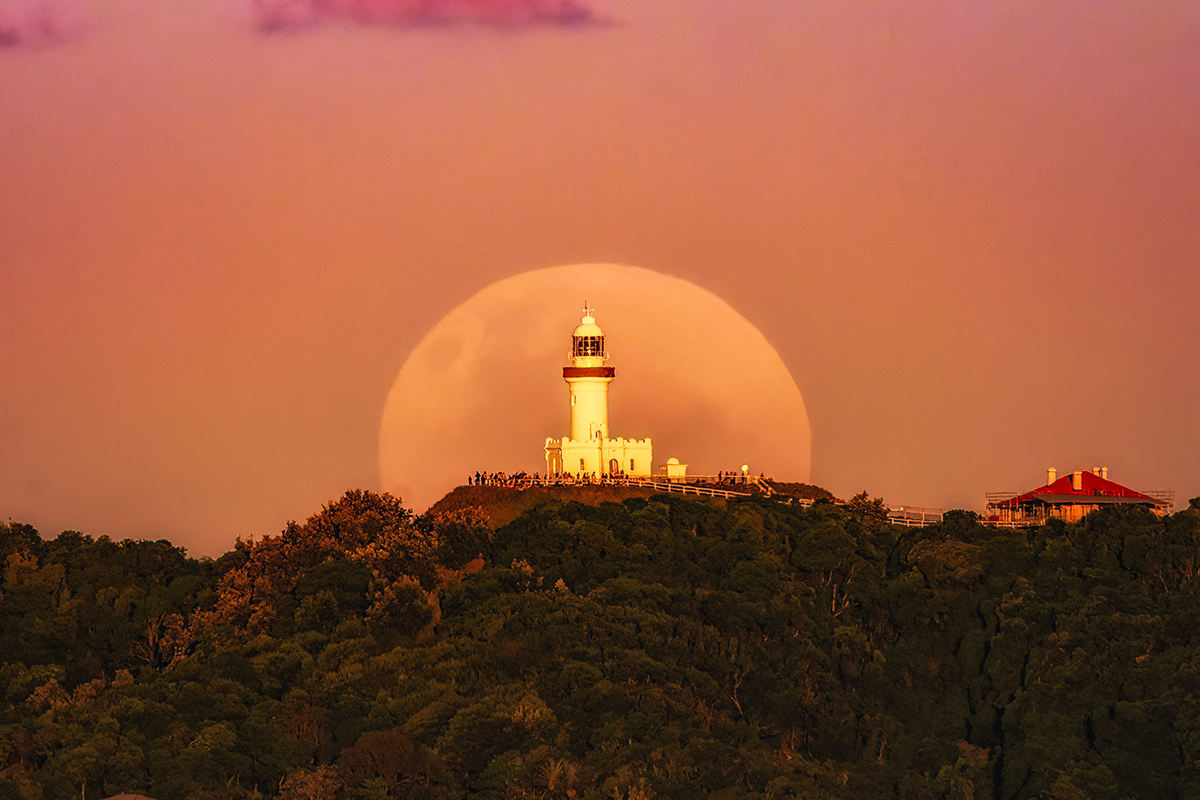
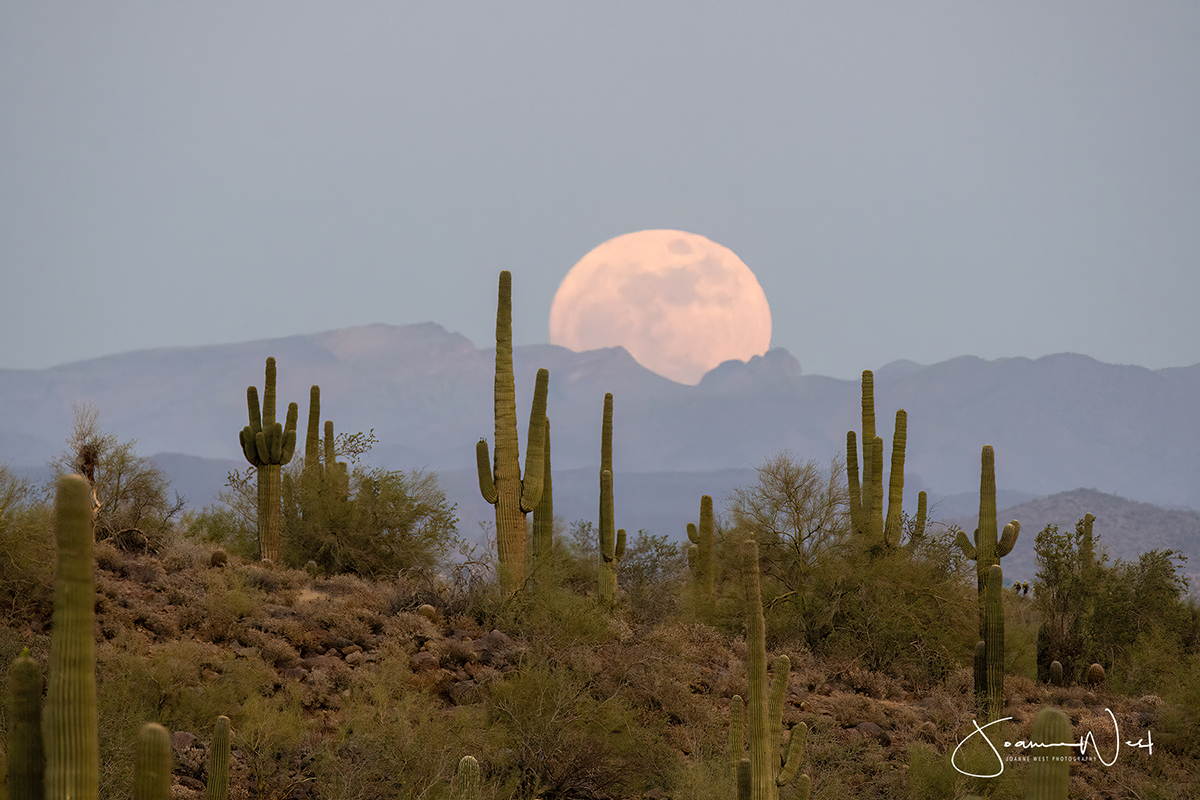
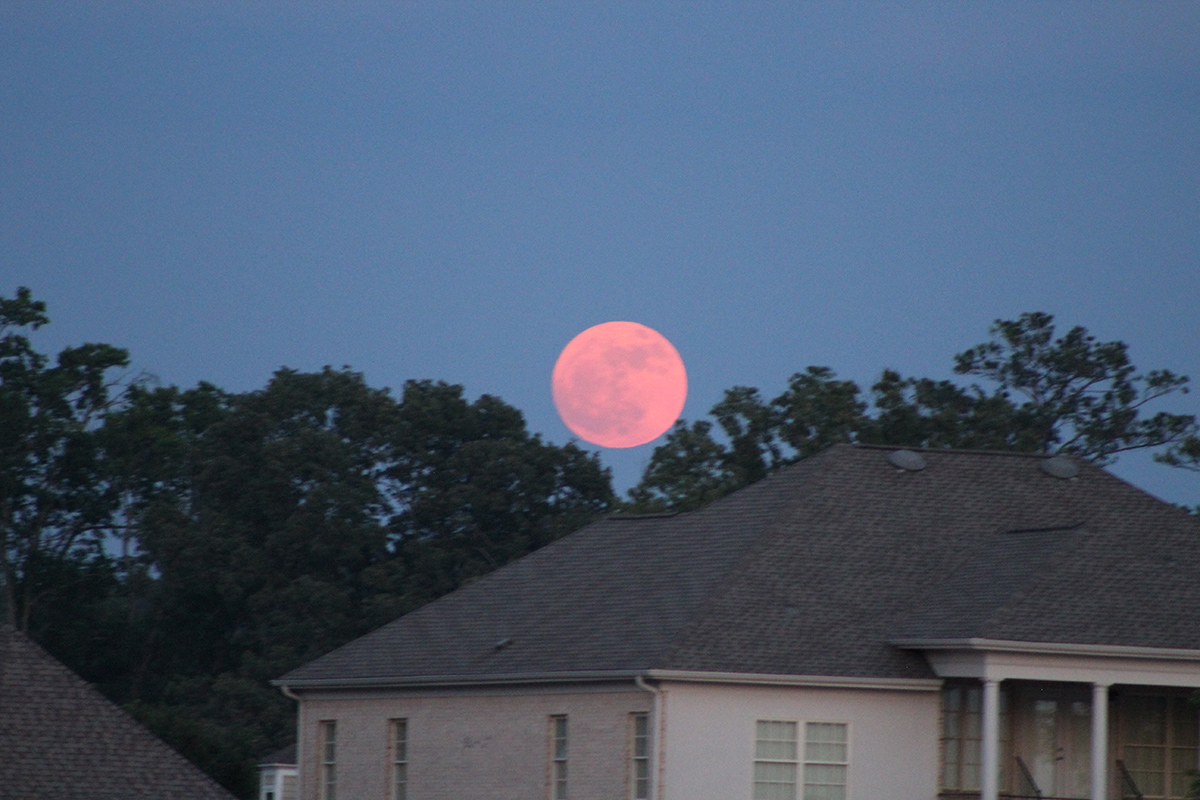
Despite what you may see in images posted online, the June full Moon won't look like a strawberry and, if it does look slightly orange or reddish, that's likely because it's a low-lying full Moon – nothing to do with the 'Strawberry Moon' nickname.
When the full Moon is low in the sky, sunlight reflecting off the surface of the Moon has to travel through a thicker portion of Earth's atmosphere, scattering blue light and making the Moon look orange.
This weekend, head out and see if you can spot the nearly-full Moon beside a bright star in Scorpius.
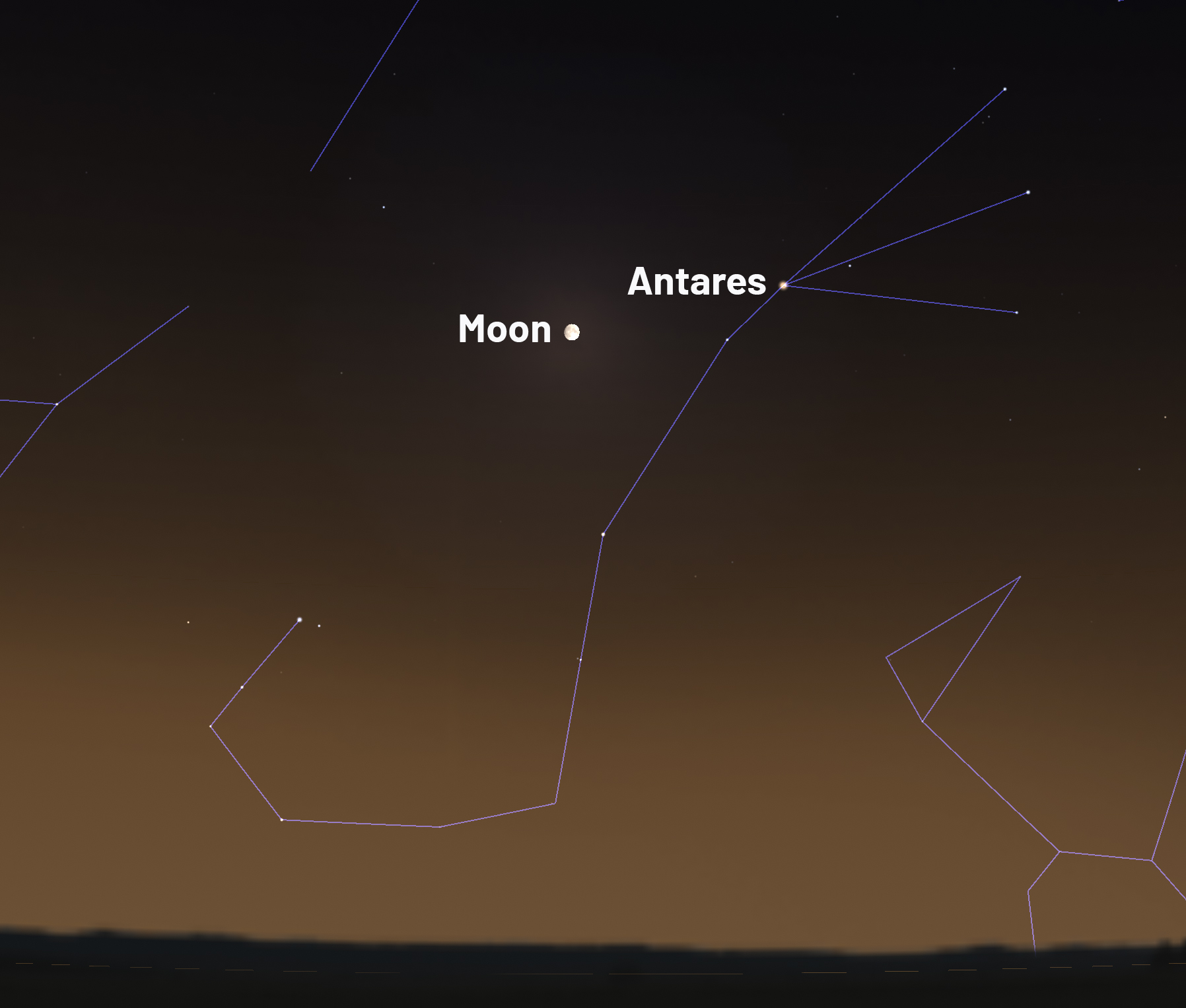
Friday 26 June
The nearly full Moon is visible in the southern sky tonight around sunset.
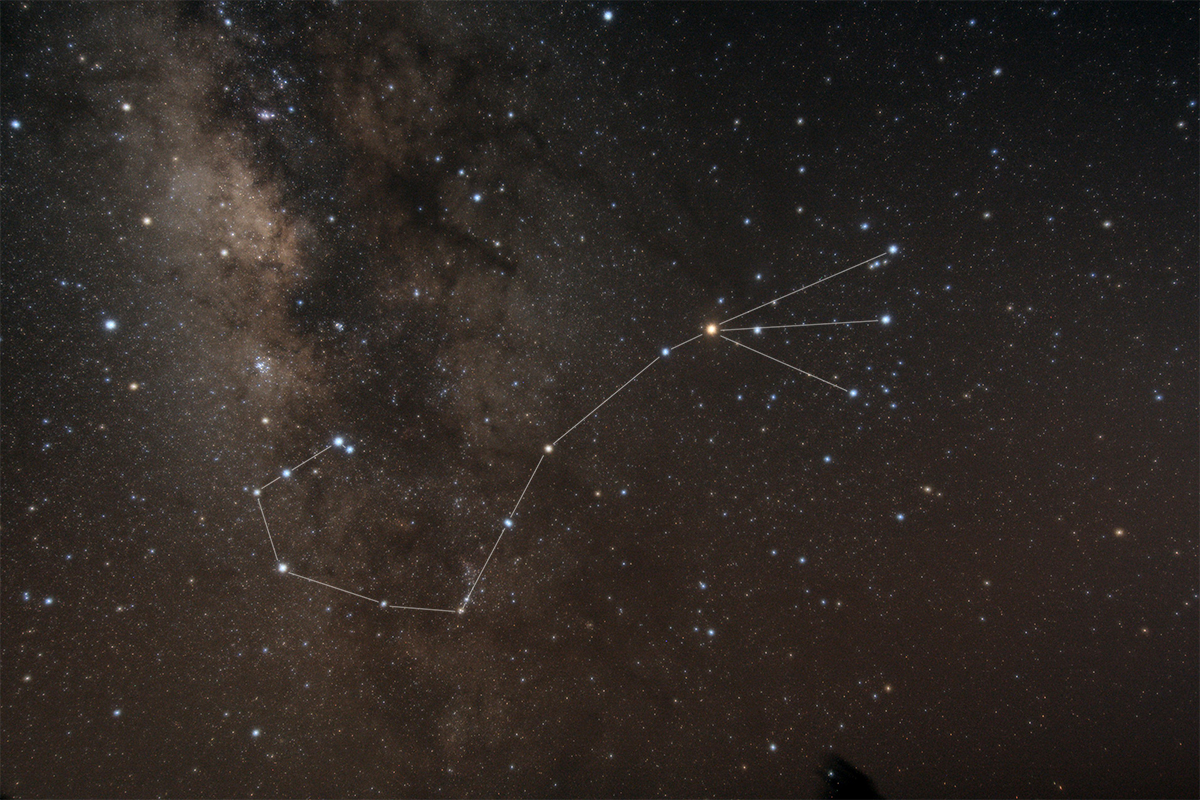
Once the sky grows dark, find the Moon low above the horizon and you may notice a bright, reddish star to its left.
That star is Antares, the brightest star in the constellation Scorpius.
It's often known as the 'scorpion's heart' because it represents the centre of the constellation.
Scorpius can be tricky to see from the Northern Hemisphere, particularly at more northerly latitudes, because from there it never fully rises above the horizon.
That makes this weekend's large Moon a good guide to helping you locate it.
Saturday 27 June
Look again, low in the southern sky tonight and you'll see the Moon is still beside Antares.
However, the Moon is now to the left of the bright star.
That's because, while the stars don't noticeably change where they're positioned at a particular time from one evening to the next, the Moon very much does.
The Moon tracks east from one night to the next, which is why it's now on the other side of Antares, compared to the previous night.
Sunday 28 June
Look tonight and you'll see the Moon has tracked further east and is now in the south-southeastern portion of the sky, very low down and close to the horizon.
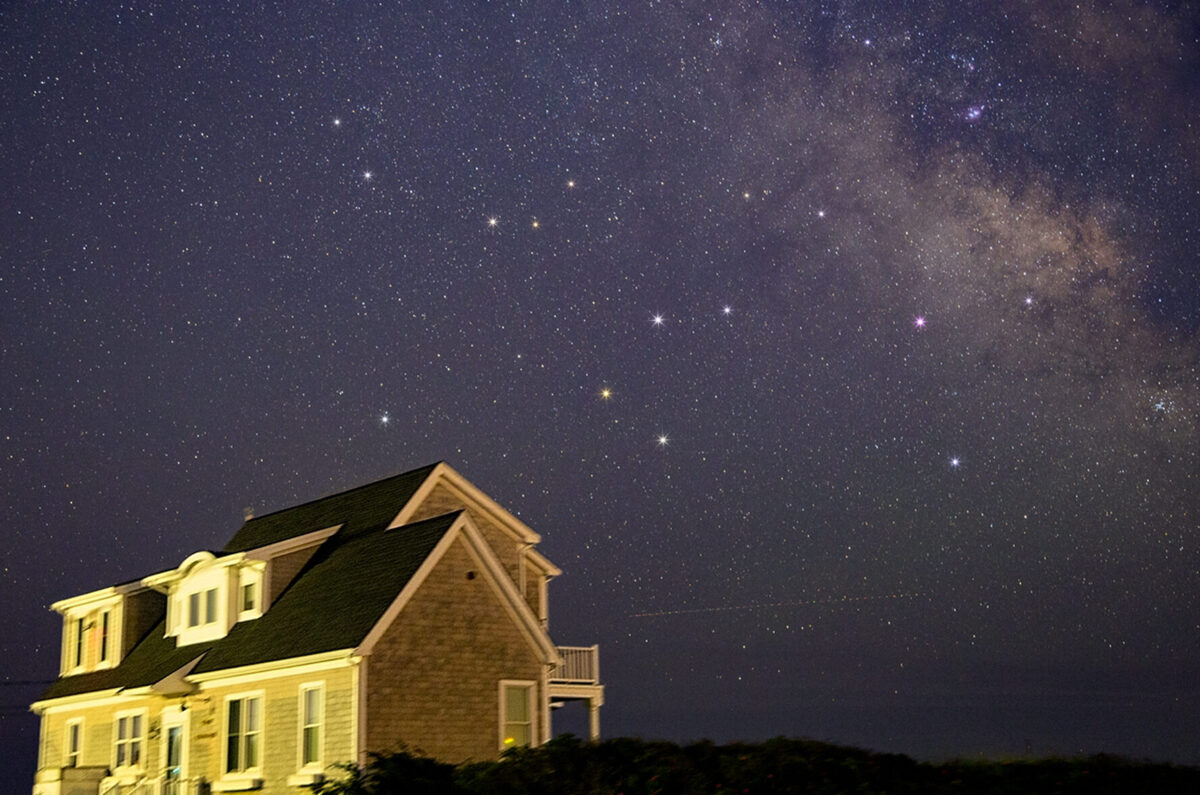
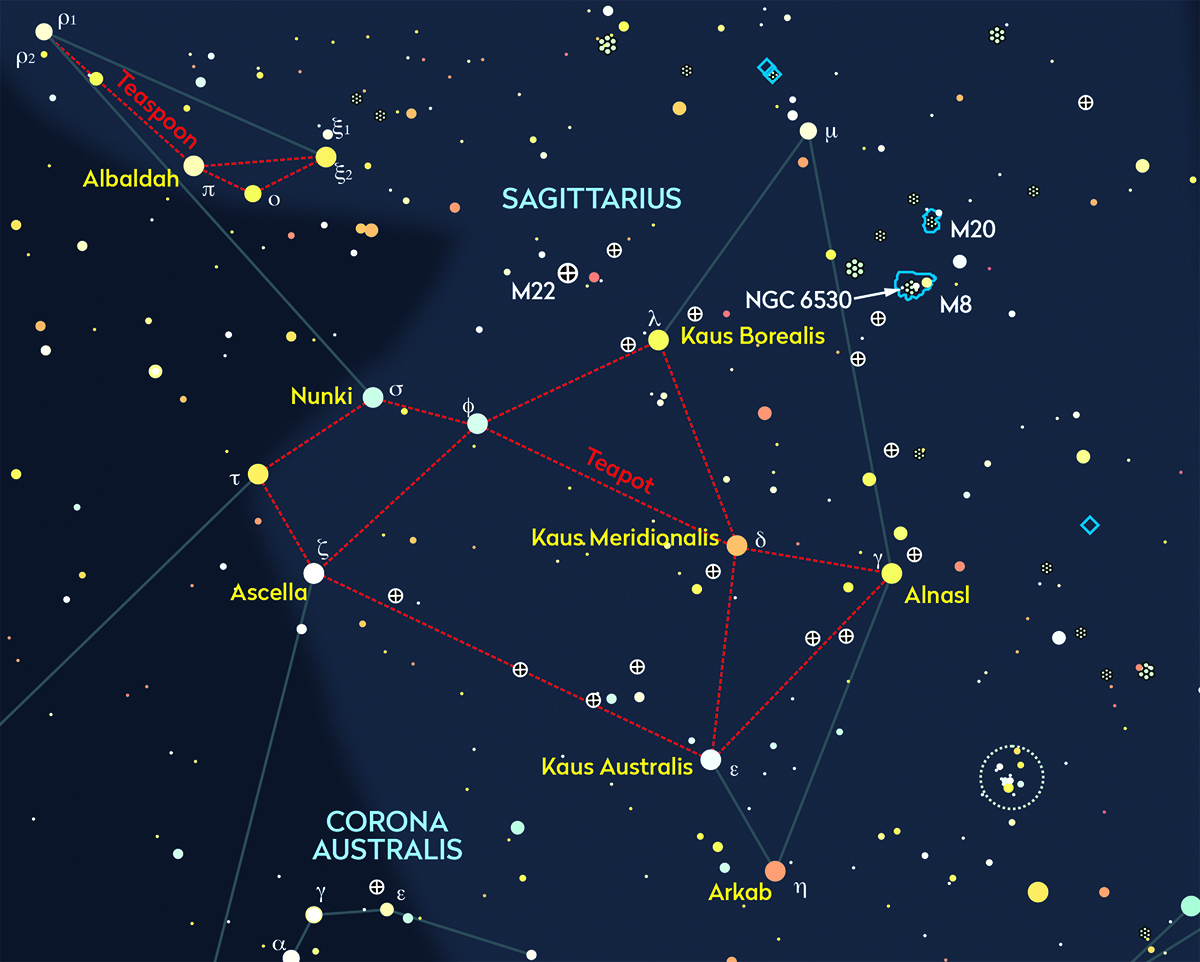
It's close to Sagittarius, a constellation whose central stars form a teapot-shape that's known, fittingly enough, as the Teapot star pattern.
Sagittarius is also the region of the sky where you can see the summer Milky Way stretching upwards.
When you see the band of the Milky Way in the summer sky, you're looking inwards to the centre of our Galaxy.
The caveat to this, however, is that the bright, nearly-full Moon will make both the stars of Sagittarius and the Milky Way tricky to see.
But now that you've been able to mark the location of both of these, wait a week or so until the Moon is waning and out of the way, then look again and see if you can spot them both.
Monday 29 June
Tonight, the Strawberry Moon rises, marking the seventh full Moon of 2026.
It's also a micromoon, because it's at the farthest point from Earth in its orbit.
That happens because the Moon's orbit around Earth is slightly elongated, meaning sometimes te Moon is closer to Earth than at other times.
When the Moon is full at its farthest point from Earth, it's known as a micromoon.
For more on this, read our full guide to the Strawberry Moon.
If you observe or photograph the Strawberry, Moon, share your observations and images with us by emailing contactus@skyatnightmagazine.com

