
Have you noticed two bright stars in the east before dawn? Those two 'stars' are actually the planets Mars and Jupiter.
And tomorrow morning, Sunday 5 October 2026, the crescent Moon will be right next to Mars.
If you're based in northern Canada, you'll get to see a lunar occultation of Mars, when the Red Planet will disappear behind the Moon.
Then the following morning, Tuesday 6 October, the Moon will be next to Jupiter.

Again, from certain parts of the world – namely the eastern regions of the US and the western regions of Africa – a lunar occultation of Jupiter will be visible.
This double-whammy of planet-Moon meetings is easy to see in the sky before dawn.
They're visible with the naked eye and great for early risers or those with kids who begin the day before sunrise.
Here we'll go through where you need to look and when.
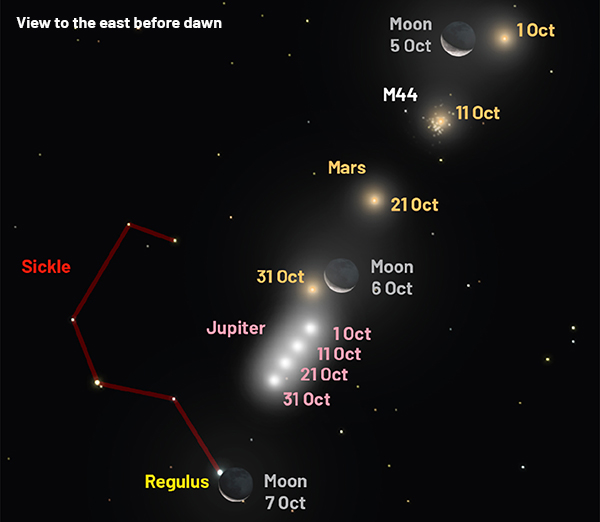
Winter 2026 is planet season
Mars and Jupiter are spectacular in the morning sky at the moment. And they're going to get closer together as the month progresses.
By November, Venus will enter the show, with Saturn, Uranus and Neptune also on display.
It's going to be a fantastic few months for planet spotting. And it starts now, with the days getting shorter and the planets re-emerging into the morning and evening sky.
Get all the info you need over the coming weeks by signing up to our newsletter via the form below.
Monday 5 October
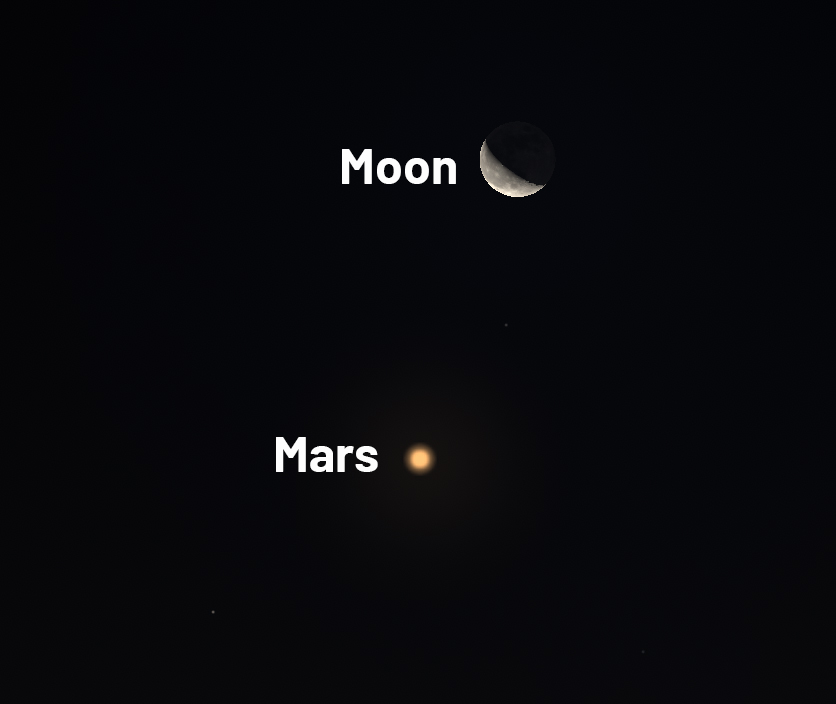
Look to the eastern part of the morning sky before the Sun rises and you'll see the crescent Moon, with Mars just below it.
The pair will get closer and closer together as dawn approaches, tracking to the southeastern portion of the sky.
While it's still dark, look further below the Moon and Mars and you'll see another bright 'star'. That's Jupiter, and it will meet the Moon the following morning.
Tuesday 6 October
While the location of the planets in the sky doesn't change from one day to the next – to any noticeable degree – the Moon does.
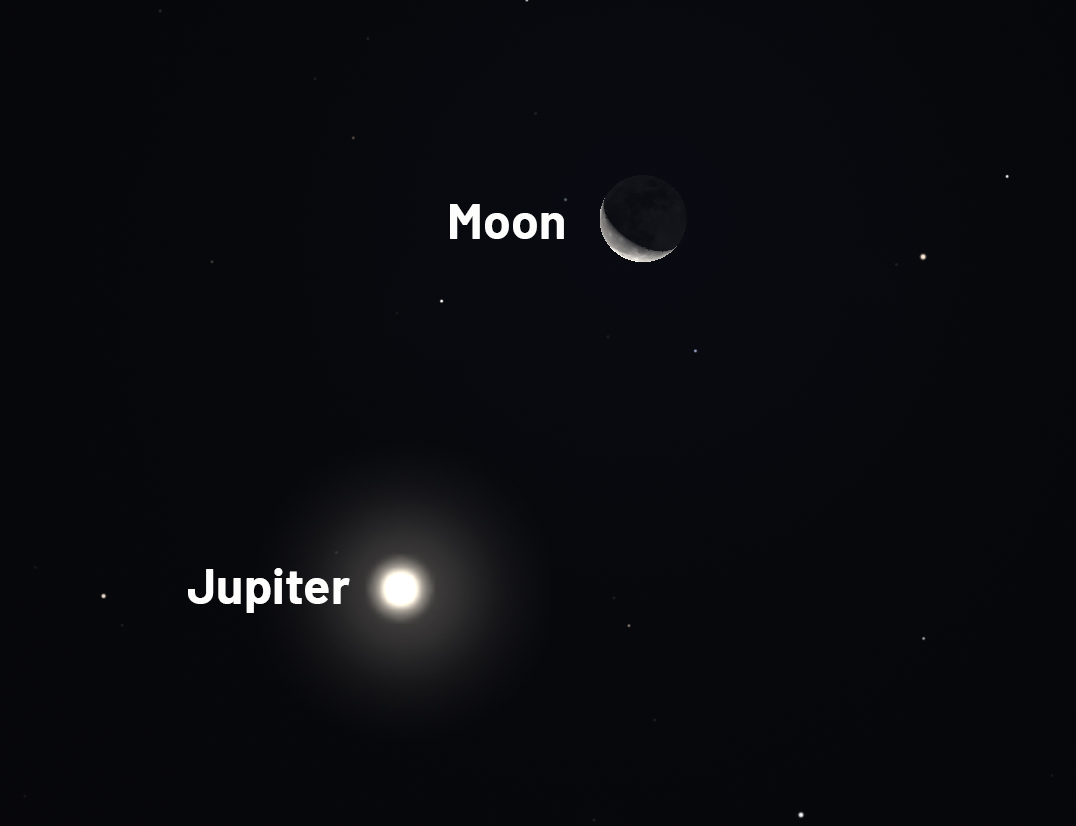
The Moon moves to the east, day after day, so this morning it has a close encounter with the planet Jupiter.
You'll perhaps notice the crescent Moon is thinner this morning and rises in the east a little later than it did on Monday.
Jupiter is right below the Moon and the pair will climb higher across the sky towards the southeast as dawn approaches.
If you do observe the meetings of the Moon and Mars and Jupiter, share your stories and images with us by emailing contactus@skyatnightmagazine.com

