
NASA is ramping up its plans for crewed missions to the Moon and establishing a permanent settlement on the lunar surface.
Plans include an eventual target of sending astronauts to the Moon every six months, building habitable infrastructure on the lunar surface and sending rovers, instruments and technology demonstrations.
More on NASA spaceflight

The space agency also said it's working on a new space station that will "avoid any gap in U.S. human presence" in low-Earth orbit.
And NASA revealed plans for Space Reactor-1 Freedom, a nuclear-powered spacecraft the agency wants to send to Mars before the end of 2028.
NASA announced the plans during its 'Ignition' event on Tuesday, March 24, 2026, where it outlined further reliance on the commercial space sector for delivering its lunar and low-Earth-orbit goals.

New ambitions for a new era?
"NASA is committed to achieving the near‑impossible once again, to return to the Moon before the end of President Trump’s term, build a Moon base, establish an enduring presence and do the other things needed to ensure American leadership in space," NASA Administrator Jared Isaacman said at the event.
"The clock is running in this great‑power competition, and success or failure will be measured in months, not years."
Isaacman was sworn in as NASA administrator in December 2025.
In 2021 he was part of Inspiration4, the first all-civilian trip into low-Earth-orbit, and in 2024 headed Polaris Dawn, a private crewed mission around Earth that saw the first spacewalk ever conducted on a commercial spaceflight.
"If we concentrate NASA’s extraordinary resources on the objectives of the National Space Policy, clear away needless obstacles that impede progress, and unleash the workforce and industrial might of our nation and partners, then returning to the Moon and building a base will seem pale in comparison to what we will be capable of accomplishing in the years ahead," he said.
NASA's return to the Moon
The announcements come just one week ahead of the planned launch of NASA's Artemis II mission, which will send four astronauts around the Moon and back.
And the Ignition event follows a recent upheaval of NASA's Artemis programme, in which the space agency announced that Artemis III would no longer send humans to the lunar surface, but would instead fly in low-Earth-orbit in 2027 to practise rendezvous and docking procedures with commercial lunar landers.
Instead, the first crewed lunar landing of the Artemis programme is now planned for Artemis IV in 2028.

During the March 2026 Ignition event, NASA announced that beyond Artemis V, NASA would "incorporate more commercially procured and reusable hardware to undertake frequent and affordable crewed missions to the lunar surface," and said it would "initially target landings every six months, with the potential to increase cadence as capabilities mature."
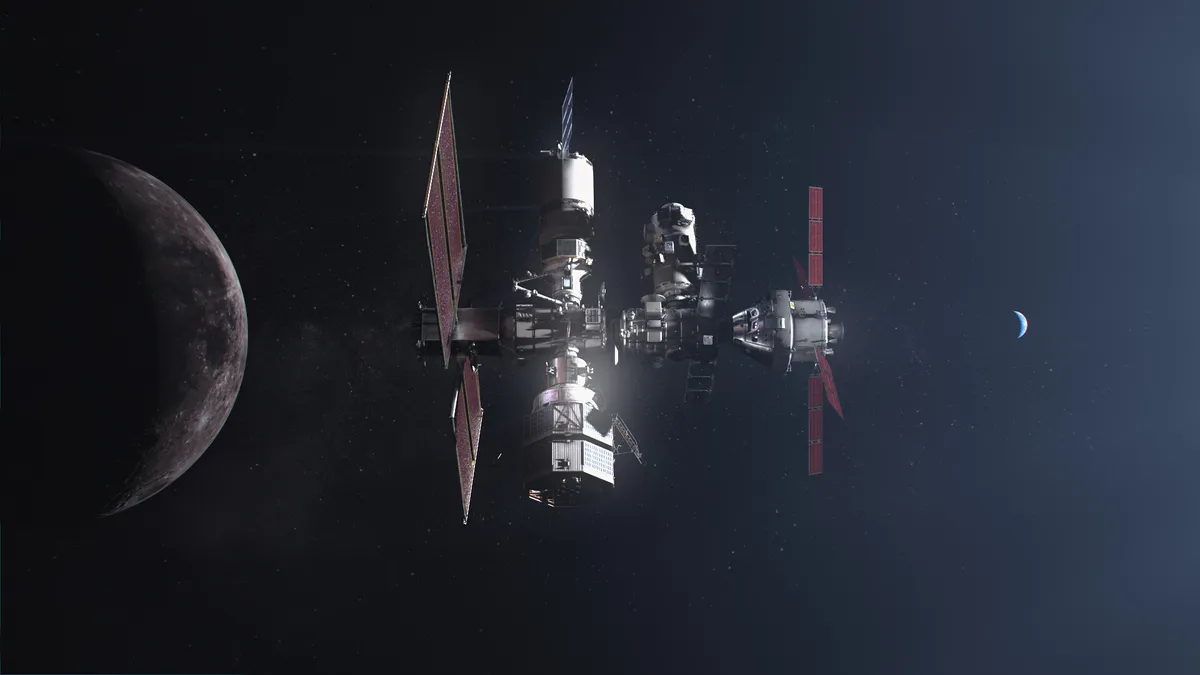
NASA also said it would pause its plans for the Lunar Gateway – originally planned as a space station in orbit around the Moon.
The agency said it would instead focus on building infrastructure on the Moon that would enable sustained operations on the surface.
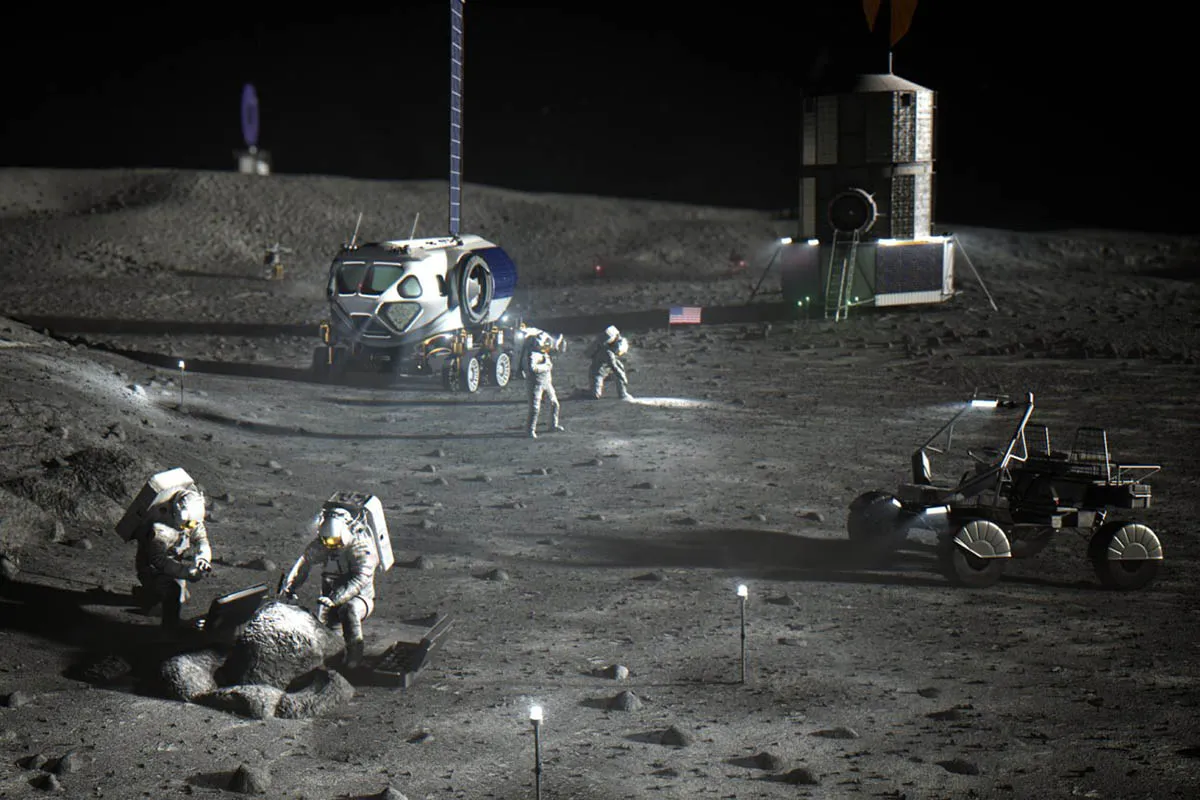
NASA plans to increase its lunar activity by sending rovers, instruments and other technology demonstrations to ramp up mobility, power generation, communications and navigation.
Then, NASA says, it will move to semi‑habitable infrastructure and regular astronaut operations on the surface of the Moon, involving international partners like JAXA (Japan Aerospace Exploration Agency), the Italian Space Agency and the Canadian Space Agency.
This will eventually develop into the delivery of infrastructure to the Moon that would enable continuous human presence on the surface.
A new space station
The International Space Station has seen a continuous human presence in Earth orbit since its first occupation in 2000, but its time is slowly coming to an end.
There have been multiple replacements for the ISS mooted over recent years, but in March 2026, NASA announced it would introduce a phased approach to maintaining US human presence in Earth orbit, centred around the existing Space Station infrastructure.

The plan would be to attach a new module to the existing Space Station that would later detach into free flight.
NASA would then be "one of many customers purchasing commercial services" on the new station.
"To stimulate the orbital economy, NASA would expand industry opportunities, including private astronaut missions, commander seat sales, joint missions, multiple module competitions, and prize‑based awards," the space agency said.
What are your thoughts on NASA's lunar ambitions? Let us know by emailing contactus@skyatnightmagazine.com

