A four-planet parade featuring Mercury, Venus, Jupiter and Mars will be visible stretching upwards in a line from the southeast horizon in November 2026, making for a beautiful morning alignment.
The planet alignment is visible in the morning sky in the dark, early hours before sunrise.
And with the mornings getting darker as we approach winter, that makes the four Solar System planets easy to see before you start your day.
In this guide we'll reveal where you need to look and when.
- Peak dates: Mid to late November 2026
- Best time to look: 45–60 minutes before sunrise
- Where to look: Southeast, along the eastern horizon
- Tip: A clear, flat southeast horizon makes it much easier to see
Visible planets in the November alignment and when to see them
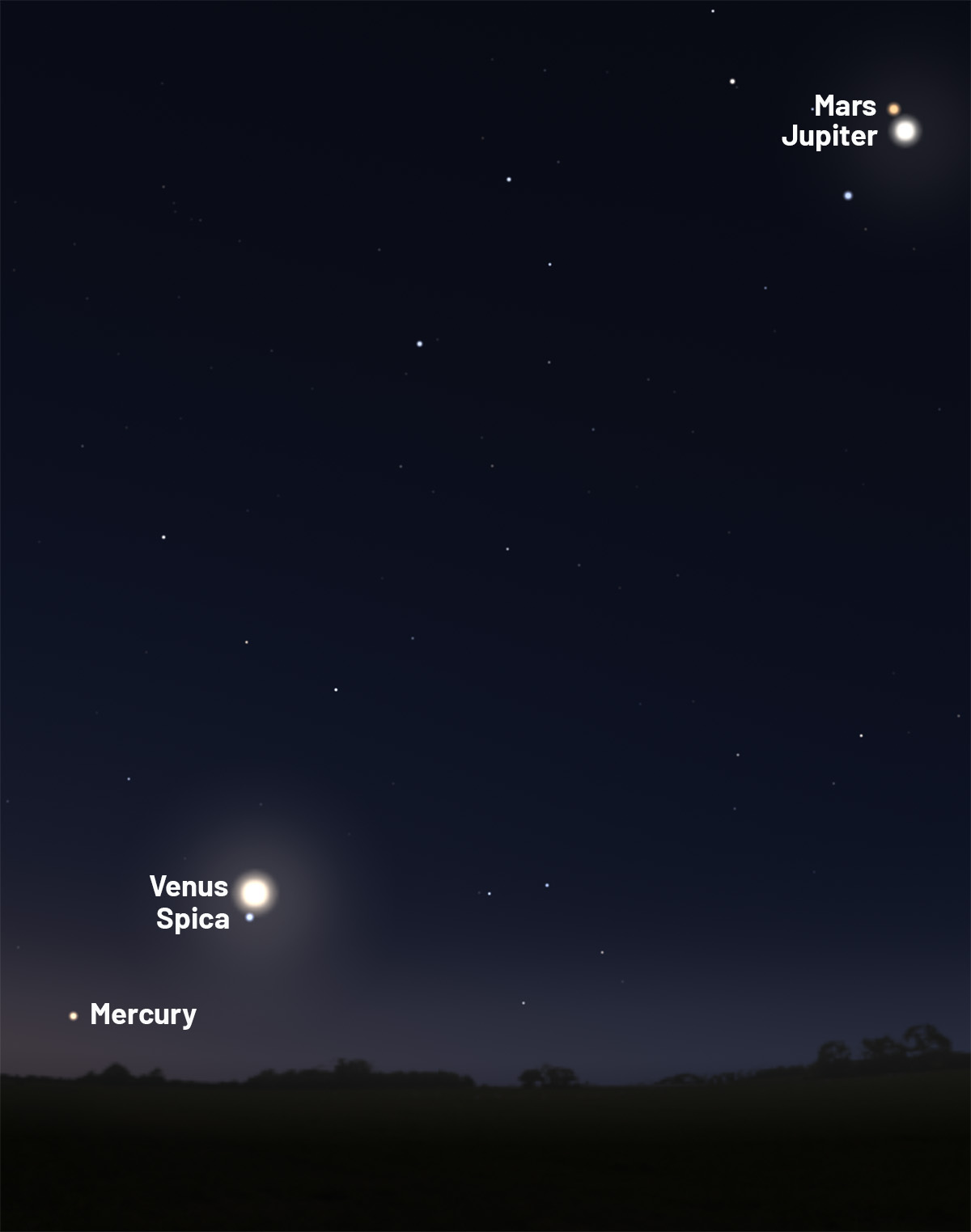
Morning alignment – Mercury, Venus, Mars, Jupiter
Mercury: Emerges mid-November as a morning planet. It sits the lowest of the four aligned planets towards the southeast. You'll need a clear, flat horizon to see it and must stop observing well before sunrise for safety.
Venus: Emerges into the morning sky in early November. Venus is located in the same patch of sky as Mercury, but higher up and brighter, making it easier to spot. You might also spot Spica (the brightest star in Virgo) close to it.
Jupiter and Mars: Both are visible in the morning sky. Mars is the highest of the four alignment planets, while Jupiter is lower than Mars but brighter.
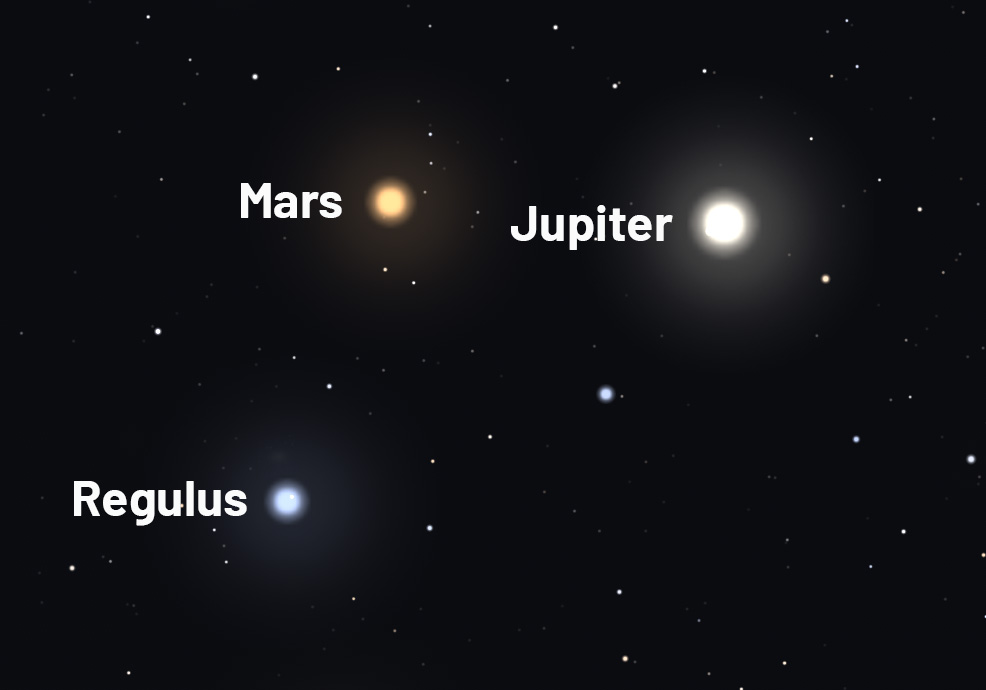
Mars-Jupiter Conjunction (14–17 November): The pair will be at their closest, looking like a bright double star (or a triple star if you include nearby Regulus).
Tightened pattern (22 November): Mars, Jupiter and Regulus will form a snug triangle in the morning sky.
More stargazing
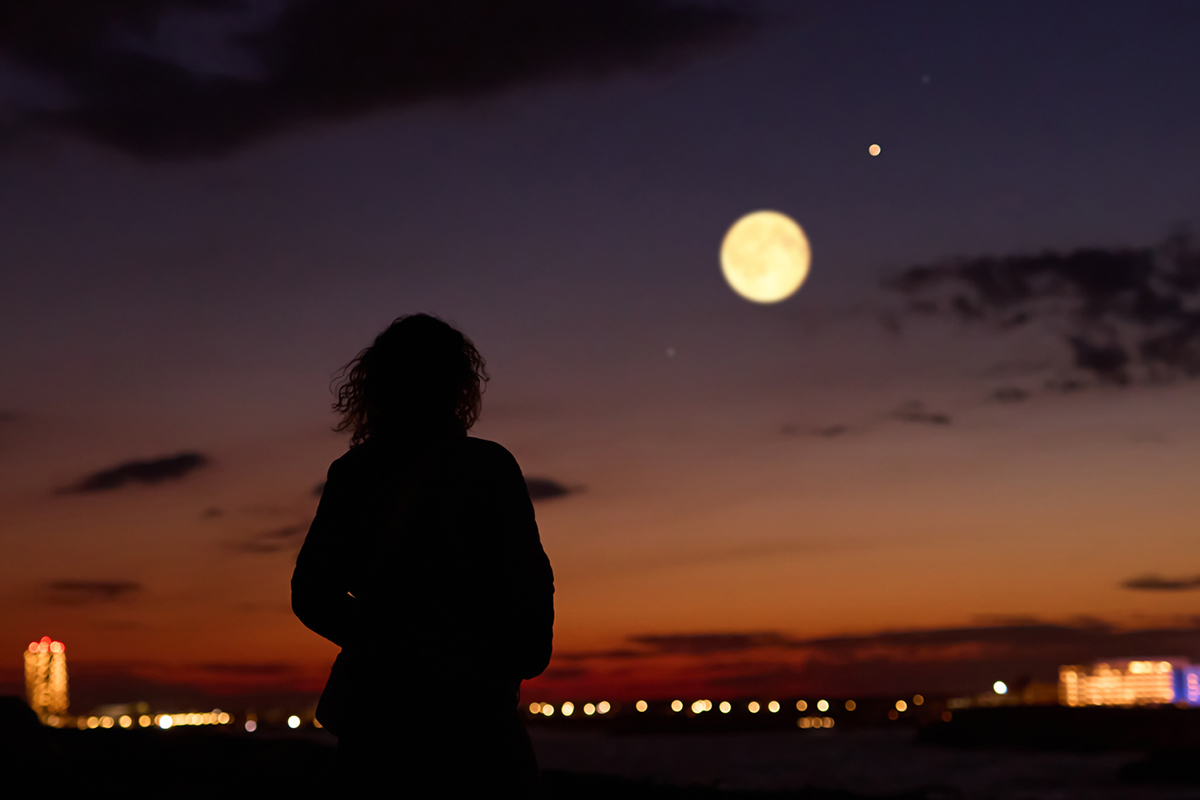
Other planets in November 2026 – Saturn, Uranus, Neptune
- Saturn: Visible in the evening after sunset. It rises in the east at dusk, tracks across the southern sky and sets in the west at dawn.
- Uranus: Reaches opposition on 25 November 2026 (its best time to be seen). Visible in the southern sky around midnight between the Pleiades and Hyades star clusters. Although visible with the naked eye under good conditions, Uranus is easier to see with binoculars or a telescope.
- Neptune: Located to the right of Saturn and only visible using binoculars or a telescope.
It is technically possible to see all seven planets in one day during November, if you catch Mercury, Venus, Mars and Jupiter before sunrise then Saturn, Uranus, and Neptune after sunset or around midnight.
Share your planet alignment observations and images by emailing contactus@skyatnightmagazine.com