
So you've heard there's a six-planet alignment on 28 February 2026, but you want to cut through the jargon and get the key facts that will help you see it.
This is the guide for you. Here are our no-nonsense, simple tips for the planet alignment, for complete beginners.
Get weekly stargazing advice by signing up to receive the BBC Sky at Night Magazine e-newsletter
Read our complete guide to the planet alignment of February 2026.
Six planets are visible in the sky

While some planet parades might feature seven planets, this particular event includes six: Mercury, Venus, Jupiter, Saturn, Uranus and Neptune. The seventh planet, Mars, is not visible.
The six planets will appear above the horizon together at once, meaning there's a chance you'll be able to see the majority of the Solar System worlds in a single evening.
This alignment isn't a perfect straight line, but instead follows the curved line of the ecliptic, which represents the flat plane of our Solar System that we see as we look out into space from Earth.
However, it won't be easy - or even possible to see all the planets in the planet alignment.
Key takeaway: six planets are above the horizon at the same time, though Mars is missing from the group.
More planet-observing tips

Watch the western horizon after sunset

Most of the action happens in the west just as the day ends.
Mercury, Venus, Saturn and Neptune are clustered low down on the western horizon.
And because they're so low, you'll need a viewing spot with a flat, clear horizon, free from tall buildings or trees, to be able to see them.
Timing is critical. Look from 30–60 minutes after sunset before these planets dip below the horizon.
Key takeaway: look toward the western sky shortly after the Sun sets to find Mercury, Venus, Saturn and Neptune clustered low to the ground.
Jupiter is your brightest target

If you only manage to spot one planet during the February planet alignment, it will likely be Jupiter.
It's spectacularly bright and much higher in the sky than the others, making it the easiest to see with the naked eye.
On February 28, you can find it in the southern part of the sky near the stars Castor and Pollux in the constellation Gemini.
It will be higher than the Moon and more prominent than its fellow planets.
Key takeaway: Jupiter is the easiest planet to find because it's bright and high in the southern sky.
Never look at the Sun

Safety is the most important rule for beginners observing this planet alignment.
Because several planets – Mercury, Venus and Saturn – are visible very close to where the Sun has just set, there's a risk of accidentally looking at the Sun.
Viewing the Sun directly, especially through binoculars or a telescope, can cause serious damage to your eyesight.
Always wait until the Sun has completely disappeared below the horizon before you begin scanning the sky.
Key takeaway: wait until the Sun has fully set before looking for the western planets
Venus and Mercury are a pair
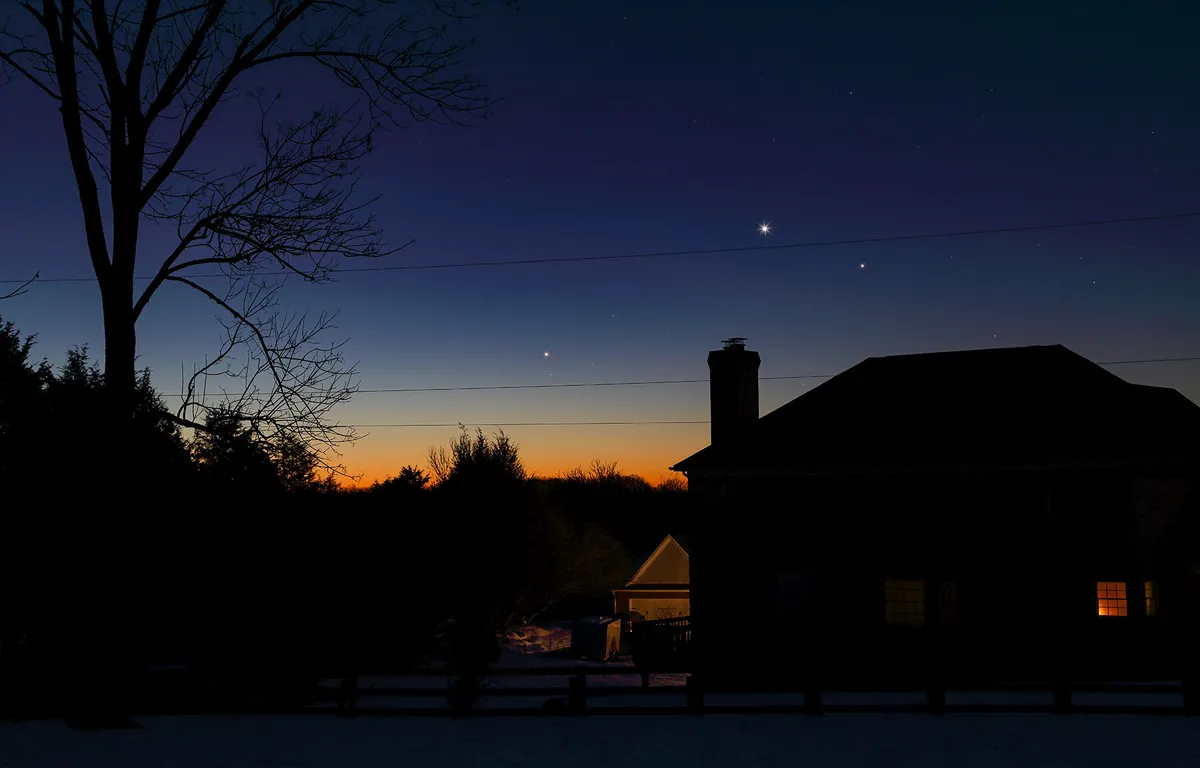
Toward the end of February 2026, Venus and Mercury are close to each other in the sky.
This is helpful for beginners because Venus is quite bright and can act as a guide to finding its dimmer neighbour.
Mercury reached 'greatest eastern elongation' (its furthest point from the Sun) earlier in the month, so by February 28, it's setting later than usual, but becoming fainter.
If you find the bright point of Venus, look just to the right to find Mercury.
Key takeaway: use the bright light of Venus to help you locate much fainter Mercury nearby.
Saturn is a departing guest

While Saturn has been a great target for observers recently, it's becoming much harder to see by the end of February.
It's dropping lower toward the western horizon each night and setting very soon after the Sun.
On February 28, it will be part of a small cluster alongside Venus and Mercury.
Key takeaway: Saturn is visible low in the west but will set very quickly after sunset, so you must catch it early.
You'll need help to see Uranus

Uranus is an ice giant that's technically visible to the naked eye under perfect conditions, but for most people, it will require binoculars or a telescope.
It's high in the sky, which helps with visibility, and can be found beneath the Pleiades star cluster in the constellation Taurus.
Even with binoculars or a telescope it will appear as a small, faint point of light compared to the brilliance of nearby Jupiter.
Key takeaway: to see Uranus, use binoculars and look for it below the Pleiades star cluster.
Neptune is the ultimate challenge
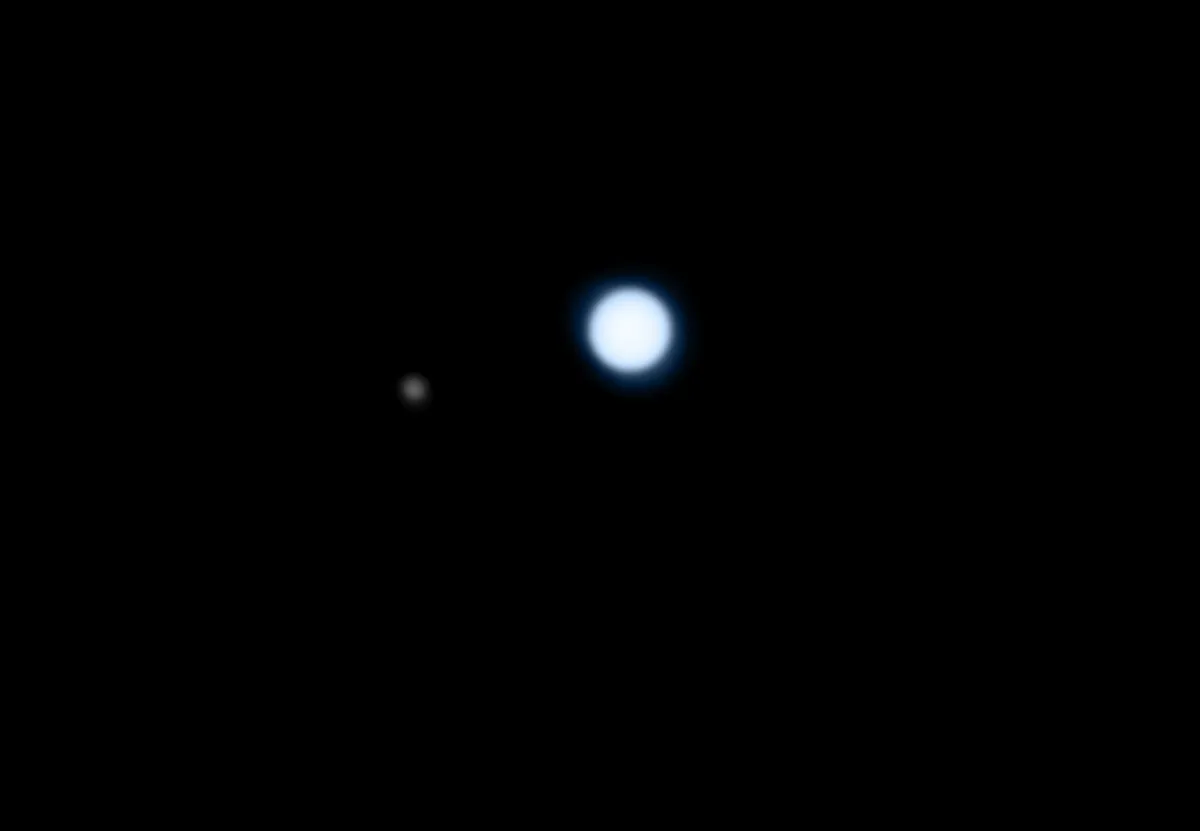
Neptune is the most difficult planet to spot in this alignment and is impossible to see from Earth without a telescope.
On February 28, it will be positioned very low in the western sky near Saturn. Because it is so close to the horizon and the setting Sun, we advise extreme caution.
If you aren't sure the Sun has completely set, you should not attempt to find Neptune with a telescope.
Likewise, if you're not an experienced astronomer, and are in any doubt at all, do not attempt to observe Neptune through binoculars or a telescope.
Key takeaway: Neptune requires a telescope, perfect timing and astronomy experience, as it sits very low and faint near Saturn.

