
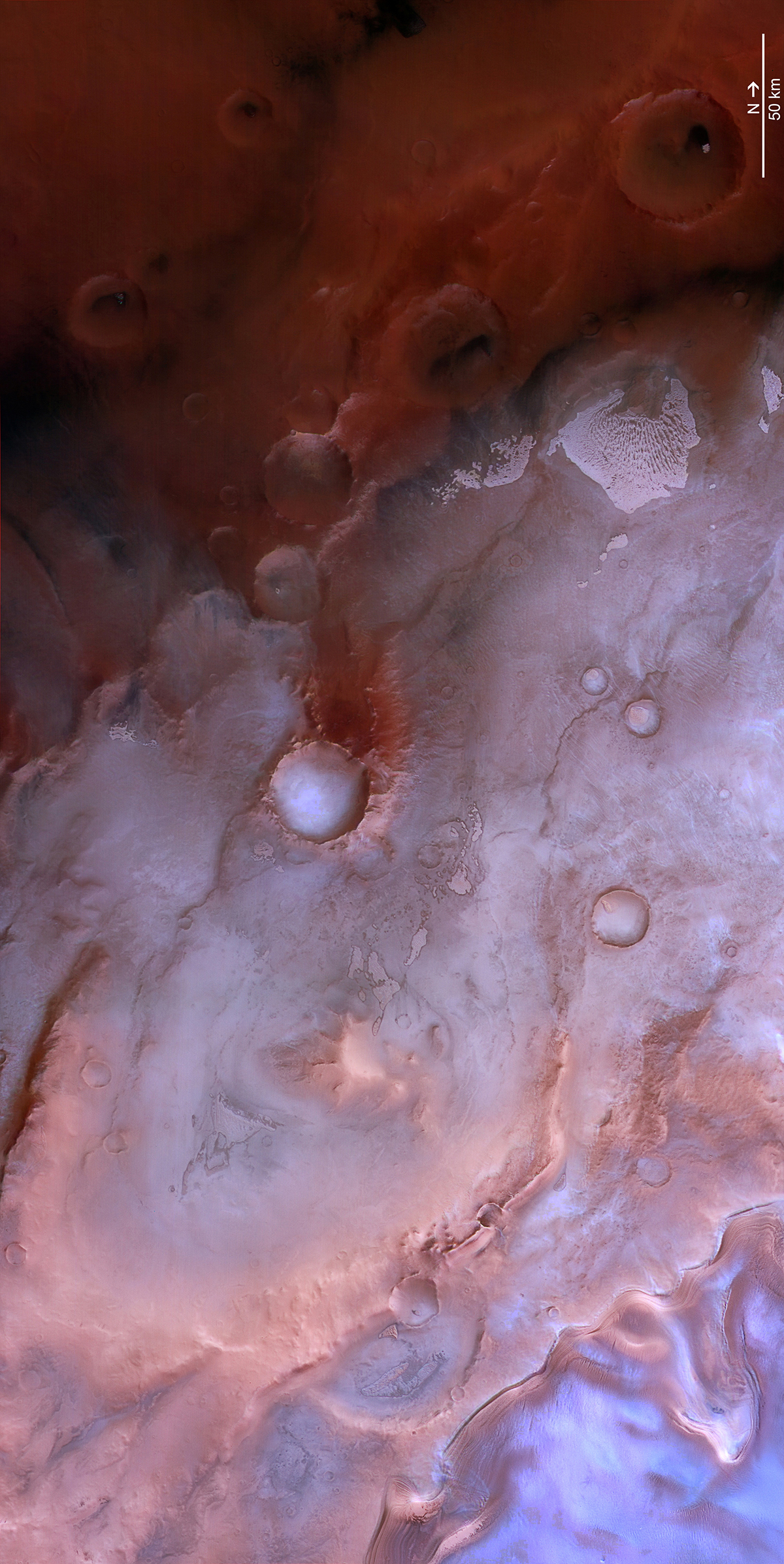
Mars is famous for its rusty-red landscapes, but this spectacular image from ESA’s Mars Express shows the Red Planet in an altogether different palette.
Swirls of purple, pink and raspberry surround an icy cliff called Thyles Rupes at the planet’s south pole, which stretches for hundreds of kilometres and rises more than a kilometre high in places.
Mars’s familiar red and ochre appearance is largely caused by iron-bearing minerals that have oxidised – effectively rusting in the planet’s environment.
But in this view, a combination of volcanic material, frost, dust and rosy early-morning light produce its predominantly purple tones.
More amazing images of Mars
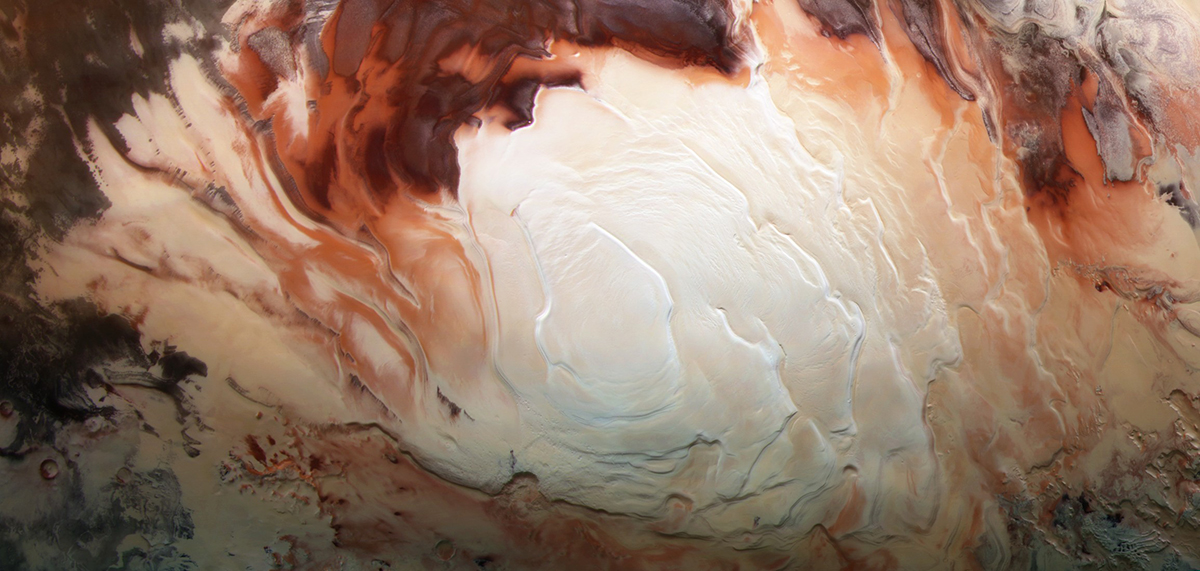
The darker areas are rich in minerals such as olivine and pyroxene, produced and distributed by ancient volcanic activity.
Meanwhile, the pale and bluish regions are covered with carbon dioxide frost.
Remarkably, some of this seasonal frost remained on the surface even though the image was taken during Martian spring.

