
From the hundreds and thousands of images of Mars captured by rovers on the Martian surface, you could be forgiven for thinking the Red Planet to be a boring, monochrome world.
But views from above captured by spacecraft orbiting the planet often tell a different story, revealing bird's eye views of enormous canyons and volcanoes, snow-capped peaks and swirls of Martian mud.
The European Space Agency's Mars Express spacecraft has been orbiting Mars since 2003, sending back amazing images of the Red Planet from high above its surface.
More amazing Mars images
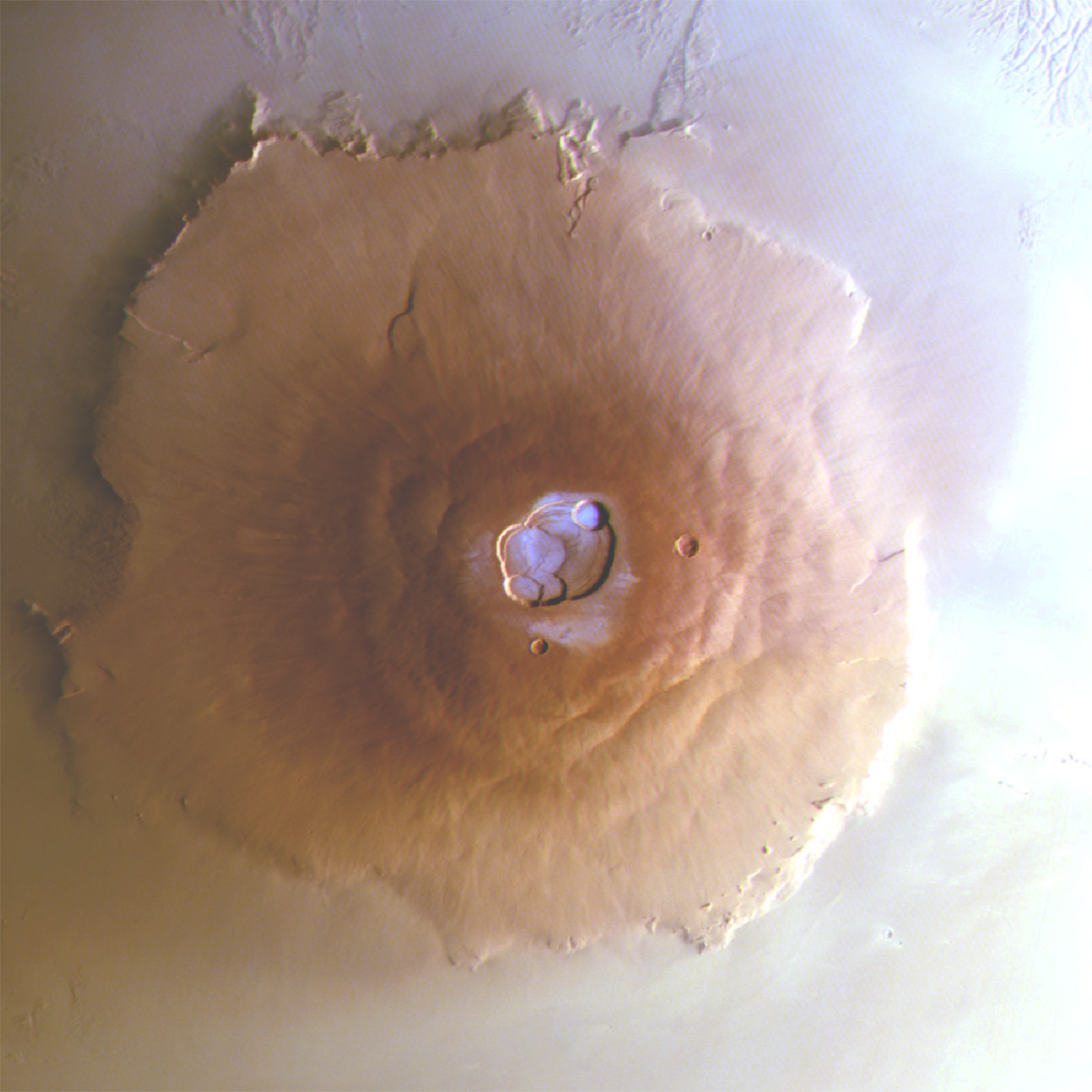
While scrolling through some of Mars Express's best views of the Red Planet, we couldn't help but find ourselves feeling rather peckish for some reason.
We soon realised that many of its most spectacular images reveal views of Mars that look rather like some of our favourite ice cream flavours.
Here are 5 of the orbiter's most delicious-looking views of the Red Planet – and the science behind what we're really seeing.
Raspberry ripple
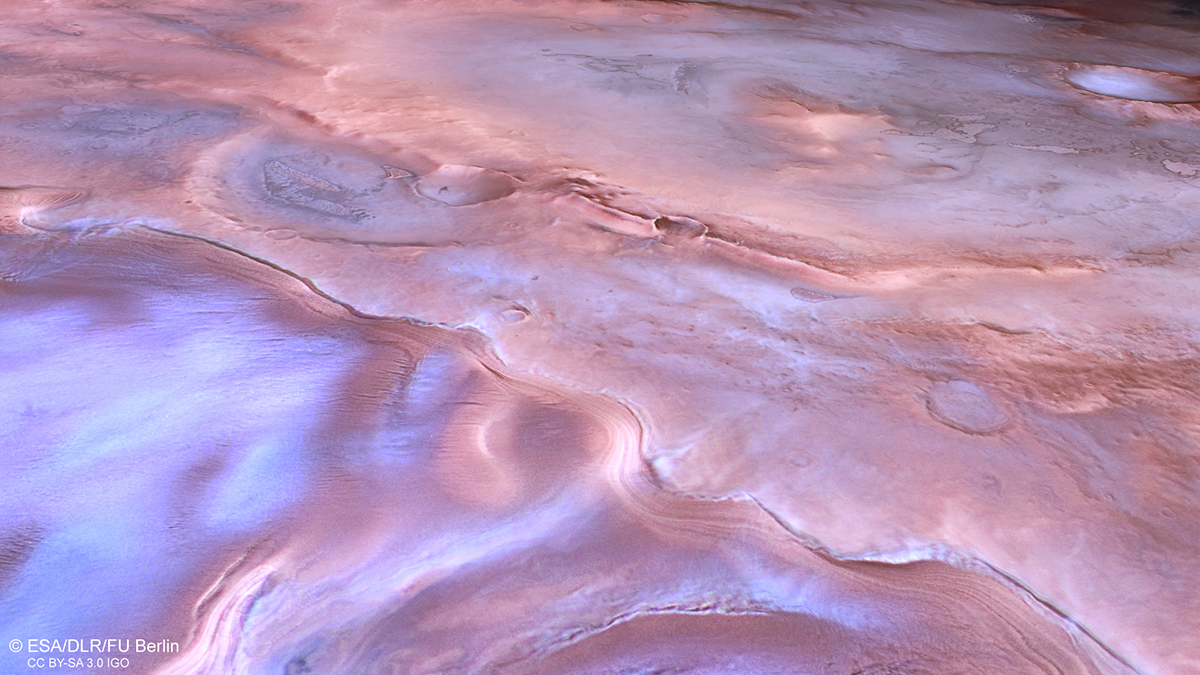
This dreamy, ethereal view of the Martian surface doesn't look at all like the harsh, rust-coloured, barren landscape we're used to seeing in images of the Red Planet.
It shows Thyles Rupes, an icy, craggy cliff named after the legendary edge of the known world, Thule, in classical geography.
The scene’s distinct colours reveal several key features, with darker tones originating from the presence of ancient volcanic material.
Pale blue deposits are carbon dioxide frost on sand dunes and inside craters, which can linger even into Martian spring.
A large pale patch in the bottom left corner marks a glacier forming part of Mars's south polar ice cap.
The general berry-coloured ripple effect of this view is a result of a mix of light bouncing off the surface, dust and frost.
Because Mars's atmosphere shifts over time, lighting conditions and colours change throughout the day, creating this striking raspberry ripple appearance.
Stracciatella
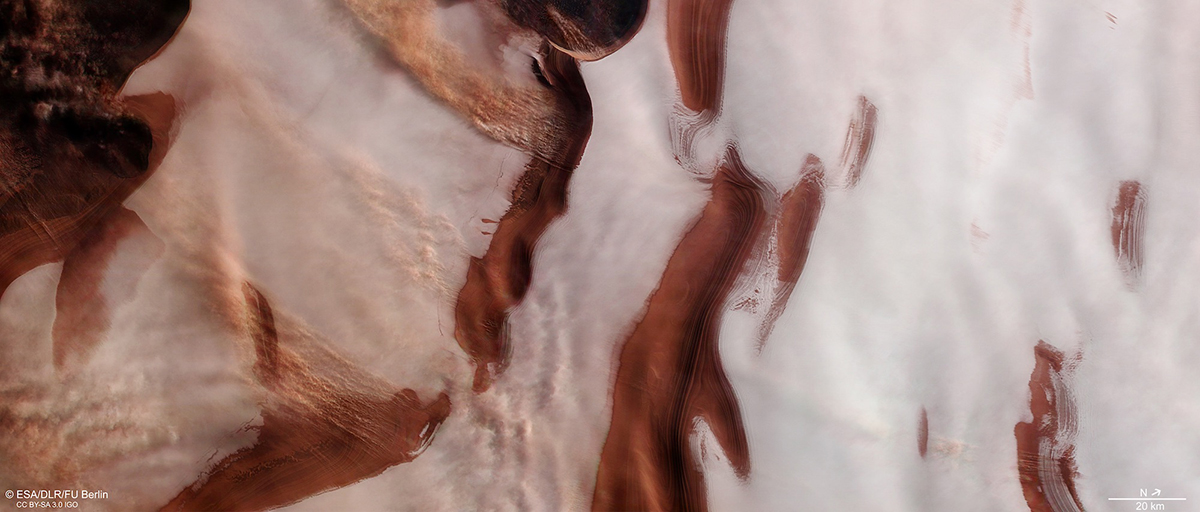
Soft vanilla ice cream covered with strands of milk chocolate in the stracciatella style?
This view shows part of Mars's north polar ice cap, the bright patches of ice interspersed with dark troughs and depressions.
Planetary scientists also detected evidence of strong stormy weather on the Red Planet's surface in this image.
The brownish troughs cutting through the icy white polar cap form a system of depressions spiralling outwards from the centre of the pole.
Softer brown wisps on the left are extended streams of clouds thought to be caused by storms dispersing dust into the Martian atmosphere.
Superman ice cream
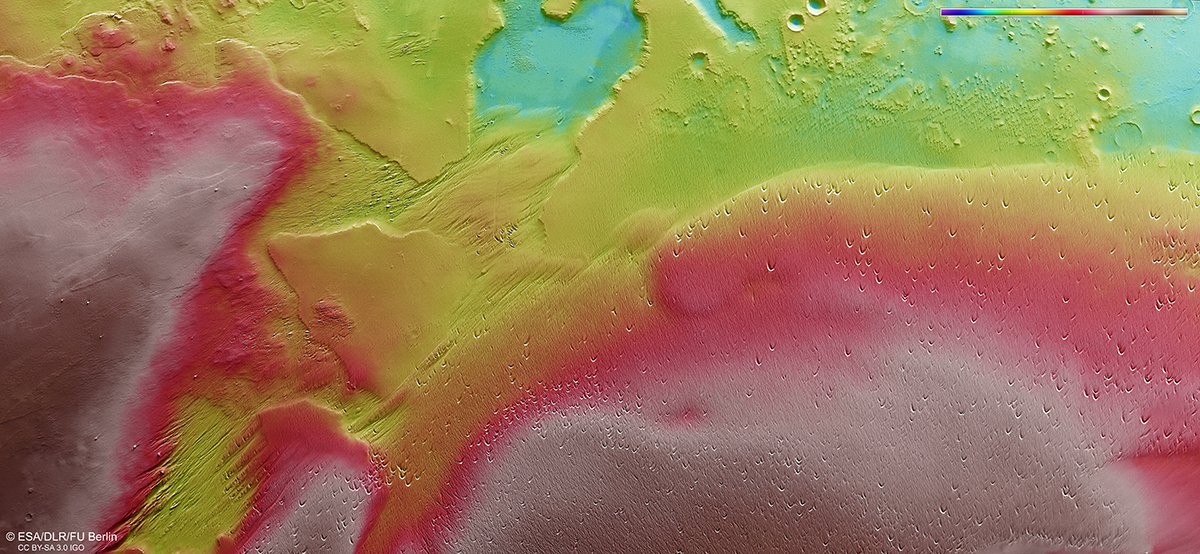
'Superman' is the name often given to the bright, kaleidoscopic ice cream flavour that combines red, blue and yellow in one scoop.
You may think it strange that a scene like this would exist on Mars, but in fact this is a false-coloured topographical image, with the colours having been added to show the varying altitudes of features across this landscape.
The region is known as Medusae Fossae and lower parts of the surface are indicated by blues and purples, while higher parts are in whites and reds.
Cappuccino caramel
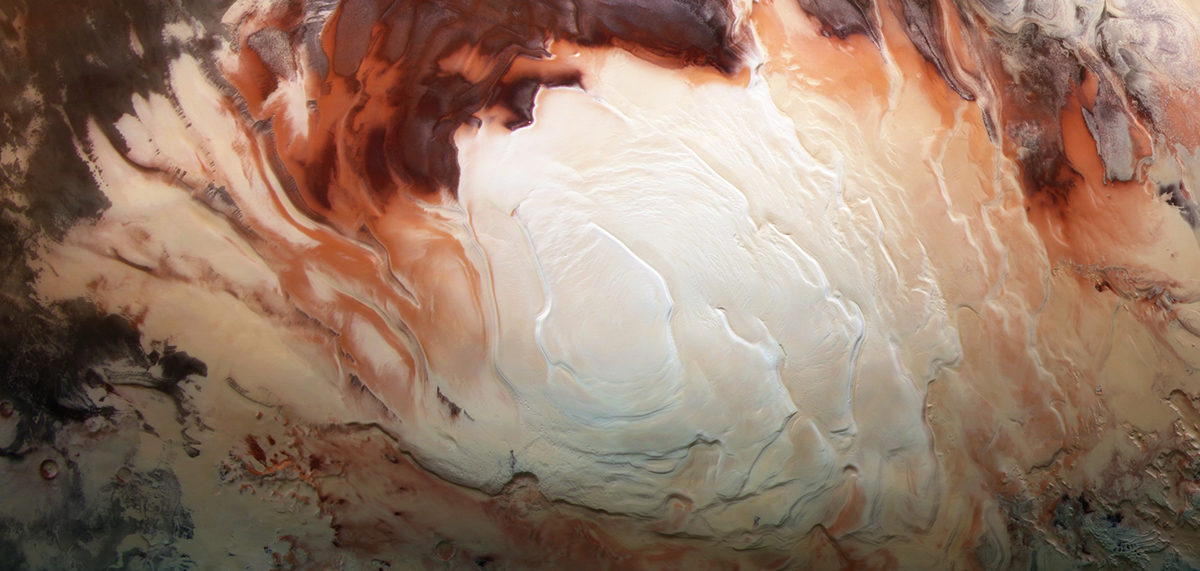
This view looks utterly delicious. A vanilla, coffee, chocolate, caramel mash-up.
The bright white region in the centre is Mars's south polar ice cap, which is made of frozen water and carbon dioxide.
Surrounding it are crags, peaks and troughs that are various hues of dark red and brown, caused by mixtures of muddy Martian soil.
Salted caramel
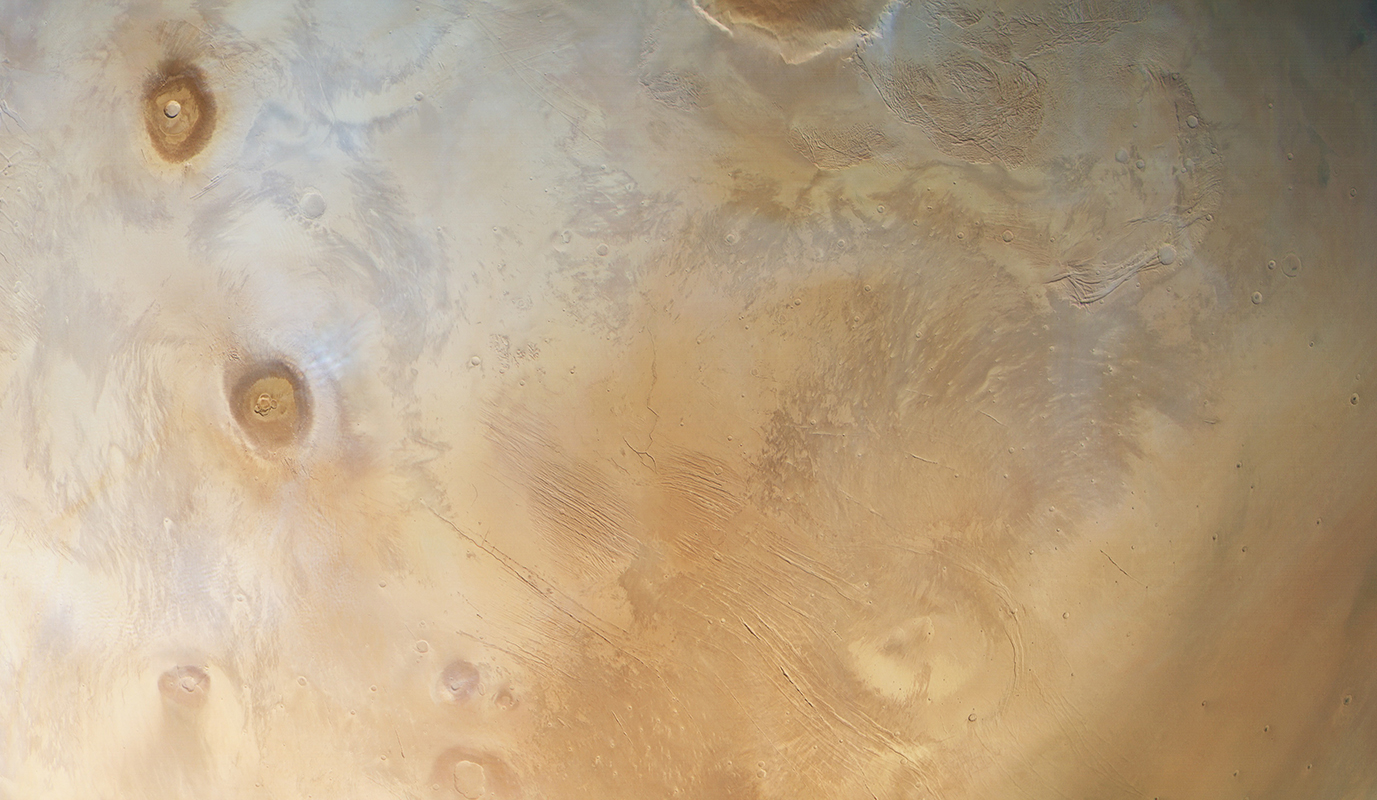
One of the most well-known and recognisable regions on Mars, this is Tharsis, which was once a very active region on Mars featuring both volcanism and shifting plates.
The three blobs – or chunks of caramel? – on the left side of the image are volcanoes Pavonis Mons (top left), Ascraeus Mons (middle left) and Alba Mons (bottom left of centre).
Also just about visible is Olympus Mons in the top middle of the frame, which is the biggest and tallest volcano in the whole Solar System.
What are your favourite images of Mars? Let us know by emailing contactus@skyatnightmagazine.com

