
Sun, sangria and… solar eclipses? Over the next few years, Spain will offer front-row seats to some of the most spectacular celestial shows on Earth, with three ‘central’ – that is, total or annular – solar eclipses in less than 18 months.
This astonishing sequence looks set to make it Europe’s eclipse-chasing epicentre for the rest of the decade.
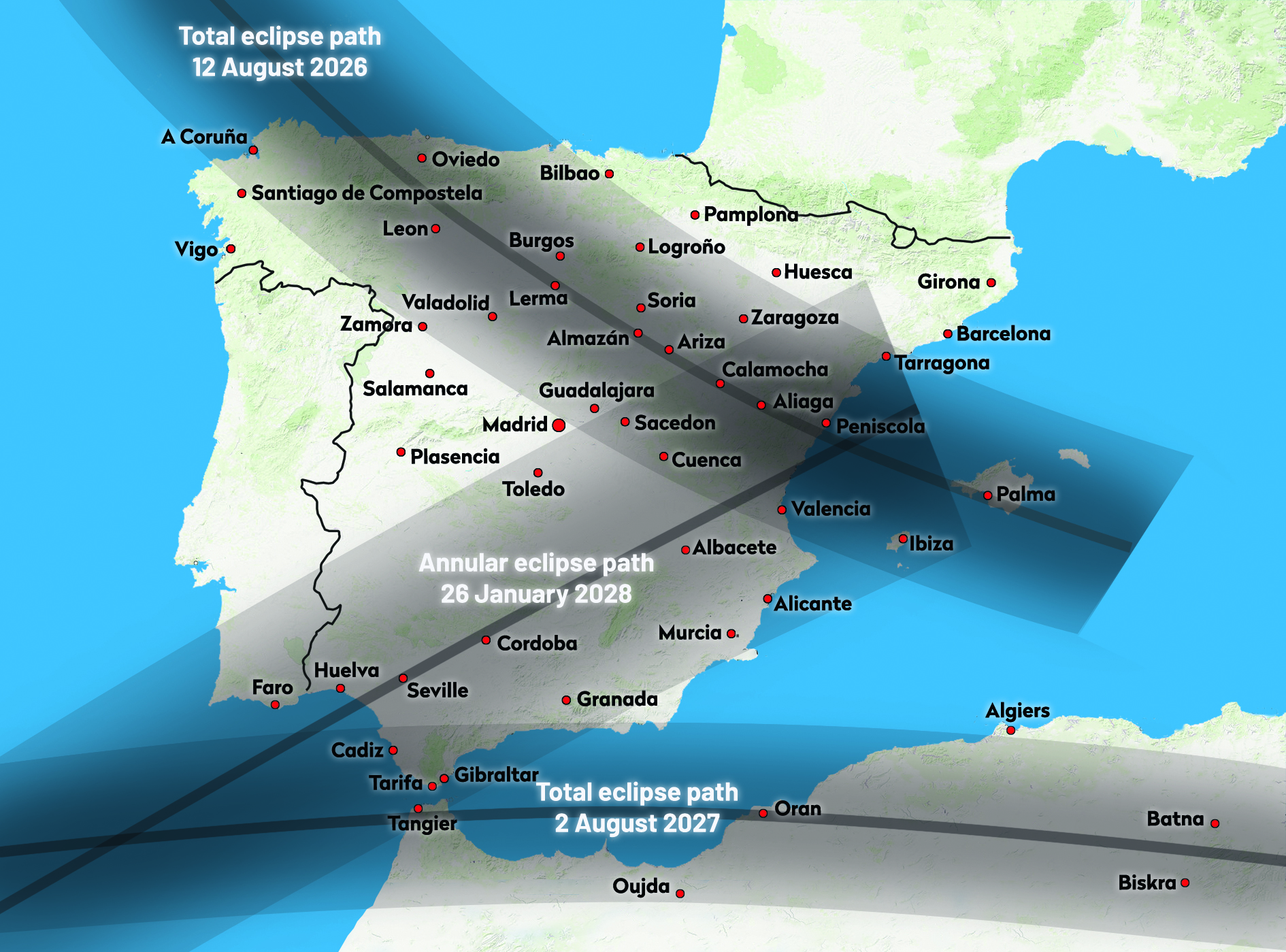
Here's our guide to the upcoming three solar eclipses in Spain.
More eclipse advice
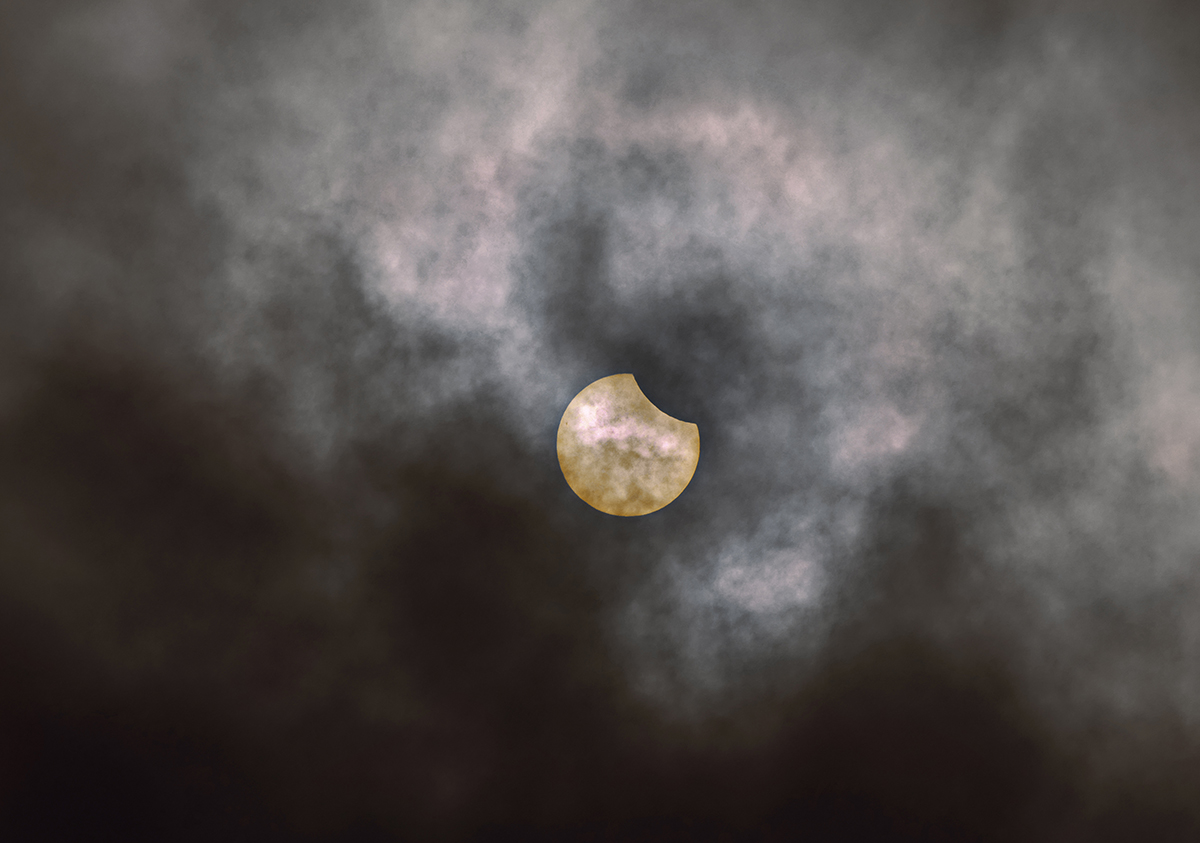
12 August 2026
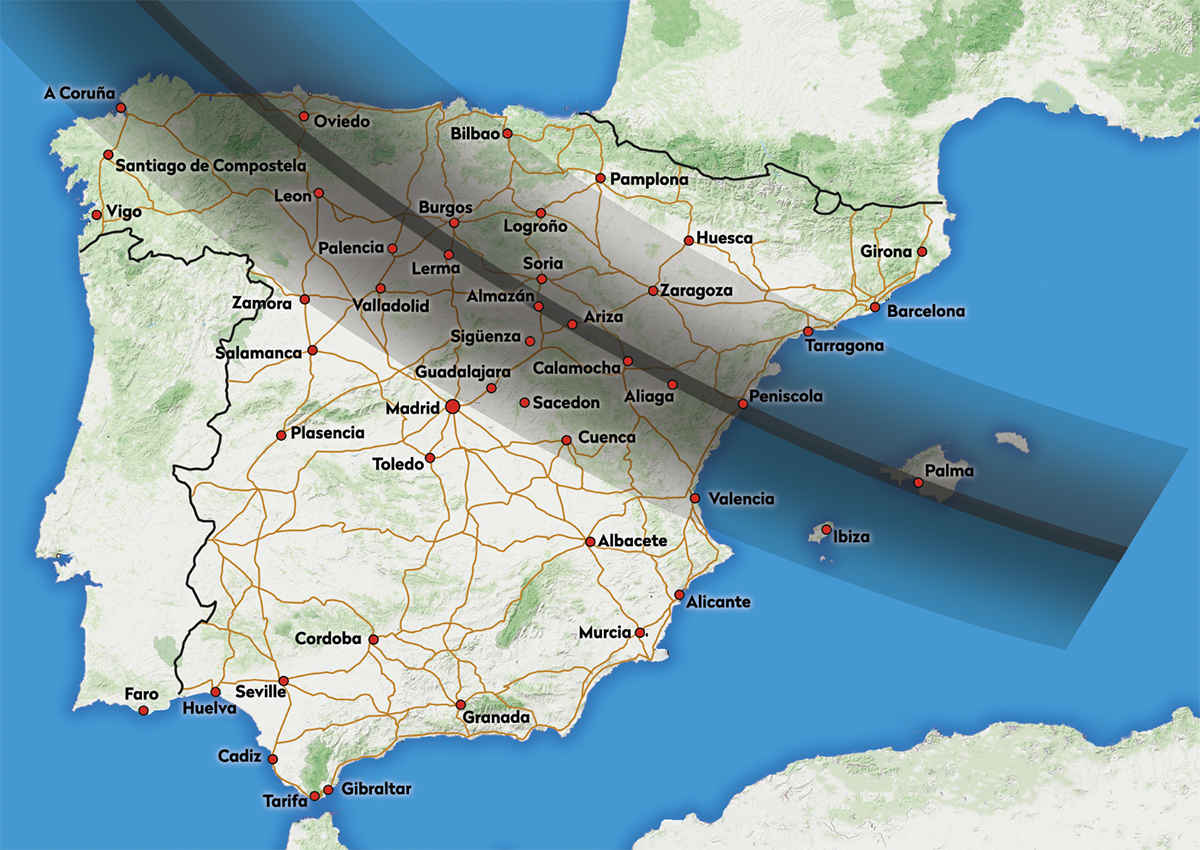
The standout is on Wednesday 12 August 2026: Spain’s first total solar eclipse in over a century, during which a short totality will briefly reveal to the naked eye the sun’s corona (Spanish for ‘crown’, incidentally), its tenuous outer atmosphere.
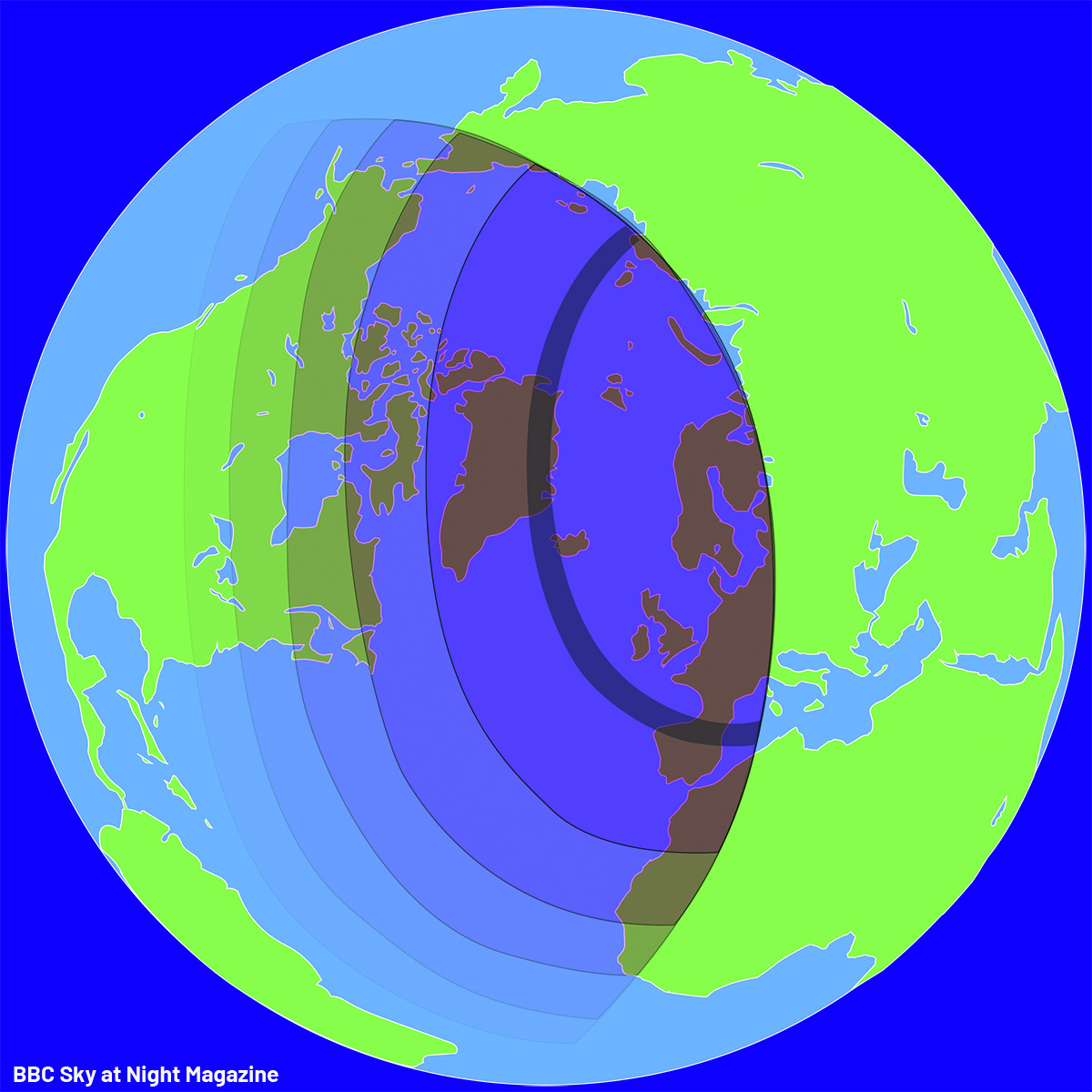
On that date, a path of totality will pass over the Arctic, Greenland, Iceland, the Atlantic, a speck of Portugal and northern Spain.
Occurring just before sunset, totality will last under two minutes, first kissing Galicia on Spain’s north coast, crossing a 290km-wide (180-mile) swathe to the Costa del Azahar and Costa Dorada before sinking beneath the Mediterranean Sea as seen from the Balearic Islands.
If you were to look at Spain from space, the Moon’s shadow would take just six minutes to cross the country, accelerating to over 32,000km/h (20,000mph) as it races toward sunset and slips off the edge of the Earth.
It will be 121 years since this last happened. Although a slice of northwestern Spain briefly experienced a hybrid eclipse – just one second of totality – on 17 April 1912, it was barely noticeable.
The 2026 total solar eclipse is unmatched since an almost identical path of totality swept through northern Spain on 30 August 1905.
"It’s the first total solar eclipse visible from Spain in over a century, but in 2027 we will have another total solar eclipse in the southern part of Spain, and an annular in January 2028," says Eduard Masana Fresno, an astronomer at the Institute of Cosmos Sciences in Barcelona.
"Everything we will prepare for next year’s eclipse – logistics, outreach and education – is not for just one eclipse, but three!"
The excitement around the 2026 eclipse is already mounting, with key cities such as Bilbao, Santander, Valladolid, Burgos, Zaragoza and Valencia all set to experience totality.
Madrid and Barcelona, however, will narrowly miss out, each witnessing a 99.9% partial eclipse (which in eclipse terms still equals zero totality).
With about 12 million people living in those two cities, expect a lot of travel into the path of totality on eclipse day.
Spain lies at the sunset end of the path of totality, with the Sun just 11° above the western horizon when the path of the Moon’s central shadow reaches Galicia at 20:26 local time (18:26 UT).
It sinks lower as the path travels southeast, ending in a horizon-proximity totality at 20:31 (18:31 UT). In Majorca, that’s just 10 minutes before sunset.
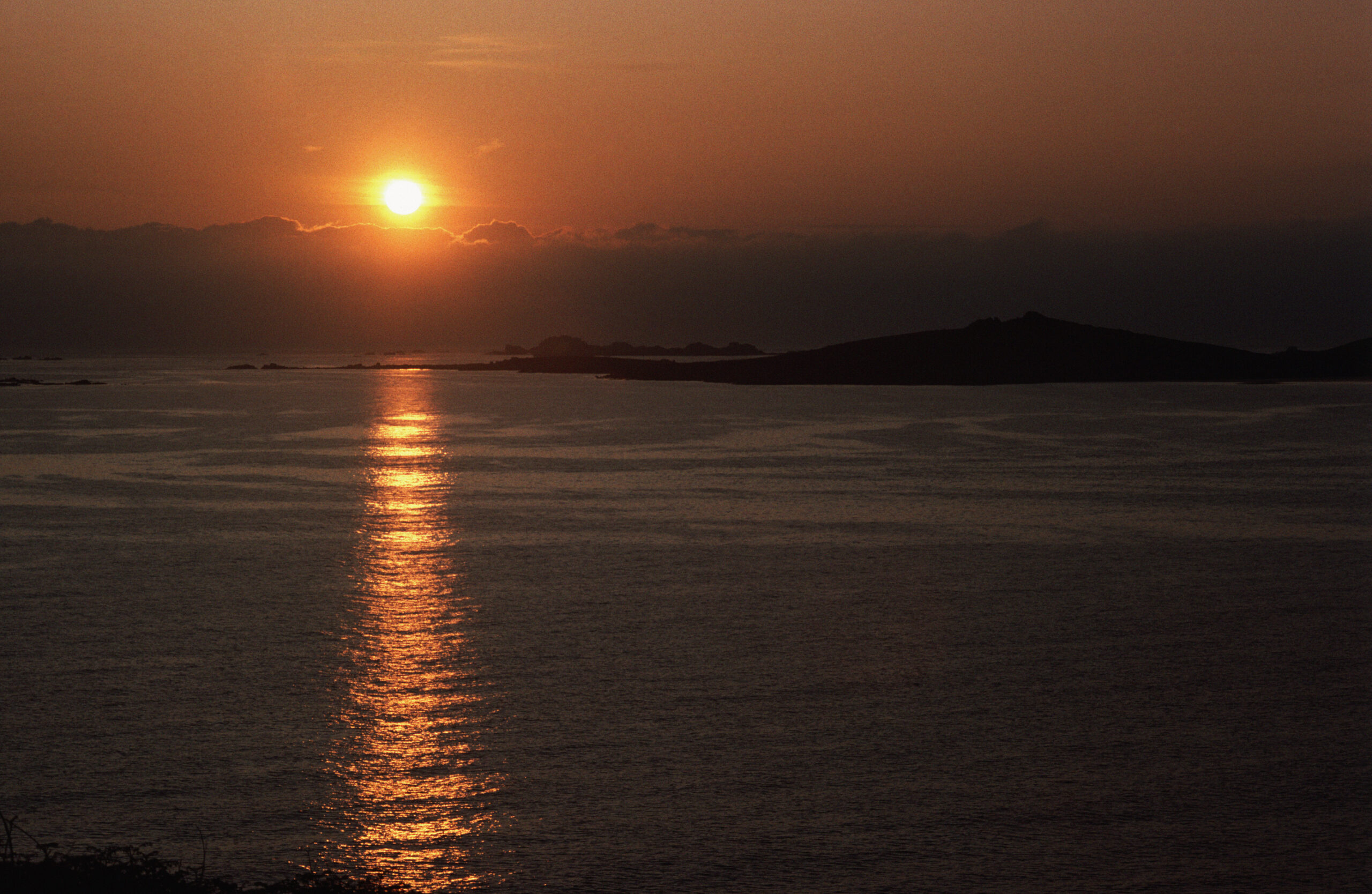
Dramatic views of the eclipsed Sun hovering low on the horizon are assured, but only for those who have checked out sightlines in advance.
"The western horizon must be completely clear, especially in the eastern part of the path," says Fresno, cautioning against locations with any natural or human-made obstructions.
"We’re talking just 4° or even less, so it’s very important."
Spain is the second-most mountainous country in Europe after Switzerland, with the Meseta plateau north of Madrid, the Cantabrian Mountains near the north coast and the mountains near León all potential obstacles.
"The eclipse will be very low in the sky," says eclipse cartographer Michael Zeiler of www.eclipse-maps.com.
"Local terrain, trees and buildings will require careful site selection, as well as backup locations in case of local clouds. Eclipse shadow maps will be an invaluable guide."

There are ways to avoid the need for meticulous planning when choosing your observing location.
For example, the region near Palencia and Burgos is relatively flat, the eclipse will occur fairly high above the horizon, and there’s a good chance of clear skies – all of which make it a naturally favourable spot.
Alternatively, book a tour where observation sites are carefully chosen in advance by astronomers. Either way, eclipse chasers need to think about the chance of clouds blocking the view.
"The topography means the south side of the eclipse track is sunnier than the north side," says eclipse meteorologist Jay Anderson of www.eclipsophile.com.
"Stay away from the eastern side of dark mountains. The biggest problem is likely to be thunderstorms, which form on the mountains north of Madrid, but they’ll be in the weather forecasts.
"It’s a late-in-the-day eclipse, so there’ll be lots of time to move.” Having a car to chase clear skies may be useful."
For more info, read our guides on how to see the 12 August 2026 total solar eclipse and the best places in Spain to see the August 2026 eclipse.
2 August 2027
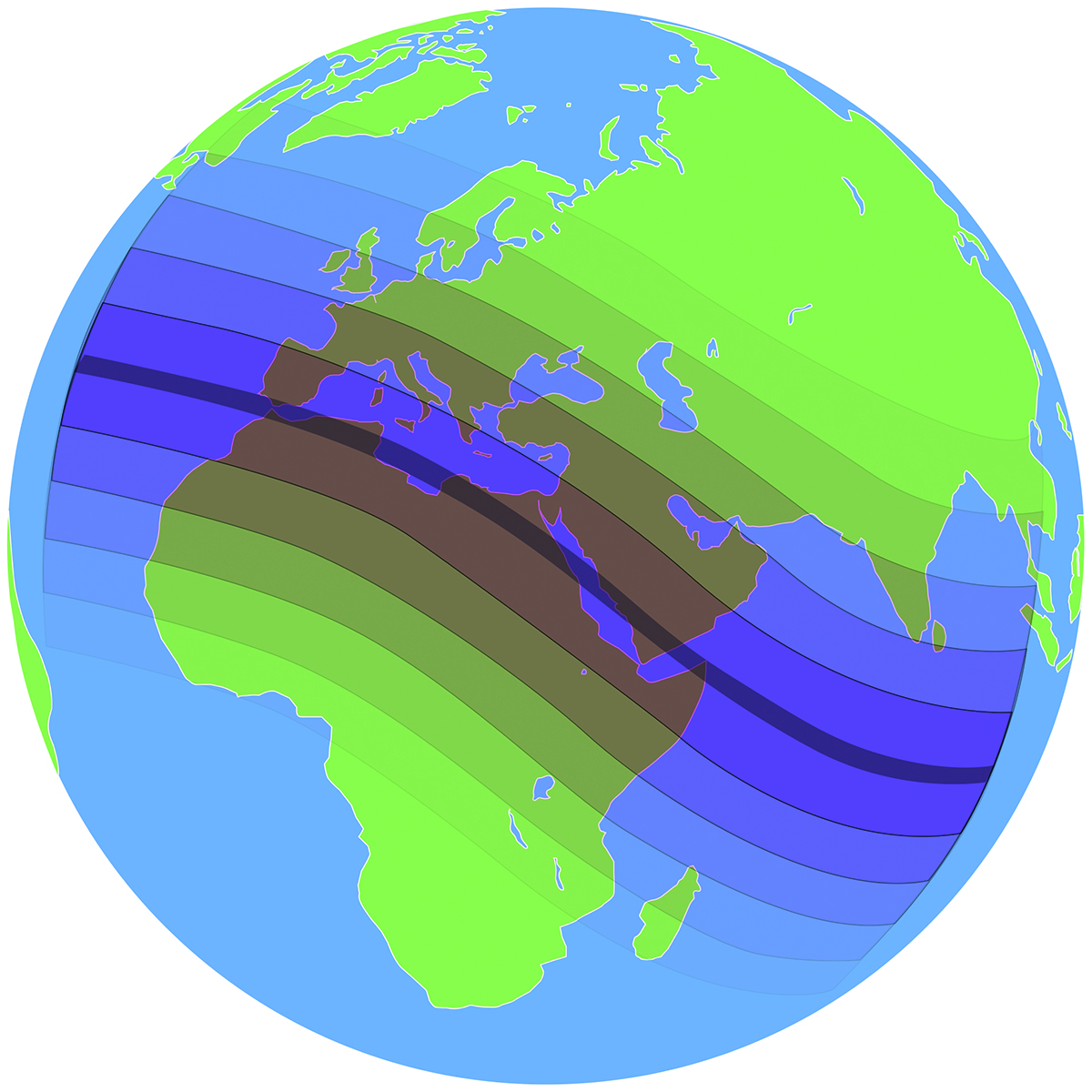
Less than a year later, another extraordinary total solar eclipse will grace Spain.
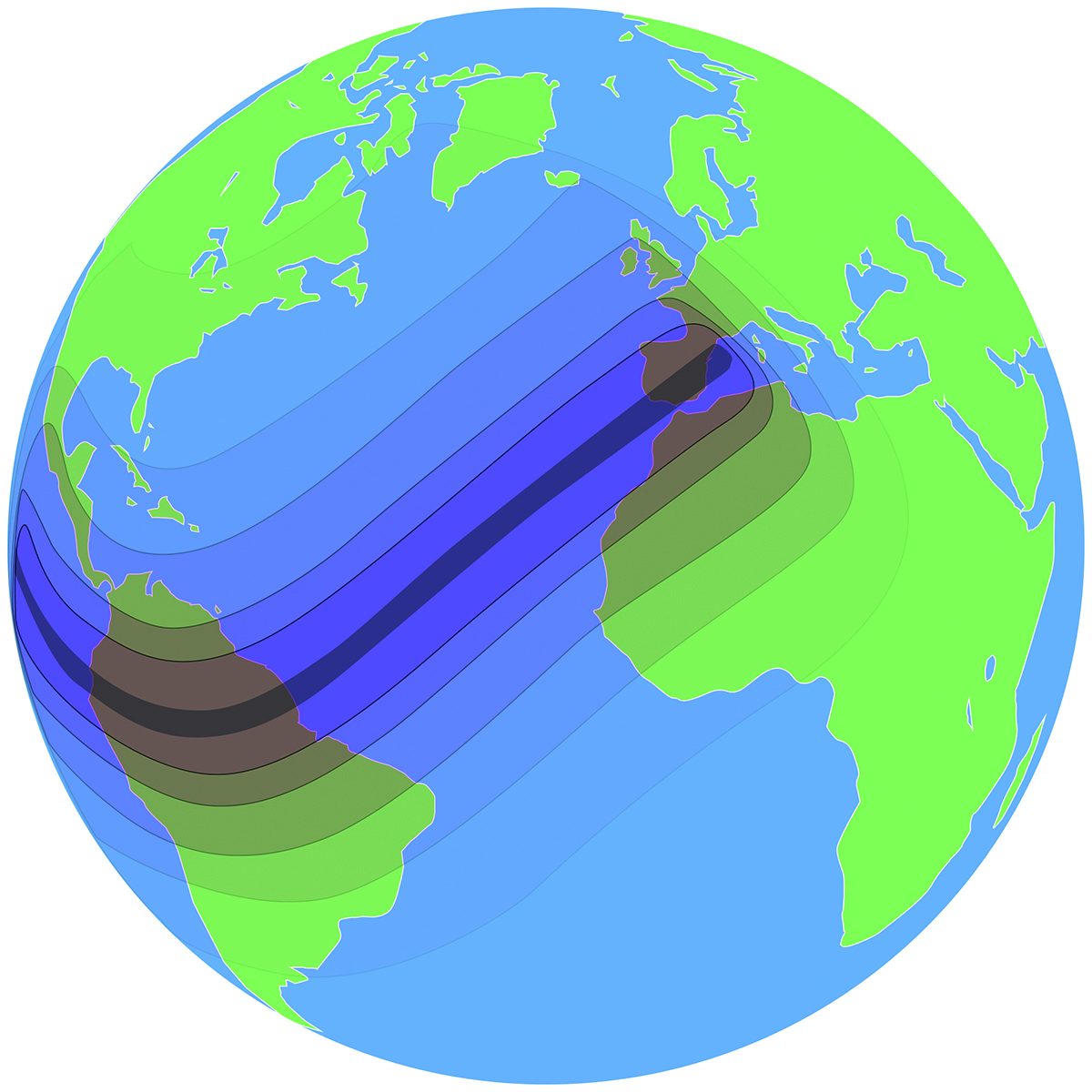
On Monday 2 August 2027, a path of totality will cross the country’s southern regions, including Andalucía.
This eclipse belongs to a family of repeating Moon shadows known as Saros 136, famed for producing exceptionally long totalities.
In fact, the 2027 eclipse will feature the longest duration of totality remaining this century – albeit much farther southeast, in Egypt.
Although many will travel to Luxor for that six minutes and 20 seconds of totality, Tarifa at the tip of Andalucía will see four minutes and 39 seconds – still remarkably long.
The ancient Roman ruins of Baelo Claudia nearby will experience just a few seconds less, as will Algeciras and Gibraltar (although avoid the Rock of Gibraltar mountain, which famously generates its own ‘Levanter’ cloud).
Further north, Cádiz, one of Europe’s oldest continuously inhabited cities, will see two minutes and 47 seconds of totality, while Marbella and Málaga will get three minutes and 11 seconds, and one minute and 51 seconds, respectively.
It won’t boast the record-setting duration of over six minutes seen in Egypt, but Spain’s accessibility, superb infrastructure and favourable climate are sure to make this Andalucían eclipse a popular event. Remarkably, it’s followed 177 days later by something almost as alluring: a ‘ring of fire’.
26 January 2028
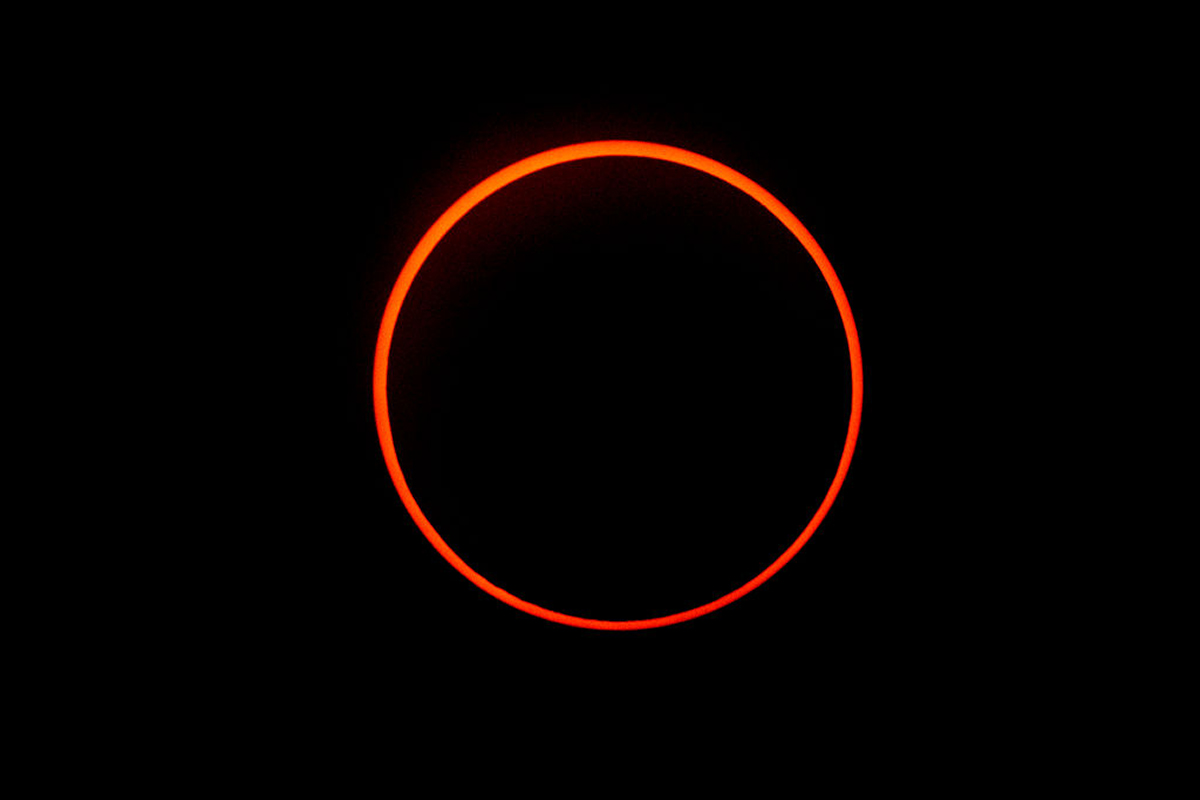
Completing a remarkable celestial hat-trick, Spain will witness an annular solar eclipse – known as a ring of fire – on 26 January 2028.
Unlike a total eclipse, the Moon will be too far from Earth to completely cover the Sun, resulting in a spectacular bright ring around its silhouette. This means the entire event must be viewed through eclipse glasses.
Geographically, the path of annularity is a mash-up of the previous two. Another sunset eclipse, visible from a path that travels southwest to northeast, will appear just 8° above the horizon for a whopping seven minutes and 10 seconds, as seen from Playa de Castilla in Andalucía.
Seville, on the centreline of the path, is where eclipse chasers will likely gather, ready to drive into clear skies (January isn’t the kindest month, clouds-wise).
Also on the centreline are Cordoba and Valencia, with other locations in the path including Gibraltar, Cádiz, Marbella and Málaga, as well as Faro on Portugal’s south coast.
Ibiza in the Balearic Islands will again witness a breathtaking eclipse just before sunset, with Majorca seeing a brilliant ring sink into the Mediterranean.
How to plan for the Spanish eclipses
Three central solar eclipses all occurring in the same small country within 18 months is phenomenal.
That two of them will be at sunset while another features a totality of over four minutes is almost unbelievable.
However, there’s something about the 2026 total solar eclipse that makes it an extra-special opportunity.
"Except for the Mediterranean coast and the Balearic Islands, the path of totality crosses some of the most unpopulated areas of Spain," says Fresno, adding that the path of totality contains everything from castles, cathedrals and mountains to plazas, local cuisine and wineries.
"Take advantage of this opportunity to visit areas you have never seen before. Spain is much more than bulls, flamenco and sangria – so plan ahead."
Exploring the world is a big part of what eclipse chasing is all about, but so are logistics.
With Spain’s 2026 total solar eclipse falling during the summer holidays, and accommodation within the path scarce (not to mention sightlines to think about), it’s time to plan, plan, plan.
Only then can you be confident of experiencing mainland Europe’s first total solar eclipse since 11 August 1999 and spending precious moments under the shadow of the Moon.
Share your eclipse experiences with us by emailing contactus@skyatnightmagazine.com

