Regulators in the US have given approval to SpaceX for the launch of one million satellites into Earth orbit.
The space firm owned by Elon Musk plans to use solar power to help power the satellites, which will act as data centres in space.
It's not yet confirmed whether SpaceX intends to launch the full volume of one million satellites included in the approval.
The US regulator, the Federal Communications Commission (FCC), announced on Wednesday 25 November 2026 approval of the project, known as Starmind, saying the project would "support America's booming super intelligence economy".
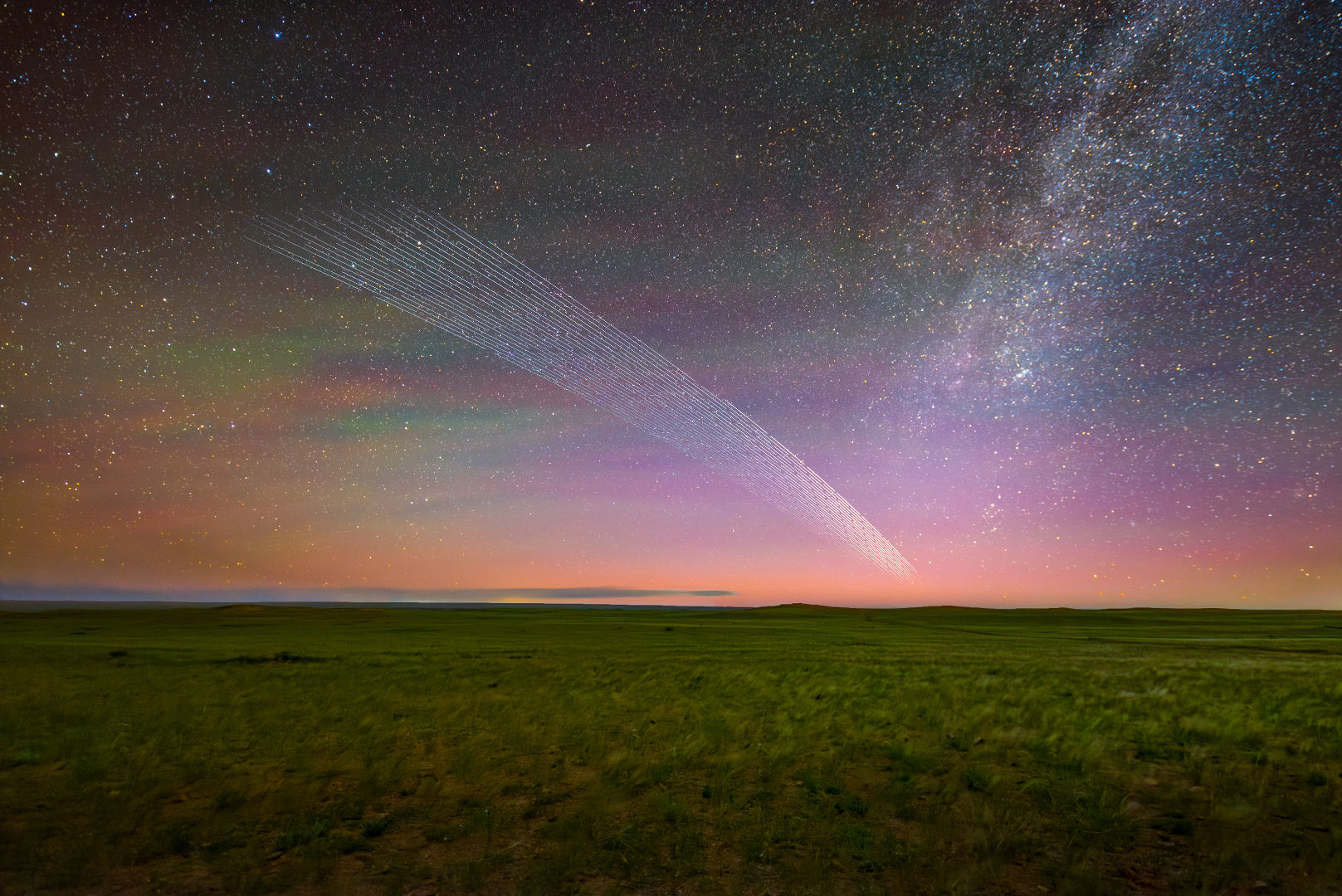
However, many astronomers, who are already worried about the impact of artificial satellites on our ability to observe and study the night sky, are against the move.
Read more
Harnessing the full power of the Sun for data centres
"At this pivotal time in America’s development of super intelligence, the FCC is granting SpaceX authorisation to deploy 1,000,000 orbital compute modules to process massive amounts of data to be used back here on Earth," a statement from the FCC said.
"More fundamentally, it promises to bring the human race closer to a Kardashev II civilization – one that can harness the full power of the Sun."
A 'Kardashev II' civilisation is a hypothetical situation in which the population of a planet has been able to harness and utilise the entire energy of its host star.
It's often imagined via another hypothetical structure known as a Dyson sphere.
Starmind's satellites will orbit in low-Earth orbit at altitudes between 500–1,002 km (310–622 miles).
The FCC licence states that deployment of the satellites must begin no later than November 2033 and SpaceX must have deployed 10% by November 2035, and 50% by November 2038.
Opposition to data centres and satellites
There's increasing opposition to data centres around the world, particularly within the communities where they're built.
So could SpaceX's orbital data centres offer a cost and energy-efficient way to develop artificial intelligence off-Earth, for use around the world?
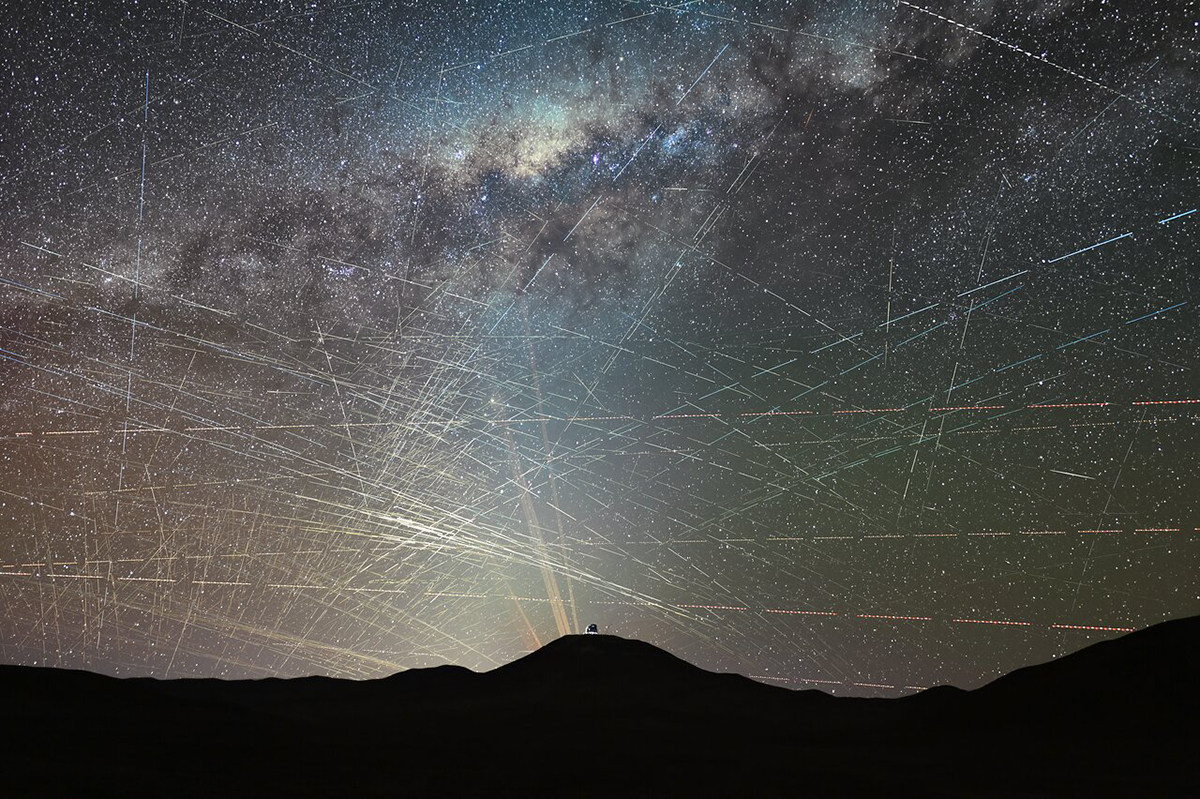
Many space scientists are against the move.
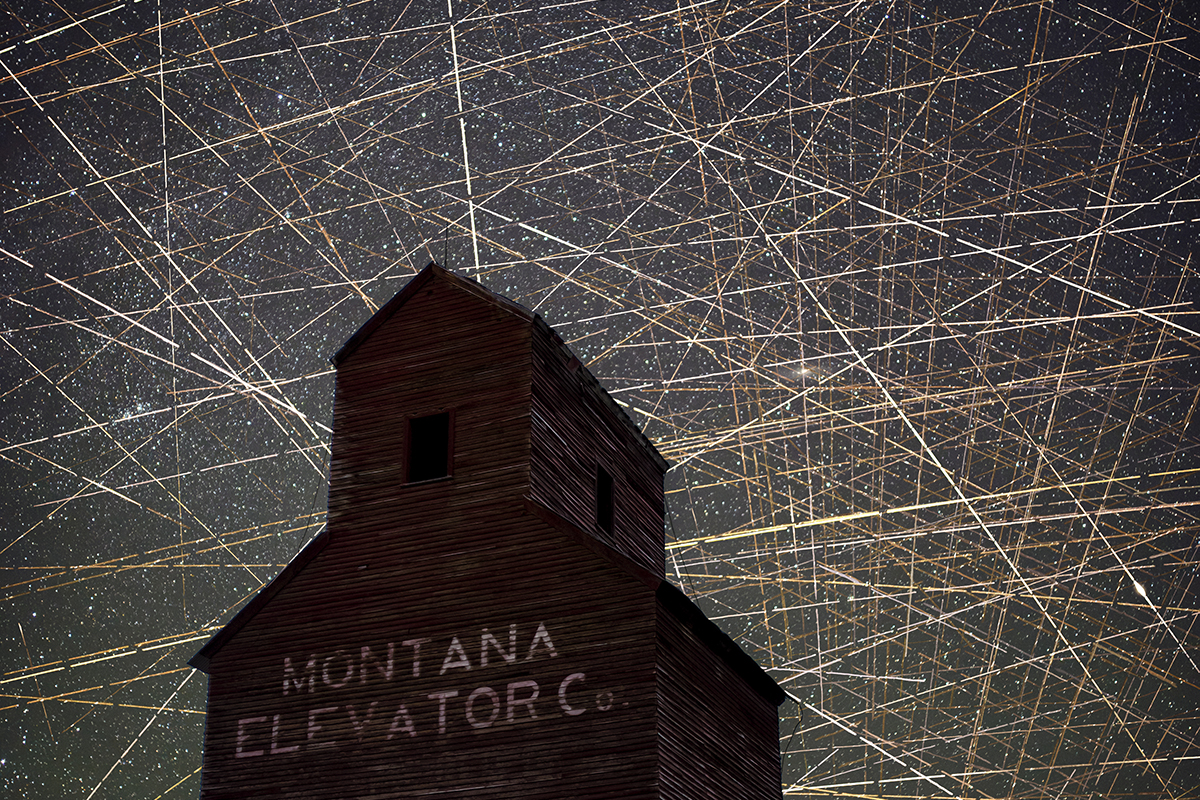
SpaceX's current Starlink network, for example, has already generated criticism from astronomers and space scientists who point to the effect of artificial satellites on our view of the night sky.
Dr Filippo Marchetti, Associate Professor of International Law and Technology at the University of Westminster, says:
"The FCC's decision to license up to one million SpaceX satellites is significant for its scale. Only around 17,000 active satellites orbit the Earth today, and low Earth orbit is a limited resource.
"Under Article IX of the 1967 Outer Space Treaty, space activities must be conducted with due regard to the interests of other states. If a state has reason to believe that a planned activity would cause potentially harmful interference with the space activities of other states, it must consult internationally before proceeding, and a constellation of this size certainly raises that question.
“In such numbers, these satellites could affect astronomical observation of the sky from every country. This is not only a concern for astronomers: for example, radio telescopes track distant objects called quasars to measure the Earth's rotation, and satellite navigation systems like GPS depend on this to remain accurate.
“Yet the FCC rejected the petitions to deny permission filed by stakeholders like the American Astronomical Society, and declined to impose additional conditions to protect astronomy.
"While the license conditions are a domestic matter, the night sky is not, and it can be argued that Article IX exists for exactly this kind of situation."
What are your thoughts on this move? Let us know by emailing contactus@skyatnightmagazine.com