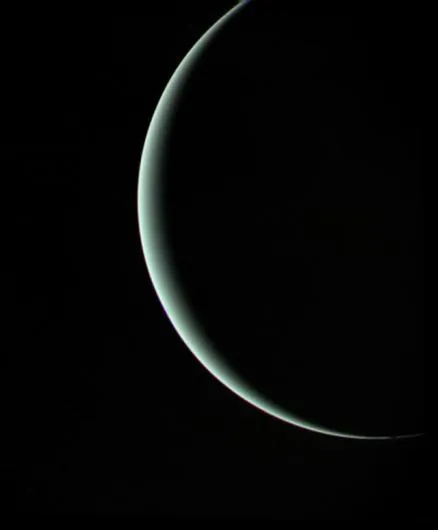
Uranus isn’t much to look at. When Voyager 2 flew past the planet in 1986, it found a uniform ball that is tinted sky blue by methane in the atmosphere.
But looking beyond the calm exterior reveals a planet where winds blow at speeds in excess of 900km/h.
And while most planets’ spin axes are at right angles to their orbits, Uranus has been knocked over onto its side.
No one is entirely certain why, but the lead theory is that an Earth-sized planetoid collided with Uranus early in the Solar System’s history, tipping it over.
More Solar System facts

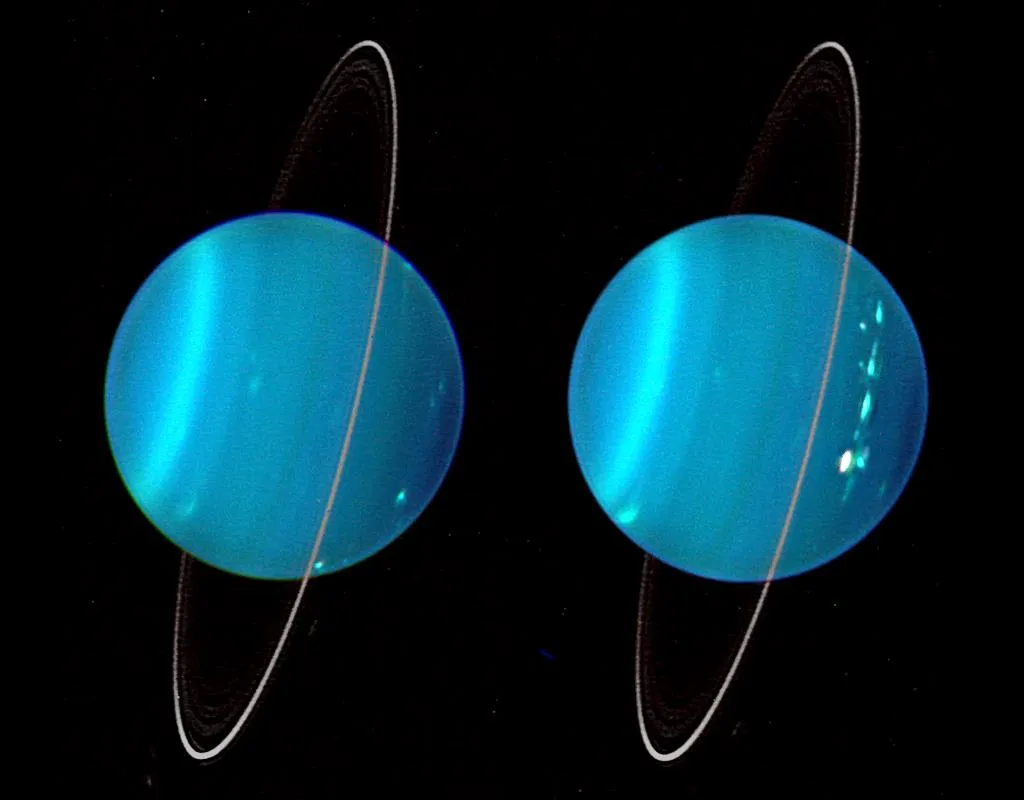
However, Uranus isn’t always as calm as when Voyager 2 spied on it.
As the planet takes 84 years to orbit the Sun, the seasons last for decades and the probe passed by during the planet’s northern summer.
When Uranus passed into autumn in 2007, long-range observations found the planet seemed to wake up, with storms creating bright spots the size of North America in the planet’s atmosphere.
Uranus quick facts
- Diameter: 50,724km (3.98 times Earth)
- Mass: 86.8 trillion trillion kg (14.5 times Earth)
- Distance from the Sun: 2872 million km (19.2 AU)
- Length of day: 17.2 hours
- Length of year: 84 years
- Number of moons: 28
- Average temperature: -195ºC
- Type of planet: Ice giant

Uranus is about 4.5 billion years old
All of the Solar System planets formed around the same time, coalescing out of the Sun’s protoplanetary disc (effectively the material that was left over after the formation of the Sun itself). Uranus is no exception.
It was probably once a lot closer to the Sun
Like Jupiter and Neptune (but not Saturn), Uranus is believed by many astronomers to have formed closer to the Sun before migrating outwards.
This migration would have been the result of complex gravitational interactions, particularly with Saturn – but not everyone agrees that it ever happened.
It’s the seventh planet from the Sun
Uranus orbits our parent star at an average distance of around 19 AU, where 1 AU is the distance from the Sun to Earth. But that’s an average distance: at any given moment, Uranus can be anywhere from 18.28 to 20.09 AU from the Sun.

Uranus appears cyan when seen through a telescope
Compared to fiery Mars, ringed Saturn or hooped and banded Jupiter with its Great Red Spot, Uranus isn’t much of a looker – through all but the largest telescopes it just looks like a featureless blue-green sphere.
It takes 84 Earth years to orbit the Sun
Unsurprisingly, the further you are from the Sun, the longer it takes to orbit it – so the only Solar System planet with a longer orbital period is Neptune, which takes nearly 165 years to complete a single solar orbit.
It’s basically on its side
Earth is titled at around 23° relative to its orbital path, which is why Earth has seasons; Mercury is tilted at just 0.03°, which is why Mercury doesn’t.
But Uranus takes the Solar System crown for Most Slanted Planet, with an axial tilt of 97.77° (or 82.23°, depending on how you look at it).
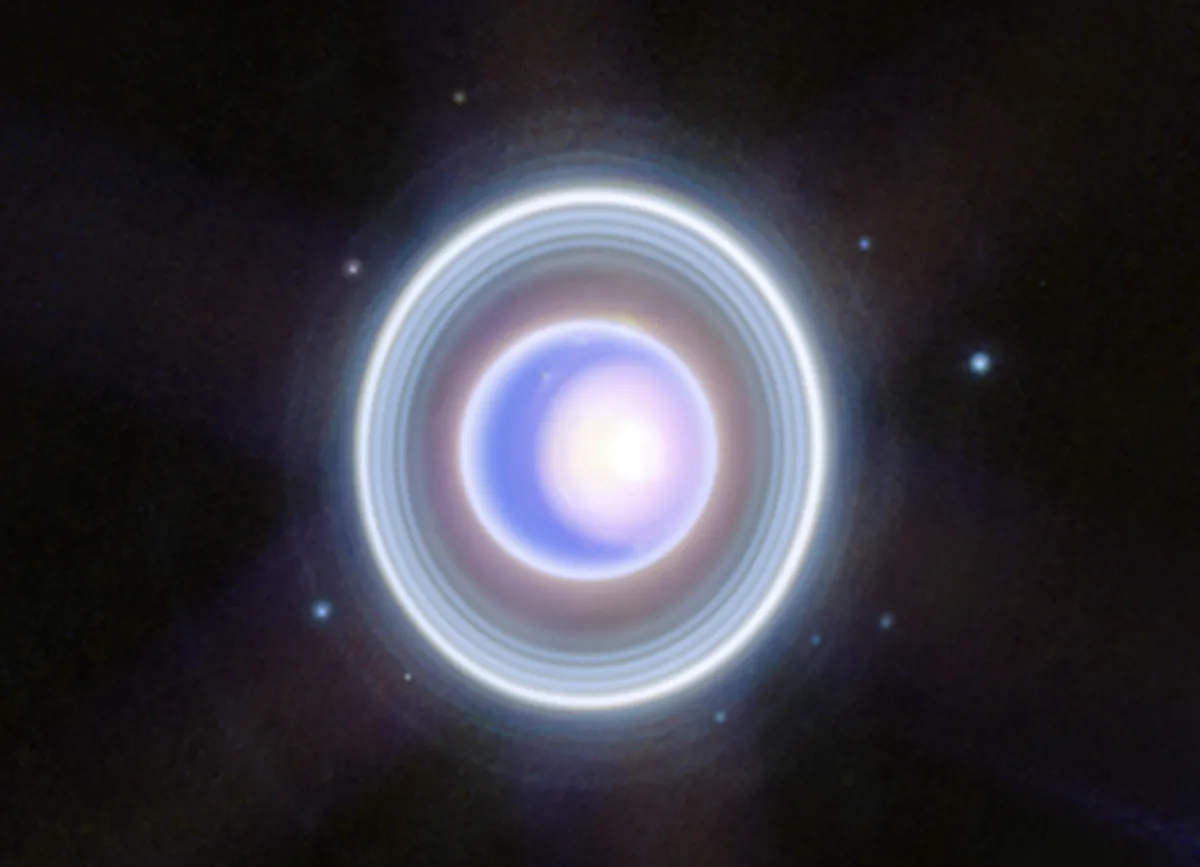
Uranus's unusual orientation may have resulted from a giant impact
Those pesky giant impacts in the early days of the Solar System get the blame for lots of things, including the formation of Earth’s Moon and Saturn’s rings. And now you can add Uranus’s distinctive “sideways” orientation to that list.
A day on Uranus lasts around 17 hours
That is to say it takes 17 hours for Uranus to complete a full rotation on its axis. Or 17 hours, 14 minutes and 52 seconds, if you want to be precise!
It has retrograde rotation
All of the Solar System planets orbit the Sun in an anticlockwise direction, and most of them spin counterclockwise on their axes, too. Only Venus and Uranus orbit the Sun counterclockwise but rotate clockwise on their axes.
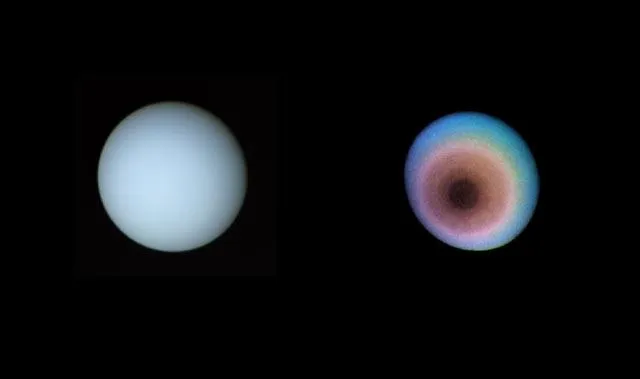
Nights at Uranus's poles are long
Due to Uranus’s high degree of axial tilt, each of its poles faces directly towards the Sun for half the year, and directly away from it for half the year.
As a result, Uranus’s poles experience 42 years of daylight followed by 42 years of darkness in each Uranian year – though, as on Earth, this effect decreases the further you get from the poles.
It’s mostly made of ice
Like Neptune, Uranus is classed as an ice giant – it has a rocky core, a mantle of ice and a gaseous atmosphere.
Its ice is superfluid
The water, ammonia and methane 'ices' of which Uranus is composed aren’t solid, like water ice on Earth. Instead, these substances are in a supercritical phase of matter known as a superfluid, which means they sometimes behave like a liquid and sometimes like a gas.
They’re only called ices by astronomers because that’s the form they would were in when the planet first formed.

Credit: NASA/JPL-Caltech
Uranus has no real surface
You could never fly to Uranus, land on the surface and walk about, because there isn’t a surface to land or walk about on.
Instead, the supercritical fluids that make up the planet’s mantle slowly give way to the gases that constitute its atmosphere – just as freshwater rivers on Earth flow into saltwater seas, creating a brackish zone in the mouths of estuaries.
It does have a theoretical one, though
Surfaces are quite useful when you want to discuss things like “how far above the planet’s surface is [object X]?”
So for practical purposes, astronomers define the “surface” of Uranus as being the depth at which atmospheric pressure is equal to 1 bar (ie, the same as atmospheric pressure on Earth).

Uranus is essentially a failed Jupiter or Saturn
The formation of giant planets can be thought of as a bit like the domino effect, or a self-fulfilling prophecy: the more matter they HAVE, the more matter they ATTRACT, and that process only accelerates as they get larger.
Jupiter and Saturn got beyond a certain tipping point, and so became gas giants; ice giants on the other hand, never quite got to that point, just as brown dwarfs never quite reached the tipping point where they would ignite and become stars.
Its atmosphere is mostly hydrogen and helium
There are also trace amounts of carbon dioxide and carbon monoxide, as well as assorted hydrocarbons. The most important of these is methane (or CH4, as its known to chemists) – this is the third most prevalent chemical in Uranus's atmosphere, and is responsible for its apparent cyan colouring.

It rains diamonds on Uranus… or at least it might
At extreme temperatures and pressures, the hydrogen and carbon molecules in methane can become unbound.
Some scientists believe this could lead to the formation of diamonds in Uranus’s atmosphere (or even within its mantle) which would then 'rain' downwards towards the planet’s core. But not all astronomers agree on this, and as of 2025 we can’t yet say for sure if it’s true.
It’s got no shortage of moons
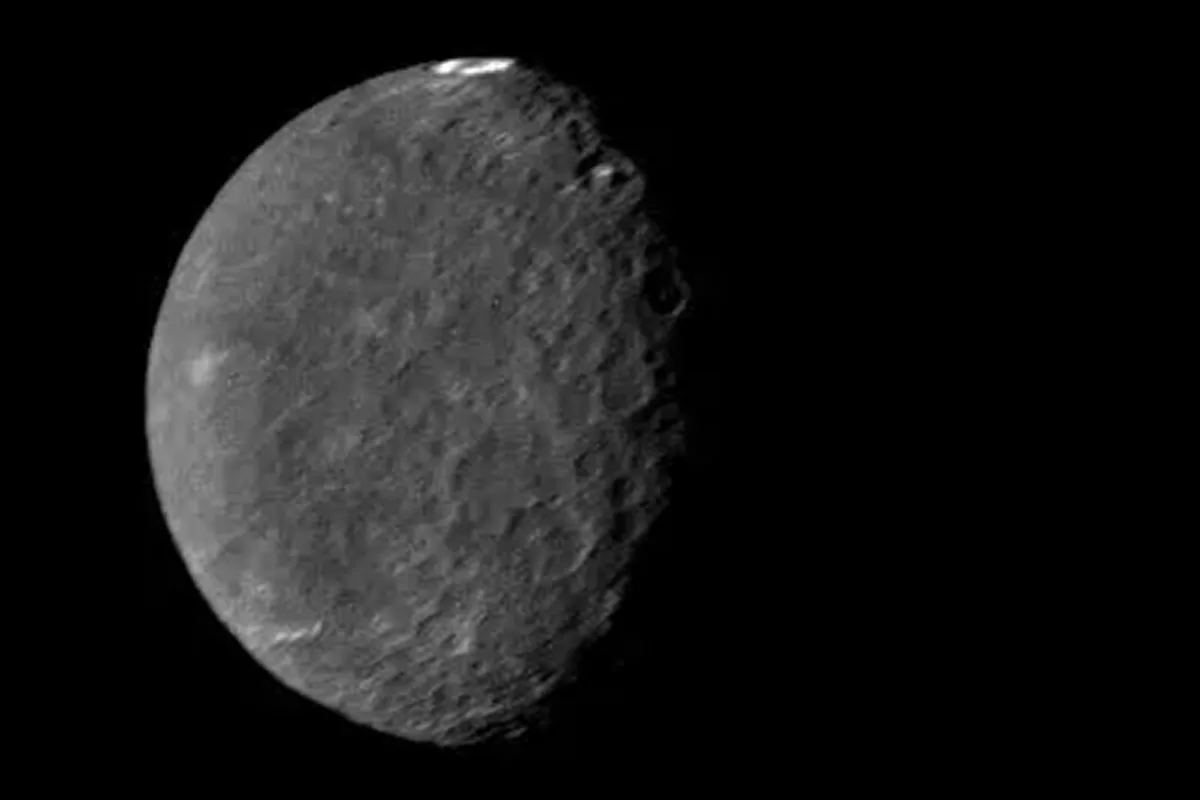
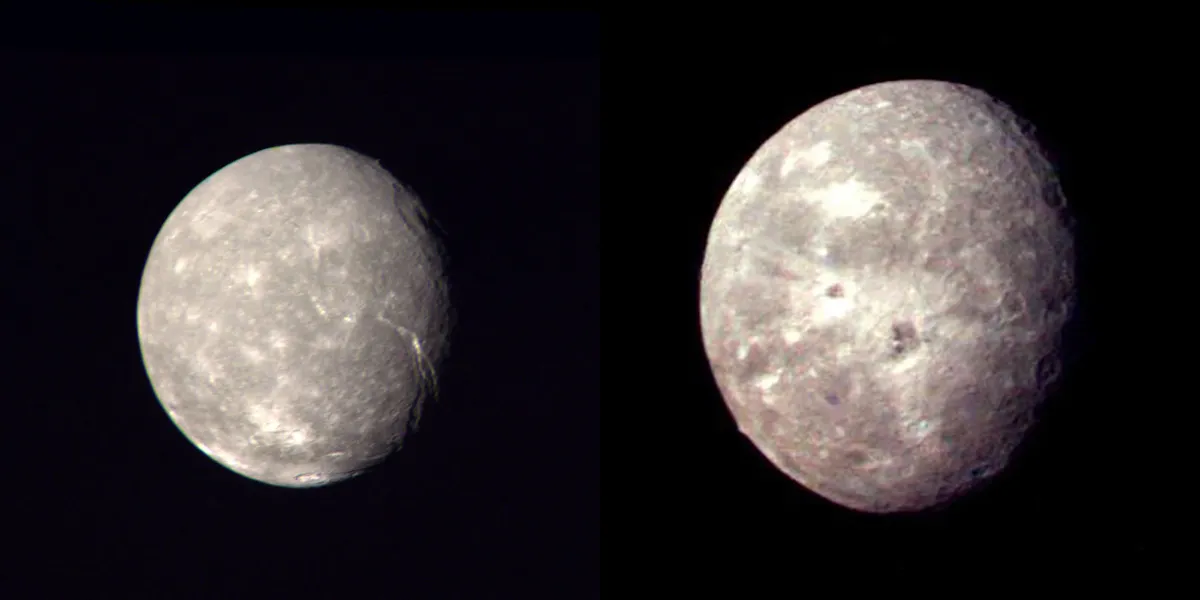
Uranus has 28 known moons, albeit only 27 of these are large enough to have been given names. There are 18 regular and 10 more distant irregular moons, with the 18 regular ones breaking down in turn into 14 tiny inner moons and the five major moons: Titania, Oberon, Ariel, Miranda and Umbriel.

Uranus's moons are named after literary characters
Titania and Oberon are named after characters from Shakespeare’s ‘A Midsummer Night’s Dream’, Ariel and Miranda are named after characters from Shakespeare’s ‘The Tempest’, while Umbriel takes its name from a character in Alexander Pope’s ‘The Rape Of The Lock’.
All of Uranus’s other moons are named for Shakespeare characters – apart from Belinda, which is Pope again.
Its moons are made of rock and ice
As far as we’ve been able to ascertain so far, Uranus’s moons are made of rock and ice in more-or-less 50:50 proportions.
The ices in this case are solids, not superfluids, and likely to be ammonia and carbon dioxide.
From Earth, it can be a naked-eye object
You can actually see Uranus without the need of any special equipment, but you would need dark skies, good eyesight and, preferably, for Uranus to be at opposition.
Don’t beat yourself up if you’ve never spotted it, and don’t get too excited either – the planet is so small and so far away that with unaided vision it just looks like a star.
All the same, it’s there – and indeed, prior to Herschel’s breakthrough in 1781, Uranus was known as 34 Tauri.

William Herschel was first to see Uranus through a telescope
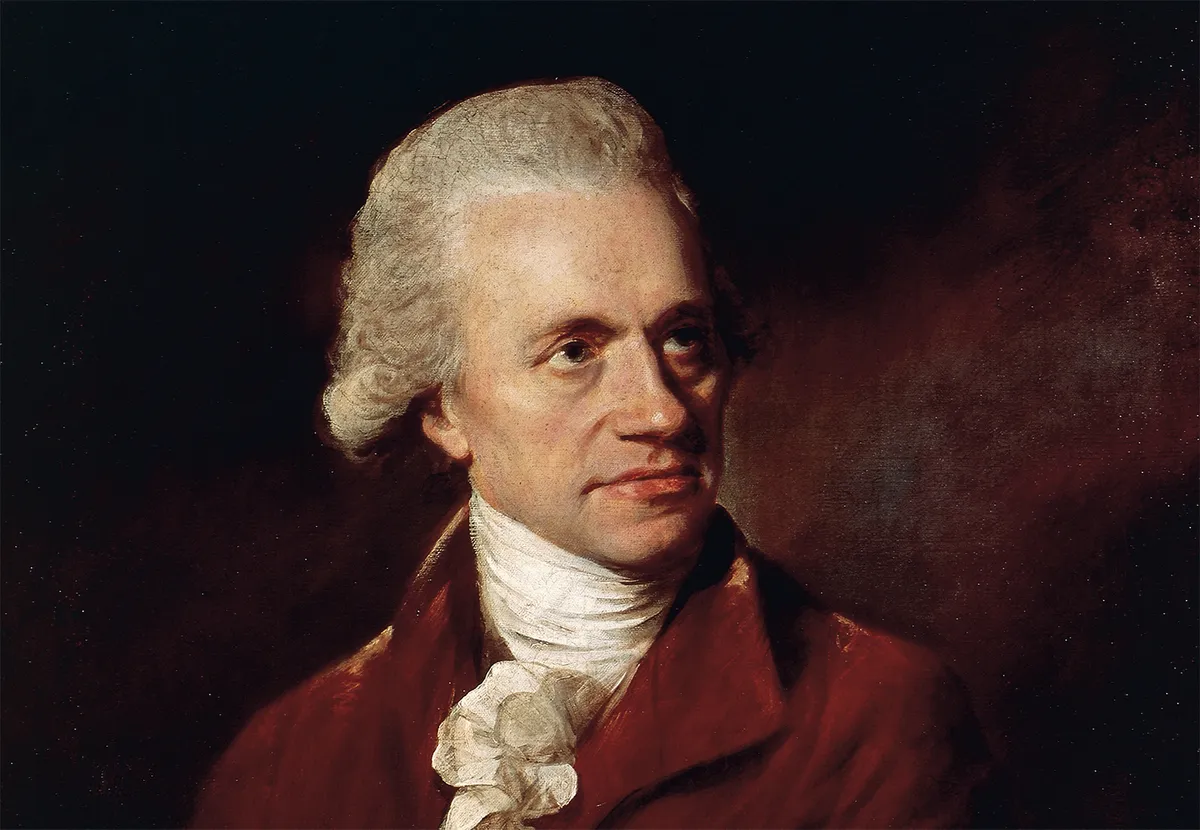
German-born Herschel was living in Bath when he built his first telescope in 1774, and discovered Uranus in 1781 while he was using it to hunt for double stars – though at first he thought it was a comet, rather than a planet.
Its planetary status wasn’t settled until 1783
News of Herschel’s discovery spread fast, and soon other astronomers were making follow-up observations, including Sweden’s Anders Johan Lexell and Germany’s Johann Elert Bode.
It was the observations and calculations of these astronomers that led Herschel to acknowledge to the Royal Society in 1783 that his new discovery was indeed a planet, not a comet.
Herschel wanted to name it after George III
Herschel proposed naming his new discovery Georgium Sidus – George’s Star – after his patron, King George III.
But this name proved unpopular outside of England and Hanover (England being ruled at this time by Hanoverian kings) and various other names were proposed – with Bode suggesting Uranus, the Latinised form of Ouranos.
Ouranos was the Greek god of the sky, and the father of Saturn (who in turn was father of Jupiter).
Uranium was named after Uranus
Uranium was discovered by German chemist Martin Klaproth in 1789. As a friend and Royal Society colleague of Bode, he named the new element Uranium as a gesture of support for his friend’s proposed nomenclature for the new planet.
It didn’t officially become ‘Uranus’ until 1850
Bode’s and Herschel’s proposed names were used in parallel for nearly 70 years, but Bode’s suggestion slowly began to take precedence and in 1850 His Majesty’s Nautical Almanac Office switched to using the name – the last official body to do so.
Herschel’s discovery earned him a pension
In recognition of Herschel’s achievement, King George III granted him an annual stipend of £200 a year for life – equivalent to around £30K per annum today. There was a catch, though – Herschel and his family had to move to Windsor, so that the royal family could enjoy looking through his telescope.
Uranus is called 'heavenly king star' in Mandarin
The same applies in Japan, Korea and Vietnam. Mongolians call it Tengeriin Van (“king of the sky”), in Swahili it’s known as Kausi, while in Hawaii it’s called Hele‘ekala – which is the Hawaiian rendering of the name ‘Herschel’.
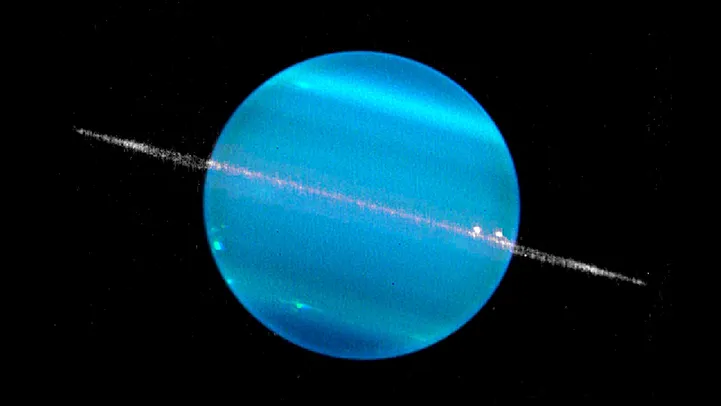
It has rings
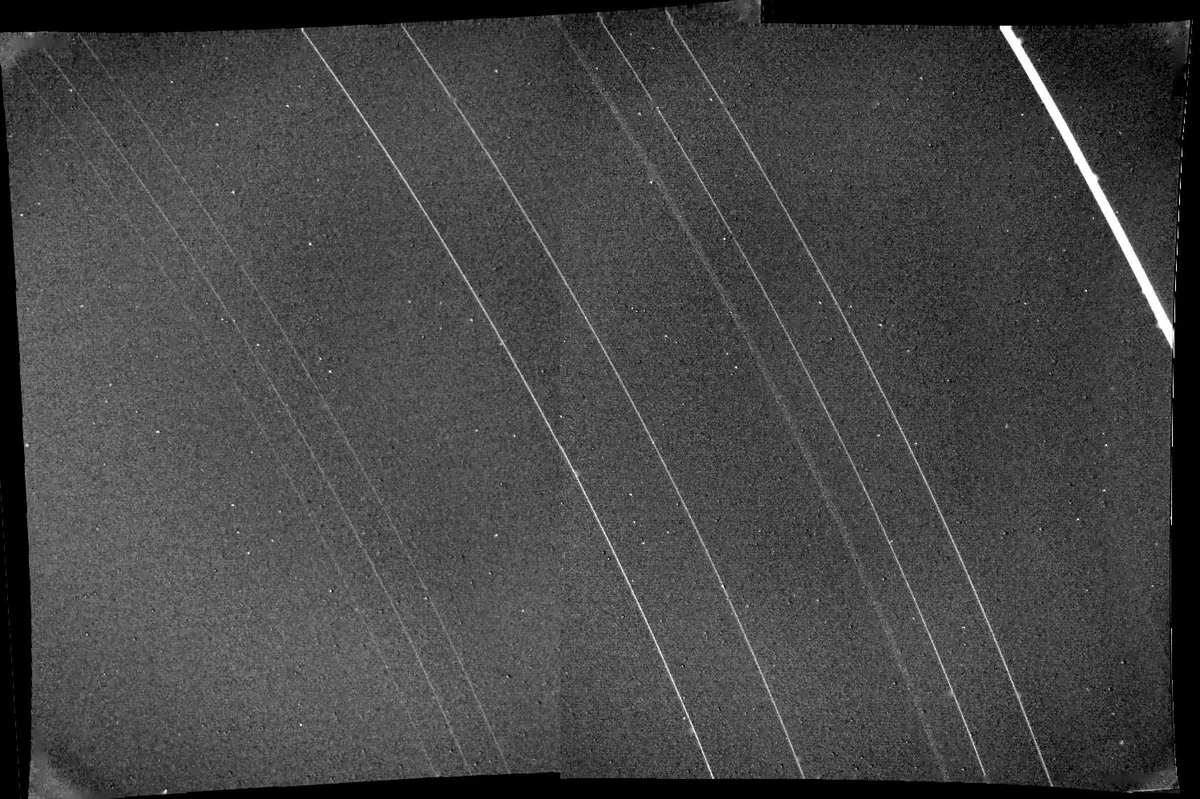
Admittedly, Uranus’s 13 rings are small, dark and faint, and we had no idea they were there until 1977 – we very much doubt that Saturn is looking over its shoulder, put it that way!
Uranus’s rings are made of particles ranging in diameter from a few nanometres to a few centimetres, and most are no more than a few kilometres across.
Its ring system is very young
While some ring systems consist of leftover material from the planet’s formation, Uranus’s rings are much, much younger than the planet itself – it’s thought they were probably formed from the debris of a former moon that was destroyed by a giant impact.
Uranus's rings come in several colours
Uranus’s two outer rings are much more distant from the planet than the other 11, and we had no inkling of their existence until the Hubble Space Telescope spotted them in 2005.
Follow-up observations by the Keck Observatory in April 2006 then revealed that the outermost ring is blue, while the next one in is red. All of the inner rings, meanwhile, appear grey.
It's the least massive of the giant planets
At 14.54 Earth masses, Uranus is a little bit lighter than Neptune (17 Earth masses) despite actually being the larger of the two planets – and considerably lighter than Jupiter or Saturn, which weigh in at 318 and 95 Earth masses, respectively.
It’s cold
According to NASA, the average temperature at Uranus’s non-existent, 1-bar surface is -195°C (-320°F), making it the second coldest of all the Solar System planets after Neptune.
This is partly because the planet is a long way from the Sun, and partly because, for reasons that aren’t fully understood, it generates very little internal heat.
Uranus has a with a heat halo around it
While Uranus itself is cold, the uppermost layer of its atmosphere, known as the corona, gets very hot – its temperature can range from 527°C to 577°C (980°F to 1070°F). The reasons for this, again, haven’t quite been figured out yet. And that’s partly because…
Only one spacecraft has ever visited it
That spacecraft being Voyager 2, which in January 1986 passed within 81,500km (50,600mi) of the Uranian cloud tops on its way to Neptune. That one, fleeting visit isn’t a lot to go on, but it’s still the source of much of our best data on the planet.
Voyager 2 discovered moons, rings and more
While it was in Uranus’s neighbourhood, Voyager was able to send back data and images on the planet, its magnetosphere, its rings and its moons – in fact, it discovered 10 new moons and two new rings while it was there.
The probe also revealed some cloud activity in the upper atmosphere – the first time we’d seen any features on the planet at all.
Uranus has a weird magnetosphere
Most planets’ magnetospheres wrap around their host like an outer shell – the large, roughly spherical field sharing an axis and centrepoint with the smaller, roughly spherical planet.
Uranus is the exception to this rule: its magnetosphere is tilted by 59° relative to its axis, and instead of sharing a centrepoint with Uranus, its centre is a point about 1/3 of the way from the planet’s core to its South Pole. One more for the “things we’re not really sure about yet” list!
It helped us discover Neptune
In 1821, French astronomer Alexis Bouvard published a table of observations of Uranus’s orbit, and noticed something peculiar: the planet wasn’t always where maths and physics said it should be. The obvious explanation was that it was subject to the gravity of another, unseen body nearby.
This led Bouvard to propose the existence of an eighth planet – although Neptune wasn’t actually located until the 1840s, when both British astronomer John Couch Adams and French counterpart Urbain Le Verrier spotted it independently.
It has the Solar System’s biggest aphelion/perihelion difference
Uranus lies 18.28 AU from the Sun at perihelion (the closest point in its orbit) and 20.09 AU at aphelion (the furthest point). That difference of 1.81 is the greatest for any planet in the Solar System – despite Uranus’s orbit actually being less eccentric than those of Mercury, Mars, Jupiter and Saturn.
Cassini nearly went to Uranus, but didn’t
Launched in 1997, NASA’s Cassini-Huygens mission conducted flybys of Venus and Jupiter before heading on to its primary objective, Saturn.
In 2009 a proposal was submitted to extend its mission further, to Uranus – but NASA ultimately kiboshed the idea, as it would prove too costly and take another 20 years, opting instead to destroy the craft by sending it crashing into Saturn.
China is planning to send a probe there
If all goes according to plan, the CNSA’s Tianwen-4 mission – whose primary objective is Jupiter – will also dispatch a subprobe to Uranus. Tiaanwen-4 is due to launch in 2029, in which case it should arrive at Uranus in 2045.
What are your favourite Uranus facts? Let us know by emailing contactus@skyatnightmagazine.com