As humanity's longest-lasting space mission pushes deeper into space, NASA engineers are having to think on their feet, pulling off creative problem-solving to keep our most distant spacecraft alive.
Voyager 1, the farthest human-made object, is racing towards a historic milestone.
On 18 November, the spacecraft will reach a distance of 16.09 billion miles (25.89 billion kilometres) from Earth.
At that point, it will be one ‘light-day’ from home, a light-day being the distance light travels through a vacuum in 24 hours.
More incredible spaceflight

That means if we could observe the Voyager 1 spacecraft, we'd be looking back in time, seeing it as it existed 24 hours ago.
And that, of course, makes talking to the Voyager probes a tricky process for scientists back on Earth.
"If you want to say ‘hello’ to Voyager, you send your message and then you go home and you wait two days before you finally get a response," says Suzanne Dodd, Voyager project manager at NASA's Het Propulsion Laboratory.
The Big Bang energy swap
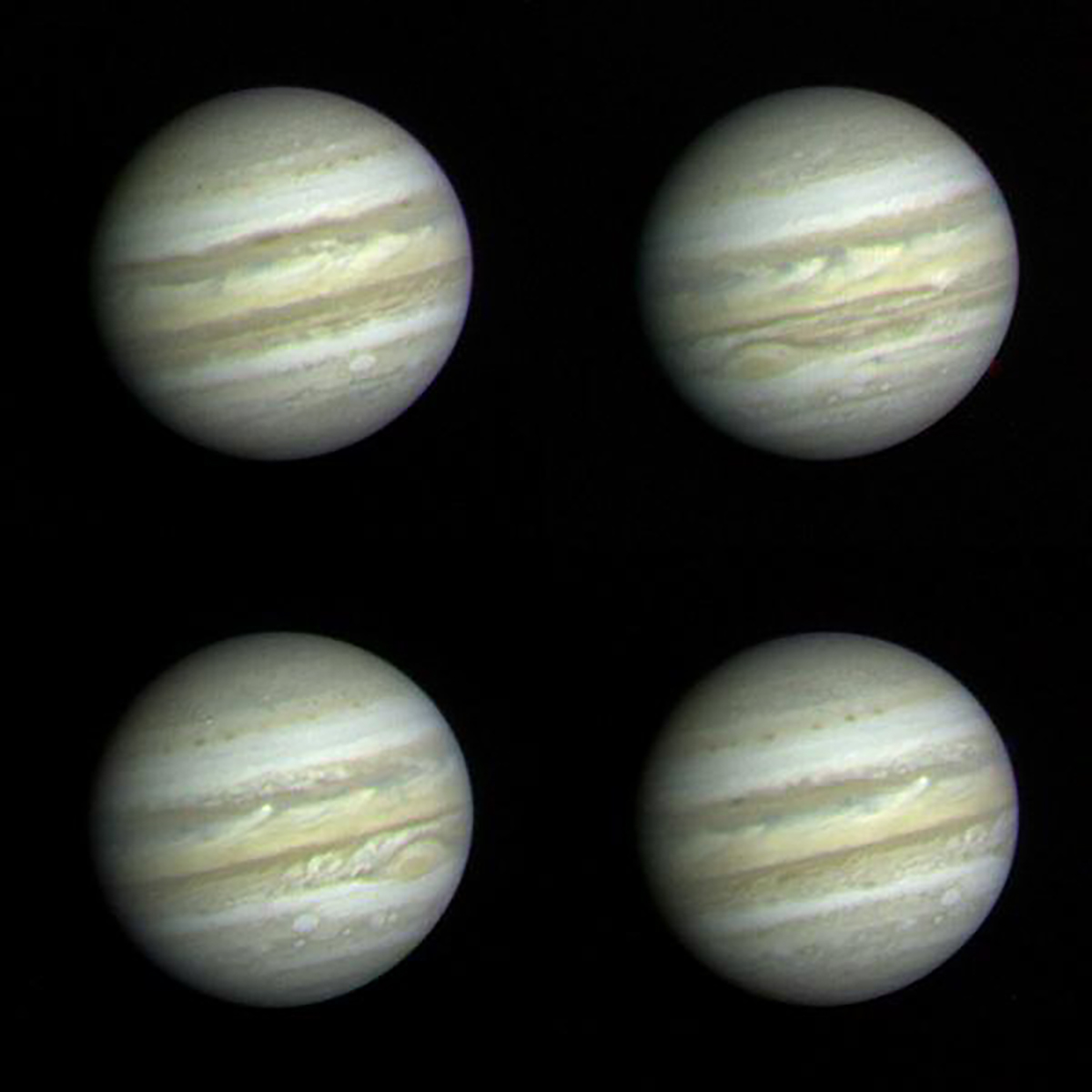
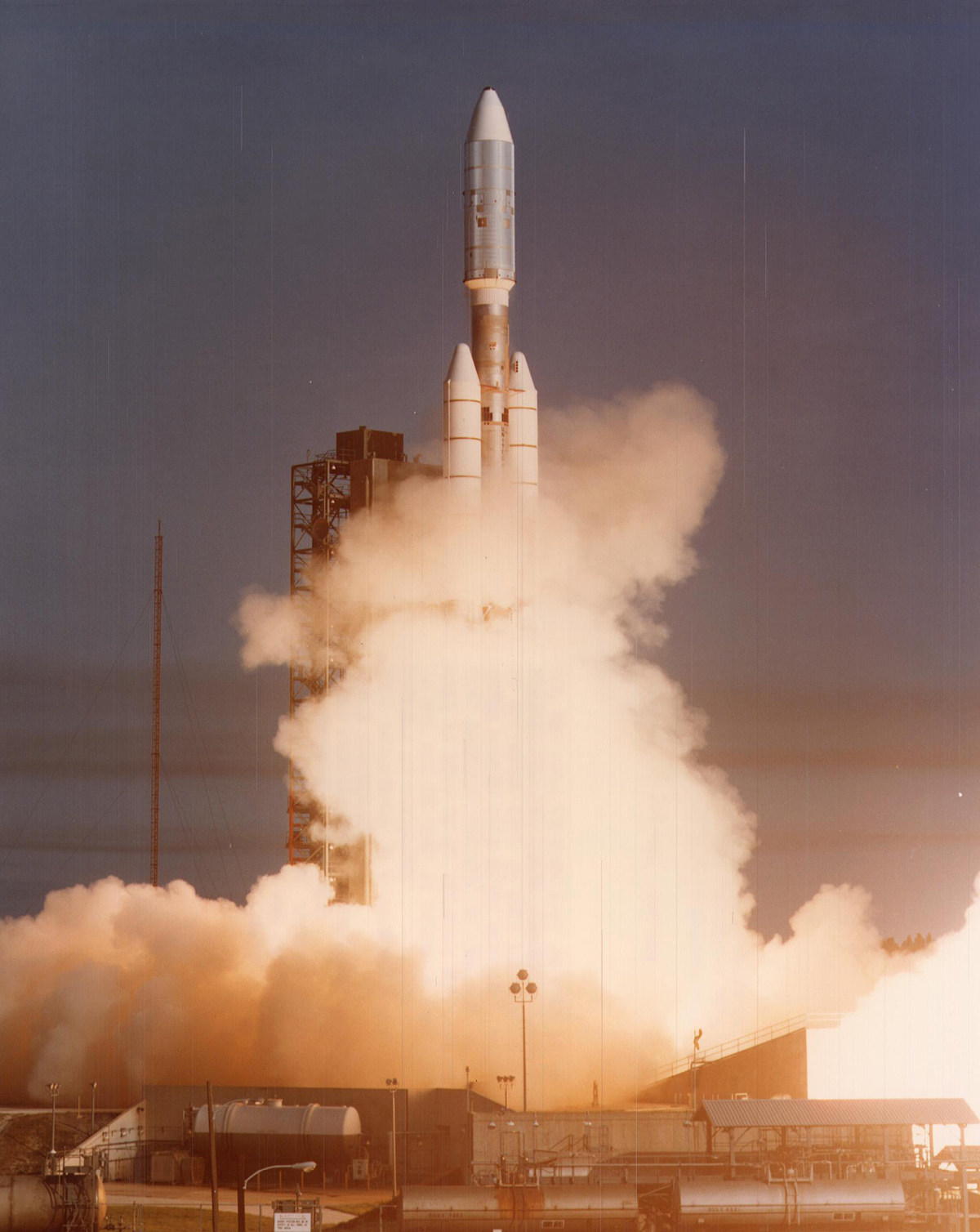
Voyager 1 was launched on September 5, 1977 on a mission to fly through the Solar System and capture images and data to reveal the secrets of its planets and moons.
Voyager 2, which had been launched earlier on August 20 1977, travelled onwards to the outer Solar System, also capturing views of the ice giants Uranus and Neptune.
Naturally, the Voyager probes are running out of fuel. So in order to help the spacecraft reach the historic light-day milestone with scientific gear still running, Voyager 1 recently underwent a major overhaul.
The probes rely on radioisotope thermoelectric generators, which convert the heat of decaying plutonium into electricity.

As the plutonium depletes over time, Voyager 1 loses roughly 4 watts of electrical power every year.
The team have been switching off science instruments to keep the spacecraft going.
And in order to prevent another science instrument from being turned off as early as summer 2027, engineers executed a manoeuvre in early September 2026 nicknamed the 'Big Bang'.
The NASA team turned off three warming devices on Voyager 1 and substituted them with three lower-power alternatives.
This happened about six weeks after the team had performed a similar swap on Voyager 2.
These six devices are vital to keeping the spacecraft warm enough to function in the cold depths of space.
What's more, the swap had to happen simultaneously so the heat remained properly distributed across the probe, while also reducing overall power usage.
This, the team hopes, will allow Voyager 1’s remaining operational science instruments to collect data longer than previously expected.

Expecting the unexpected
Even with energy-saving measures in place, operating a spacecraft billions of miles away brings continuous surprises.
Between October 18 and 19, 2026, NASA’s Deep Space Network – a global network of giant antennas used to track deep-space missions – briefly lost contact with Voyager 1 during two scheduled communications attempts, spaced 24 hours apart.
The sudden radio silence resolved itself on October 20 when the spacecraft's signal reappeared, allowing engineers to restore contact and begin troubleshooting.

The team discovered that one group of thrusters had gone offline, triggering the spacecraft’s onboard computers to automatically switch to a backup set.
This safety response, known as 'fault protection', causes Voyager 1 to pause operations and place itself in a stable configuration, in order to give flight controllers on Earth time to diagnose issues.
"This is the first time we’ve seen the spacecraft do something like this, but we are also at a point in the mission where we have to expect the unexpected,” says Kareem Badaruddin, Voyager mission manager at NASA’s JPL.
"We’re relieved to be back in contact with Voyager 1 and are eager to understand what happened."

The trouble with interstellar travel
Voyager 1 was originally equipped with 10 dedicated science instruments at launch, but several were turned off following its planetary flybys.
Others were kept active to study the outer heliosphere, which is the vast bubble of charged particles and magnetic fields blown across the Solar System by our Sun.
Today, Voyager 1 and its twin Voyager 2 are in interstellar space, the vast region beyond the heliosphere.
They remain the only human spacecraft in history to directly reach this region of space.
And when Voyager 1 crosses the one light-day threshold on November 18, 2026, it will mark an unforgettable milestone in space exploration – a testament to human engineering and our enduring desire to rexplore the unknown.
What are your thoughts and memories of the Voyager mission? Let us know by emailing contactus@skyatnightmagazine.com