What is the point of sending humans to the Moon, when we could carry out the same lunar science but with rovers and robots instead? Why risk lives?
Following Artemis I’s successful dry run in 2022, NASA's next mission in the Artemis programme is Artemis II.
This second phase will have four astronauts on board, but they won’t make a lunar landing.
That was initially reserved for Artemis III, intended to launch by 2028, but in early March 2026, NASA announced that Artemis III won't land on the Moon, but will instead stay in Earth-orbit to practise docking manoeuvres.
This change of plan means that Artemis IV is now the first mission of the Artemis programme scheduled to put human feet on the lunar surface.
I’m sure the astronauts themselves must be excited, but is anyone else?
Why go back to the Moon?
According to NASA, the return to the Moon is for scientific discovery, economic benefit and inspiration, all while maintaining "American leadership in exploration".
On this latter point, I’d question whether the USA was the pioneer of lunar exploration specifically.
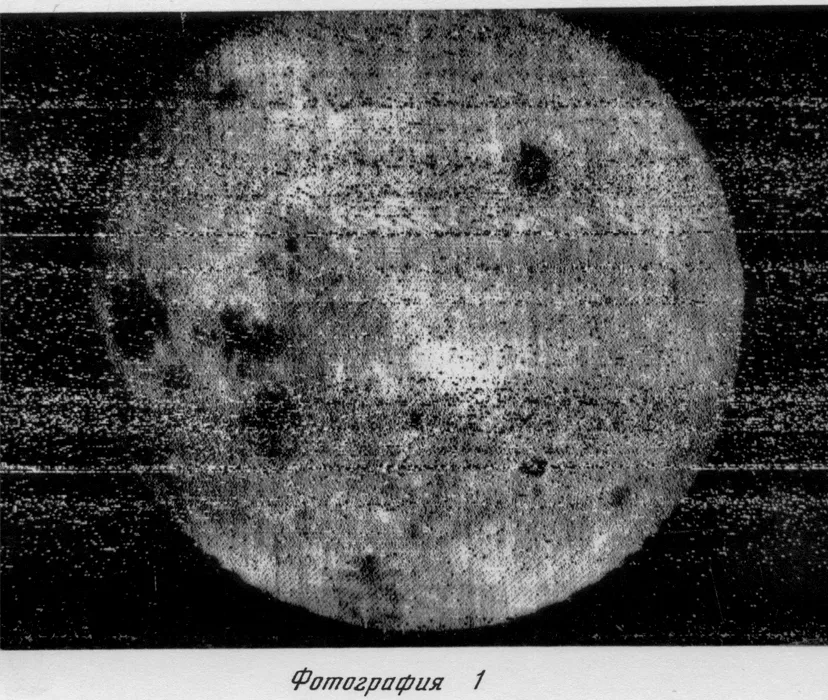
The Soviets were the first to achieve five of the eight major lunar mission types (fly-by, orbit, impact, soft landing, rover), while the USA were the first to bring back Moon samples, get people into lunar orbit and land a crew on the surface.
But I guess they were the first to plant flags there – and we all know flags are what really matter.
Of course, missions to the Moon were different during the Space Race.

Back then, they were a contest where American and Soviet leaders would wave their rockets around, in lieu of crossing swords.
But nowadays, in the 21st century, there’s nothing like that going on. Ahem.
The ‘scientific discovery’ at least does appeal to me. I do, after all, love the Moon. Artemis promises lunar geology and geophysics the likes of which we’ve never seen before.
We’ll learn about water trapped in deposits in the permanently shadowed craters near the poles.
By exploring the Moon’s volcanic and thermal history, we could understand more about the history of the Solar System. There are also plans to do some radio astronomy from the lunar far side.
These are all big scientific goals, but realistically, they don’t need humans to do them.

Why Artemis doesn’t add up
This is where my big beef with Artemis is: its other big-ticket goal is to conduct experiments on human physiology, in preparation for future crewed missions to Mars.
How do people survive long term in low gravity? What’s needed to set up deep-space communities? Can we thrive on another world?
It feels a lot like Artemis’s science goals – while cool and exciting – are only there to justify Artemis’s existence.
The scientific goal that needs people to be there is simply reconnaissance.

And then we get to the ‘economic benefit’. Artemis has already kickstarted a lunar economy that is set to grow even further over the coming decades.
Everything needed for crewed missions and long-term lunar bases has to be developed, tested and manufactured.
It’ll mostly be done by private companies, which means lots and lots of profits.
We might also remember that many technologies developed for human spaceflight in the Apollo era – miniaturised electronics, autonomous control, heat shields, and so on – found direct military applications.
At least we still have the ‘inspiration’ bit. One of NASA’s flagship goals for Artemis was to put the first woman and person of colour on the Moon.
Less inspirational was the removal of all mention of these goals when DEI (Diversity, Equality and Inclusion) was scrapped across federal agencies in the US.
However, there’s still hope, as the Artemis II crew have already been selected and among the four are Christina Koch and Victor Glover.

Artemis will continue despite my misgivings.
I will still revel in the science, visit museums to look at Moon samples the astronauts bring back, and I’ll probably have a little cry when I get to watch a live Moon landing for the first time.
And that’s because – despite the language of cosmic imperialism present in all the ‘interplanetary species’ propaganda – any exploration of this kind fills us with a renewed sense of awe.
And maybe, if we’re lucky, the hostile conditions on the Moon and on Mars will reignite our determination to save Earth – the only planet we are meant to live on.
What are your thoughts on the Artemis missions? Let us know by emailing contactus@skyatnightmagazine.com