
Modern physics has a big problem. All the stars, galaxies, gas clouds and planets we can see account for just 5% of the cosmos.
To put it another way, the large-scale structure of the Universe only makes sense if there are vast quantities of unseen mass.
An invisible substance – one we can infer from its gravitational effects, but have never directly detected – makes up 27% of the Universe.
This is dark matter.
More on dark matter

How we know dark matter's there
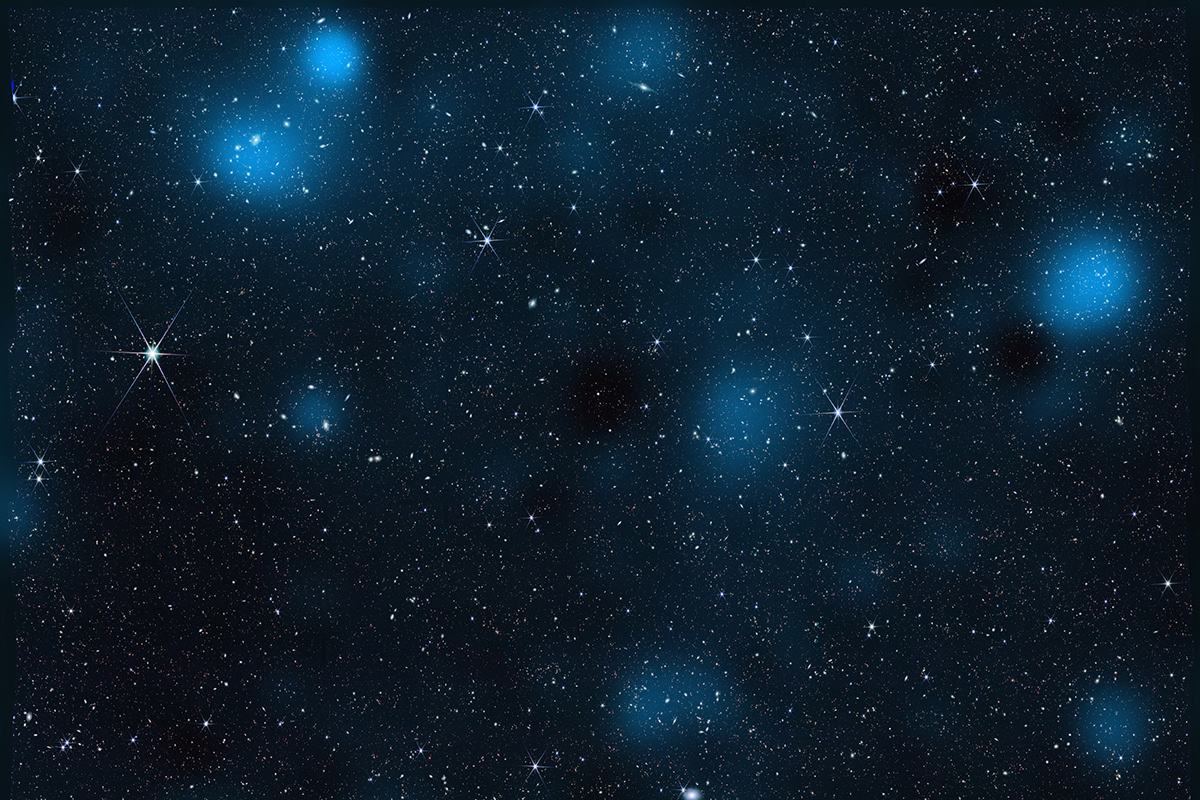
The evidence that dark matter is out there somewhere is overwhelming. Galaxies spin too fast for their visible mass to hold them together, and light bends around galaxy clusters more strongly than their luminous matter can explain.
The trouble is that after decades of searching with equipment costing billions, nobody has ever caught a dark matter particle doing anything at all.
It is the near-total confidence that dark matter must exist, combined with the total failure to catch it, that makes the hunt one of the most important in science today.
And bigger and bigger experiments continue to be built to detect the elusive substance.
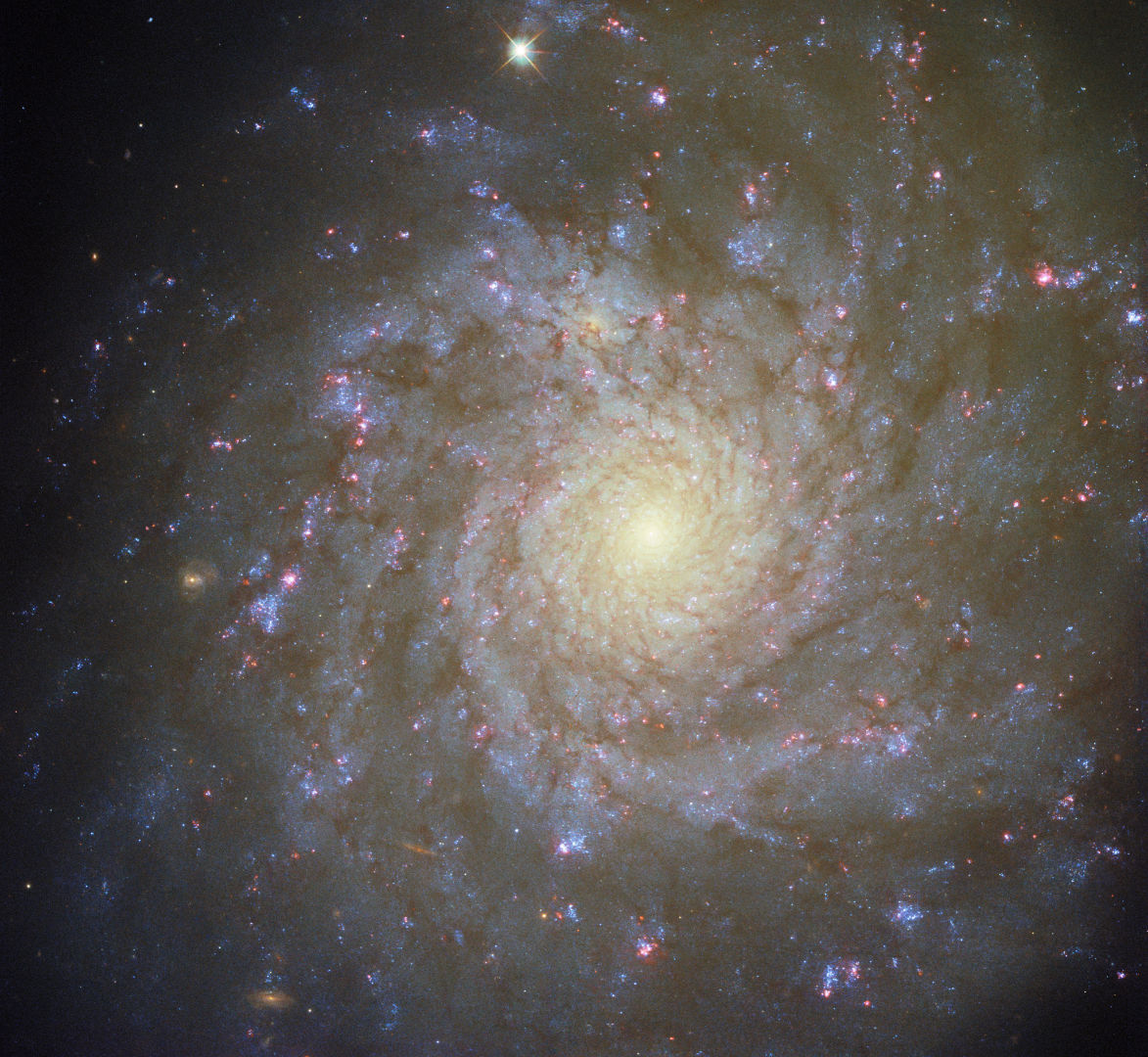
So what are these facilities looking for? The leading theoretical candidate has long been the WIMP: the Weakly Interacting Massive Particle.
Equations show that if a particle with a WIMP’s traits had been produced in the aftermath of the Big Bang, we would have almost the exact quantity of dark matter we measure now.
This ‘WIMP miracle’ was seen as too coincidental not to investigate further.
And because WIMPs should interact with ordinary matter occasionally, a sensitive enough detector ought eventually to catch one.
That reasoning has driven enormous investment in some of the most extraordinary experiments ever built.
Underground xenon
The most sensitive WIMP detectors on Earth are buried deep underground, shielded from interference by other subatomic particles, like cosmic ray muons, that would otherwise drown out any signal.
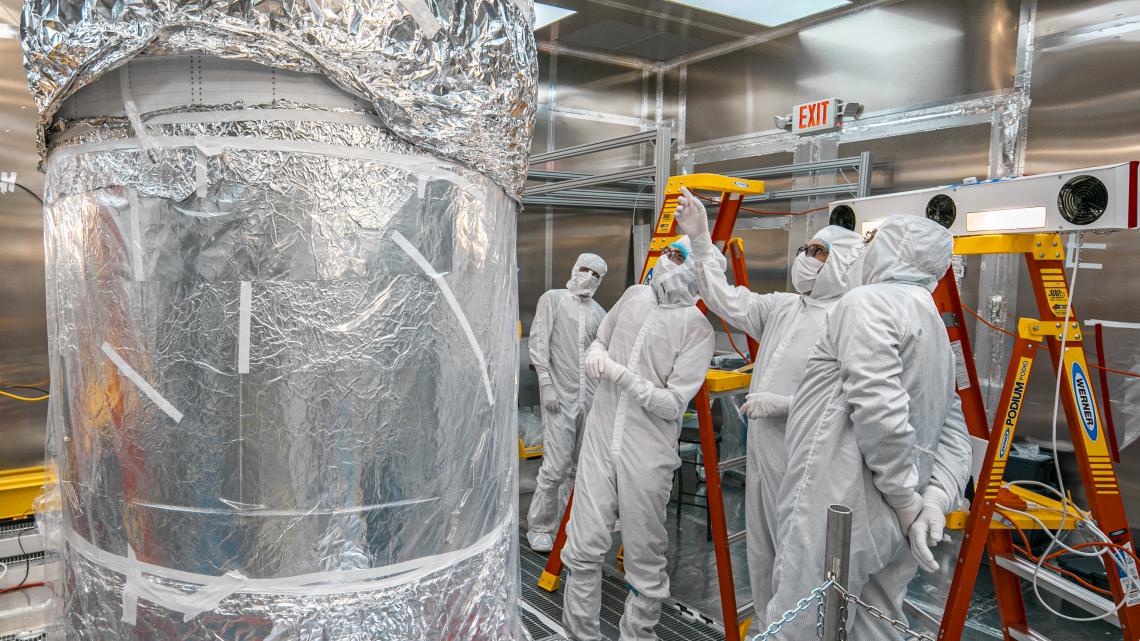
The current world leader is the £41 million ($55 million) LUX-ZEPLIN, known as LZ.
Sitting nearly a mile below ground at the Sanford Underground Research Facility in South Dakota, it holds 10 tonnes of ultra-pure, ultra-cold liquid xenon.
Here’s how it works: when a particle collides with a xenon nucleus, it produces a sharp flash of light, followed by a burst of electrons that drift upward and create a secondary flash.
Arrays of photomultiplier tubes record both, and the pattern reveals where the collision happened and how much energy it carried.
The challenge is making the whole apparatus quiet enough that whatever signal is still detected could plausibly be dark matter.
In December 2025, LZ published results drawn from 417 days of data: no WIMPs.
A news story released in September 2026 revealed one of the most intriguing results from LZ so far, but not enough to be a confirmed discovery
To some, the lack of a conclusive discovery might be a disappointment, but it is actually a scientific result.
The limits it sets on how weakly WIMPs can interact are the tightest ever achieved.
The same run also caught subatomic neutrino particles from the Sun’s core, the strongest signal of the kind yet seen by a dark matter detector and a measure of just how sensitive these instruments have become.
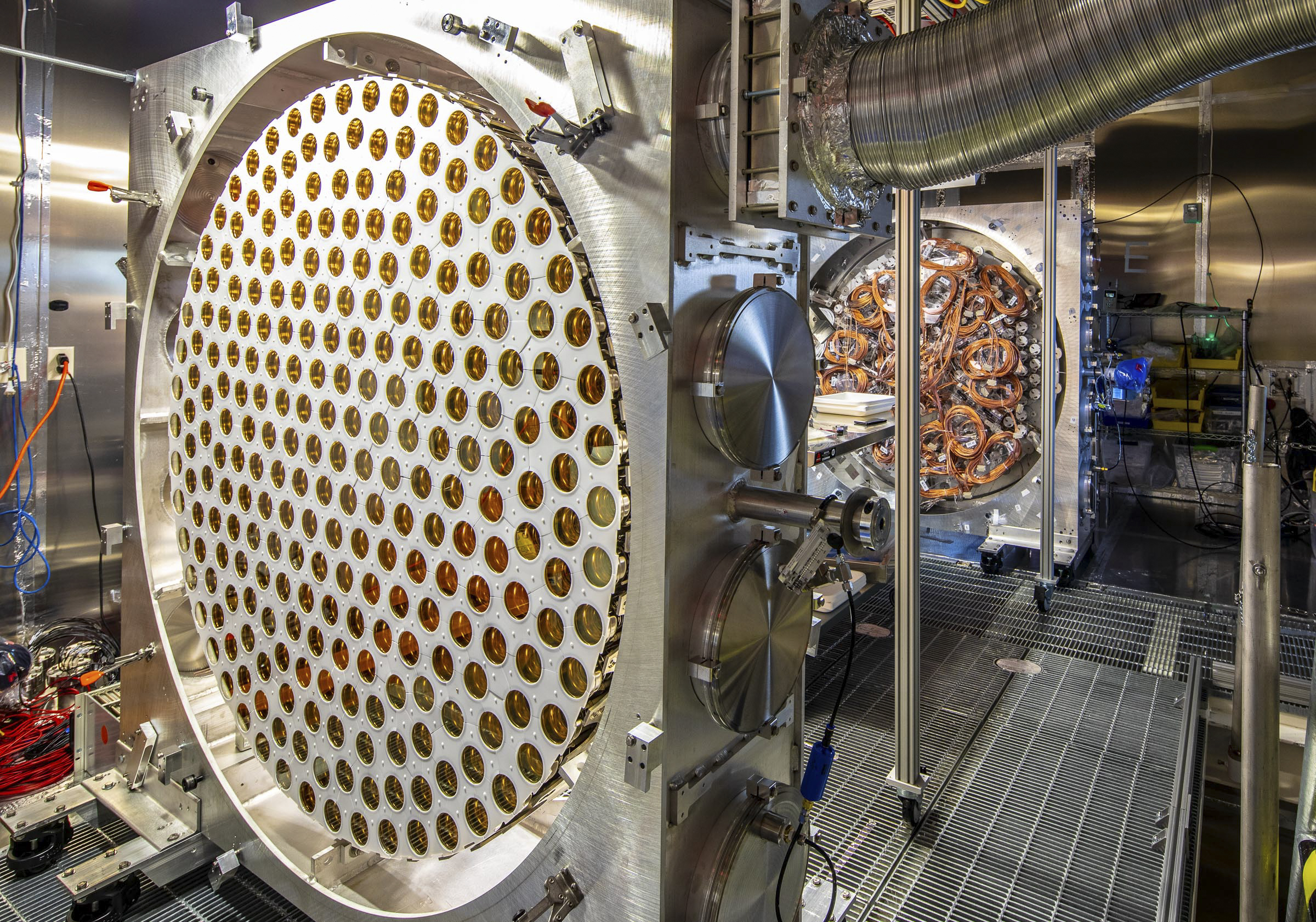
Another experiment, the £22 million ($30 million) XENONnT, beneath the Gran Sasso mountain in central Italy, has reached a similar sensitivity.
Both experiments have now reached what physicists call the ‘neutrino fog’ – a background ‘noise’ of neutrinos produced by fusion in the Sun’s core, which makes separating a dark matter signal from ordinary neutrino interactions extremely difficult.
The proposed follow-up is XLZD (pronounced ‘exelzed’), a collaboration between LZ, XENONnT and a similar experiment called DARWIN, to create a single observatory containing 40–60 tonnes of
liquid xenon.
UK teams are actively exploring hosting it at the Boulby mine in North Yorkshire, 1,100 metres (3,610ft) below ground level.
If a WIMP exists anywhere within the mass range we expect, XLZD should have a reasonable chance of finding it. If it does not, the technique will have been pushed about as far as physics allows.

Axion haloscopes
But WIMPs are not the only option in the hunt for dark matter.
In the late 1970s, physicists proposed a hypothetical particle called the axion as the fix to an awkward problem in the theory of the strong nuclear force.
It later became clear that the same particle, if it exists, would also make an excellent dark matter candidate.
These theoretical axions are extremely light, potentially a billion times lighter than an electron, and detecting them demands a completely different method.
The device to do it, an axion haloscope, uses a powerful magnetic field to convert axions into microwave photons.
Like an AM radio, the detector can be tuned to a specific frequency, while extremely cold radio receivers listen for the faint signal.
The leading experiment, the £7.5 million ($10 million) ADMX at the University of Washington, published new results in 2025 after scanning a fresh band of frequencies. No axions.
Even so, the search is steadily covering more ground. The receivers ADMX uses are now about as quiet as the laws of physics allow, sensitive enough to pick up the faint signal that the most credible theories predict an axion would make.
The next versions of the experiment will replace the single detection chamber with banks of them, letting the team listen across a wider range of frequencies and hunt for slightly heavier axions.
Watching the sky
A third approach in the search for dark matter skips direct detection entirely
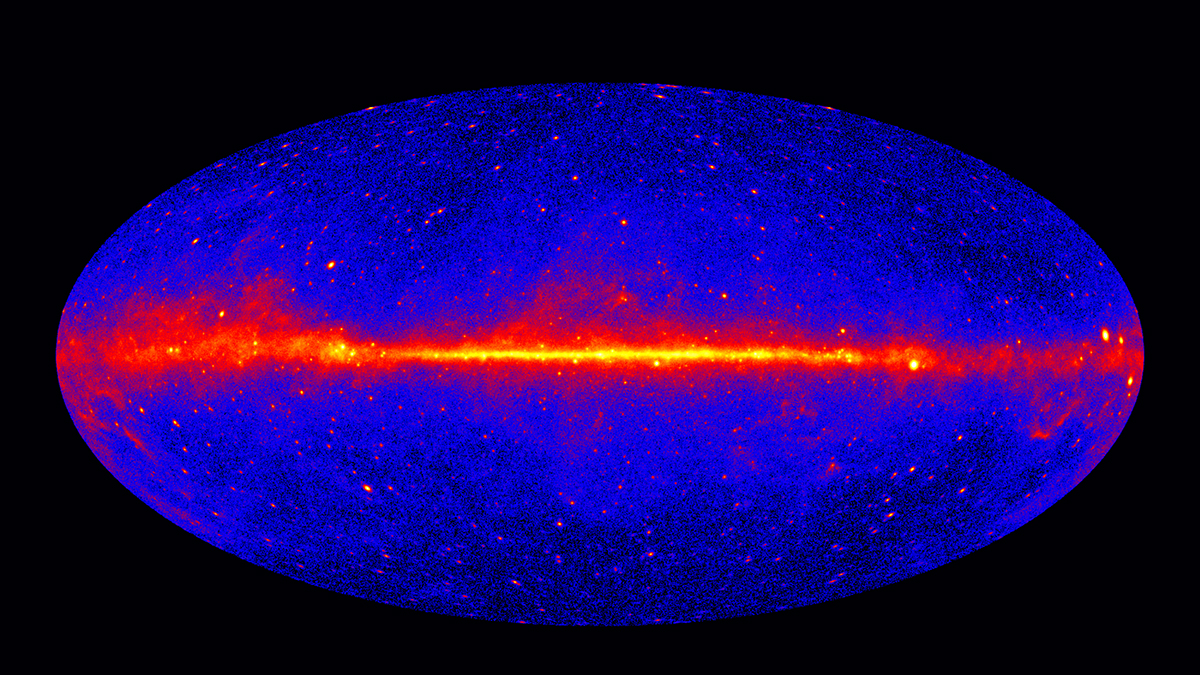
Instead, it relies on the leading theory that dark matter particles annihilate themselves when they collide with one another, and the detection of the by-products this should leave behind: gamma rays, neutrinos or antimatter.
NASA’s £45 million ($60 million) Fermi Gamma-ray Space Telescope, operating since 2008, has been watching the sky for gamma rays with exactly this in mind..
It focusses on Milky Way satellite dwarf galaxies, which are unusually rich in dark matter and relatively free of contaminating elements. Yet nothing conclusive has been found so far.
There is another way to look for the leftovers of dark matter annihilation, and it happens above the atmosphere.
If dark matter particles really do destroy each other when they meet, the wreckage should include not just light but matter’s mirror image, antimatter.
Two instruments in space are watching for this: the £1.5 billion ($2 billion) Alpha Magnetic Spectrometer (AMS-02), bolted to the outside of the International Space Station; and the Dark Matter Particle Explorer (DAMPE), a £75 million ($100 million) Chinese satellite.
Both instruments are designed to catch particles raining in from deep space and sort them by type.
What they are hoping to spot is a surplus: slightly more antimatter or high-energy electrons than the ordinary workings of the Galaxy can account for.

These indirect detection methods have produced one of the most argued-over signals in modern physics, and it comes from the centre of our own Galaxy.
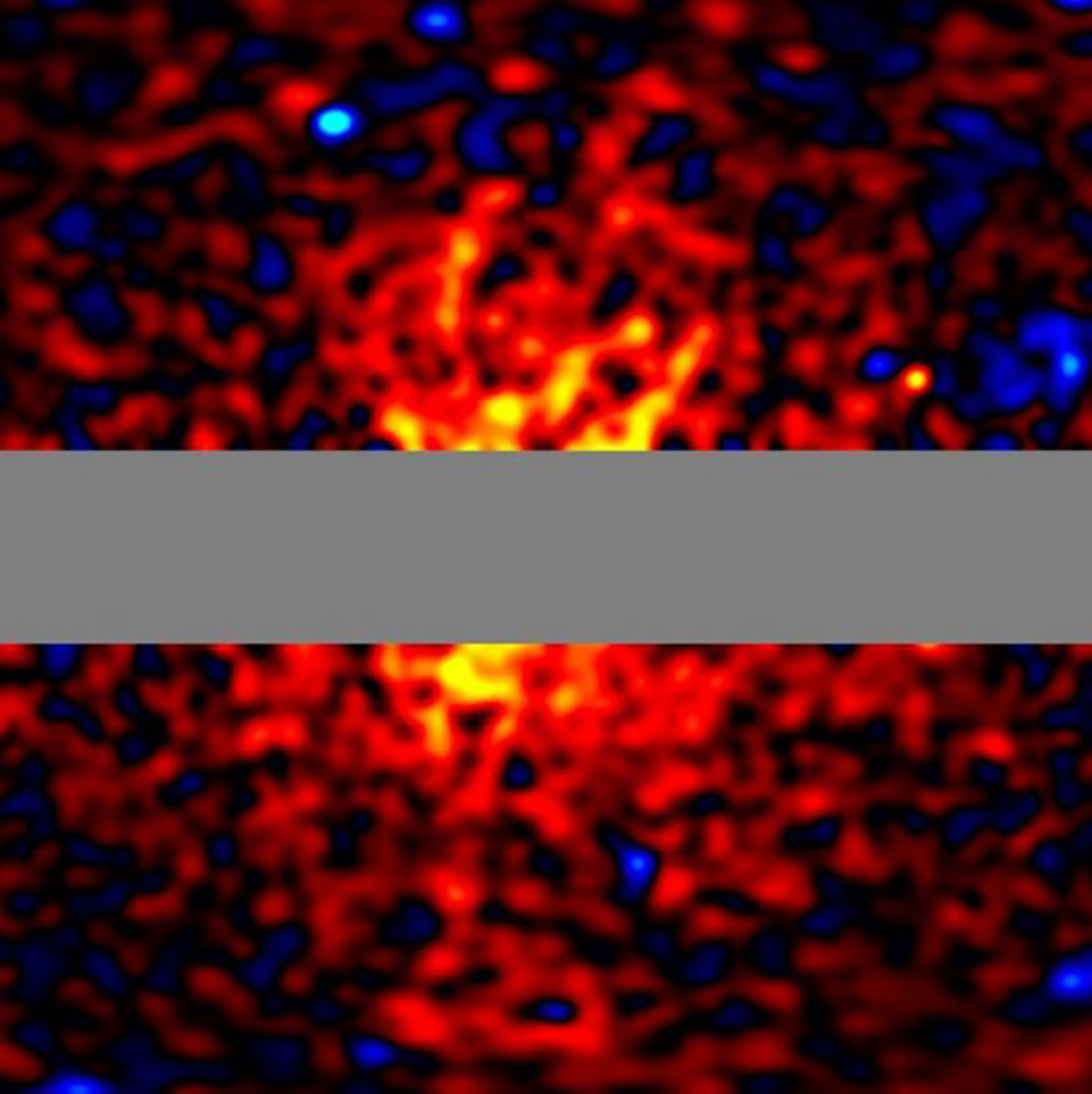
Since 2009, Fermi has recorded more gamma rays from the galactic centre than models of ordinary astrophysics predict.
One explanation is dark matter annihilation.
The other is a hidden population of rapidly spinning neutron stars called millisecond pulsars.
The debate has run for more than a decade, and in late 2025 a fresh analysis argued that the excess of gamma rays fits a dark matter halo – a giant invisible cloud of dark matter enveloping the Milky Way – better than a population of pulsars.

The next generation of detectors is already taking shape.
The Cherenkov Telescope Array Observatory (CTAO), under construction in Chile and on the Canary Islands, will bring a substantial improvement in ground-based sensitivity.
In orbit, the High Energy cosmic-Radiation Detection (HERD) facility, due to be installed on the Chinese space station around 2027, has roughly 10 times the collecting power of today’s instruments, with dark matter among its primary targets.
Between them, they are the most anticipated indirect detection experiments of the coming decade.
Smashing things together
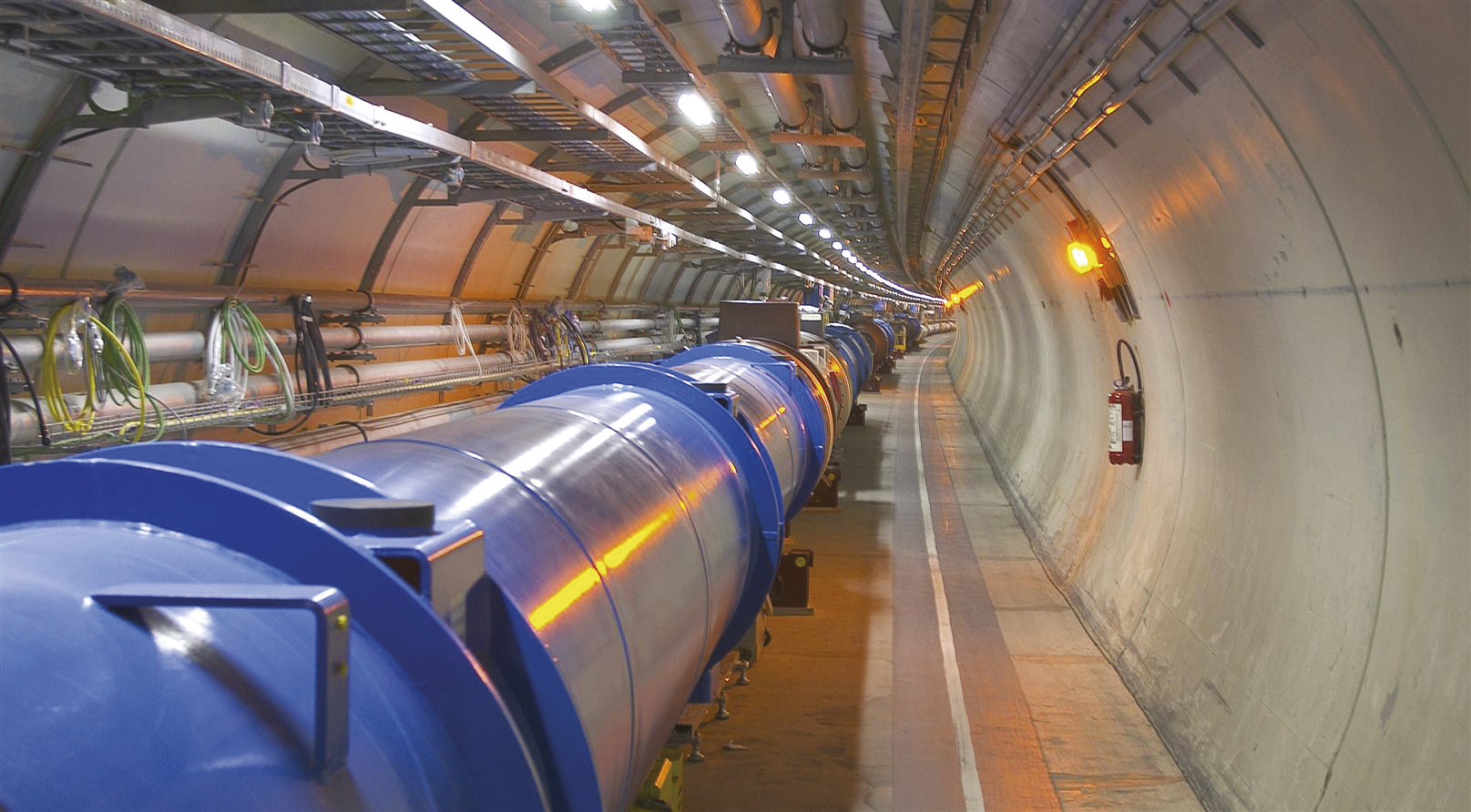
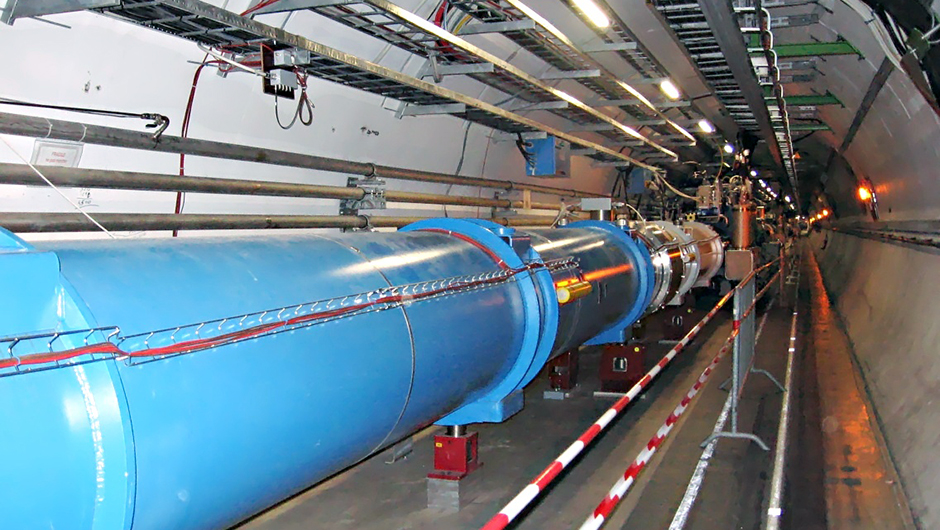
Buried 175 metres (575ft) beneath the Swiss–French border, the Large Hadron Collider (LHC) at CERN is also searching for dark matter.
With an annual budget of £1.3 billion ($1.75 billion), the massive 27km-long (17-mile) particle accelerator comes at dark matter detection from the opposite direction: rather than waiting for a dark matter particle to wander into a detector, it tries to manufacture one.
If dark matter can be produced by smashing protons together at high enough energy, the LHC should be able to do it.
Scientists at CERN know what they’re looking for: dark matter would show up as missing momentum, energy that ought to be present after a collision, but isn’t there because a dark matter particle has fled the detector without leaving a trace.
The collider’s appeal is that its approach could pin down a particle’s mass directly, something the other methods would struggle to do.
But the LHC has been running this search for over a decade, across many millions of collisions, with nothing definitive so far.
CERN’s proposed Future Circular Collider, a 91km (56-mile) ring currently in feasibility studies, would reach energies roughly seven times higher than the LHC and open significant new territory to explore dark matter physics.
However, whether it is funded and built is, for now, as much a political question as a scientific one.
The bigger picture
So far, the search for dark matter has spanned four different experimental philosophies, all running at the same time, each sensitive to different candidates across different mass ranges, and none has identified what dark matter is.
But that’s not to say they’ve failed.
The lack of results from xenon tanks has ruled out swathes of WIMP models. The lack of results from haloscopes has shrunk the possible options of properties axions can have if they’re the answer to dark matter.
The absence of a clear gamma-ray excess from dwarf galaxies limits how often dark matter can annihilate.
And the null results at the LHC suggest we need to probe higher energies to finally find the dark matter particle.
Every result, including every non-result, changes what theorists consider worth pursuing next.
The gravitational evidence for dark matter is about as solid as astrophysics gets.
Working out what it actually is, though, may yet demand experiments nobody has even thought of building.

