Disaster movies promote asteroids as the likely candidates for Armageddon, but they aren’t the only cosmic threat to planet Earth by far.
Space hazards like massive radiation events, cataclysmic galactic phenomena, sudden space weather, geomagnetic changes and even black hole mergers pose an enduring threat.
More apocalyptic astronomy

Many are scientifically grounded and could happen without warning.
Let’s take a deeper dive to distinguish between credible, likely threats and those that are low probability, exotic but with high-impact apocalyptic outcomes.
Solar superstorms
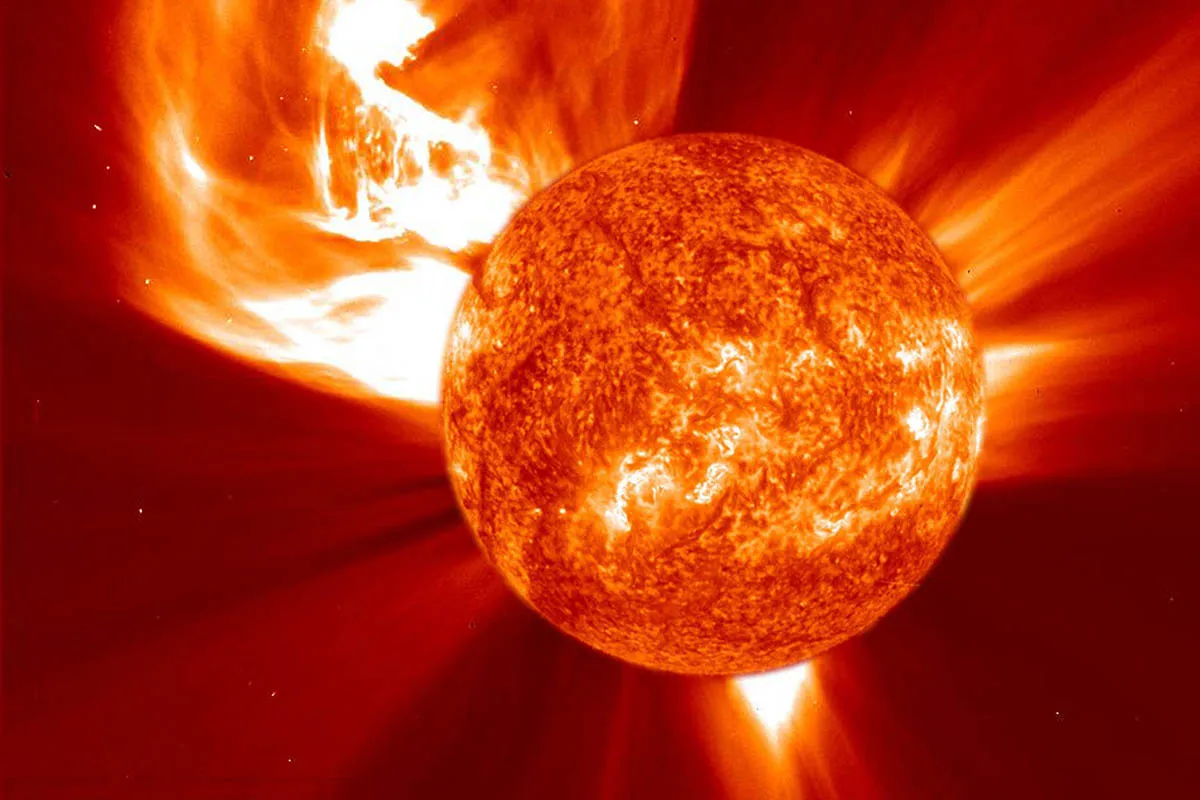
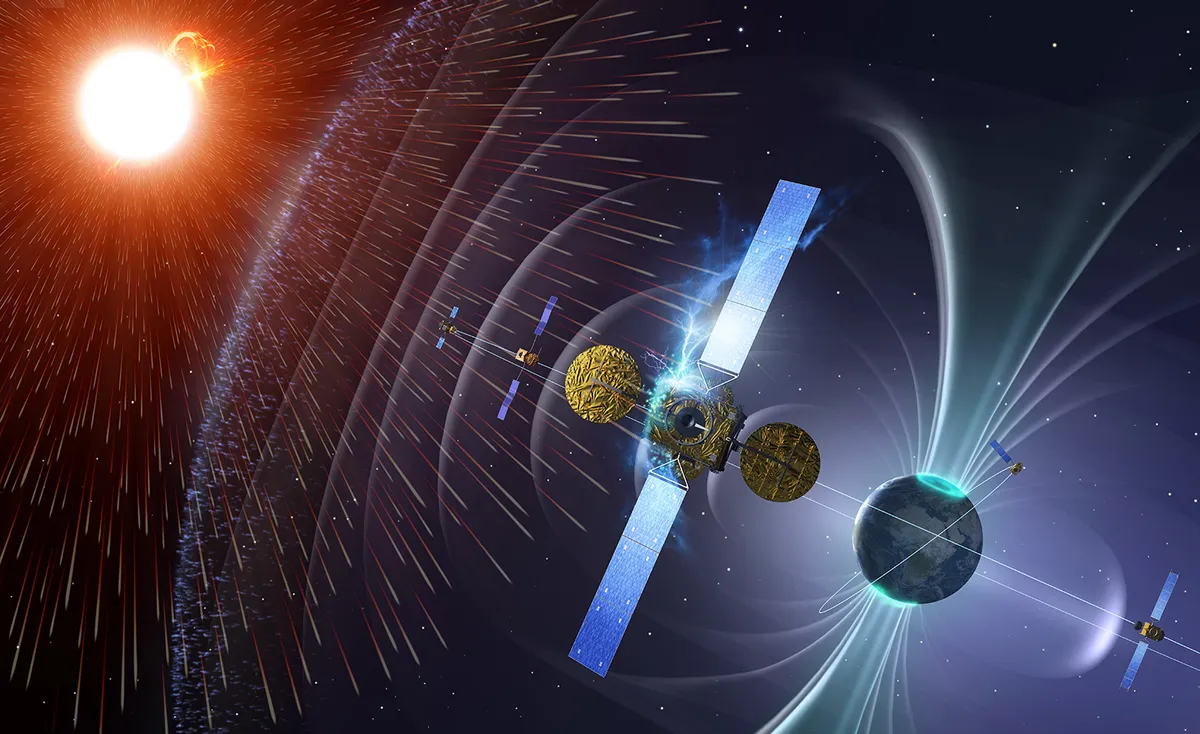
Possibly the most significant existential threat comes from solar superstorms, spawned by massive eruptions of highly magnetised plasma – Coronal Mass Ejections (CMEs) – from the Sun’s surface.
These charged particles rush through the solar wind to flood Earth’s magnetosphere, inducing intense electrical currents and global magnetic disturbances.
The consequence of a CME hitting Earth directly include operational anomalies for spacecraft, and possible premature re-entry for those at low altitude.
Meanwhile, satellites are disrupted or damaged, GPS systems would transmit navigation errors and power grids would be overloaded.

Solar superstorms occur once every two to three solar cycles (around every 20 to 25 years), and include the legendary September 1859 Carrington Event, the most intense geomagnetic storm ever recorded.
More recently, Earth’s perilous close shave with multiple CMEs in July 2012 and May 2024’s ‘Gannon Storm’, the strongest in over two decades, affirms these superstorms are not as rare as once thought.
To achieve better protection, scientists monitor space weather closely, using a posse of spacecraft.
The most recently launched of these are NASA/NOAA’s Interstellar Mapping and Acceleration Probe (IMAP), the Carruthers Geocorona Observatory and the Space Weather Follow-On at Lagrange Point 1 (SWFO-L1).
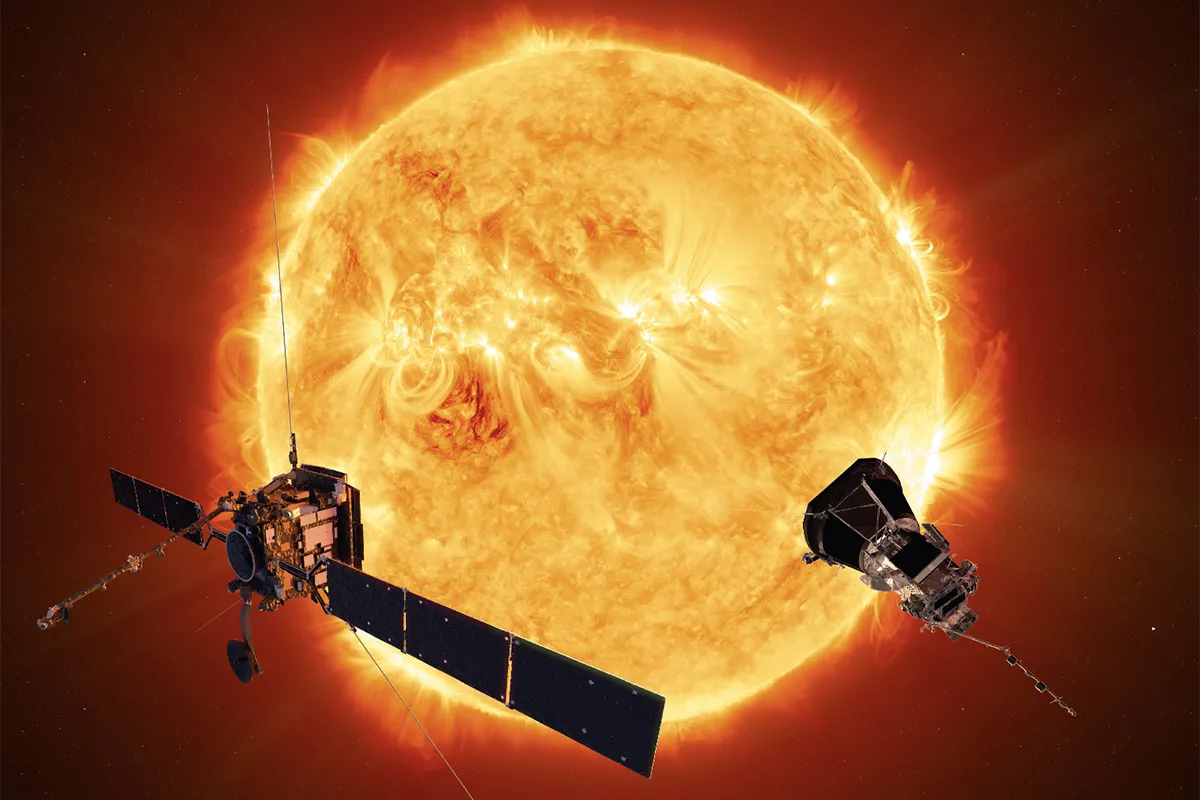
These join an existing armada: NASA’s Solar Dynamics Observatory, the Parker Solar Probe, Advanced Composition Explorer (ACE) and Solar Terrestrial Relations Observatory (STEREO), as well as NASA/ESA’s Solar and Heliospheric Observatory (SOHO), India’s Aditya-L1. ESA's Vigil mission will soon join the fleet.
Gamma-ray bursts

Originating in distant galaxies, gamma-ray bursts (GRBs) are the most powerful cataclysmic explosions in the Universe.
They release vast amounts of energy in the form of gamma rays, followed by longer-duration ‘afterglows’ detectable at X-ray, optical and radio wavelengths.
Like a lighthouse, their energy is focused along two narrow beams, and any object caught within them is destroyed.
Long-duration GRBs are thought to be caused by the collapse of enormous stars into black holes, while short-duration GRBs are set off by the merger of two neutron stars.

One controversial hypothesis holds that a GRB hit Earth 450 million years ago and triggered the Ordovician-Silurian extinction.
Caused by a nearby event, the theory suggests the GRB stripped our planet’s ozone layer, causing UV damage, acid rain and even triggering ice ages.
This led to the recorded collapse of global ecosystems, and the loss of over 85% of species alive at the time.
Mercifully, since no stars are destined to explode as GRBs within 200 lightyears of our Solar System, our planet is safe – for now.
But scientists constantly monitor for new events using ESA’s gamma-ray observatory, Integral, the flagship orbiting XMM-Newton spacecraft and, from 2037, the investigative New Advanced Telescope for High-Energy Astrophysics (NewAthena), the largest X-ray observatory ever constructed.
Exploding stars

When a star with many times the mass of our Sun exhausts its fuel, its core collapses, igniting a shockwave that blasts its outer layers into space.
The remnant of this ‘core-collapse supernova’ is a neutron star or black hole.
Alternatively, these catastrophic explosions can occur when a white dwarf star in a binary system leeches matter from its stellar companion.
When the white dwarf reaches a critical mass, runaway nuclear fusion is triggered and it explodes as a ‘Type Ia supernova’.

If either of these explosive events happened within 25–50 lightyears of our planet we would be jet-washed by high-energy cosmic rays, intense radiation and shockwaves of stellar debris.
It’s likely the atmosphere would be stripped, rendering Earth uninhabitable.
Luckily, as with GRBs, astronomers have yet to find any supernova candidates in our cosmic backyard; however, using spacecraft like the James Webb Space Telescope and Neil Gehrels Swift Observatory, monitoring is ongoing.
Rogue stars and nomad planets
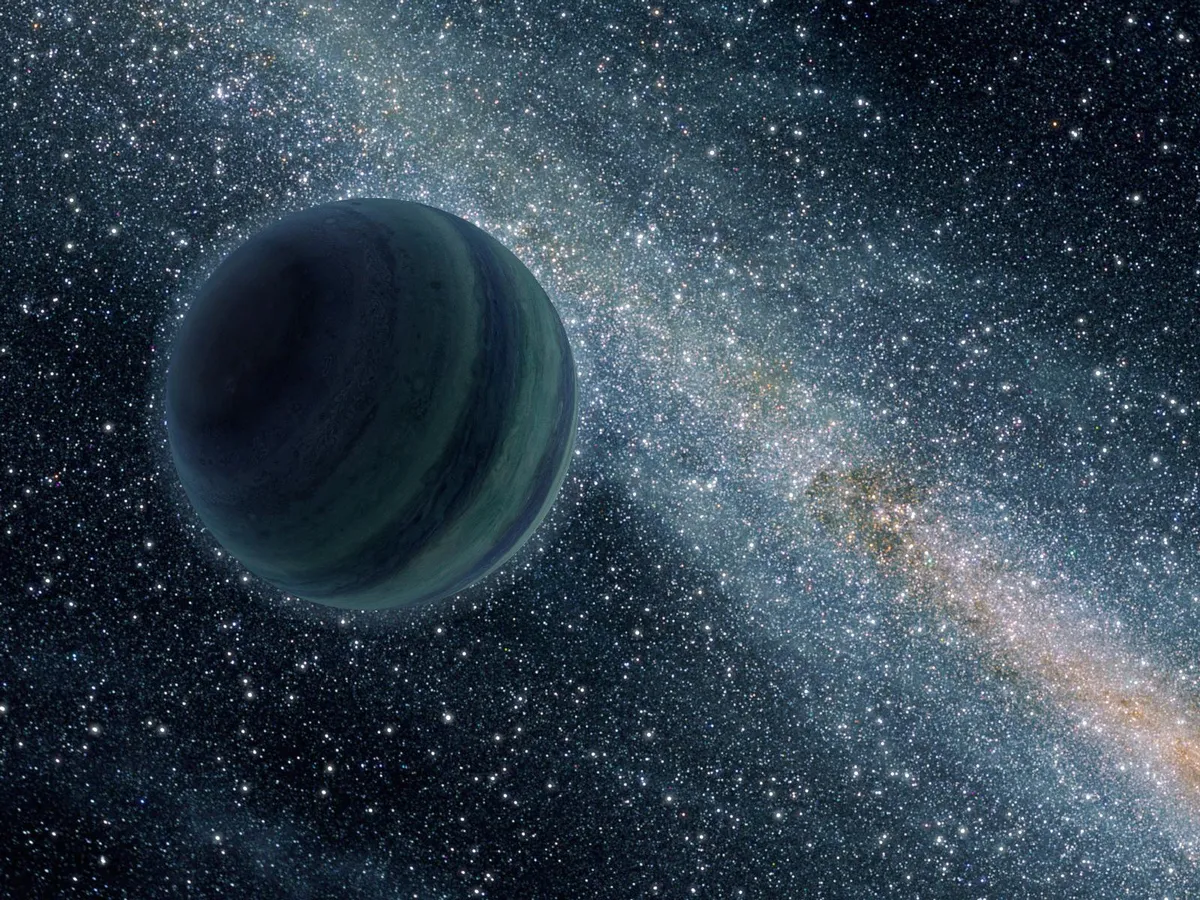
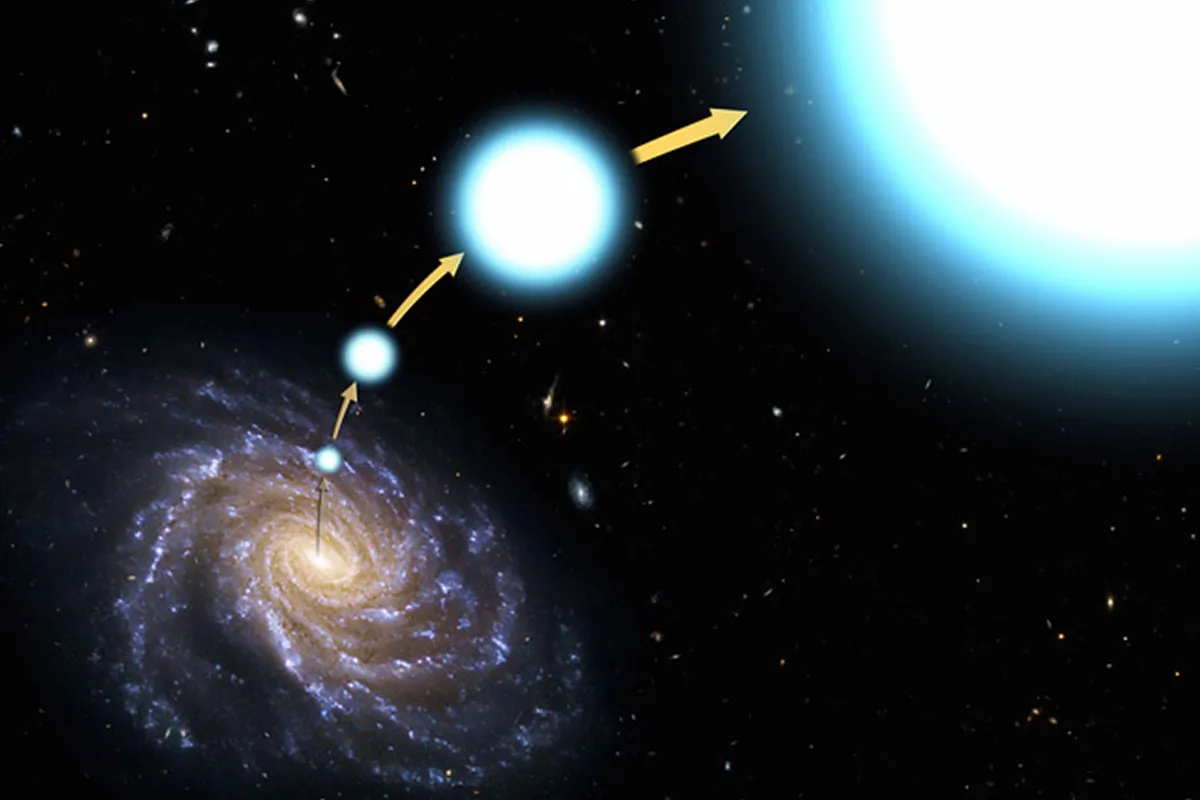
Rogue stars passing our Solar System pose a long-term but remote threat to our everyday lives.
Should one get up close and personal, it would destabilize our cosmic locale. Jupiter would disrupt Mercury’s orbit, kicking off more planetary impacts and ejections.
Earth could collide with the Sun, a neighbouring planet or be slung into interstellar space.
A wayward star could pass through the Oort Cloud – a theorised spherical shell of trillions of icy bodies encasing the Solar System and extending around a quarter the distance to our nearest star – sending a planet-obliterating shower of icy rocks in our direction.
The odds of a rogue star or nomad planet – a celestial body roaming the Galaxy gravitationally untethered to any star – impacting our Solar System are almost zero.
Nevertheless, astronomers are focused on tracking low-probability threats like asteroids, and developing planetary defence systems like September 2022’s Double Asteroid Redirection Test (DART) mission, to trial deflection technologies.
Black hole flybys or collisions

A stellar-mass black hole (SMBH) passing within a few dozen lightyears of us could wreak havoc in the Oort Cloud, inciting a millennium-long bombardment of comets.
A SMBH ‘buzzing’ Earth would have calamitous consequences: gravitational chaos would transform planetary orbits, induce massive earthquakes, extreme tides and probably shoot Earth right out of the Solar System.
That’s if our planet is not spaghettified first – stretched and shredded by the black hole’s tidal forces. Ferocious heat and radiation would yield global devastation.
A large SMBH would rip our planet to pieces. A collision between two SMBHs would also sabotage space around the Sun.
Thankfully, the nearest known SMBH is 1,560 lightyears away and the odds of such an event are low … just 1 in 100 billion!
Galactic collisions and cosmic encounters

Galactic collisions evoke thoughts of our Galaxy colliding with the Andromeda Galaxy in five billion years’ time, which Earth will likely survive since galaxies comprise mostly empty space.
However, recent research suggests the Milky Way might not collide with the Andromeda Galaxy after all.
In any case, our fate is doomed far earlier when our Sun, having exhausted its fuel, bloats up into red giant, devours the inner planets and, dying, sheds its out layers to form a planetary nebula.
But, crucially, our star journeys through dense interstellar clouds and supernova shockwaves in its orbit around the Milky Way.
These compress and shrink the heliosphere – the Sun’s protective bubble – exposing Earth to dangerous cosmic rays.
As earlier, climate shifts, ice ages and evolutionary mutations will ensue.
Vacuum decay

Some models of particle physics propose our Universe exists in a ‘false vacuum’, but this may not be its lowest-energy, supremely steady state. It could be ‘metastable’, awaiting another violent transition.
andom quantum oscillations could generate a new ‘ground state’ with lowest-energy particles, forces and fields.
If this vacuum decay destroyed the Universe, then not just Earth that would cease, but all of undamental reality.
A revolutionary ‘true vacuum’ quantum bubble could expand at light speed, altering physical laws, particle masses and chemistry, creating a catastrophic finale where matter, forces and existence as we know it is rewritten or erased.
Extreme cosmic rays and particle storms
Last on our list, and posing less of a significant threat to our daily lives since we’re protected by our atmosphere and magnetic field, are rare ultra-high-energy cosmic rays.
If these particles are accelerated by distant black holes or hypernovae they can hose Earth’s atmosphere, depleting its ozone.
Potential technology ‘damage’ will affect spacecraft equipment, ground-level computers, silicon atoms in microchips, satellites, GPS systems and power grids.
Biologically, passengers on high-altitude flights will suffer excessive radiation, possibly triggering DNA mutation and cell damage.
But remember, more cheerily, that most apocalyptic scenarios are extremely unlikely – and should none of them come to pass, then life on this paradisial, precious ‘pale blue dot’ can be enjoyed for a further five billion years.