
It's safe to say the planets are back.
The onset of autumn and winter 2026 means the return of longer nights and darker mornings – and we're going to be treated to an array of Solar System worlds visible in the sky.
You may have heard rumblings of another 'planet alignment' or 'planet parade' visible in November and December 2026.
Planet alignments tend to garner a lot of hype online and across social media, but often the reality doesn't quite match up to expectations (or artists' impressions).
But it is true. The next planet alignment will be a four-planet parade in November 2026.
Read more

Mercury, Venus, Jupiter and Mars will be seen in a line stretching upwards from the horizon before dawn, as of mid-November 2026. And they won't be the only planets visible.
So what can we expect and how can we make the most of this planet alignment – or planet parade – in the run-up to Christmas 2026?
Here we'll go through each planet over the coming months and how to see the planet alignment at its best.
First, a note on safety. When attempting to observe planets like Mercury and Venus close to the eastern horizon before dawn, be sure to stop observing well before sunrise, to prevent yourself accidentally catching a glimpse of the Sun with your naked eye.
How to see each planet in the November 2026 alignment
Mercury
As of October 2026, Mercury isn't visible, but that all begins to change mid-November when Mercury will re-emerge as a morning planet.
Halfway through November 2026, Mercury will be visible low in the eastern sky in the early hours before dawn.
Mercury will be the lowest of the four-planet alignment and can be seen towards the southeast before sunrise. You'll need a clear, flat horizon to spot it.
Venus
Like Mercury, Venus isn't visible in October 2026, but by early November the planet will just be emerging into the morning sky.
It will be in the same patch of sky as Mercury in the southeast, but higher up and therefore visible earlier before sunrise. Venus is also brighter, so it should be much easier to spot than Mercury.
Again, a clear, flat southeastern horizon will be needed to get the most out of Venus in November.
You might spot a star very close to it, too. That's Spica, the brightest star in Virgo.
Venus is going to get even better as we approach December 2026.
Mars
Mars is one of the best planets to see at the tail end of 2026. As of mid-October it's high in the eastern sky before sunrise. Of the four planets in the Mercury-Venus-Jupiter-Mars alignment, Mars is the highest.
Mars is also doing a bit of a tango with the planet Jupiter. The pair are very close to one another in the sky and are going to be getting even closer over the coming weeks.
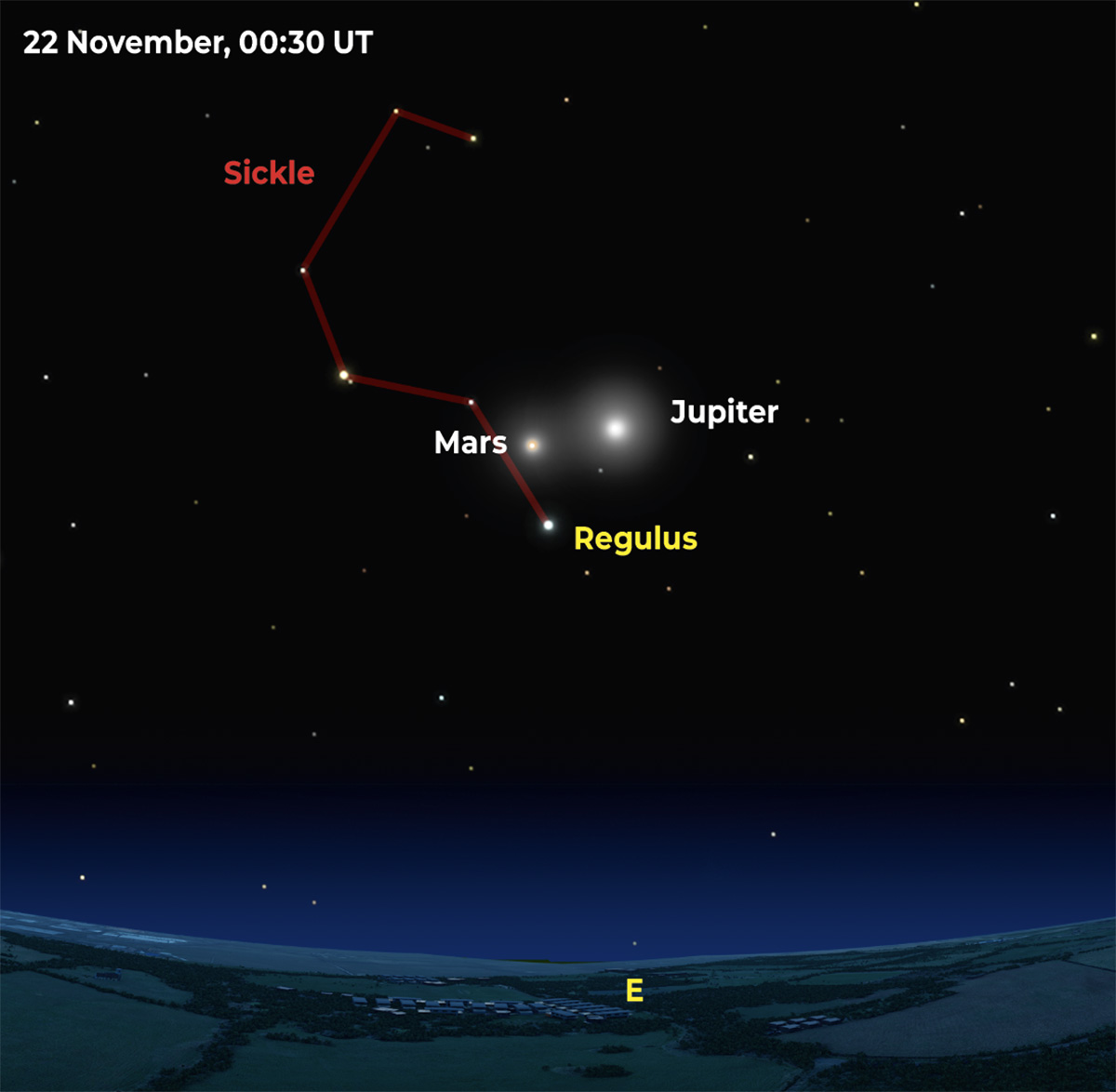
Keep an eye out for the Mars-Jupiter conjunction on 15/16 November, when they'll be at their closest and will look like a bright double star in the morning sky.
They'll be bunched up close to Regulus, the brightest star in Leo, and so may even look like a triple star.
Jupiter
Jupiter is also visible in the eastern sky in the morning before dawn. In October 2026 it's lower than Mars, but it's the brighter of the two.
As mentioned above, Jupiter and Mars are close together in the morning sky and will be getting even closer together as the weeks roll by.
By mid November, the two planets will be at their closest, making for a beautiful naked-eye spectacle.
Saturn
Saturn is visible in the eastern sky, too, but in the evening after sunset. That means it's not part of the morning planet alignment, but is instead a beautiful planet in its own right to observe in the night sky.
It rises in the east at dusk then tracks across the southern sky, setting in the west at dawn.
Uranus
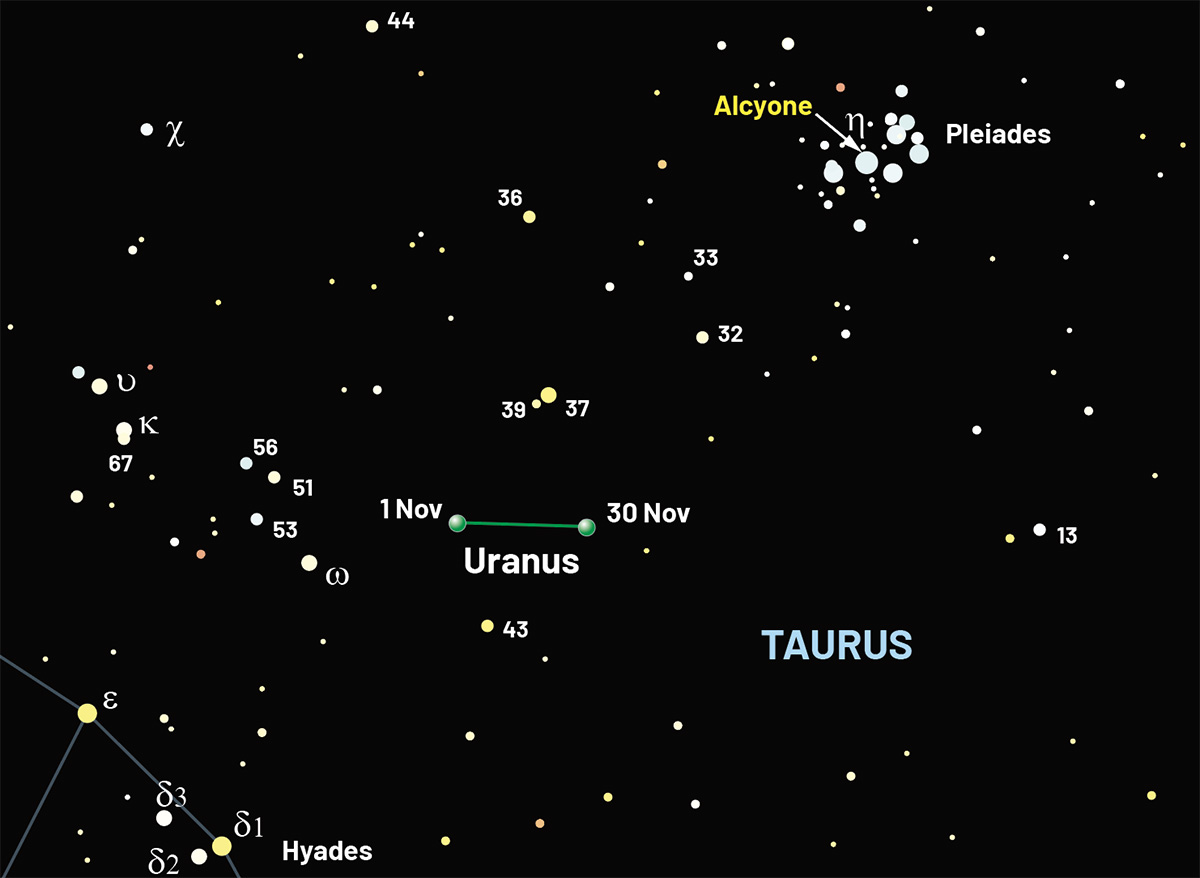
The ice giant Uranus can be seen in the southern sky around midnight, in between the Pleiades and the Hyades star clusters.
Uranus reaches opposition on 25 November 2026, which is the best time to see the planet. It's technically visible with the naked eye if you have good eyesight, good conditions and dark skies, but is easiest seen through binoculars or a telescope.
Neptune
If you can find Saturn in the night sky this winter, Neptune is nearby. It's just to the right of Saturn, but only visible through binoculars or a telescope.
How to see the November 2026 planet alignment
By mid-November 2026, Mercury, Venus, Jupiter and Mars will visible stretching upwards from the eastern horizon before dawn.
Mercury will be hardest to see. You'll need a clear, flat view of the east to see it skimming the horizon right before sunrise.
Above and to its right will be Venus. Further up in the sky will be Jupiter and Mars, bunched together like a double star. All four planets will form a diagonal line pointing upwards from the southeast.
At the same time, Uranus will be visible in the west – but setting – while Neptune and Saturn will have already set below the horizon.
That means it should be technically possible to see all seven planets in one day: Mercury, Venus, Mars and Jupiter before sunrise, then Saturn, Uranus and Neptune after sunset.
The easiest planets to see with the naked eye will be Mars and Jupiter in the eastern sky in the morning, then Saturn in the southern sky around midnight.
At a glance: November 2026 alignment
- Peak dates: Mid-to-late November 2026
- Best time to look: 45 to 60 minutes before sunrise
- Where to look: Southeast
- Main alignment planets: Mercury, Venus, Jupiter, Mars (eastern horizon)
- Highlight: Close conjunction of Mars and Jupiter, 15–16 November
Moon and planet conjunction dates, October–December 2026
The Moon tracks eastward across the sky day after day, meaning that it changes position to a much greater extent than the planets or stars.
That means there will be key dates when the Moon will join the planets in the evening sky throughout October, November and December 2026.
Here are those dates:
- 24 October: the nearly-full Moon is to the right of Saturn before dawn and to the left of Saturn after sunset
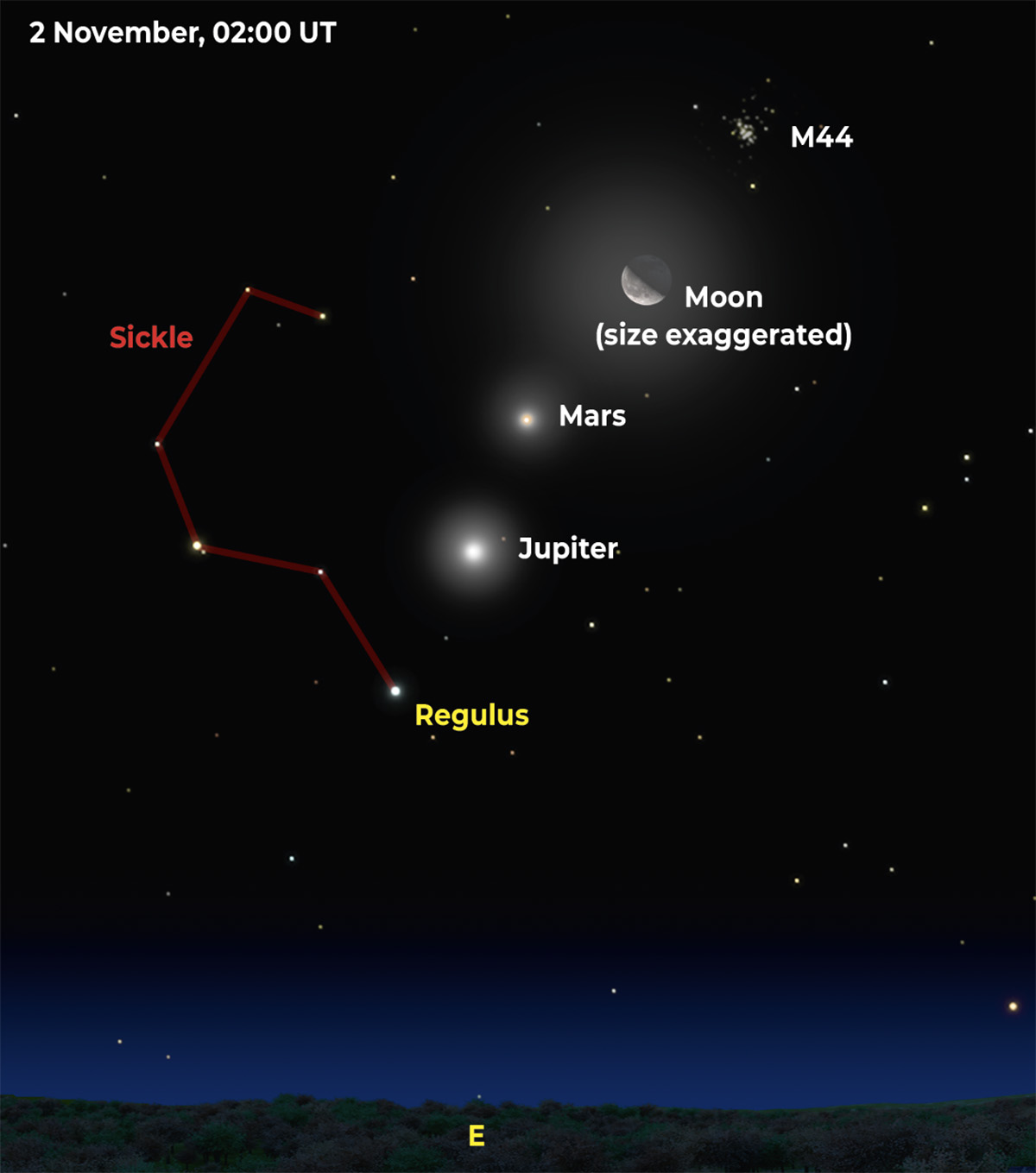
- 1/2 November: the half-lit Moon is above Mars and Jupiter in the east just before and after midnight
- 3 November: the half-lit Moon is below Mars and Jupiter in the east after midnight
- 20 November: the gibbous Moon is above Saturn in the southern sky after sunset
- 30 November: the half-lit Moon forms a close trio with Mars and Jupiter in the southeastern sky after midnight
- 1 December: the half-lit Moon is below Mars and Jupiter in the southeastern sky after midnight
- 17 December: the half-lit Moon is to the right of Saturn in the southern sky after sunset
- 18 December: the gibbous Moon is visible above Saturn after sunset
- 26/27 December: the gibbous Moon forms a close trio with Mars and Jupiter in the southeastern sky around midnight
- 28 December: the gibbous Moon forms a triangle with Mars and Jupiter in the eastern sky around midnight
- 29 December: the half-lit Moon is below Mars in the southeastern sky after midnight
If you observe or photograph the Moon and planets in winter 2026, get in touch by emailing contactus@skyatnightmagazine.com

