
Mark your calendars for August 12, 2026, because there's going to be something of a celestial double whammy visible that day – and you don't need any elaborate kit to see it.
On this day, the Moon will pass directly in front of the Sun, giving us a view of a spectacular solar eclipse across North America, the UK and Ireland and continental Europe.
Then as the Sun sets and night falls, Earth will pass through debris left behind by a comet, producing one of the best meteor showers of the year.
Read more
For beginner stargazers, this is a date for planning ahead – and hopefully one to remember.
During the day, we'll see a solar eclipse. The same night we'll see one of the most prolific shooting star events of the year. And the two events are linked.
Here we'll walk through each one and reveal how to make the most of the double celestial show.
The daytime solar eclipse
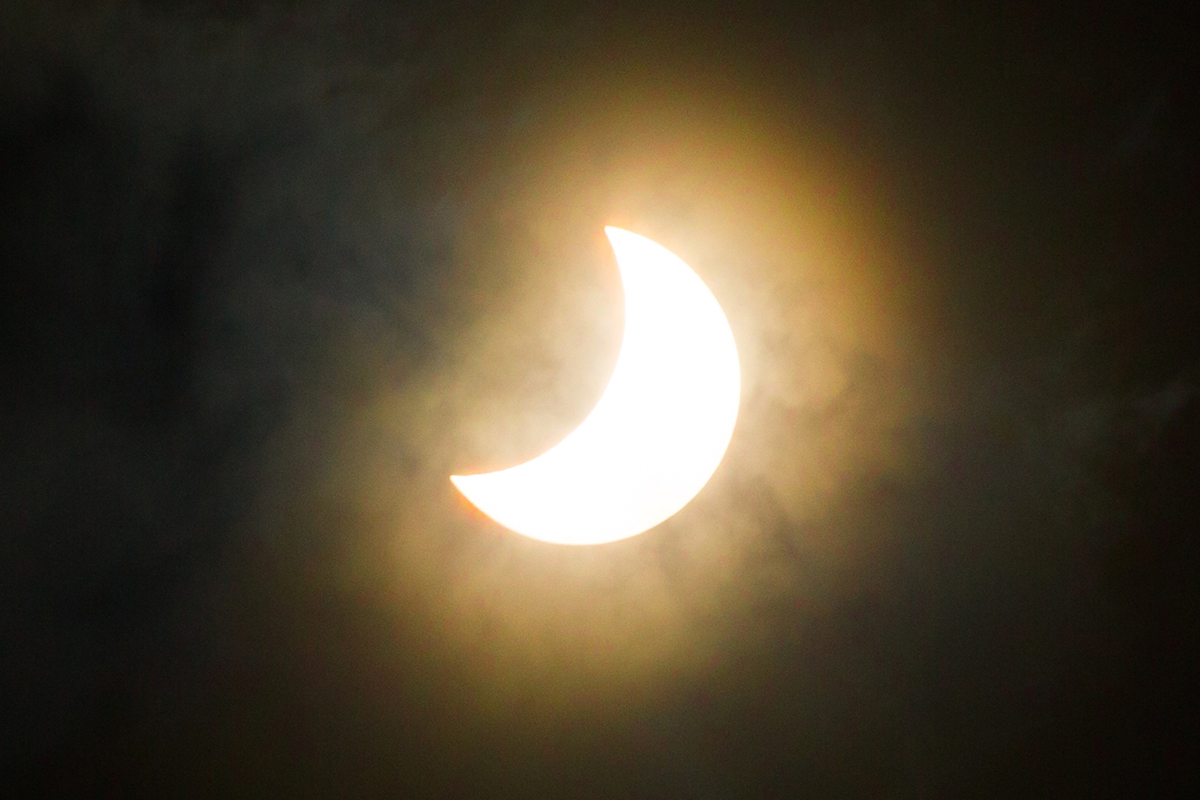
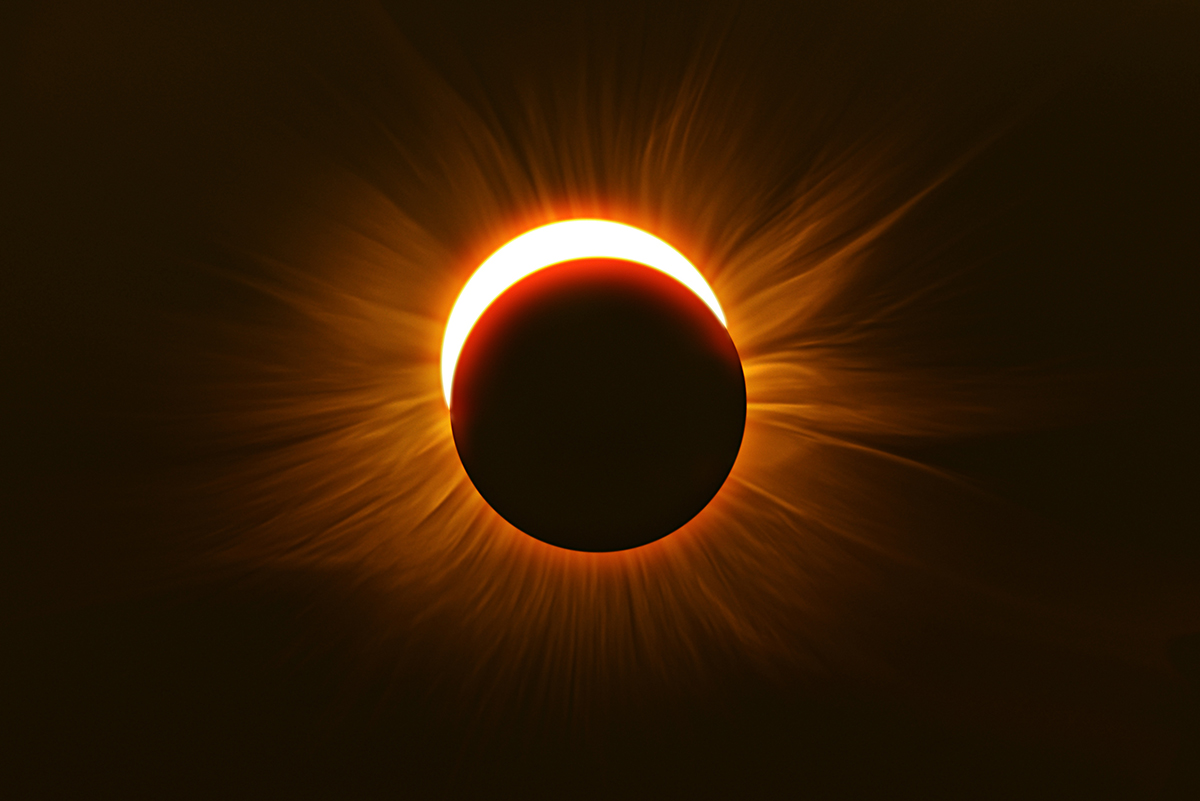
A solar eclipse occurs when the Moon passes between Earth and the Sun, temporarily blocking the 'solar disc' (or at least part of it) and casting a shadow onto our planet.
On August 12, 2026, a total solar eclipse will occur, but not everyone in the world will get to see it.
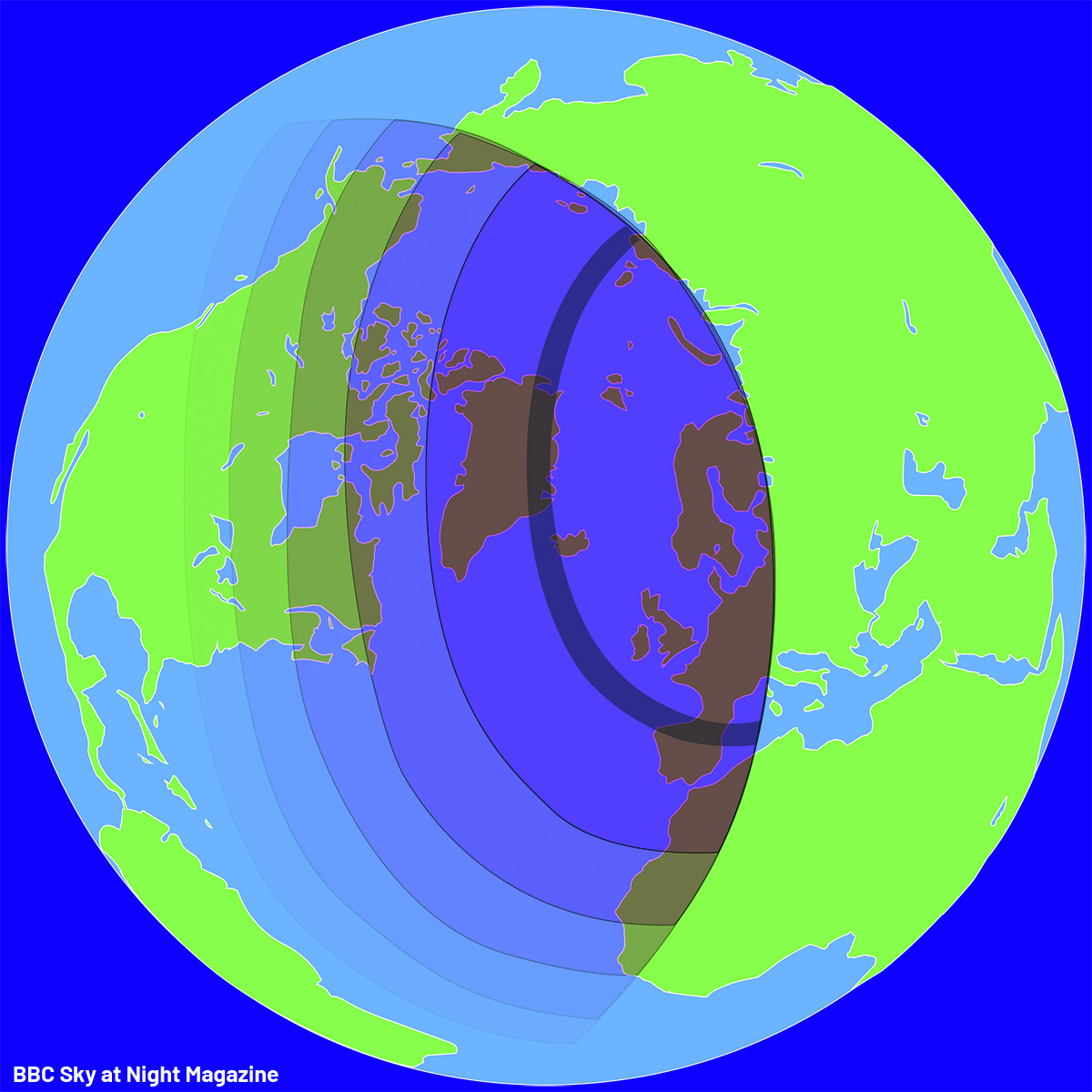
For every total solar eclipse, there's an imaginary thin 'path of totality' stretching across Earth and, if you happen to be standing within that path, you'll see a total solar eclipse.
During a total solar eclipse, the Moon completely covers the Sun, plunging daytime into twilight darkness for a few minutes and creating a surreal, eerie twilight atmosphere.
Outside the path of totality, you'll see the Moon cover some – but not all – of the Sun, producing a partial solar eclipse.
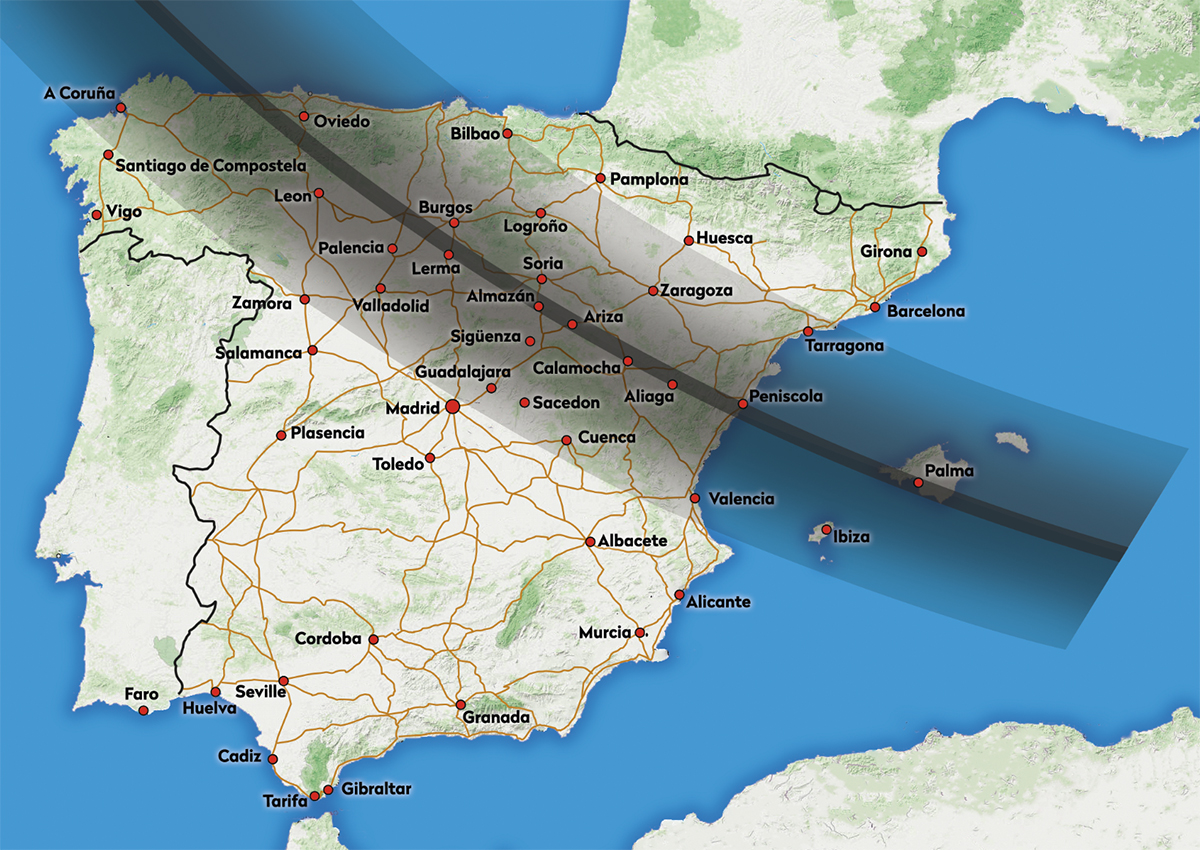
- In the path of totality: the total eclipse will sweep across parts of Greenland, Iceland and Spain, meaning if you're in these countries, you shouldn't have to travel too far to see totality
- Outside the path of totality: If you aren’t in that narrow track, don't worry. Surrounding regions including the rest of Europe, parts of North America and north Africa will see a partial solar eclipse, where the Moon will look like it has taken a massive 'bite' out of the Sun.
- Read our complete guide to the August 2026 solar eclipse
- Get our guide to observing the August 2026 solar eclipse in the UK
- In the USA or Canada? Read our North America guide to the August 2026 solar eclipse
- Our pick of the best places in Spain to see the August 2026 solar eclipse
Where to see it
Spain is arguably the best place to see the total solar eclipse, because the path of totality stretches right across the northern part of country and across the island of Mallorca.
From North America, the August 12, 2026 partial solar eclipse is best seen in eastern Canada and northeastern US. Nowhere in North America will see a total solar eclipse on this date.
You can find out more about how to see it in our North American guide to the August 2026 solar eclipse.
Because the eclipse happens in the late afternoon and evening, observers in western Europe will get to witness a rare and beautiful sight: a partially-eclipsed Sun sinking onto the western horizon.
In the UK, many major cities will see over 90% of the Sun covered by the Moon, with Glasgow, Belfast, Manchester, Liverpool, Birmingham, Cardiff and London being among the best UK cities to see it.
In the Republic of Ireland, Dublin will see about 94% of the Sun obscured, while Cork will see up to 96%.
Viewing the solar eclipse
Observing a solar eclipse means looking directly at the Sun, and if you think that sounds dangerous, it is!
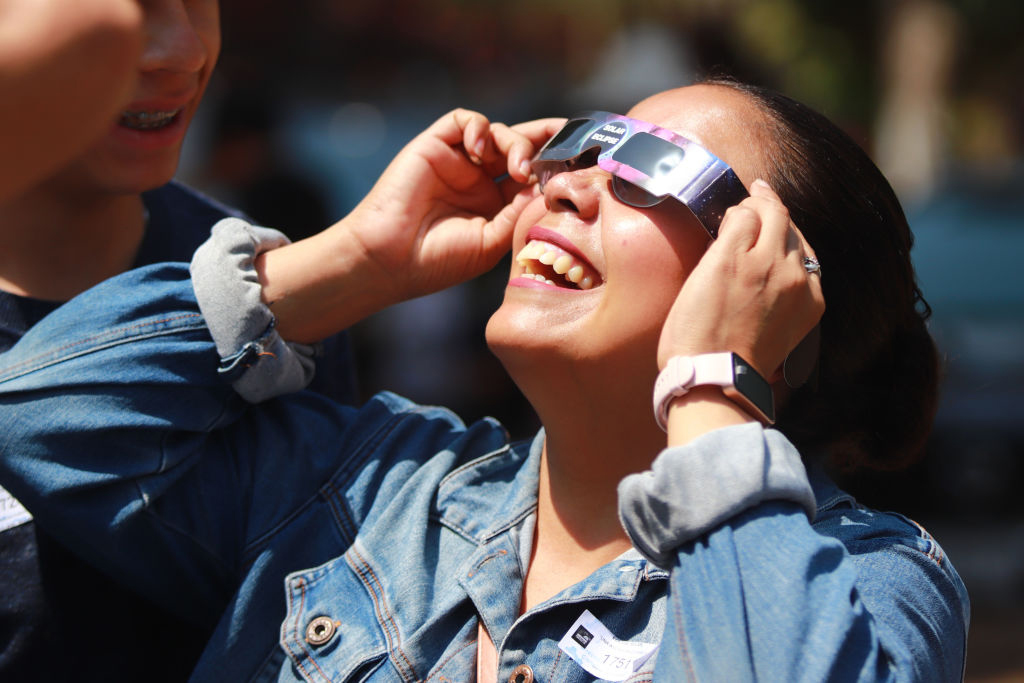
When observing a solar eclipse, eclipse glasses must be worn. These relatively inexpensive pieces of equipment filter out the vast majority of the Sun's harmful rays, enabling you to safely view the whole event.
If you're observing within the path of totality – where you'll see a 100% total solar eclipse – you can theoretically take off your solar eclipse glasses at the moment of totality, when the Sun is completely blocking the Sun, but they must be worn before and after totality.
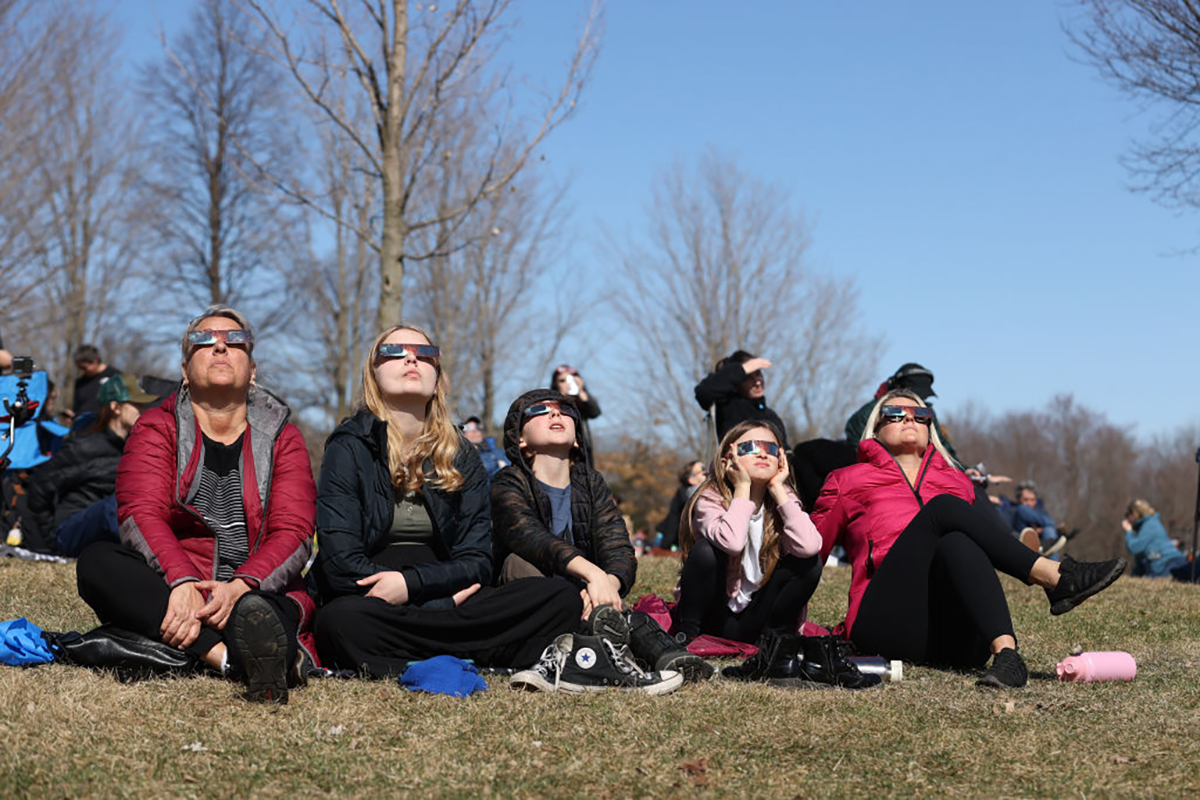
And that's the case even at sunset. It might seem like the early evening Sun is dimmer and less harmful, but it's not. Solar eclipse glasses must be worn.
You should also make sure you only buy properly-made, certified solar eclipse glasses – and always inspect your solar eclipse glasses for tiny holes or tears before use.
Find out more in our guide on how to make sure your eclipse glasses are safe.
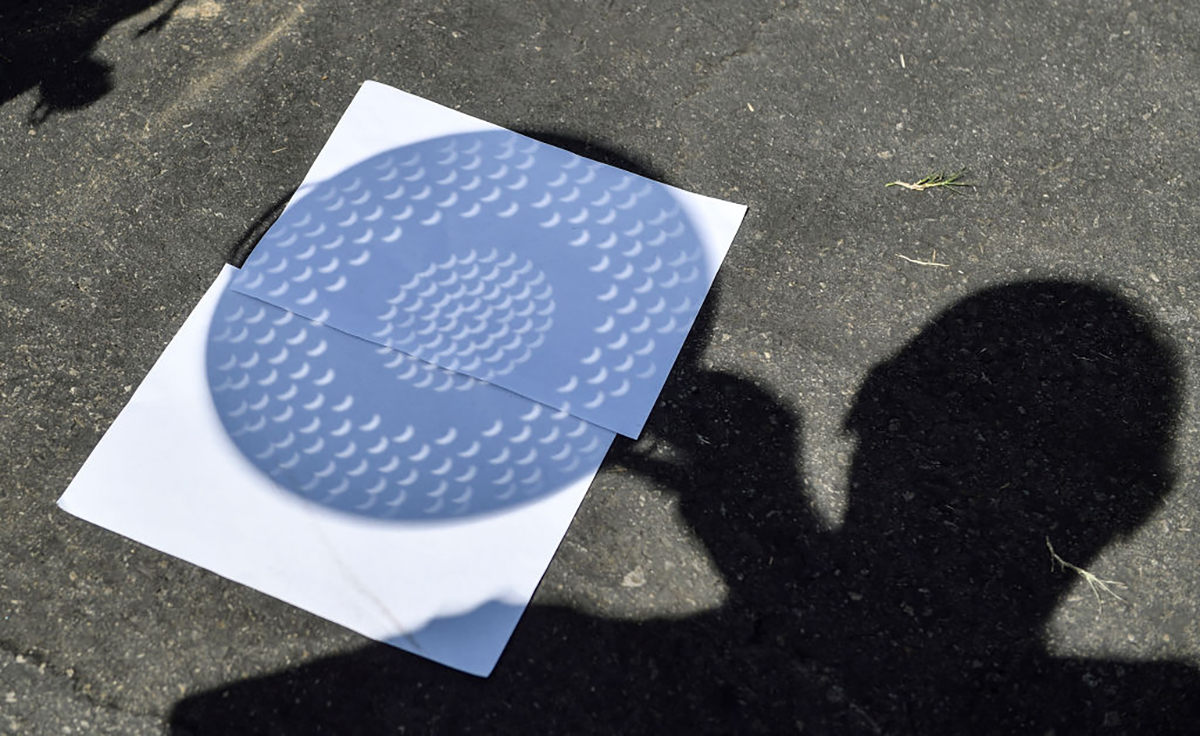
If you don't have solar eclipse glasses and the eclipse is approaching, read our guide on how to safely view a solar eclipse without solar eclipse glasses.
Nighttime shooting stars – the Perseid meteor shower
As the Sun sets and the eclipse excitement winds down, get ready for the second part of the show.
Every year from mid-July to late August, Earth passes through debris left behind by a giant ball of rock and ice known as comet Swift-Tuttle.
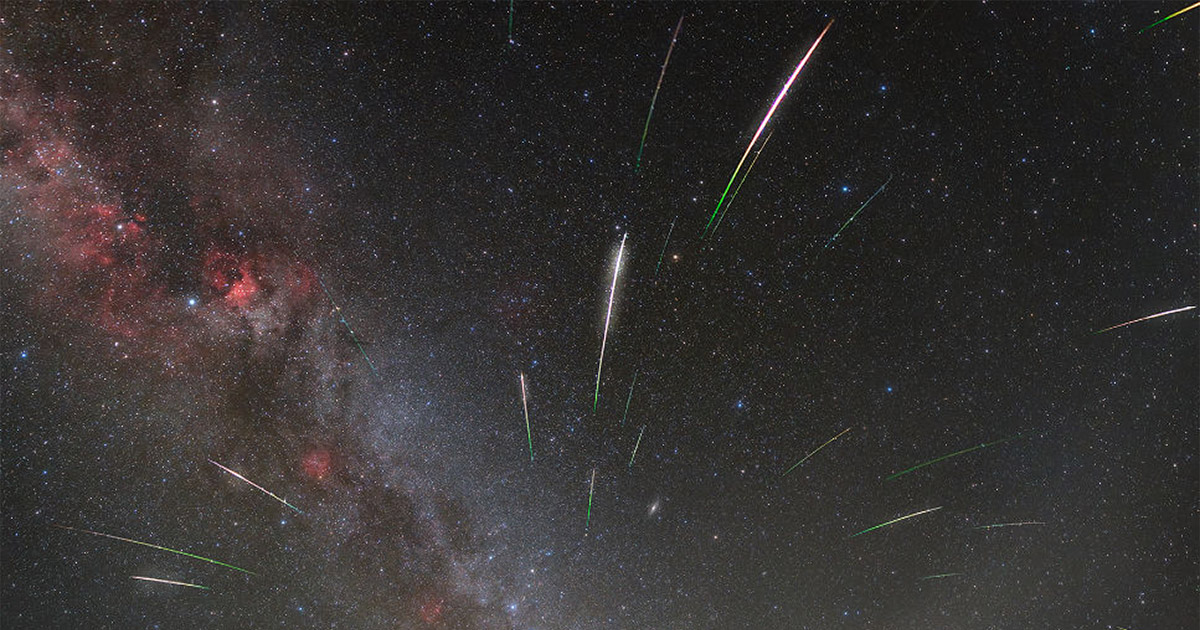
When this happens, tiny grains of cosmic dust slam into Earth's atmosphere, generating shooting stars, or meteor trails, in an event known as the Perseid meteor shower.
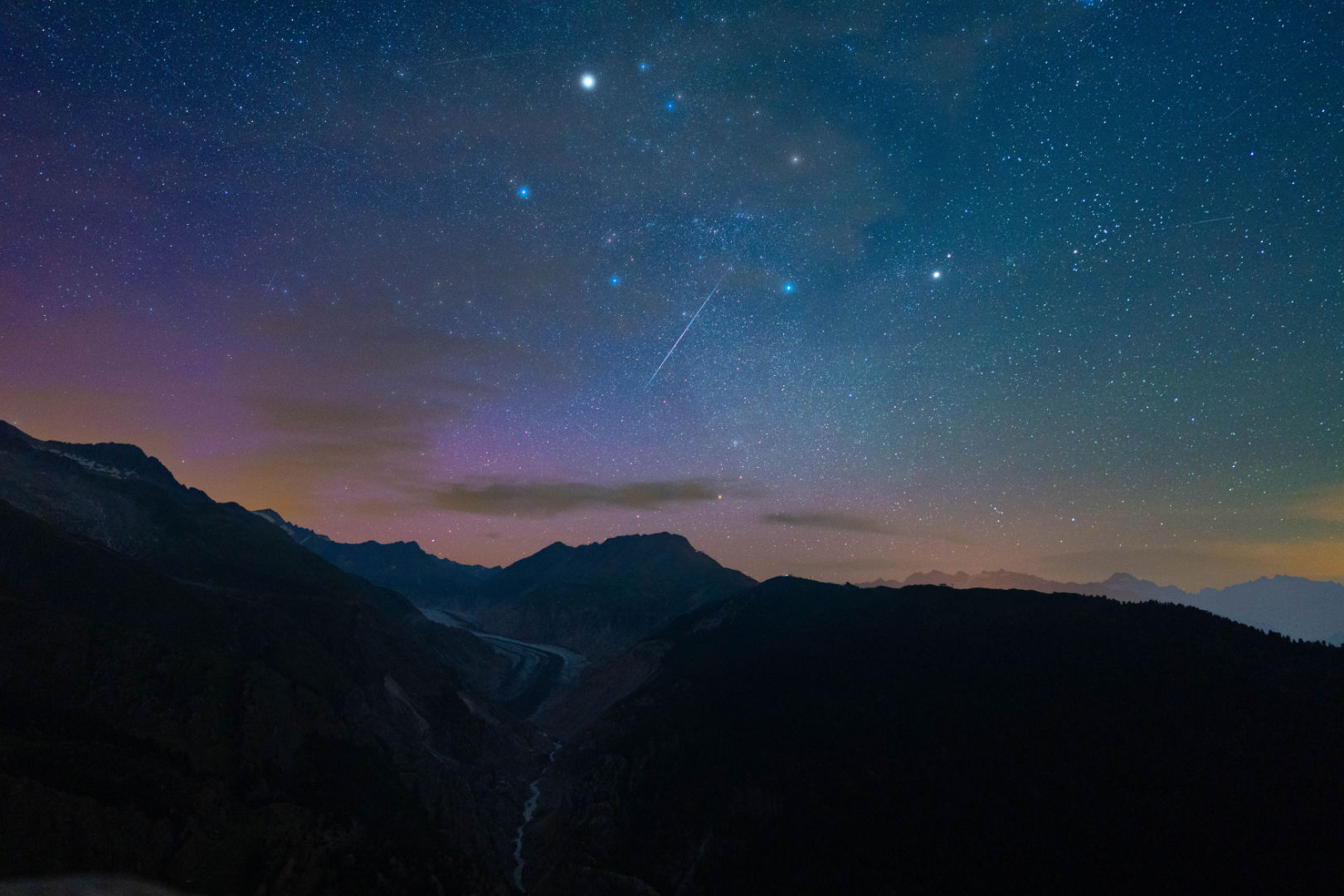
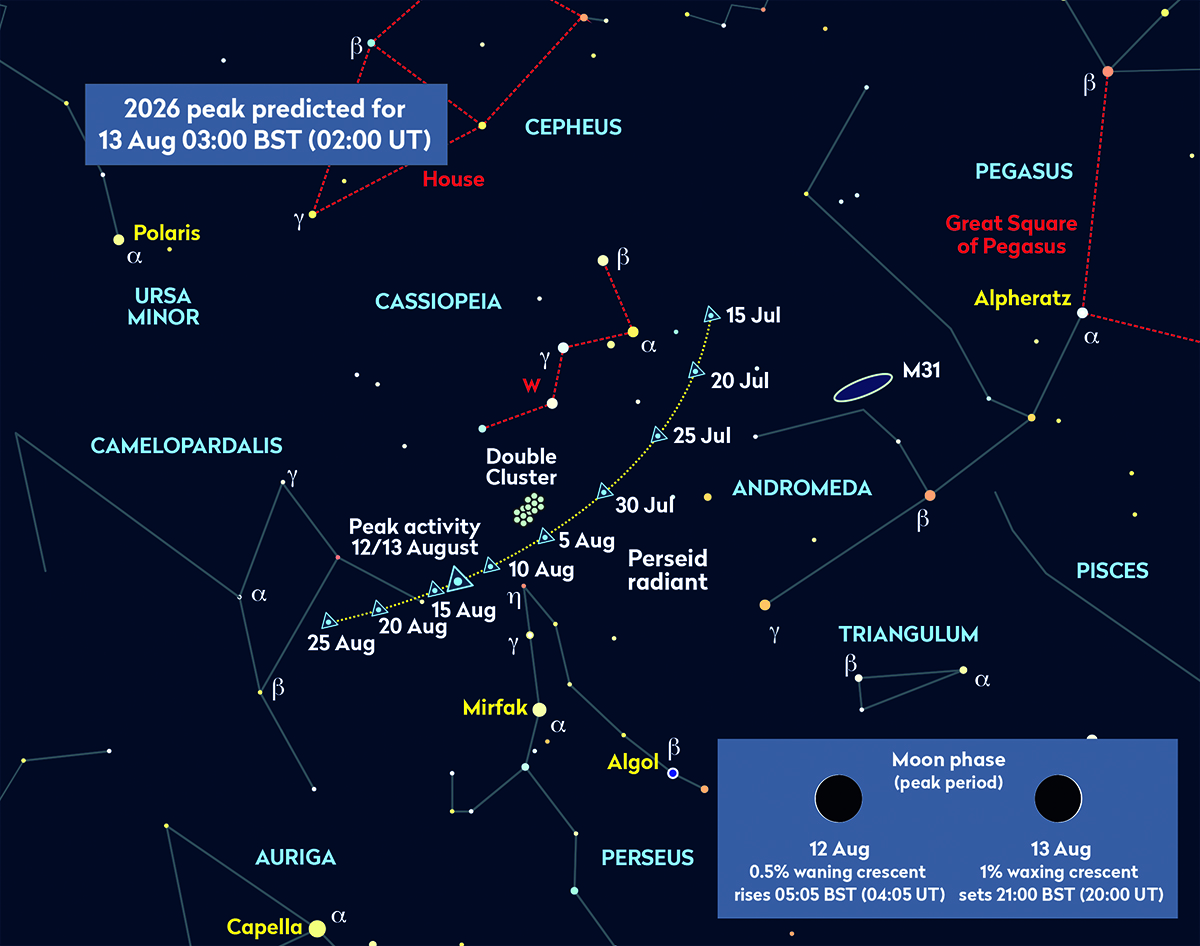
The Perseid meteor shower is one of the best of the annual meteor showers because it produces a lot of meteors and also because it peaks around 12/13 August, making staying up past midnight – when the best meteors are to be seen – more tolerable than doing the same in the middle of winter.
Perseids are also known for producing fireballs: extra bright, dramatic meteors that leave glowing trails across the sky.
And the good news is that the meteor shower is visible across the Northern Hemisphere – so even if you weren't able to see the solar eclipse, you can still see a Perseid.
You can find out more in our guide to the Perseid meteor shower.
Why the eclipse will make the Perseids even better
The pairing of these two events is a fortunate coincidence, because the fact that the Perseid meteor shower peaks at the same time as the solar eclipse will make Perseids even easier to spot.
A meteor shower's success depends on a few things – and one of the factors is the Moon.
To see faint, streaking meteors, you need the darkest sky possible. That means getting away from light pollution and also observing when the Moon is out of the way.
A bright full Moon acts like natural light pollution, washing out all but the brightest shooting stars.
Solar eclipses, by definition, occur during new Moon – when the Sun and the Moon are in the same patch of sky – and new Moon is the best time to see a meteor shower.
That's because during new Moon, the Earth-facing side of the Moon remains in darkness, meaning there's no lunar glare to spoil the show.
As well as this, during new Moon, the Moon sets around the same time as the Sun, meaning it will be below the horizon from sunset to sunrise.
How to watch the eclipse and meteor shower
Protect your eyes during the day
Never look directly at the Sun without solar filters or specially-made eye protection.
You must use certified eclipse glasses to view the partial phases of the eclipse.
If you're in the path of totality, the only time it's safe to remove them is during the brief couple of minutes when the Sun is 100% covered – but even then, caution must be taken.
Even if the Sun is 99% covered by the Moon, that's still a partial solar eclipse and eclipse glasses must be worn for the whole event.
Use your naked eye at night
When the Perseid meteor shower peaks later that night, you should observe with your naked eye.
Binoculars or a telescope will narrow your field of view. Meteors can streak across any part of the sky, so it pays to keep your field of view as wide as possible.
Let your eyes adjust
The solar eclipse requires just a clear view of the Sun and – as mentioned – certified solar eclipse glasses.
The Perseid meteor shower requires a clear view of the whole night sky, but also a lack of artificial light.
Luckily, the Moon will be out of the way – as discussed above – but you should still do as much as possible to ensure you're observing the Perseid meteor shower under truly dark skies.
That means getting away from light pollution. And that could mean leaving your town or city and travelling to a more rural location, or it could simply mean going to your local park or playing field – provided it's safe to do so at night.
It also means avoiding looking at your phone, as this will spoil your night vision.
If you need to find your way, use a red light torch, because red light better preserves your night vision.
Observe with friends and family – you'll need company at that time of night and you're more likely to see meteors collectively as a group.
Give your eyes at least 20 minutes to adjust to the darkness and you'll see more meteors.
This August is promising to be celestial spectacular. A solar eclipse by day and the peak of a stunning meteor shower at night.
Sometimes the Universe is good to us!
Share your photos and observations of the solar eclipse or Perseids by emailing contactus@skyatnightmagazine.com.

