
This week on Thursday and Friday, 4/5 December 2025, it's your last chance to see a supermoon in 2025, because the Cold Moon will rise, big and bright, under the cover of winter darkness.
And if you can manage to brave the cold the night before, 3/4 December, you'll get to see the Cold Moon pass in front of a beautiful, blue star cluster.
Here we'll look at 6 ways to make the most of the Cold Moon, the final supermoon of 2025.
Sign up to the BBC Sky at Night Magazine e-newsletter for lunar times and phases delivered to your email inbox every week.
More winter stargazing

It's one of the longest, highest Moons of the year
The 2025 Cold Moon will rise in the northeast on 4 December at around 3pm, then set in the north west around 9am the following morning, meaning it's visible before sunset on Thursday, through to sunrise on Friday.
That's quite a feat for a full Moon that's visible during one of the longest nights of the year.
The Cold Moon will also reach an impressive height in the sky, meaning you won't need a clear horizon to see it: it will be visible even from built-up towns and cities.
Why is this full Moon so high? It's to do with Earth's tilt as it orbits the Sun, but essentially, the Moon is doing the opposite of what the Sun is doing.
The Moon is full when it's in the opposite part of the sky from the Sun, which is why the whole of the Earth-facing side of the Moon is illuminated (i.e. why it's 'full').
And because the Sun is low in winter, the Moon is high.
That makes the Cold Moon one of the best, easiest full Moons to see all year.
It will pass in front of a beautiful blue star cluster

If you watch the nearly-full Moon rise on Wednesday 3 December 2025, you may notice it's close to a small group of stars that appear like a 'smudge' to the naked eye.
This is the Pleiades open star cluster, and through binoculars it looks like a mini 'Big Dipper'.
The Cold Moon will appear to pass in front of the Pleiades on Wednesday night, moving right to left from our perspective, in an event known as a lunar occultation.
This lunar occultation of the Pleiades will occur late in the evening on 3 December for observers in North America; in the UK and Europe it will happen after midnight on 4 December.
If you observe the Moon passing across the Pleiades through binoculars or a telescope, you'll be able to watch as it obscures individual stars in the cluster.
A good stargazing app should enable you to pinpoint when the event will happen from your location.
Your last chance to see a supermoon in 2025

The December 2025 Cold Moon is the third and final supermoon of 2025 (the other two having occurred in October and November), meaning it's your last chance to see a supermoon this year.
Supermoons happen because the Moon's orbit around Earth isn't a perfect circle. It's elliptical, or slightly egg-shaped.
That means sometimes the Moon is closer to Earth than at other times.
When the Moon is at its farthest point from Earth, it's at 'apogee'. When it's at its closest point to Earth, it's 'perigee'.
And when the Moon is full at perigee, it appears slightly bigger and brighter than usual, which is why it's become known as a 'supermoon'.
It will be close to Orion and Jupiter

The constellation Orion and the planet Jupiter are among the best naked-eye objects to see in the night sky in December 2025.
Jupiter is at its best and visible all night long. Orion has returned to the Northern Hemisphere sky, signifying winter is truly here.
As you watch the Cold Moon climb higher, below it you'll see the constellation Orion rising above the horizon.
To the left of Orion, you'll see a bright 'star'. This is the planet Jupiter, which is easily visible with the naked eye at the moment.
Now that you've spotted them using the Moon as a guide, keep observing them over the coming weeks and, as the bright Moon moves out of the way, take the chance to explore Jupiter through binoculars or a telescope.
For more advice on this, read our guide on how to observe Jupiter through a telescope.
The Moon may look absolutely enormous

If you have a clear view of the eastern horizon, you'll be able to observe the Cold Moon rising as the Sun sets, during evening twilight.
And if you can glimpse the full Moon close to the horizon, you might notice it appears bigger than usual.
This apparent increase in size is not related to it being a supermoon. What you're experiencing is a phenomenon known as the Moon illusion, which makes a low-hanging Moon appear larger than usual.
It's an optical illusion that occurs whenever any full Moon is near the horizon, regardless of whether it's a 'supermoon' or not.
The illusion is likely triggered because large foreground objects such as trees and buildings appear small next to the full Moon, which in turn causes the Moon itself to look larger.
It's chance to see the Moon's chaotic history
Some observers argue that the full Moon is the least ideal time for lunar observation.
That's because during the full phase, the whole of the visible surface of the Moon is fully illuminated by sunlight.
As a result, the bright glare tends to obscure details like its lunar seas, valleys, mountains and craters, making them difficult to distinguish.
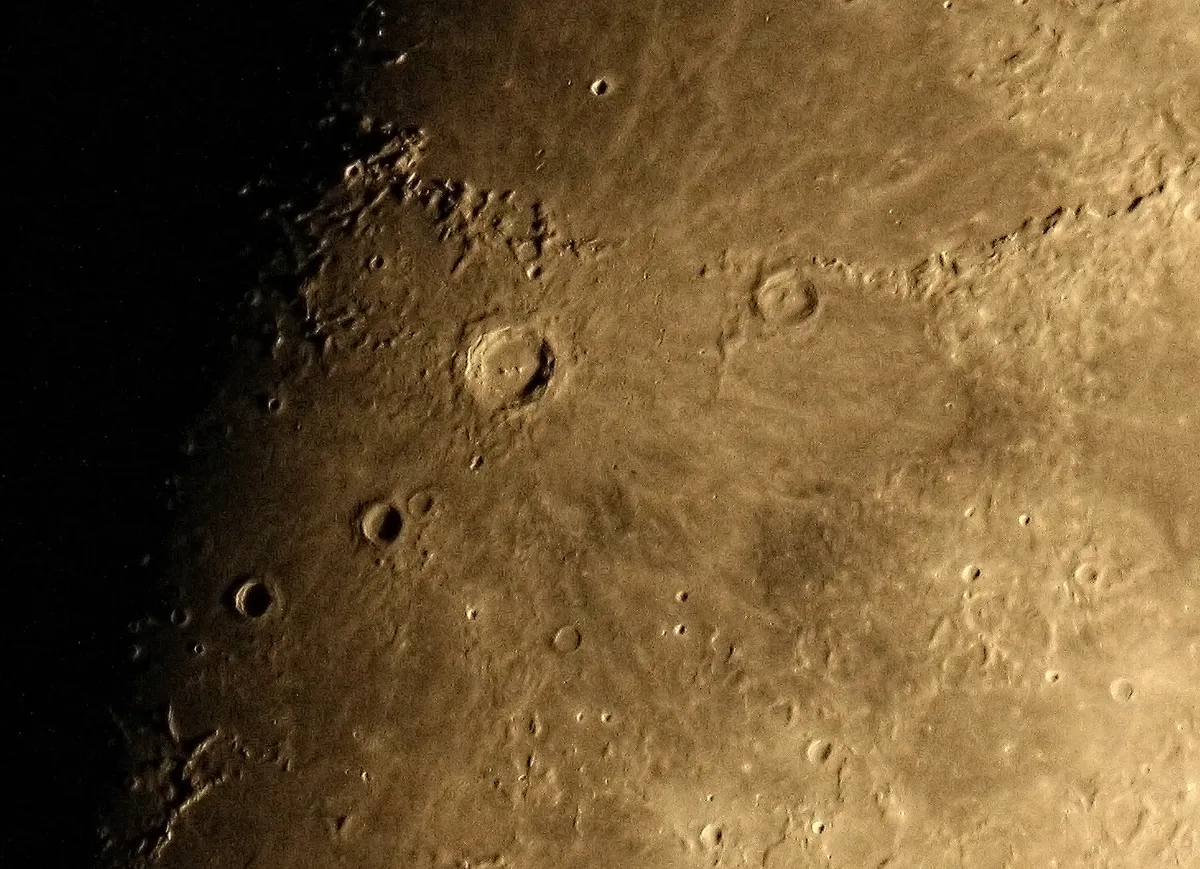
Conversely, when the Moon is in a crescent or gibbous phase, these features are highlighted by the terminator – the dividing line between the lit and shadowed parts of the Moon – making them stand out better.
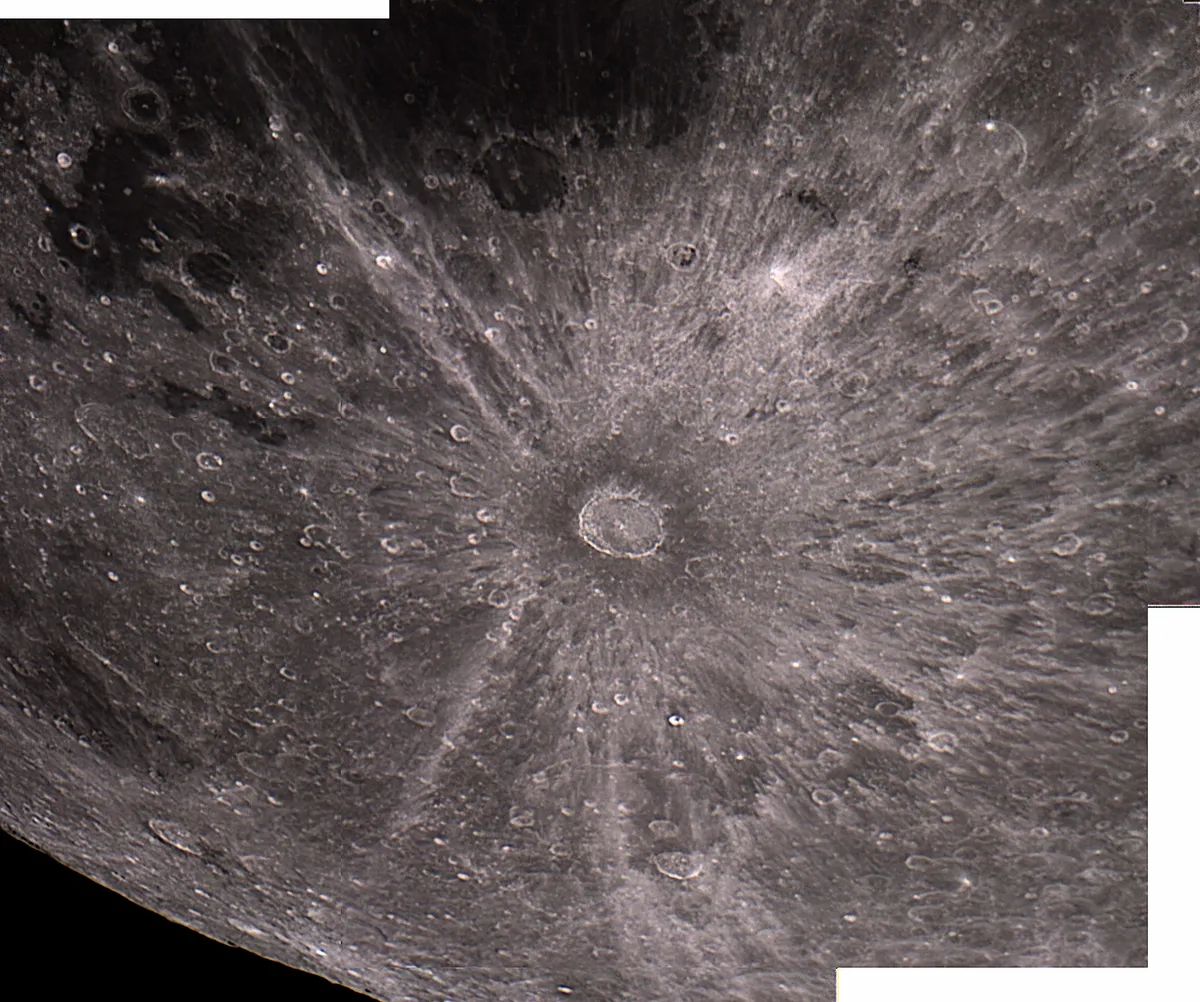
But while the Moon's shadow effects may disappear during full Moon, the phase does offer a good chance to see lunar rays.
These bright streaks are material ejected from ancient impacts, evidence of the Moon's chaotic history during a more turbulent era of the Solar System.
Lunar rays are fascinating features to study, with those originating from Tycho Crater and Copernicus Crater being among the most well-known.
It's a great event for kids

The fact that this Moon is visible in the sky before the Sun even sets, and that it climbs high in the early evening, makes it a great stargazing event for kids, even if it is a school night.
If you are observing the full Moon with children, teach them a bit of science by explaining how it's a supermoon and why it's so high in the sky.
You could have a family Moon-sketching competition and see who can do the best drawing of the lunar surface.
Or see who can produce the best photo of the Moon with a smartphone.
You might just spark an interest in astronomy, just in time to get them their first kids' telescope for Christmas.
Quick ways to enjoy the Cold Moon
- See if the rising full Moon looks bigger - this is known as the Moon illusion
- Does the rising Moon also look orange or even rusty red?
- While not as favourable as a crescent or gibbous Moon, observe the Moon with binoculars or telescope
- Photograph the Moon with a DSLR camera
- Photograph the Moon with a smartphone
- Get out your paper and pencils and sketch the Moon
- Full Moon is a good time to observe lunar ray ejecta systems
- See if you can spot a halo or arc around the Moon
- See if you can spot a Moonbow
If you do observe Cold Moon this week, share your observations and images with us by emailing contactus@skyatnightmagazine.com

