
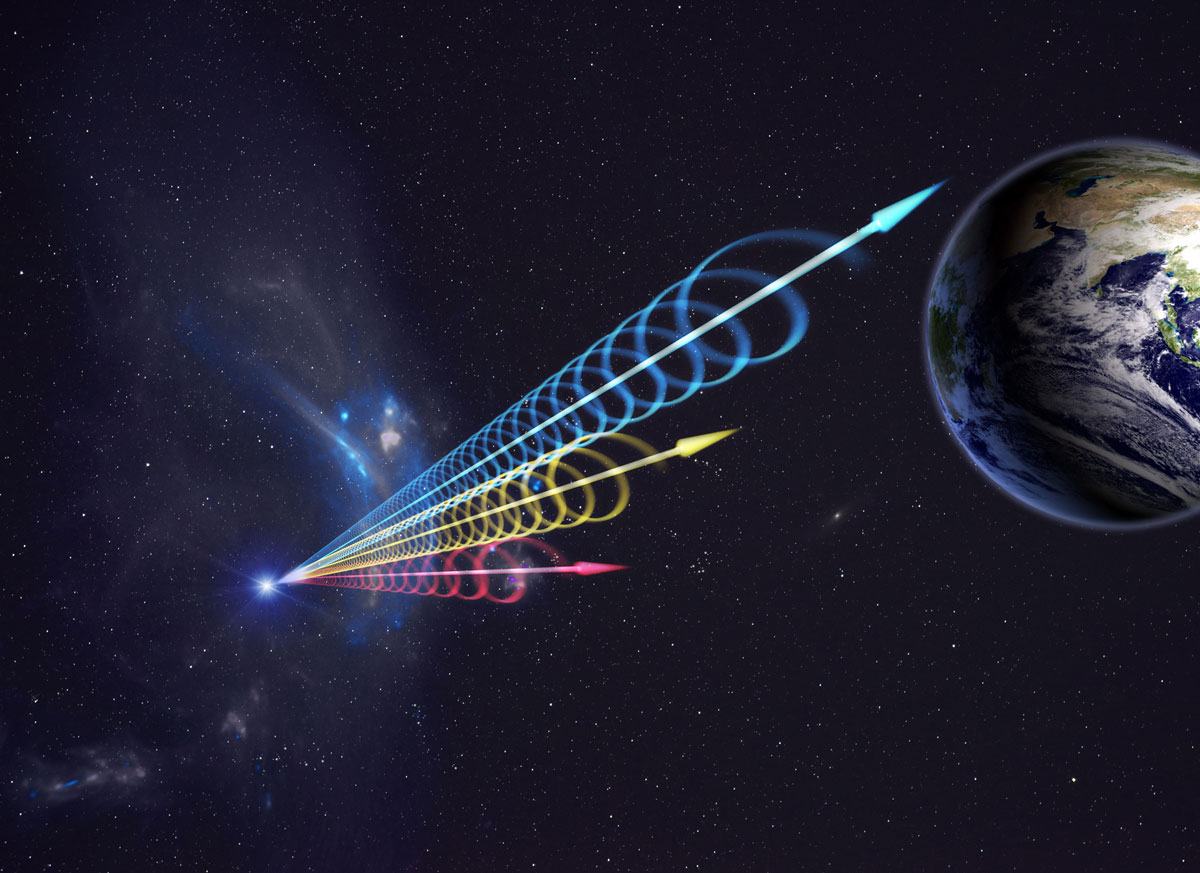
Among the strangest signals that astronomers can detect emerging from deep space are fast radio bursts, mysterious bursts of energy that last only milliseconds, but whose origins remain unknown.
Now astronomers have detected and traced a fast radio burst that has been travelling across the Universe for 10 billion years before reaching Earth.
This flash of radio waves originated when the Universe was only 3 billion years old, making it the most distant fast radio burst ever detected.
More strange signals
Detecting the strange signal
The burst was detected by Dr Manisha Caleb and Dr Themiya Nanayakkara from the University of Sydney, Australia.
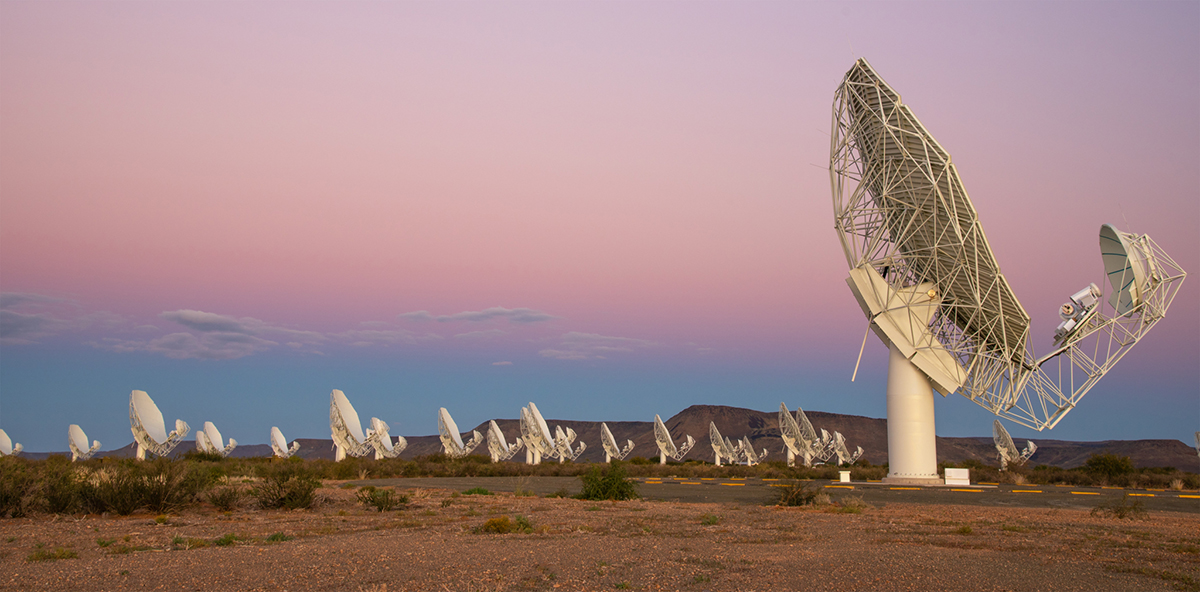
The team used the South African MeerKAT radio telescope to make the discovery as part of the MeerTRAP project, which searches for 'transient phenomena' in space like fast radio bursts.
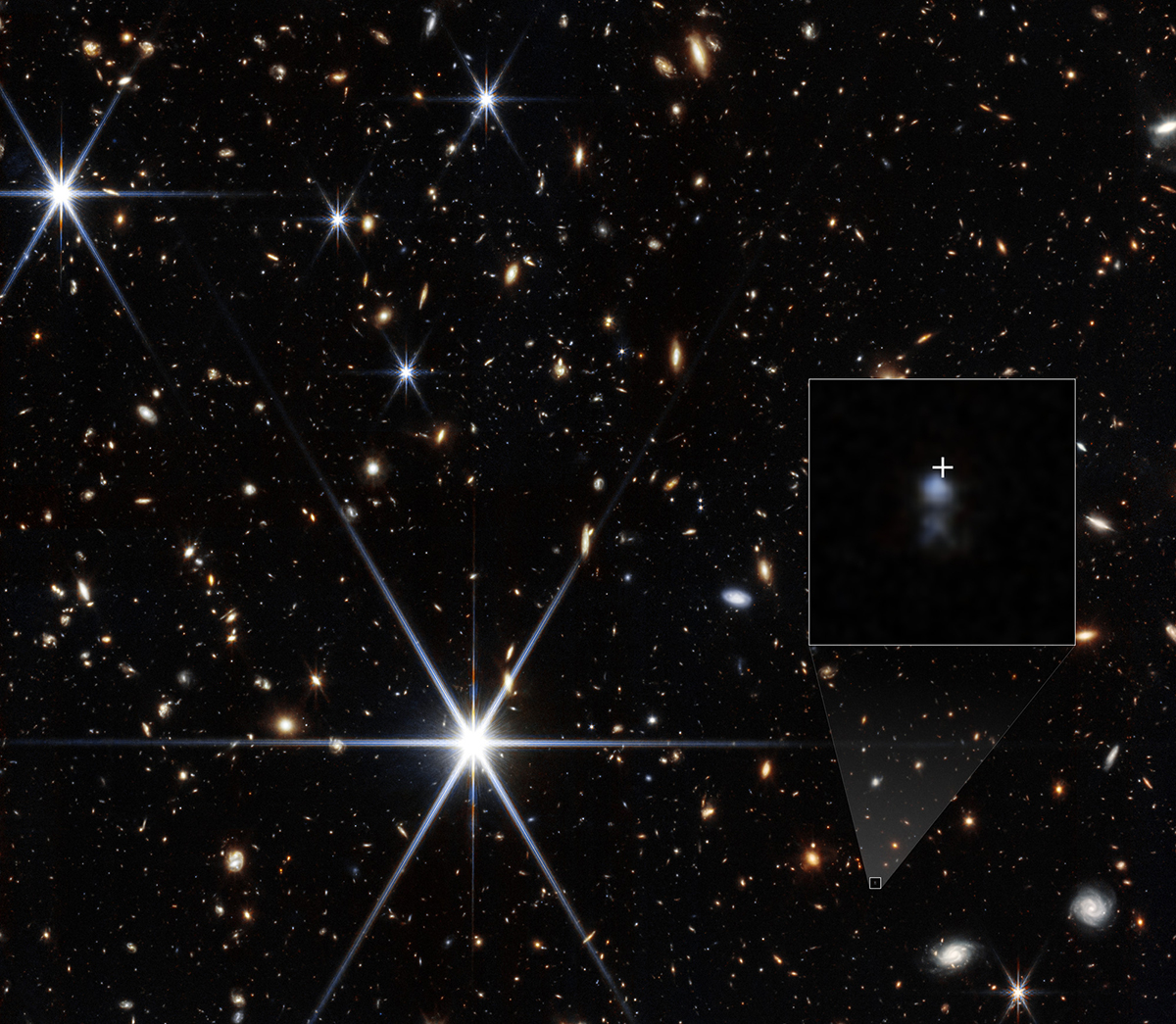
They were then able to use the James Webb Space Telescope to link the burst, designated FRB 20240304B, to its host galaxy.
The Universe is thought to be 13.8 billion years old and this fast radio burst originated just 3 billion years after the Big Bang.
It's the most distant fast radio burst ever detected.
The team say it will give them a new way to study the evolution of galaxies and decipher the invisible matter that fills the space between them.
"This is an extraordinary glimpse into the distant Universe," says Dr Caleb from the Sydney Institute for Astronomy in the School of Physics.
"We have caught a fast radio burst from a time when the Universe was only about 3 billion years old, and we have used that brief flash of radio light to learn about the matter it has travelled through over billions of years."

How they caught the burst
A range of observational methods were used to detect FRB 20240304B, including radio observations along with infrared imaging and spectroscopy.
"The galaxy hosting this burst is surprisingly small, metal-poor and undergoing a very active episode of star formation," says Dr Laura Driessen, a co-author at the University of Sydney.
"That gives us an important clue about the environments in which fast radio bursts are born and shows that these brief radio flashes can tell us not only about the distant Universe, but also about how galaxies and their stellar populations evolve."
The study suggests some fast radio bursts could originate from young magnetars, which are magnetised neutron stars that form when massive stars explode in a supernova.
It also shows that the host galaxy is young and undergoing a vigorous bout of star formation.
These, say the team, are characteristics more typical of magnetar formation than other theories involving the merger of older neutron stars.
The astronomers say the burst has acted as a sort of cosmic beacon, throwing light on the gas and matter that exists in the space between galaxies.
That's because, as the signal has travelled across the Universe for most of the time since the Big Bang, it has brought with it information about the material it has encountered on its journey through space.
That gives astronomers the chance to study cosmic structures that would otherwise be difficult to observe directly.
The host galaxy wasn't visible to even the most powerful ground-based telescopes, meaning the team had to turn to the James Webb Space Telescope to find it and measure its distance.
"Our results further show the amazing capability of the Webb space telescope where we can push boundaries beyond what was previously possible," says Dr Nanayakkara.
Read the full paper via the journal Science

