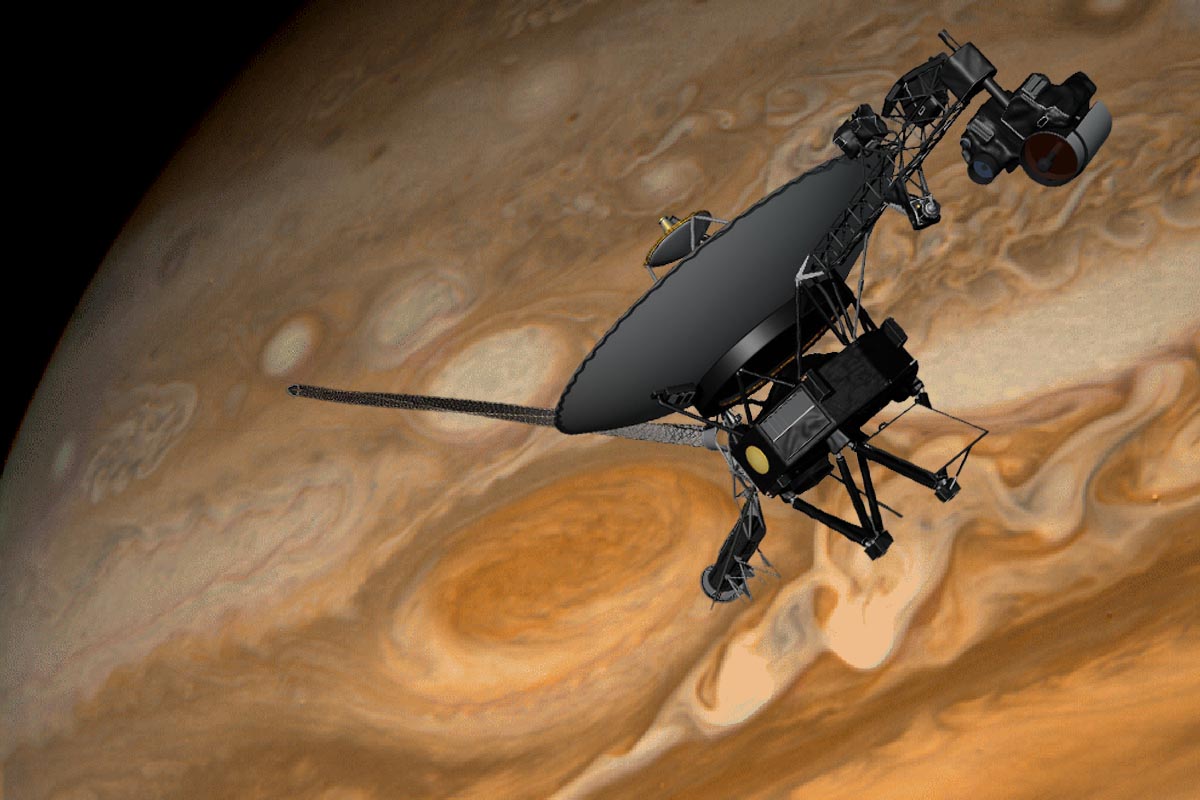
Voyager 1 is making headlines right now as it becomes the first human-made craft to travel for one light-day.
That’s 25.9 billion kilometres, or 16.1 billion miles – an impressive journey whichever way you look at it.
But it’s all the more impressive when you consider that Voyager 1 launched nearly 50 years ago, on 5 September 1977, to be precise.
Now, some of us on the BBC Sky at Night Magazine team are old enough to remember 1977 well, but not all of us are, and many of our readers definitely won’t be.
So perhaps it’s worth remembering just how different the world looked back then…
More on Voyager
Technology
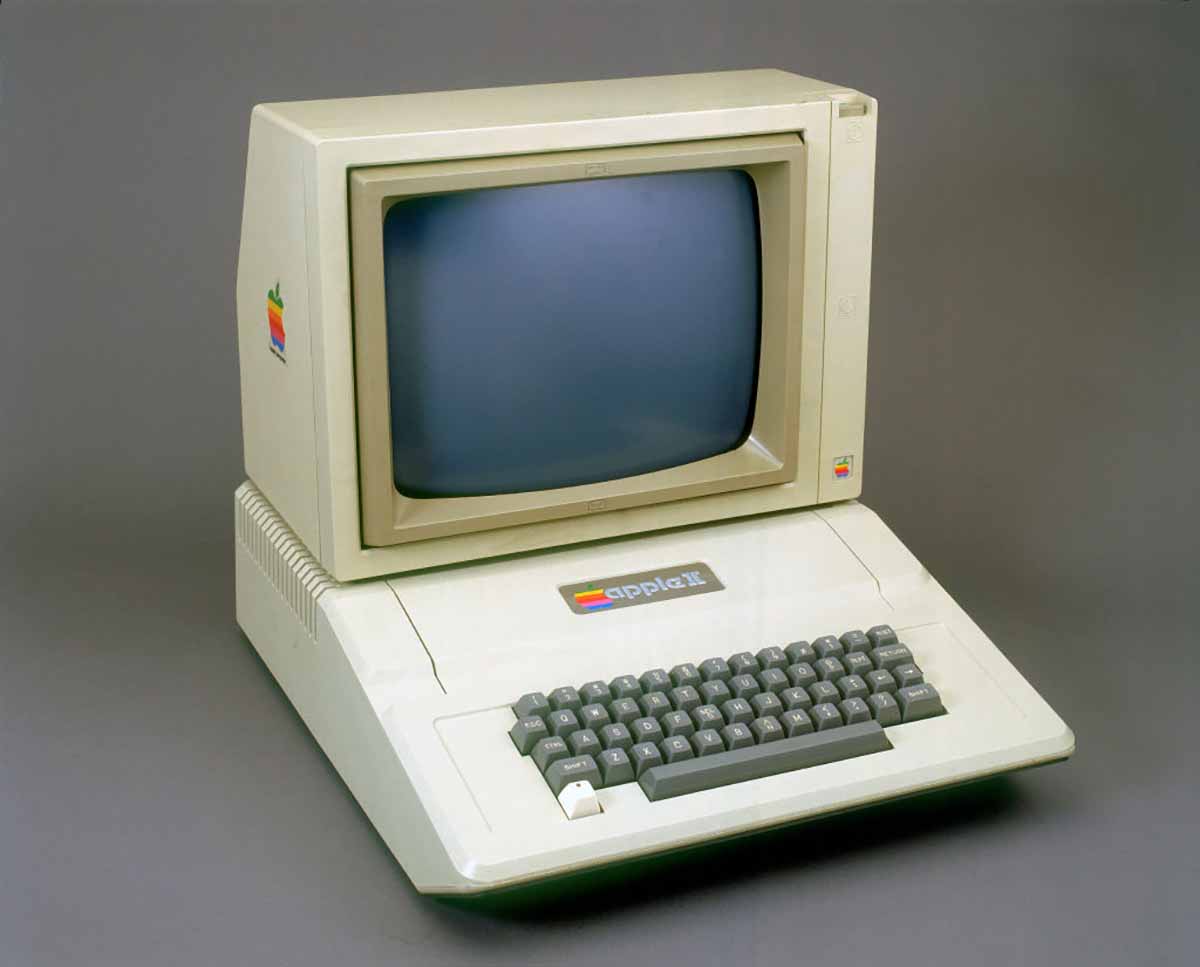
Never mind AI, smartphones, social media and streaming services, 1977 was a time before computers had really become 'a thing'.
They existed, but mostly as slow, bulky mainframes housed in the headquarters of government departments and major companies.
The personal computer revolution driven by the likes of Bill Gates and Steve Wozniak was still very much in its infancy in 1977.
If you wanted high-tech in 1977, then the kind of things you’d have been looking at would have included such cutting-edge devices as digital watches, pocket calculators, microwave ovens and phones that had – gasp! – buttons instead of a dial.
If you were rich, you might also have been toying with the idea of buying one of those newfangled video recorders, or even an Atari 2600 games console that plugged into your TV.
But as of 1977, such luxuries – though they existed – were still beyond the reach of most people on average incomes.
Music

Turn on the radio and the likes of Fleetwood Mac, Wings, Queen and Elton John ruled the airwaves.
Away from the pop charts, young people were going crazy for the sounds of either disco or punk rock.
But if you’d mentioned the names Madonna, Duran Duran, Prince, U2, Oasis, Amy Winehouse, Beyoncé or Taylor Swift, you’d have got a blank look.
In fact, never mind Taylor Swift… Taylor Swift’s mum wasn’t yet out of her teens when Voyager 1 set off!
Politics

On the world political stage, the Shah was still on the throne in Iran and it would be another 12 years until the fall of the Berlin Wall.
We still had 14 years to wait for the collapse of the Soviet Union and the birth of the World Wide Web, while the 21st Century was still something we thought of mostly in science fiction terms (and we never did get those jetpacks, did we?).
Talk to us about 9/11, the Covid pandemic, the 2008 crash or cryptocurrencies and you might as well have been speaking in ancient Greek.
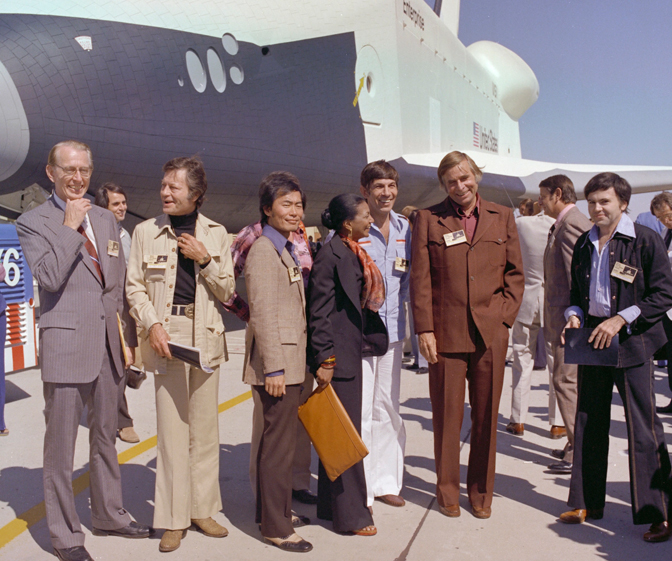
In terms of space exploration, the Space Shuttle was being built (which this writer actually saw happening, on a visit to the Kennedy Space Center that very summer) but wouldn’t fly for another few years yet.
Russia and the US had already launched the Salyut and Skylab space stations, but Mir was still nearly a decade off; the Hubble Space Telescope and the International Space Station wouldn’t launch until 1990 and 1998, respectively.
We were just getting used to the idea that dark matter existed – Vera Rubin having recently proved that the elusive substance first posited by Fritz Zwicky back in the 1930s was a real thing – but dark energy? Gravitational waves? Exoplanets?
Nope, no idea what you’re talking about there… this is 1977, mate.
We’ll stop there, before we get all misty-eyed and start going on about snorkel parkas, Grease and Crackerjack! But suffice to say: 1977 was a very different world from the one we live in today – which makes the achievement of the engineers who built Voyager 1, and the fact that we’re still transfixed by their creation and its mission now, even more impressive.
Then again, two of the three biggest films that year were Star Wars and Close Encounters of the Third Kind, while on the box, Star Trek and Space: 1999 were essential viewing.
Battlestar Galactica, Blake’s 7 and Buck Rogers in the 25th Century would all debut within the next 18 months or so.
So perhaps 1977 wasn’t all that different after all…
Do you remember the launch of the Voyagers? What were you doing at the time? Let us know by emailing contactus@skyatnightmagazine.com