
Astronomers have found the fastest known star in our home Galaxy, the Milky Way.
The star, named S301, was discovered hurtling through space at 25,000 km per second.
Published in the journal Nature, a study using the European Southern Observatory’s Very Large Telescope Interferometer shows that S301 orbits Sagittarius A* (Sgr A*), the supermassive black hole at the centre of the Milky Way, closer and faster than any star ever observed.
More speedy science
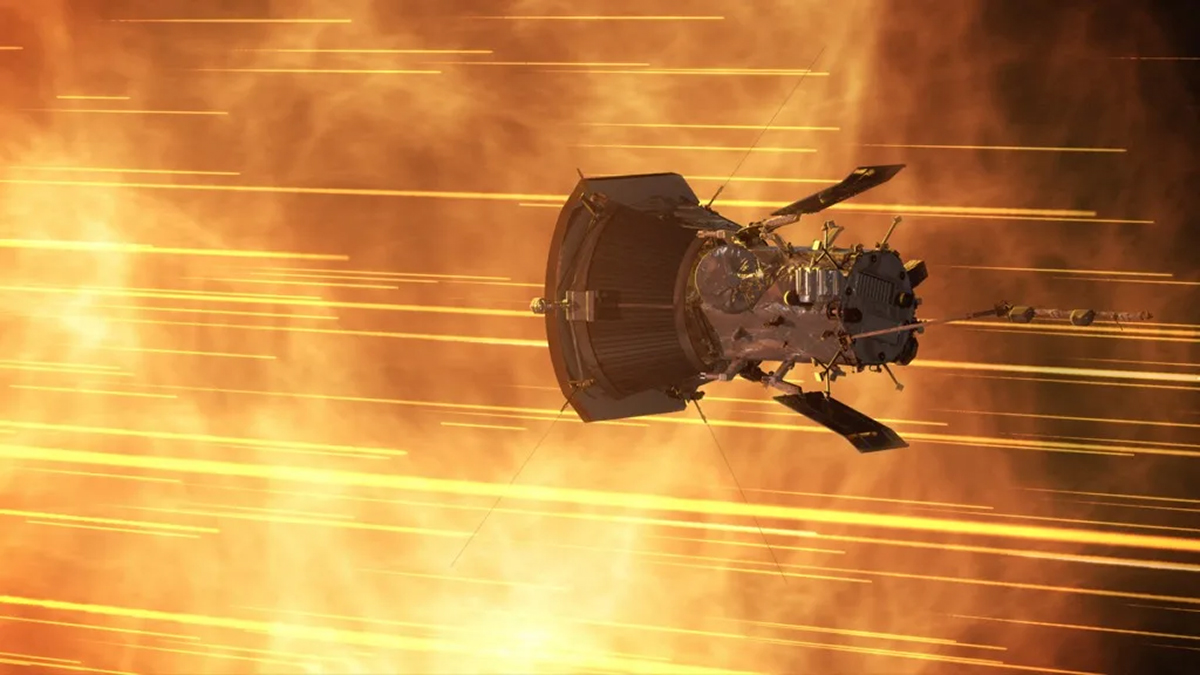
Living on the edge
What could make a star move so fast through our Galaxy?
The answer is the supermassive black hole at the centre of the Milky Way, which is so dense it's packed with a mass equivalent to 4 million times the mass of our Sun.
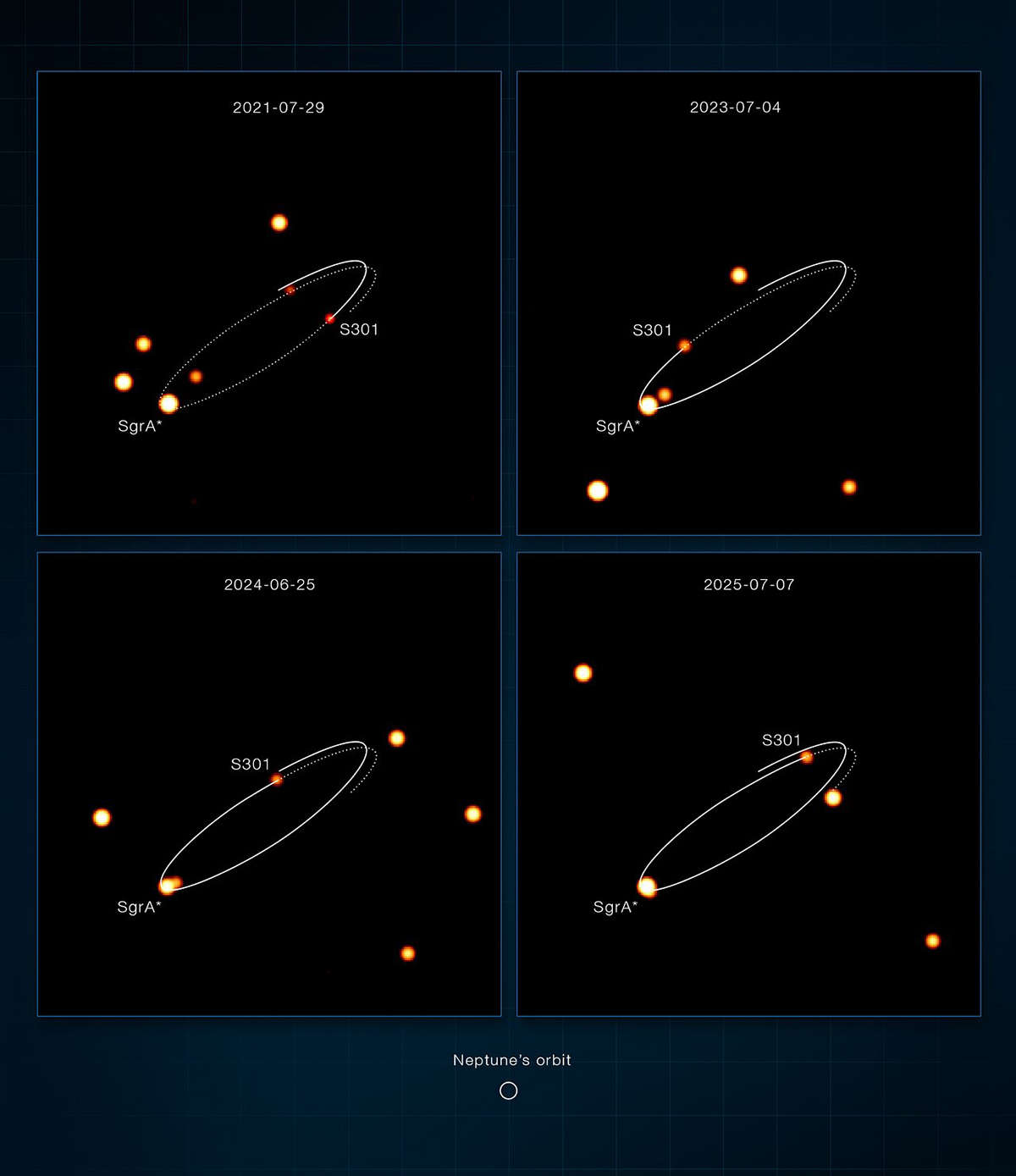
Star S301 is orbiting that black hole closer than any star ever discovered.
At its closest point, S301 comes within roughly 1.78 billion km Sagiattarius A*, which is just 12 times the distance from Earth to the Sun.
And while Earth takes 365 days to orbit our host star the Sun, S301 takes just 8.7 years to orbit the supermassive black hole at the centre of our Galaxy.
During its closest passage to the black hole, S301 travels at around 25,000 kilometres per second.
That's 100,000 times faster than a commercial plane or over 8% the speed of light. It's the fastest known star in the Milky Way.
How to catch the fastest star in the Galaxy
How do you spot and observe such a speedy star? The task was made even more difficult because it's 2 billion times fainter than Betelgeuse – the shoulder of Orion – in our night sky.
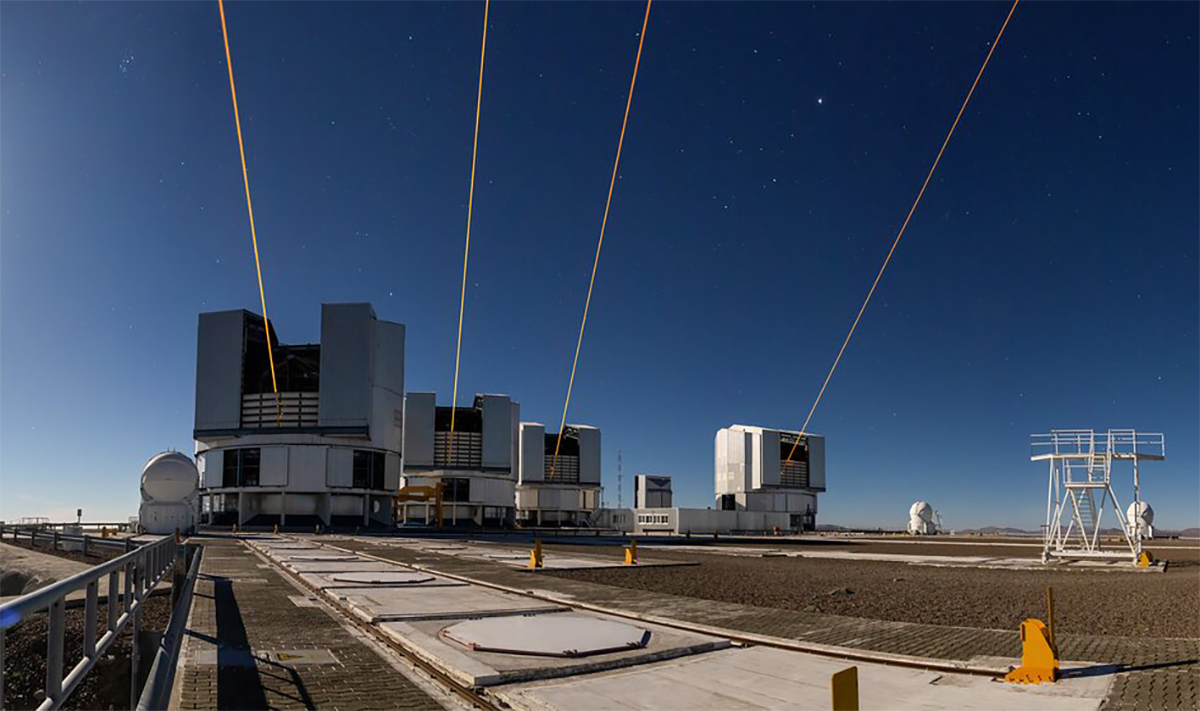
Astronomers used one of the most powerful telescopes on Earth, the VLTI at ESO’s Paranal Observatory in Chile and its GRAVITY+ instrument.
The VLTI combines light from four 8-metre telescopes to create an observing instrument with 15 times the spatial resolution of a single 8-metre telescope.
Testing Einstein's physics
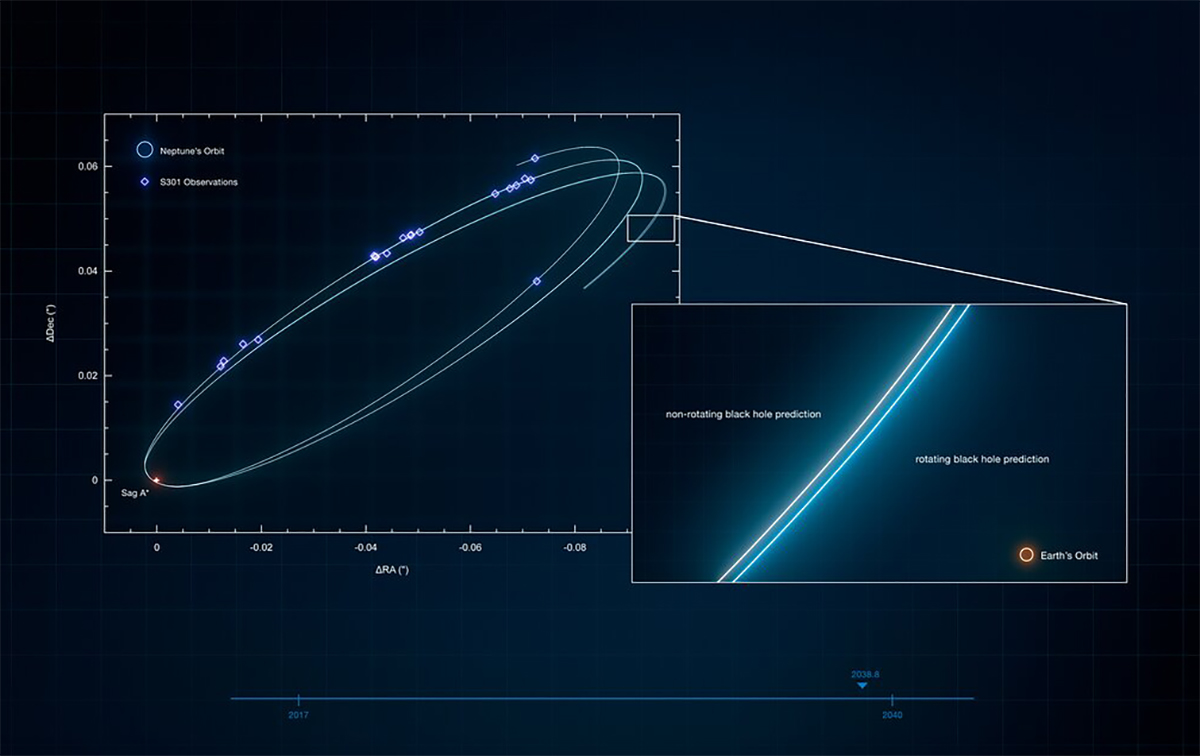
Because S301 skims so close to our Galaxy's central supermassive black hole, astronomers say it could be vital in learning more about the physics of spacetime.
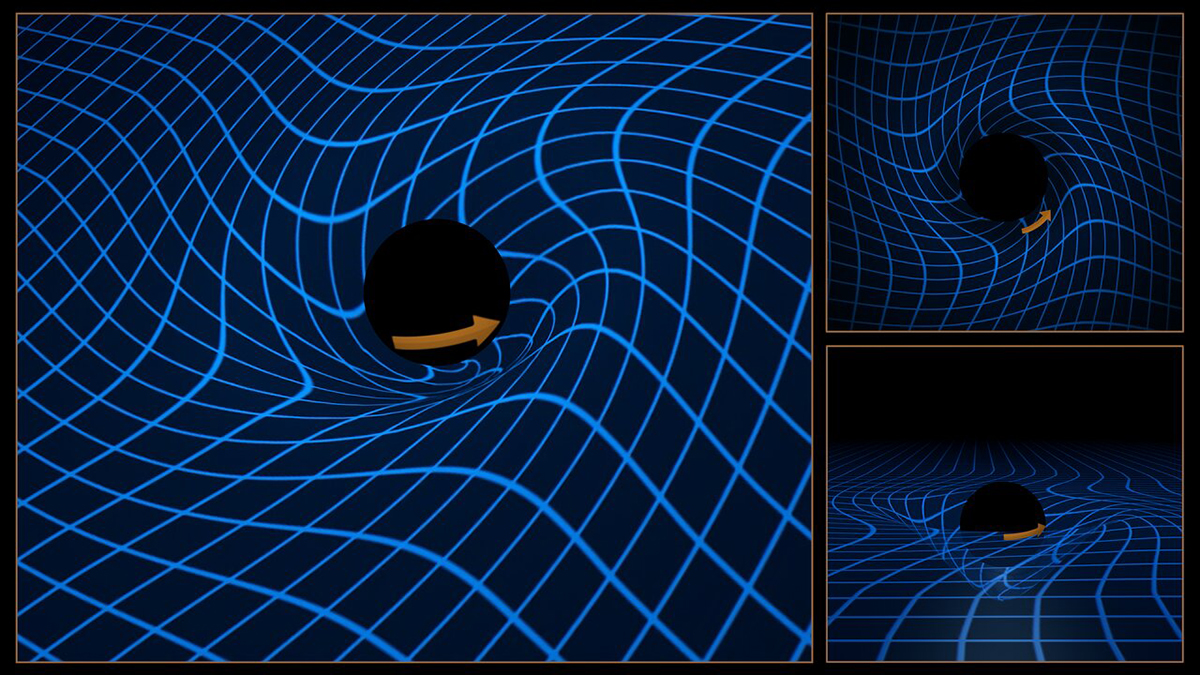
According to Albert Einstein’s general theory of relativity, massive rotating objects in space drag spacetime around with them.
S301 is the first star ever detected that 'feels' the rotation of the black hole.
Astronomers now hope to track S301 during its next close flyby of the black hole in 2031, using GRAVITY+ and the MICADO instrument on ESO’s upcoming Extremely Large Telescope.
That, say astronomers, could help them detect subtle warps in its orbit and allow scientists to directly measure the spin of Sagittarius A* for the first time in history.
"With this star we hope to measure, within the next 10 years, the spin of the black hole," says Felix Mang, PhD student at the Max Planck Institute for Extraterrestrial Physics and author of the study published in Nature.
"For the first time, we would actually be able to measure very directly the spin of a massive black hole, which would be a key test of Einstein’s theory," says MPE researcher Stefan Gillessen.
"Without this star, we would need to measure the motion of other stars for several more decades to get anywhere close to measuring the spin of the black hole," says Juan Osorno, astronomer at LIRA Observatoire de Paris–PSL, France.
How did S301 get trapped so close to the black hole?
Stars can't naturally form so close to a supermassive black hole because the intense gravitational pull would rip dust clouds apart before they could collapse to begin the star-formation process.
So how did S301 end up so close to Sagittarius A*?
Astronomers believe S301 originally belonged to a binary star system that drifted too close to Sagittarius A*, tearing the pair apart.
One star was flung outward at extreme speed and likely kicked out of the Milky Way entirely.
S301, on the other hand, lost its orbital energy, becoming tightly trapped in Sagittarius A*'s orbit foreevr.
Over the coming decade, as astronomers seek further observations with more powerful telescopes, they could solve the mystery of how S301 came trapped so close to the Milky Way's central black hole – and unlock vital information on the nature of spacetime itself.

