
If you're feeling a touch of the post-Christmas blues this week, a good way to dust off the cobwebs and look forward to a brand new year is to get out and get looking up at the night sky.
This weekend, the first supermoon of 2026 rises. It's known as the Wolf Moon, and will be a beautiful sight in the evening sky all weekend.
Each night, 2–4 January, the Wolf Moon is visible in the eastern sky as the sky grows dark, climbing higher and tracking towards the south as midnight approaches.
You can also see the Wolf Moon in the early morning before sunrise.
Get weekly stargazing advice by signing up to our e-newsletter and subscribing to our YouTube channel.
While that bright full Moon will make fainter stars, planets and deep-sky objects harder to see, this weekend it's all about the Wolf Moon supermoon.
January's full Moon is known as the Wolf Moon because wolves don't hibernate in winter, and so the howling of wolves in the first month of the year would have been particularly noticeable, historically.
Here we'll look at why everyone's talking about this bright full Moon and the best ways of observing it, including other celestial objects that will be close-by in the evening sky.
It's the first supermoon of 2026

Yes, the Wolf Moon is the first supermoon we'll get in 2026.
Actually, it's a continuation of four supermoons in a row, and is the fourth and final of the October, November, December and January supermoons.
The next supermoons after the Wolf Moon occur in November and December 2026.
So, rather than thinking of this as the first of three supermoons in 2026, it really makes more sense to group it together with the three supermoons we saw at the end of 2025.
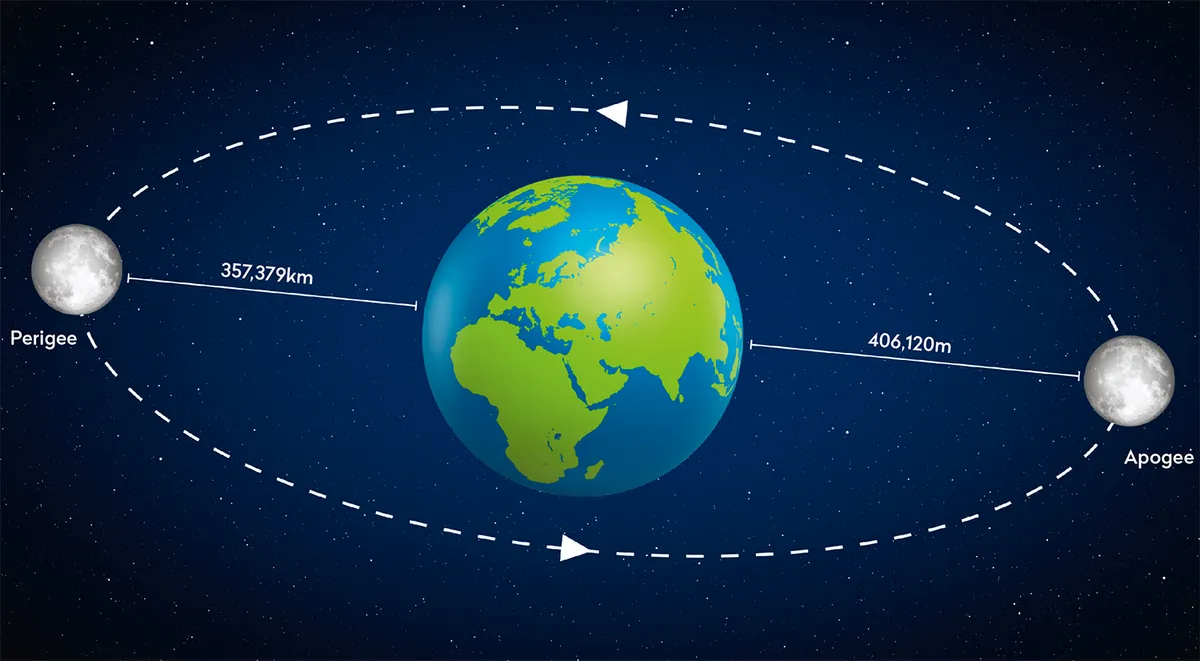
A supermoon is simply a full Moon that occurs when the Moon as at the closest point to Earth in its orbit.
The Moon doesn't orbit Earth in a perfect circle; its orbit is elliptical, or slightly egg-shaped. That means sometimes the Moon is closer to Earth than at other times.
When the Moon is at its closest point to Earth, it's known as a 'perigee' Moon. When it's at its furthest point from Earth, it's 'apogee'.
This makes the Moon technically appear bigger and brighter than a 'regular' full Moon.
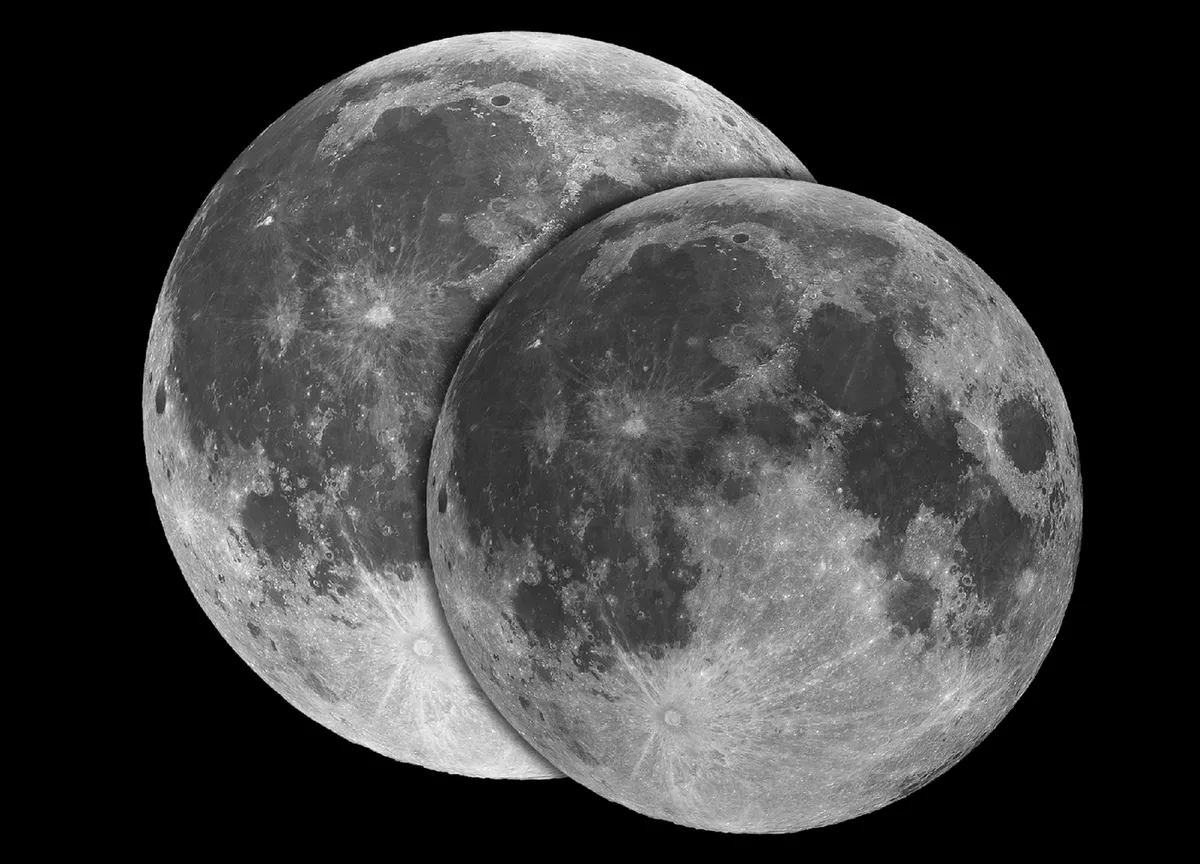
In fact, a full Moon at its closest point to Earth can appear 14% bigger and 30% brighter than a full Moon at its farthest point from Earth.
While the difference is virtually imperceptible to the naked eye, photographing the Moon will reveal its changing size, if done over the course of a few months.
Wolf Moon has a close encounter with the planet Jupiter

In reality, the best thing about the January 2026 Wolf Moon supermoon is its close approach to Jupiter.
As mentioned above, the increase in size or brightness of a supermoon compared with a 'regular' full Moon is difficult to notice with the naked eye.
Instead, take time to observe how this January full Moon dances with the bright planet Jupiter over the course of the weekend.
Jupiter is approaching opposition on 10 January 2026, and this is when the planet is at its best.
That means Jupiter is big and bright this weekend, helping it stand out against the bright glare of the full Moon.

On 2 January, if you observe the nearly-full Moon rise as the sky grows dark, you'll notice the bright planet Jupiter below it.
Follow the pair as long as you can – into the early hours of Saturday morning if possible – and you'll see Jupiter and the Moon get closer together.
They're at their closest on the evening of 3 January, making for a beautiful sight as the gas giant planet appears just below the Moon.
By the evening of Sunday, 4 January, the Moon and Jupiter are still close together, but are now further apart than they were the previous evening.
This is because the Moon appears to track eastwards across the sky, night after night, where as the stars and planets are virtually in the same location, from one night to the next.
Other easy targets to see in the same patch of sky as the Wolf Moon are:
- Castor and Pollux, the twin stars of Gemini
- The constellation Orion
- Sirius, the brightest star in the sky
- The Pleiades and Hyades star clusters
Use a stargazing or astronomy app to help you locate these objects in the night – or early morning – sky.
You may be able to witness the Moon illusion

If you have a clear northeastern horizon and are able to see the Moon when it's low down in the evening twilight, you may notice it looks enormous.
And you may be tempted to think you are witnessing the full majesty of a supermoon.
However, what you're really witnessing is a well-known optical effect known as the 'Moon illusion'.
This occurs when any full or nearly-full Moon is seen low down in the sky, and has nothing to do with the fact that this is a supermoon.
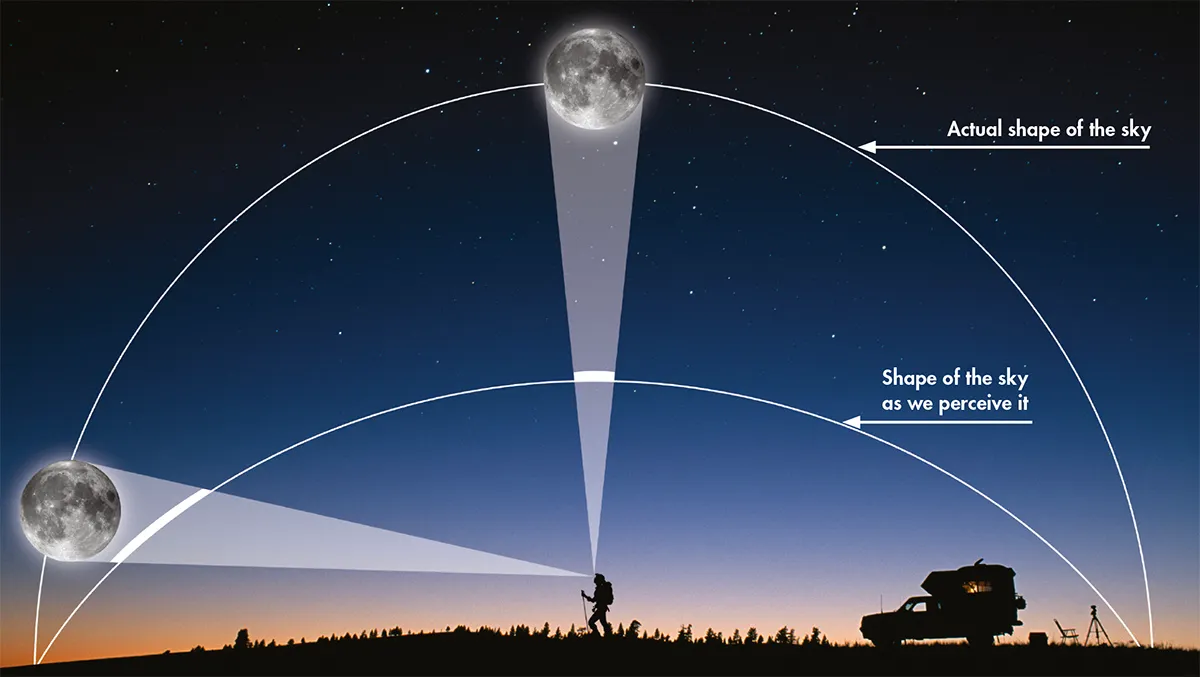
There doesn't appear to be any confirmed reason as to why the Moon illusion happens, but it could be a result of our perception of the dome-like celestial sphere above our heads.
Or it could be because a low Moon appears closer to foreground objects like buildings and trees, dwarfing them and making the Moon seem huge in comparison.
The Wolf Moon will rise higher than most other full Moons

The Moon illusion may occur when the Moon is low and close to the horizon, but this January 2026 full Moon won't stay close to the horizon for long!
It will be one of the highest full Moons you'll see all year, because it's a winter full Moon.
Full Moon occurs when the Moon is in the opposite part of the sky to the Sun. That's why the full Earth-facing side of the Moon is illuminated.
As we know, the Sun is lower in winter, and because the full Moon is mirroring the Sun's position in the sky, that makes the Moon higher in winter.
That's good news if you live in built-up towns or cities. You should be able to see the Wolf Moon supermoon towering above tall buildings, its bright lunar light clearly visible even through light pollution.
It's perfect for beginners and kids

Winter supermoons are great for families, kids and beginners, because you don't have to wait too long after sunset to see them.
In fact, the Wolf Moon supermoon of January 2026 will be visible low in the eastern sky as soon as the sky grows dark.
And, as stated above, it will be easily visible because it will climb high and its bright moonlight will be seen even through artificial light.
If observing together with family and friends, read our guide on how to make the most of a full Moon or supermoon.
It's a great time to see rays on the Moon's surface
Most Moon observers will tell you that full Moon is the worst time to observe the Moon.
That's because, if you're interested in observing craters, mountains, lunar seas and other features on the Moon, the brightness of the full Moon is something of a nuisance.
Instead, it's better to observe the Moon during its crescent or gibbous phases. During these phases, the surface of the Moon isn't drowned out by reflected sunlight.
As well as this, the 'terminator' – the line dividing the lit and unlit portion of the Moon – throws shadows on the lunar surface, accentuating its features and making them easier to distinguish.
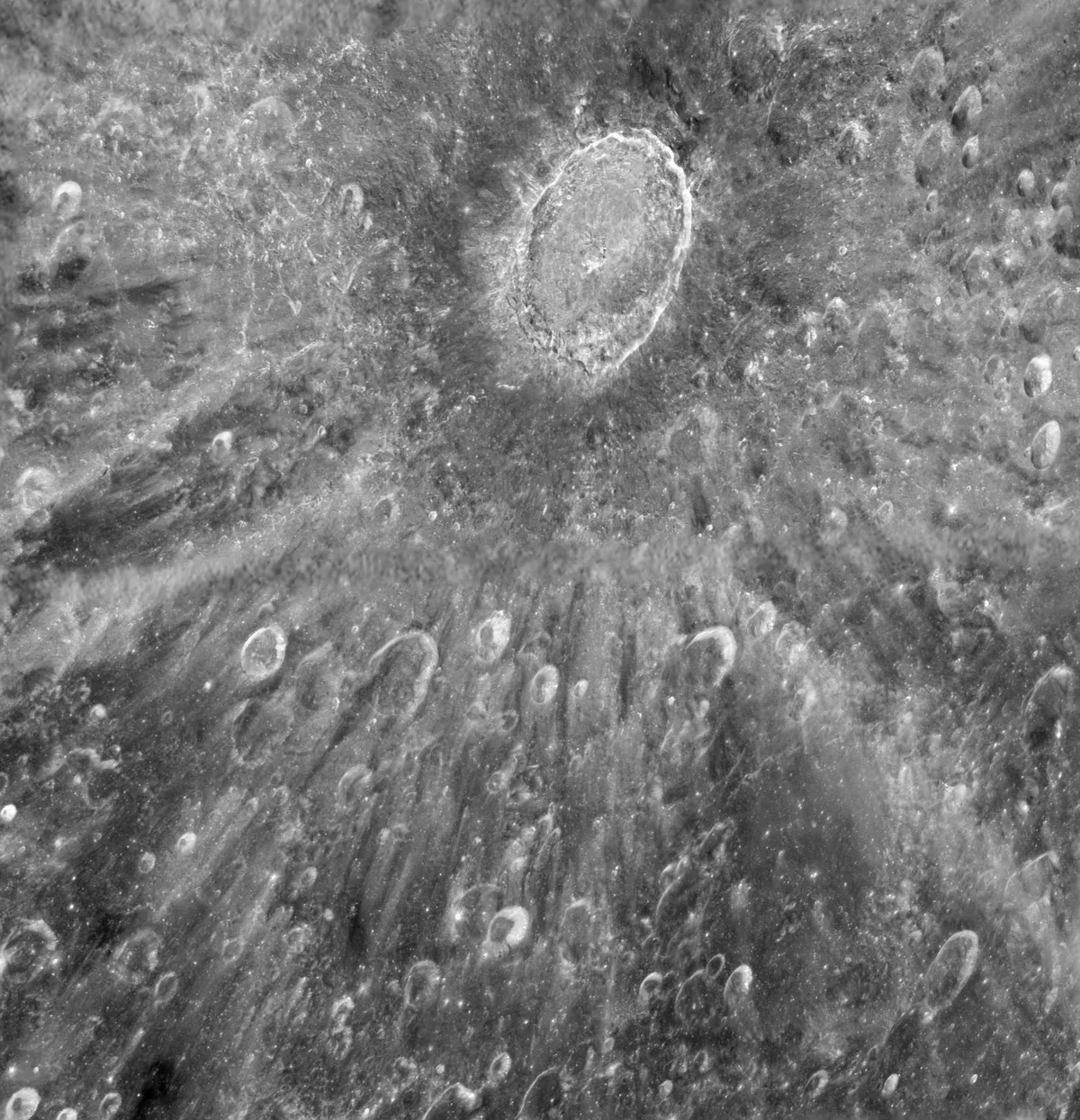
There are even well-known lunar clair obscur effects that can be seen during certain phases.
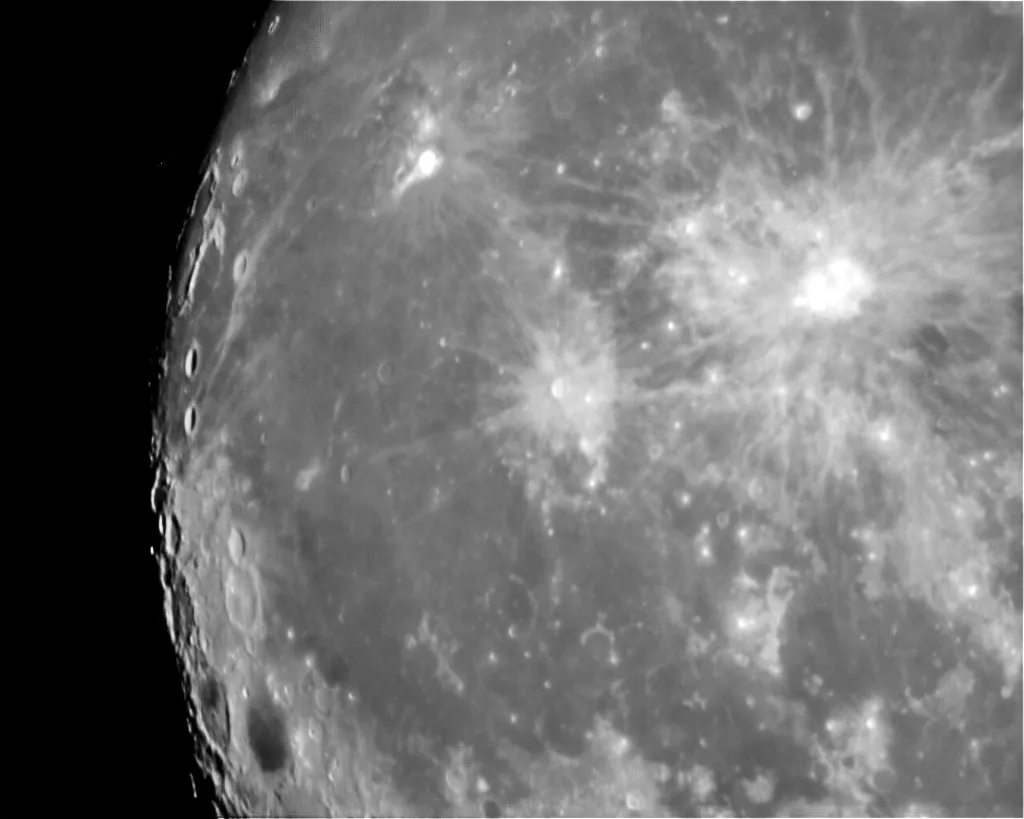
That being said, one type of feature that can be seen well during full Moon are lunar rays.
These are the remnants of ancient impacts on the Moon, when large spacerocks smashed into the lunar surface, causing debris to be ejected outwards.
If you're observing the Wolf Moon supermoon this weekend, see if you can spot the rays emanating from two of the most prominent craters, crater Tycho and crater Copernicus.
If you observe or photograph the Wolf Moon supermoon, send us your images and they could appear in a future issue of BBC Sky at Night Magazine

