Looking down on the Earth from space is a sight few have experienced, but for those that have, the view can be transformative.
Known as the ‘Overview Effect’, the sight of our planet floating against the infinite blackness of space has shifted more than one astronaut’s worldview – kindling spiritual awakenings or increasing their connection to planet Earth.
The term ‘Overview Effect’ was first coined by author and 'space philosopher' Frank White, though the phenomenon has been studied by many since the early days of spaceflight.
For no group was this effect been more pronounced than the 24 Apollo astronauts who travelled to lunar orbit, who saw Earth from a distance – a delicate orb suspended against the infinite nothingness of the Universe.
 Credit: NASA" class="wp-image-37540" title="">
The Overview Effect throughout history
That astronauts might return from their missions with a new understanding of Earth, the Universe and even God was a popular idea throughout the early Space Age.
In February 1962 John Glenn, the first American in space, appeared before a congressional committee following his flight aboard Friendship 7.
“I was wondering,” one senator asked, “whether you felt that God was up there as well as down here, and that in Him you lived and moved and had your being?”
There was nothing eccentric about such a line of enquiry. Pilots and explorers had been experiencing epiphanies, visions and other strange sensations similar to the Overview Effect long before the space programme.
While making the first non-stop flight from New York to Paris in 1927, Charles Lindbergh reported consorting with a ghostly presence.
Meanwhile, jet pilots flying in the upper atmosphere in the 1950s reported a profound feeling of isolation from Earth, known as the ‘break-off phenomenon’.
 Credit: NASA." class="wp-image-116998" title="">
Much of early space psychology centred around anxious speculations about how astronauts would respond to spaceflight, separated from Earth and humanity.
One particular concern was the isolation, as it was fairly routine for participants to start to hallucinating during isolation experiments.
For obvious operational reasons, NASA didn’t want astronauts having visions in the middle of missions.
As a result, the NASA’s initial astronaut selections showed a marked preference for candidates who were well-armoured against spontaneous transformations.
Psychological stability, noted an official review, was “the most important consideration in evaluating a candidate”.

The ideal Apollo astronaut
Even after selection, astronaut candidates were careful to conform to this perceived ideal: reticent and rational; stimulated by the technical challenge, rather than the chance for a truly novel experience.
Openly anticipating the wonder of being aloft in the heavens would shrink their chances of being trusted with an actual mission, while reports from the flights themselves tended to be dressed in self-conscious calm.
Part of the fault on that front may have laid with the bleary windows and angle of the spacecraft, which frequently made it impossible to experience the full visual majesty of the cosmos.
Not to mention the demanding schedule, which afforded little time to appreciate the view. When Michael Collins was asked if he found God during his Gemini 10 spacewalk, he replied “I didn’t even have time to look for him.”
 Credit: NASA." class="wp-image-116999" title="">
The Overview Effect from Earth orbit
Yet, despite demanding operational needs and emotional reticence, some astronauts did feel some movement of the spirit.
Towards the end of Apollo 9, which tested the lunar lander module in Earth orbit, lunar module pilot Russell Schweickart finally had the chance to gaze out of the window.
He looked first for the ‘friendly things,’ such as his home city, Houston – “You identify with that, it’s an attachment.”
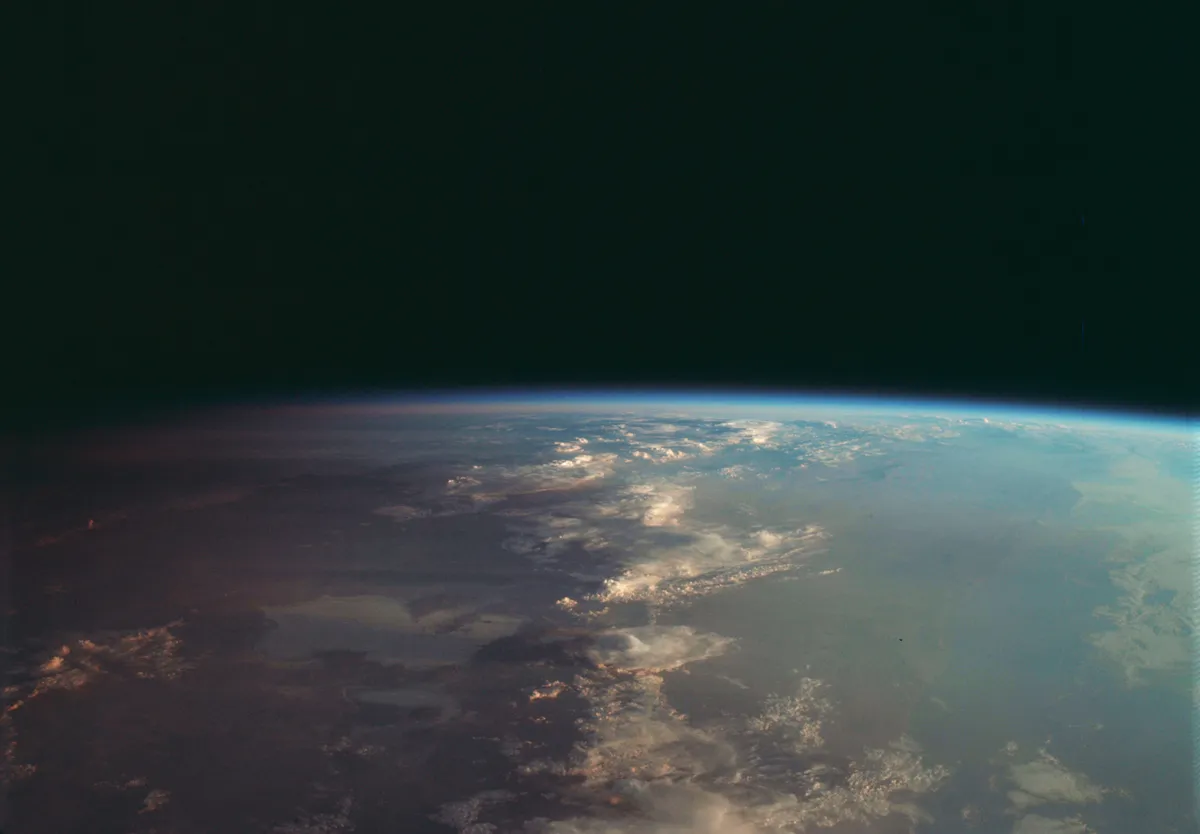
Gradually, with each passage around the world, his attachment widened and Schweickart found himself ‘identifying’ with North Africa. By the end of the mission, his sense of connection had come to encompass the whole Earth.
“And somehow you recognise,” he stated, “that you’re a piece of this total life.”
This expanded sense of connection after seeing an overview of Earth, a whole entity and not the sum of many parts, is what gives the Overview Effect its name.
Earthrise for the soul
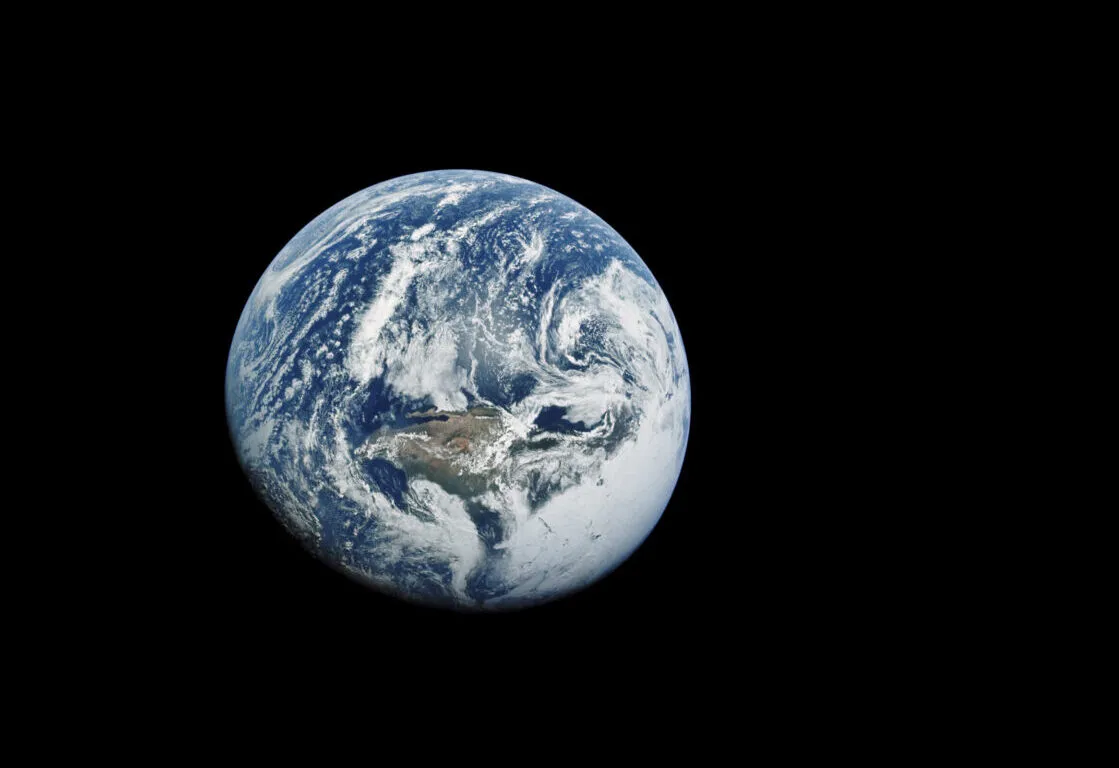
For most of the Apollo astronauts, however, the true epiphanies came only after they departed Earth, heading for the Moon.
As Apollo 11 flew away from home, command module pilot Michael Collins noted the “sobering, almost melancholy, sight” of Earth shrinking in size as the blackness around it grew.
The blue and white of Earth seemed more beautiful and delicate precisely because it was clearly surrounded by annihilating space.
 Credit: NASA." class="wp-image-117002" title="">
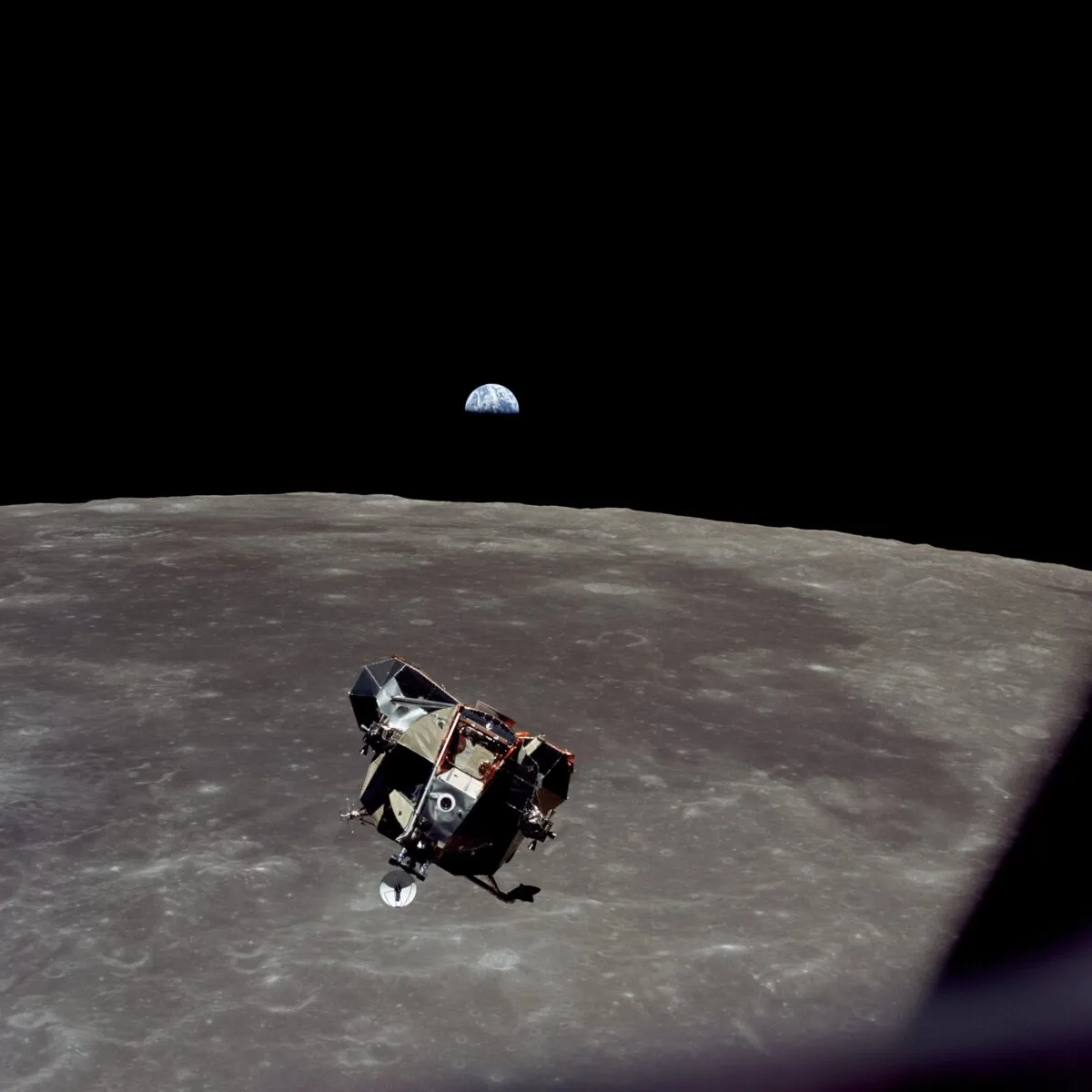
The lesson was reaffirmed when they arrived at the Moon – a grey, cratered and dead place that offered a desolating vision of what could happen to a world.
When they circled back to see a brilliant Earthrise over the barren landscape, many of the Apollo astronauts experienced a powerful rush of emotion.
“It was the most beautiful, heart-catching sight of my life,” remembers Frank Borman, commander of Apollo 8, the first crewed mission to circle the Moon.
Earthrise had a profound effect on Collins as he looked at home “in wonderment, suddenly aware of how its uniqueness is stamped on every atom of my body”.
But the effect was short-lived. “I looked away for a moment and then it was gone. I couldn’t find it again without searching closely.”
Experiencing the Universe from lunar orbit
Collins was not the only Apollo astronaut to feel the powerful Overview Effect.
Apollo 14 lunar module pilot Edgar Mitchell also gazed at Earth and experienced a fierce sense of belonging.
On Earth – “on that fragile little sphere” – was “all I had ever known, all I had ever loved and hated, longed for, all that I once thought had ever been and ever would be”.
Yet Mitchell’s grand epiphany did not just encompass Earth, as he had studied physics at MIT and was well-acquainted with the recent confirmation of Big Bang cosmology.
Now, in an “ecstasy of unity” he arrived at an understanding of what this cosmology really meant: everything was connected.
Where Collins had felt Earth in every atom of his flesh, Mitchell perceived the Universe.
“It occurred to me,” he wrote, “that the molecules of my body and the molecules of the spacecraft itself were manufactured long ago in the furnace of one of the ancient stars that burned in the heavens about me.”
Finding God on the Moon
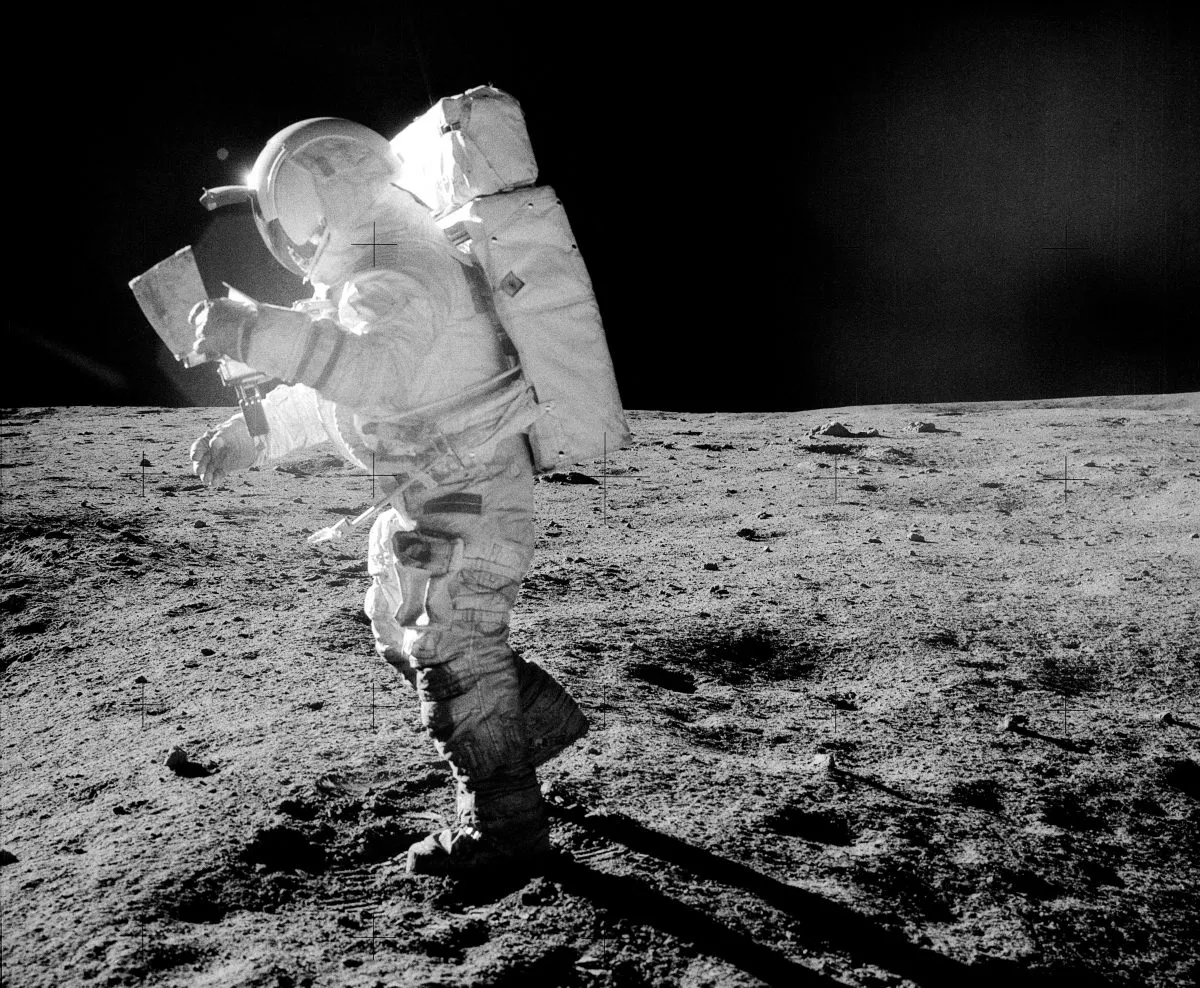
It was in the Imbrium Basin, at the foot of the Apennine mountains, that Apollo 15 lunar module pilot James Irwin had his own powerful experience with the Overview Effect.
Irwin was a devout Southern Baptist, but had never felt the immediate presence of the divine that his religion so valued.
That was, until he walked on the lunar surface.
During a spacewalk Irwin spotted a strange, lightly coloured rock perched upon a base of grey stone.
Later, the 'Genesis Rock' was found to be over four billion years old, close to the age of the Solar System itself and one of the most important reclaimed by the Apollo missions.
To Irwin, the placement of the rock “seemed to say, ‘here I am, take me’” and showed – to him at least – that God had willed its discovery.
 Credit: NASA" class="wp-image-40134" title="">
Artemis and the Overview Effect
The Overview effect has been experienced by many astronauts in the years since the Apollo missions, and the International Space Station’s cupola window looking down on Earth stands testament that sometimes the only way to truly appreciate a place is to leave it for a while.
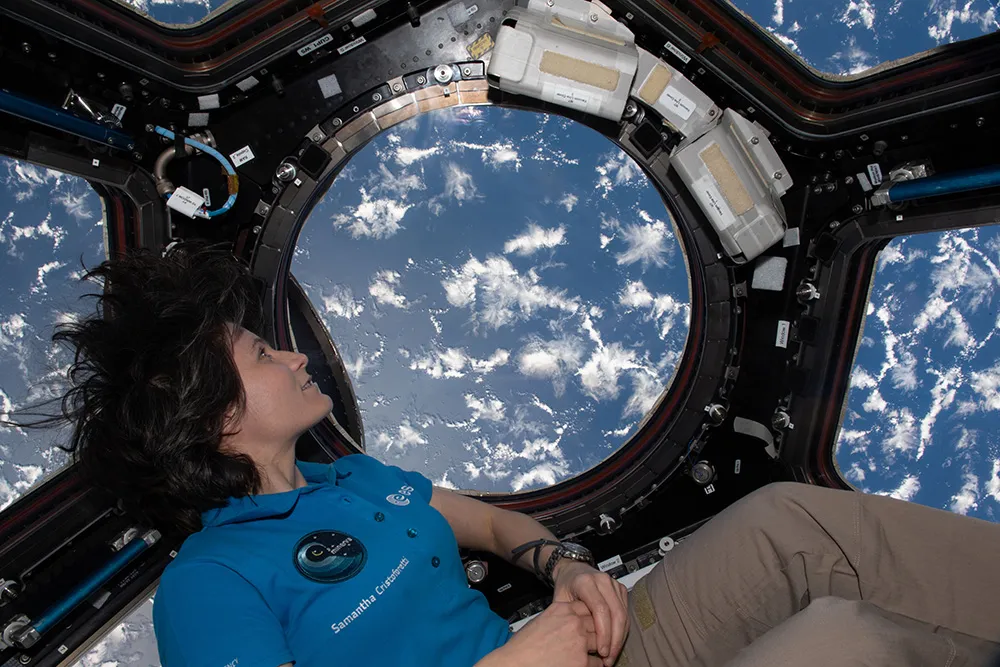
But this only shows a part of Earth. The only people to experience the profound effect of seeing Earth against the blackness of space were a group specifically chosen to not experience such epiphanies.
However, NASA's Artemis Programme will not only return to the Moon, it will do so with a more diverse group than the Apollo missions ever aspired to.

Each of these new lunar travellers will return to Earth with their own unique insight into the experience.
“With all the arguments, pro and con, for going to the Moon, no one suggested that we should do it to look at the Earth,” says Joe Allen, a Shuttle pilot who worked on Apollo.
“But that may in fact have been the most important reason.”