
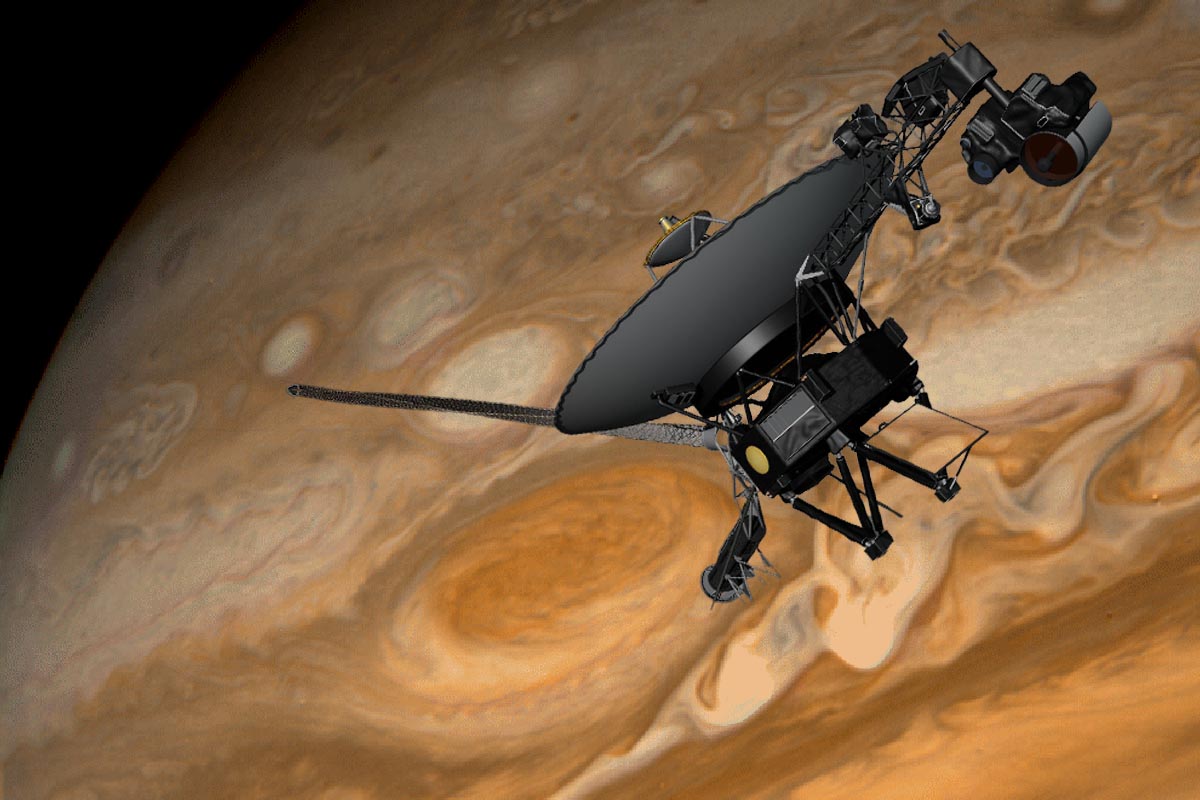
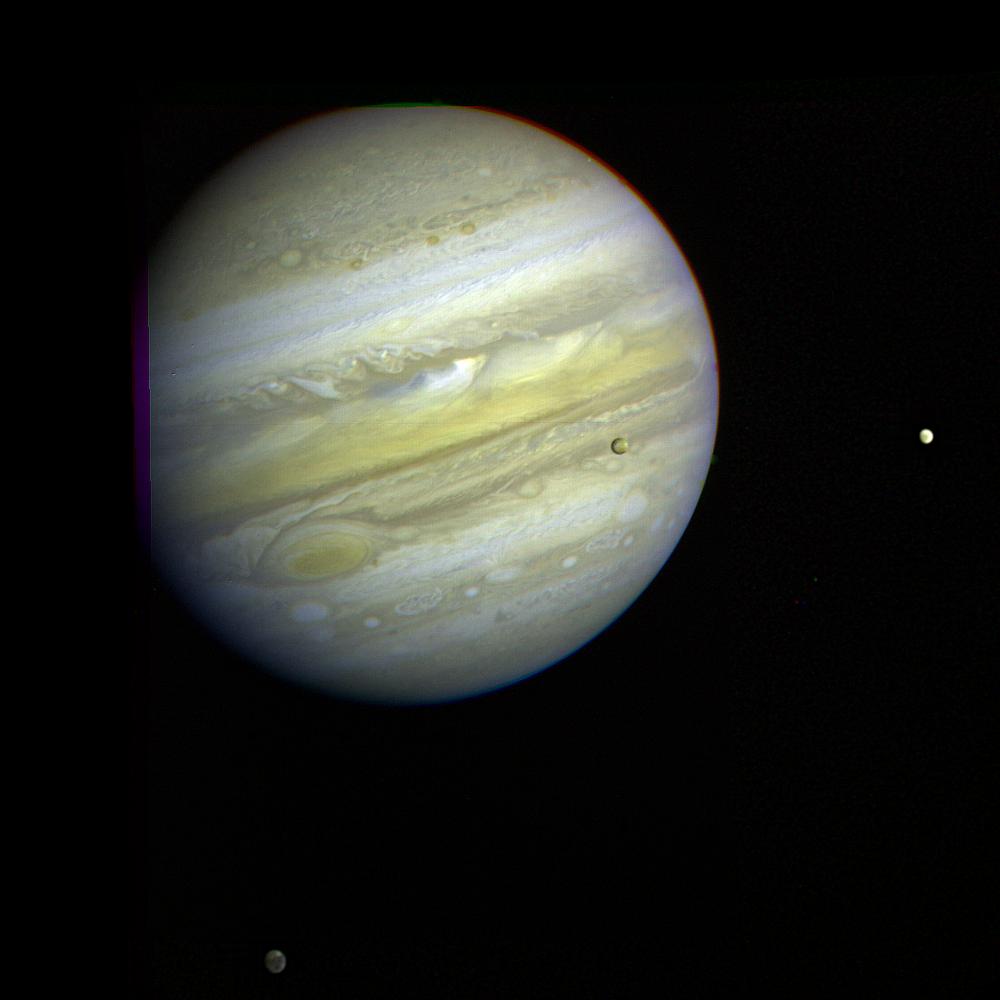
In January 1979, after a journey of 15 months, Voyager 1 began to photograph the first planet on its Grand Tour, the gas giant Jupiter.
Voyager 2 followed a few months later, and together they rewrote almost everything we thought we knew about the Jovian system – not least the fact that volcanism exists beyond Earth.
More on Voyager
Finding volcanoes on Io
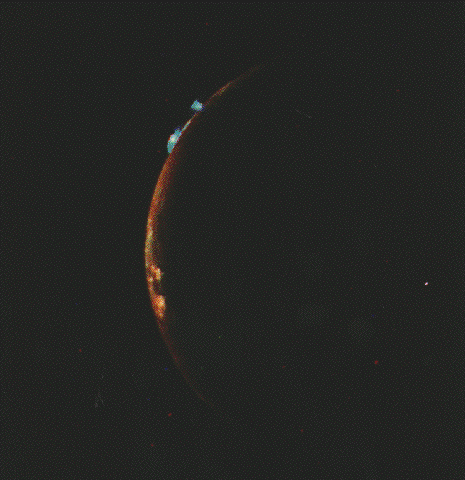
At first glance, it resembled nothing more than a blemish on Voyager 1’s lens. But as 26-year-old engineer Linda Morabito peered closer at the image of Jupiter’s moon, Io, she realised she was looking at something extraordinary.
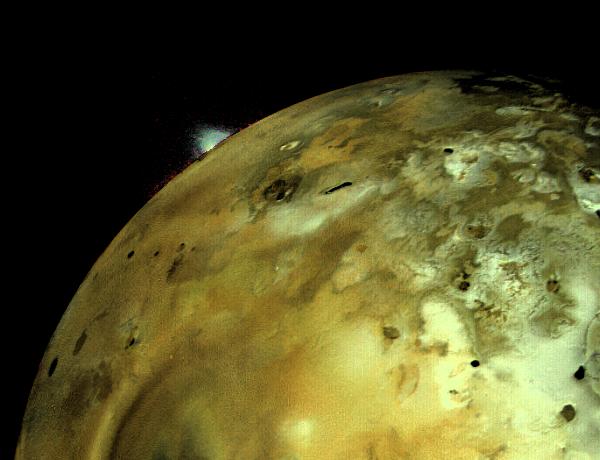
The blemish was actually a faint, bluish crescent that was protruding from beyond the moon’s limb.
This all occurred on 9 March 1979, four days after the probe had made its closest pass – 349,000km – of the broiling Jovian cloudtops.
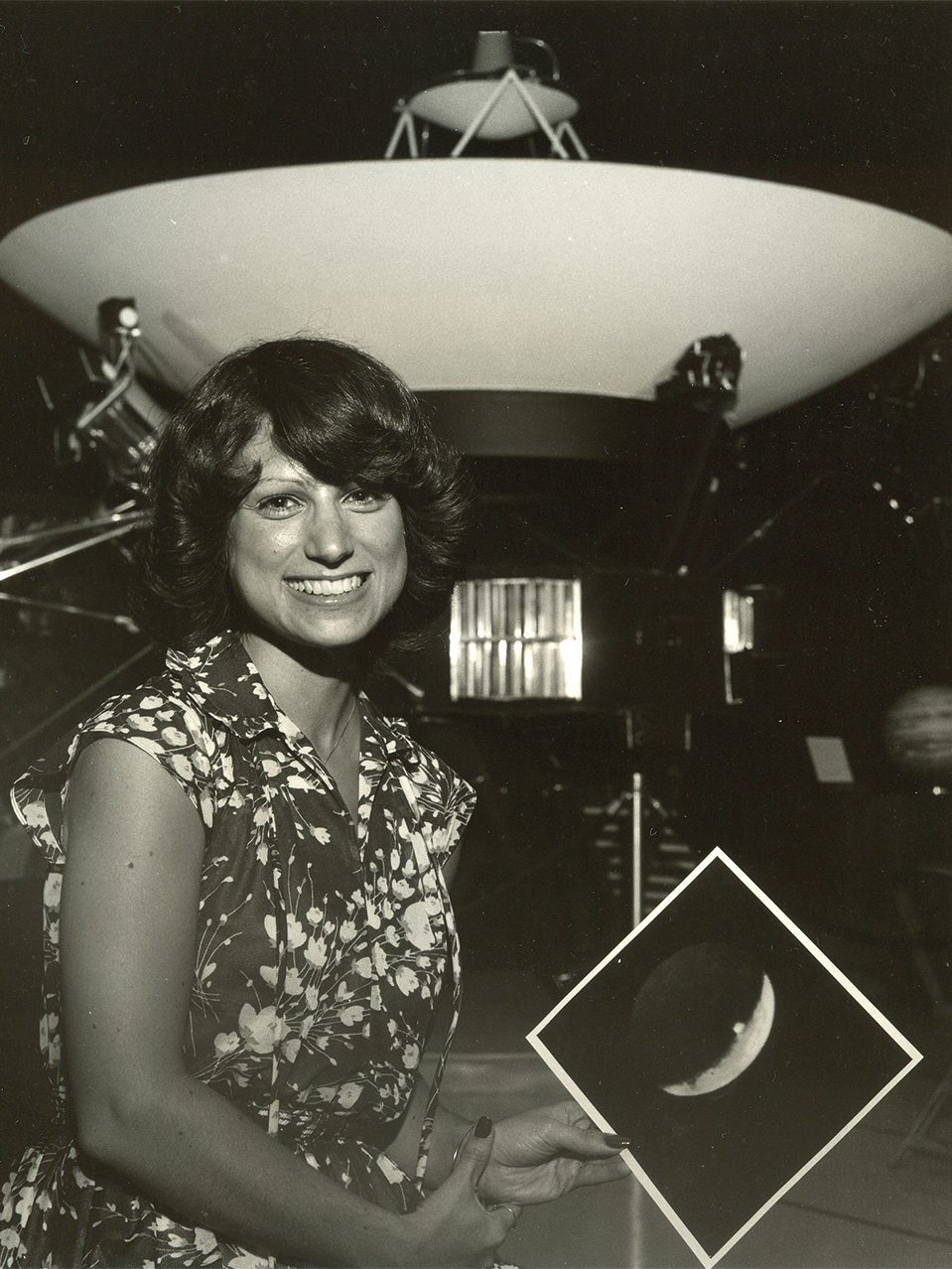
Morabito was part of the optical navigation team, plotting Voyager 1’s trajectory to Saturn, three-quarters of a billion kilometres and 20 months away. She had just made the most significant discovery of the entire mission.
The long-exposure shot, taken a day earlier, viewed Io from a parting distance of 4.5 million km.
Analysis revealed the crescent to be a plume – rising over 280km into space – from a volcano.
Later named ‘Pele’ after the Hawaiian goddess of volcanoes, it was the first of hundreds of such features to be found on Io.
As the days wore on, infrared data pinpointed regions rich in sulphur dioxide, where temperatures soared up to 200°C higher than the surrounding terrain.
Four months later, on 9 July, Voyager 2 revealed that Pele had fallen dormant, although several other volcanoes remained active.
Big surprises
It was a big surprise on a natural satellite with a size and density roughly equal to that of our geologically inactive Moon.
Io’s proximity to its giant host (it orbits just 421,800km from Jupiter’s centre) forces it to bear the brunt of a punishing magnetic field.
This is hundreds of times stronger than Earth’s and ‘co-rotates’ with Jupiter’s interior every 10 hours, transporting vast quantities of energetic plasma back and forth along magnetic field lines.
The field is inflated at the magnetic equator, pushing the plasma outwards in a huge, tilted ‘sheet’ that rises and falls, flopping north then south, during each rotation period.
The relationship between Jupiter and Io is a complex one.
As Jupiter’s magnetic field sweeps past Io it strips 1,000kg of mass from the moon every second.
This forms a doughnut-shaped ‘torus’ of charged particles, the existence and extent of which was first inferred by Pioneer 10.
Ground-based observations also identified a neutral sodium cloud around Io, formed by atmospheric sputtering, as well as the spectroscopic fingerprints of sulphur dioxide.
Not until the discovery of Io's volcanism did the process of how this torus was maintained begin to make sense.
Under Voyager 1’s gaze, twice-ionised oxygen and sodium atoms glowed brightly at ultraviolet wavelengths.
To achieve such intensities, electron temperatures have to surpass 100,000°C and radiate a trillion Watts – double the power-generating potential of the entire US – along a ‘flux-tube’ into Jupiter’s magnetosphere.
Voyager 1 tried to fly through this flux-tube, but missed its centre by around 5,000km.

Lava lakes and lights
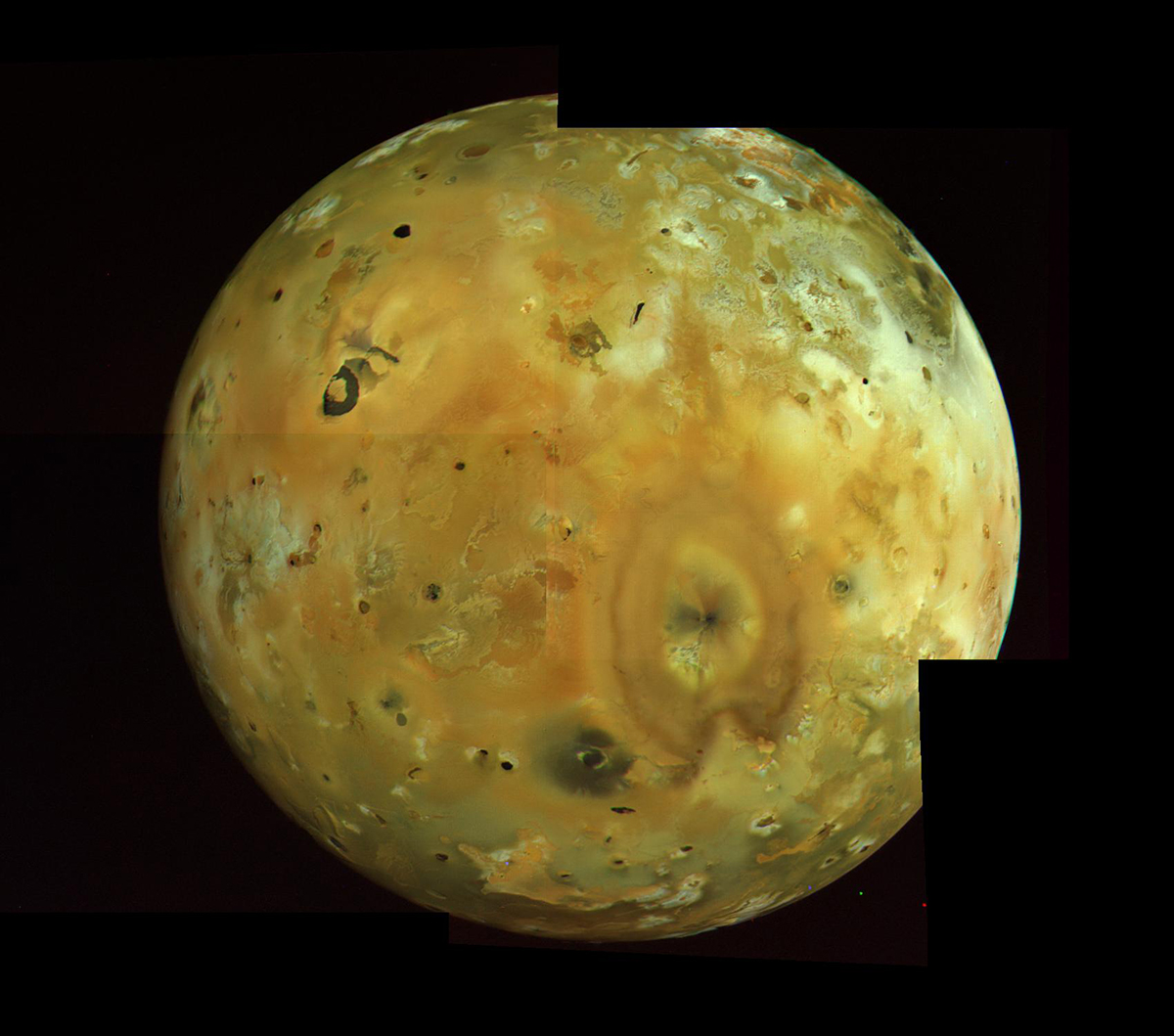
Morabito’s chance discovery identified Io as the most volcanically active place in the Solar System.
It yields twice as much energy as all of Earth’s volcanoes combined, despite having a fifth as many hotspots and being only a third of the size of our planet.
Voyager 1 found virtually no impact craters on its young and dynamic surface, just a few % of which was pockmarked with dark-centred volcanoes.
From these snaked red and orange lava flows, some fanning out in wide arcs, others forming a series of twisting tentacles.
Pele was surrounded by a hoofprint-shaped lake of sulphur dioxide, while 200km-wide Loki – more powerful than all of Earth’s volcanoes, put together – had increased in magnitude and evolved into a two-plume eruption by the time Voyager 2 was able to observe it.
Exploring Jupiter
Jupiter’s torus offered a contributing reservoir of energetic particles, which spiralled along magnetic-field lines to fuel the planet’s spectacular aurorae.
One display extended 30,000km across its north polar region and generated extraordinary ‘whistling’ radio emissions.
The Voyager 1 image that confirmed the existence of the ‘Jovian Lights’ also picked out massive electrical discharges from 19 lightning ‘superbolts’, while Voyager 2 went on to locate eight additional flashes.
Jupiter’s magnetosphere is a truly colossal powerhouse. The Pioneer probes revealed its sunward extent and raised speculation of a bullet-like ‘magnetotail’ in its wake.
Voyager data confirmed the tail’s existence and showed that it extended 740 million km beyond the planet, as far as Saturn’s orbit.
Increased solar activity since 1974 had compressed the sunward boundary and a continuous push-pull dynamic saw both spacecraft repeatedly enter, exit, then re-enter the magnetosphere – Voyager 2 recorded 11 boundary crossings.
This showed the variability of the magnetosphere’s size, as the boundary rhythmically flashed in and out in response to solar wind pressure.
Moving pictures
The two Voyagers spent months examining Jupiter, both before and after their closest passes.
From January until April 1979, Voyager 1 transmitted data across the 778-million-km gulf to Earth, while Voyager 2 did likewise between April and August.
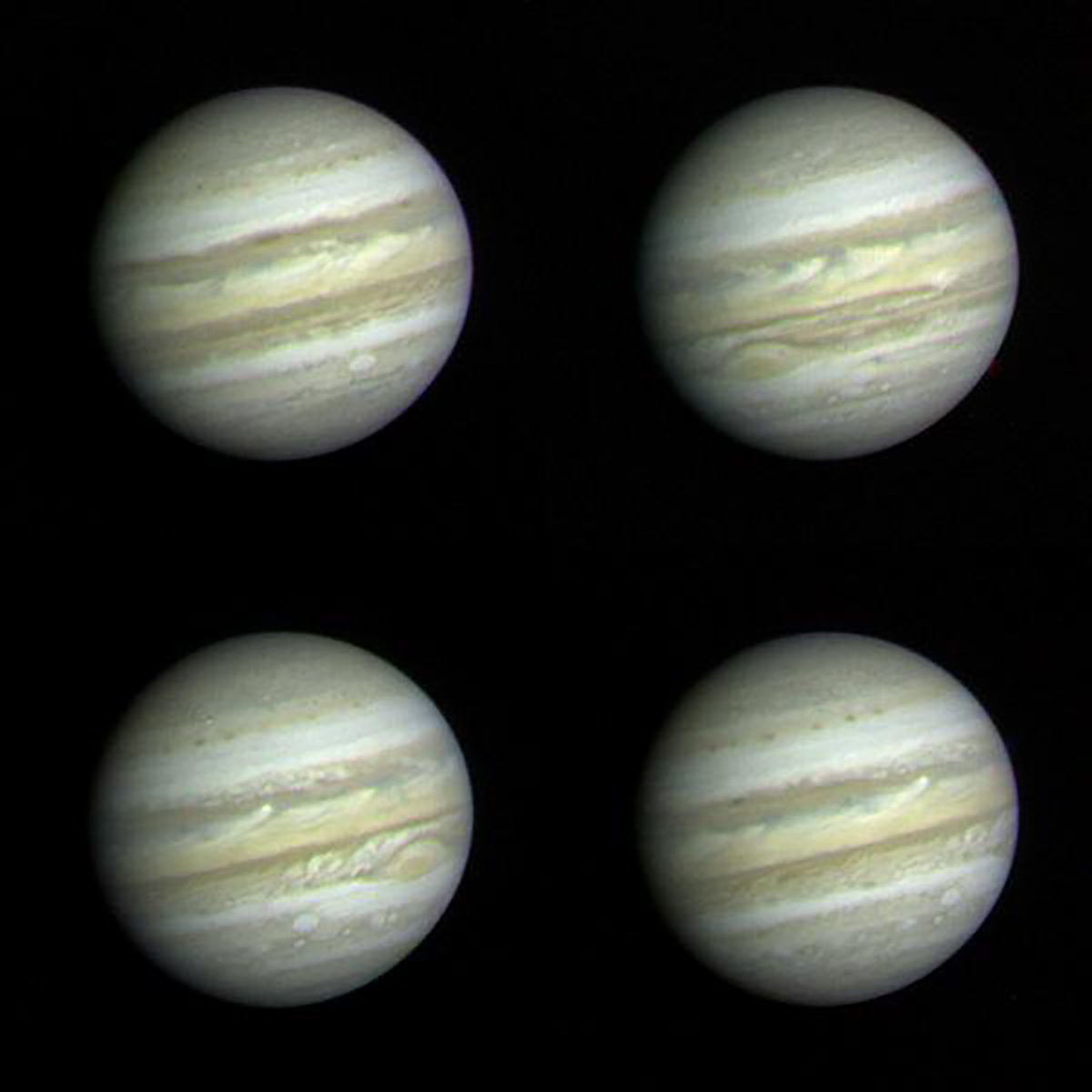
Pictures received during those periods showing how the differential rotation of Jupiter’s atmosphere produces a colourful latitudinal display of bright ‘belts’ and dark ‘bands’, prompted comparisons to the work of Vincent van Gogh.
Movies made with overlapping photos of Jupiter's rotation showed clouds swirling around the edge of the planet’s famous Great Red Spot and clipping along at 100m/s.
Twice the size of Earth and observed telescopically since the 17th century, the spot inhabits the southern hemisphere and rotates anticyclonically, bearing many hallmarks of a high-pressure region.
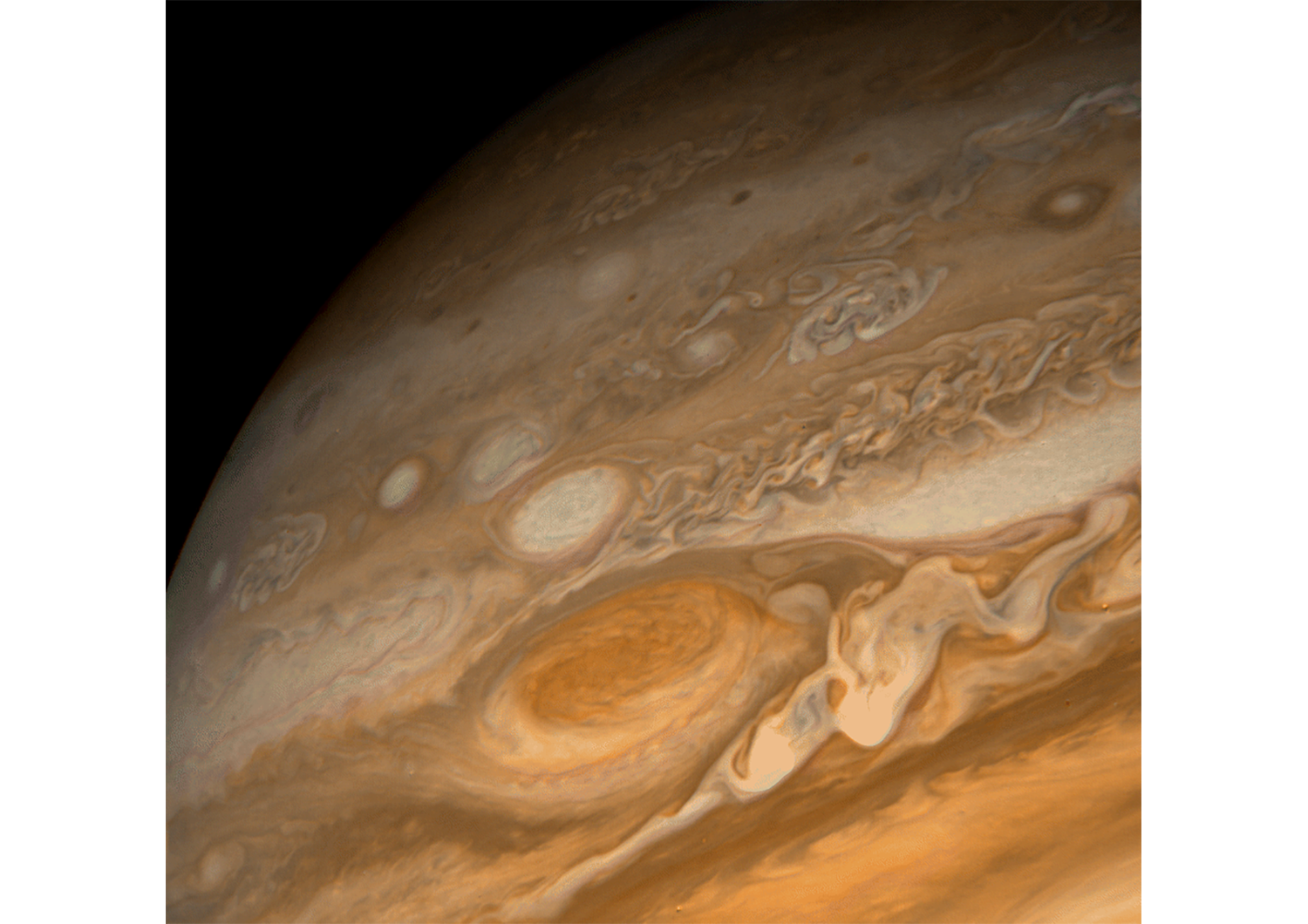
With no solid surface or continents to anchor pressure waves, Jupiter’s storms can (and do) endure for centuries.
The Pioneer probes saw uniform colour within the spot and its attendant clouds, but by 1979 south temperate latitudes had altered considerably, producing complex turbulence.
In July, Voyager 2 hurtled past at a distance of 576,000km and revealed a notable ‘thinning’ of bands at the spot’s southern rim, a spreading-out of clouds to the east and a greater evenness of colour.
Three oval-shaped white spots, first seen four decades earlier and each the size of our Moon, had also worked their way steadily eastwards.
A ring is revealed
At 1,300 times the size of Earth, Jupiter is the biggest and most massive planet in the Solar System. Infrared data from Voyager pegged its composition at 87% hydrogen and 11% helium, with trace amounts of methane, water, ammonia and rock.
A seething mass of clouds, storms and eddies within its bands and belts moved crisply across its disc, indicating that the motion of material, rather than energy, was at work deep in the interior.
Westward-blowing zonal winds extended at least 60° north and south, far closer to the poles than expected. But the surprises didn’t end there.
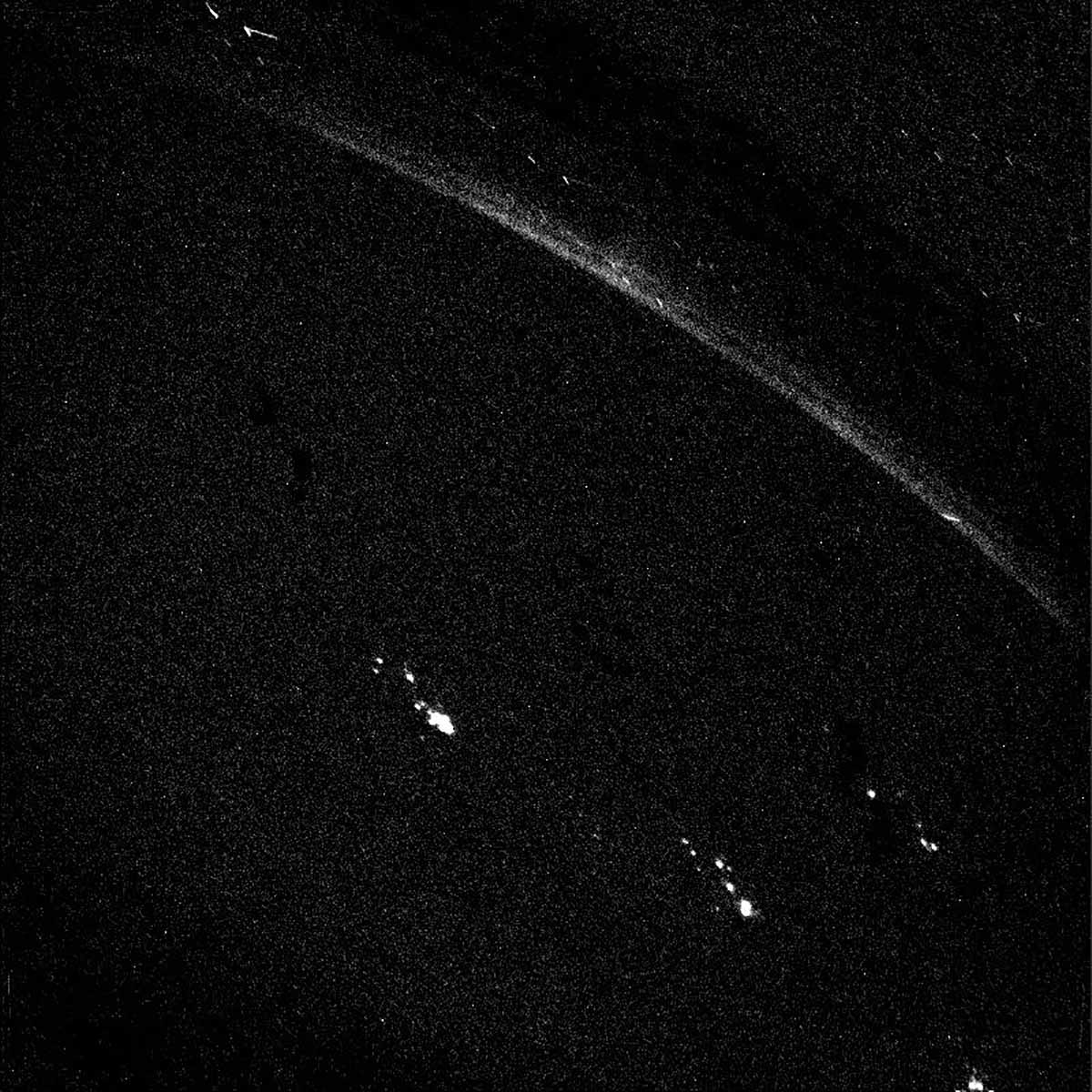
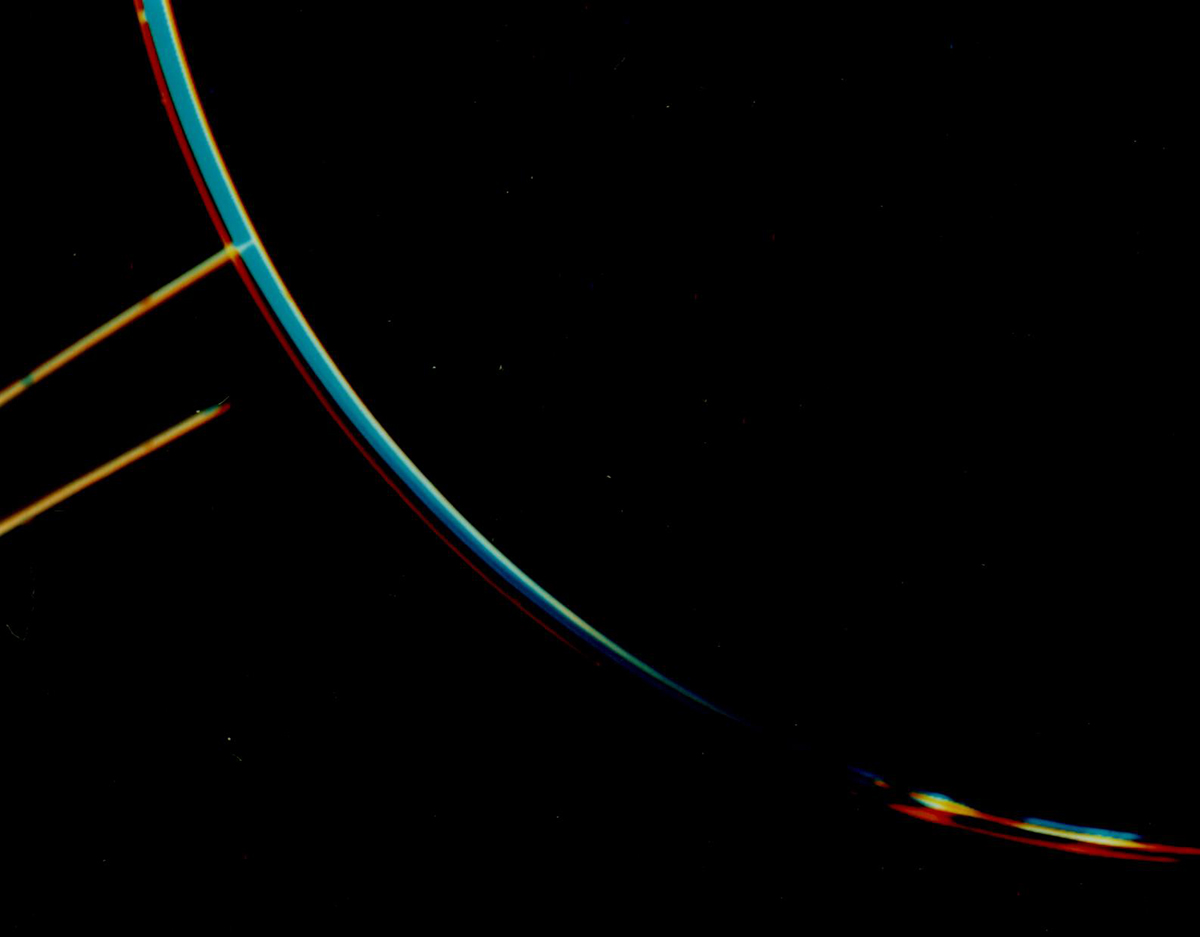
Before 1979, only Saturn and Uranus were known to have rings; theoretical models of long-term stability had not predicted any to exist at Jupiter.
That prediction was proven wrong just 17 hours after Voyager 1 made its closest approach, when a photo taken to search for new moons picked out a tenuous ring only 30km wide.
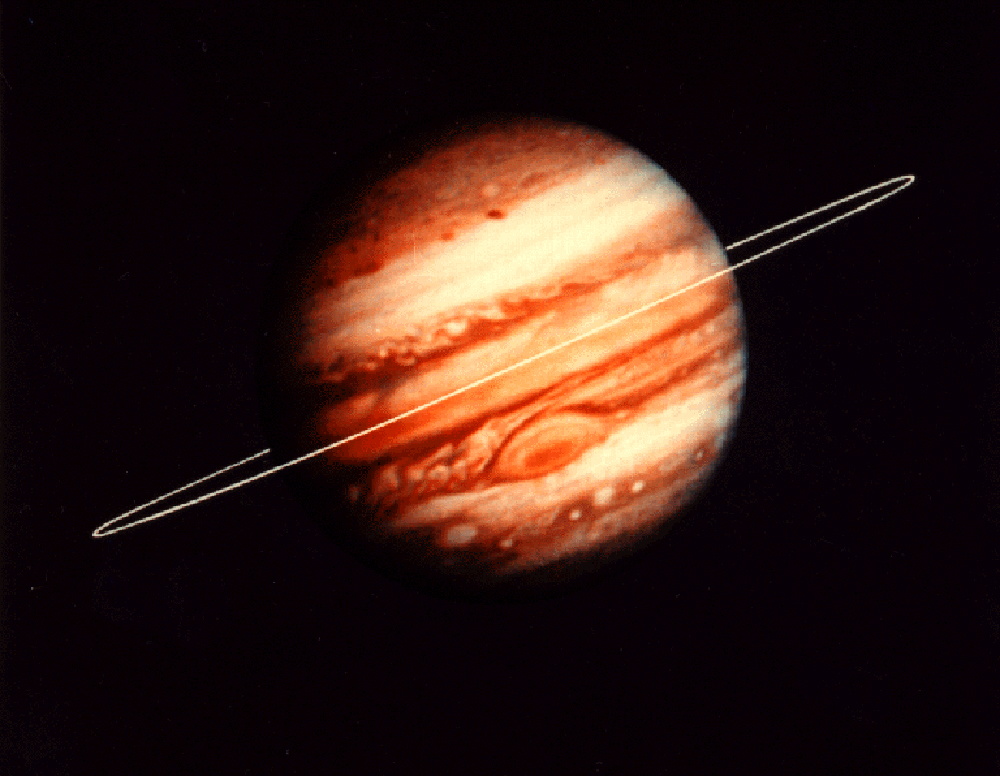
It was intrinsically dark and composed of tiny, rocky grains, with a reddish hue similar to the surfaces of the newly found moons Thebe, Metis and Adrastea.
Long-range imagery also revealed a red surface on the elongated and cratered moon Amalthea.
This prompted speculation that the ring might have evolved from an ancient moon torn apart by tidal forces and it was argued that Adrastea could provide a suitable reservoir of material for it.
Voyager 2 revealed the ring to be quite narrow – one scientist called it “ribbon-like” – and its proximity to Jupiter implied that it was quite young. Its main body was joined by an interior ‘halo’ of dust and an outer ‘gossamer’ ring, which petered out into the background darkness, 180,000km above the planet’s cloud tops.
The biggest moon in the Solar System
The Voyager probes unveiled the Jovian system in its entirety for the first time and showed us the vast differences between the four Galilean moons.
Even the finest telescopes of the era were only capable of showing Io, Ganymede, Europa and Callisto as tiny, dancing points of light.
The two Voyager spacecraft revealed them to be four distinct worlds that varied in size from smaller than our Moon to almost as big as Mars.
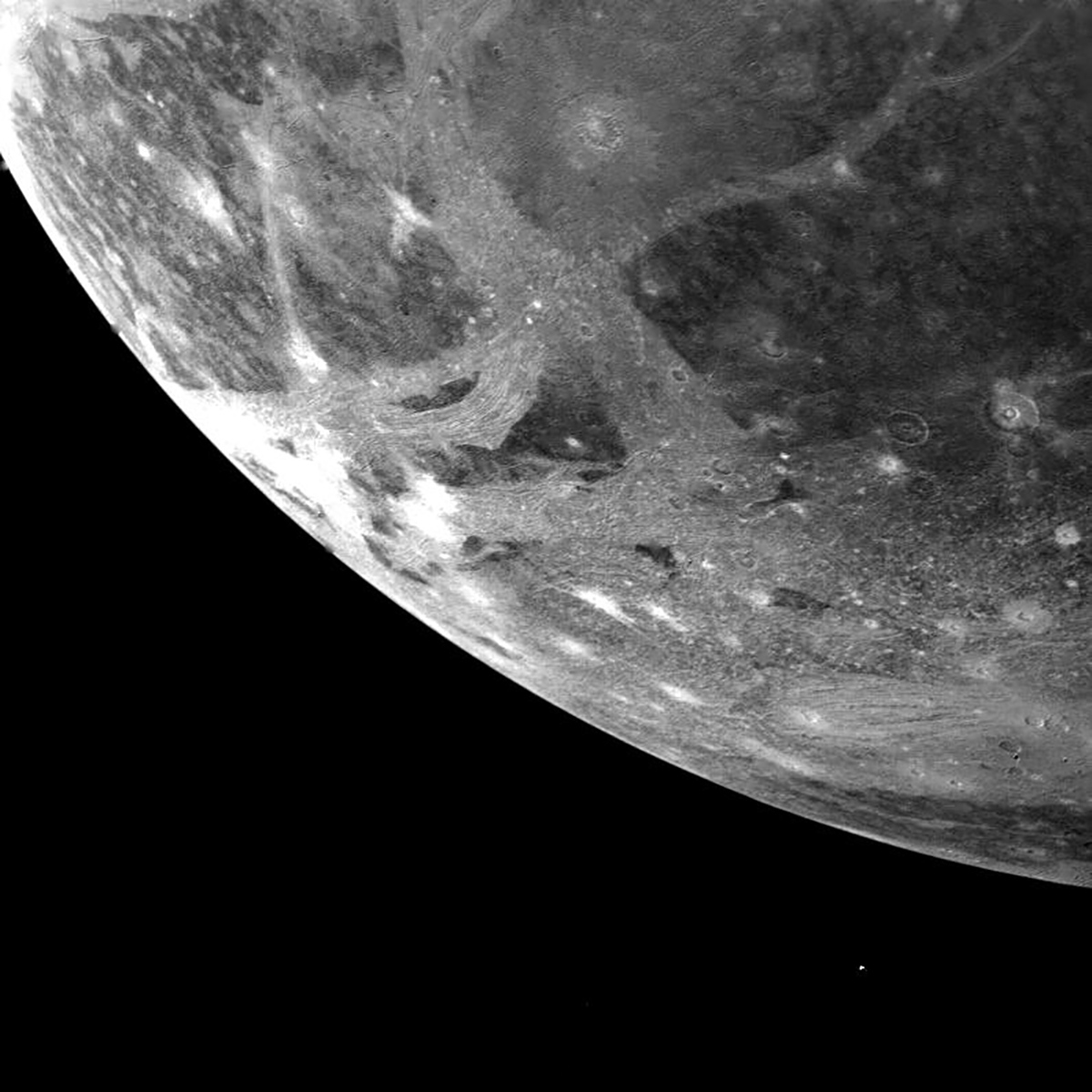
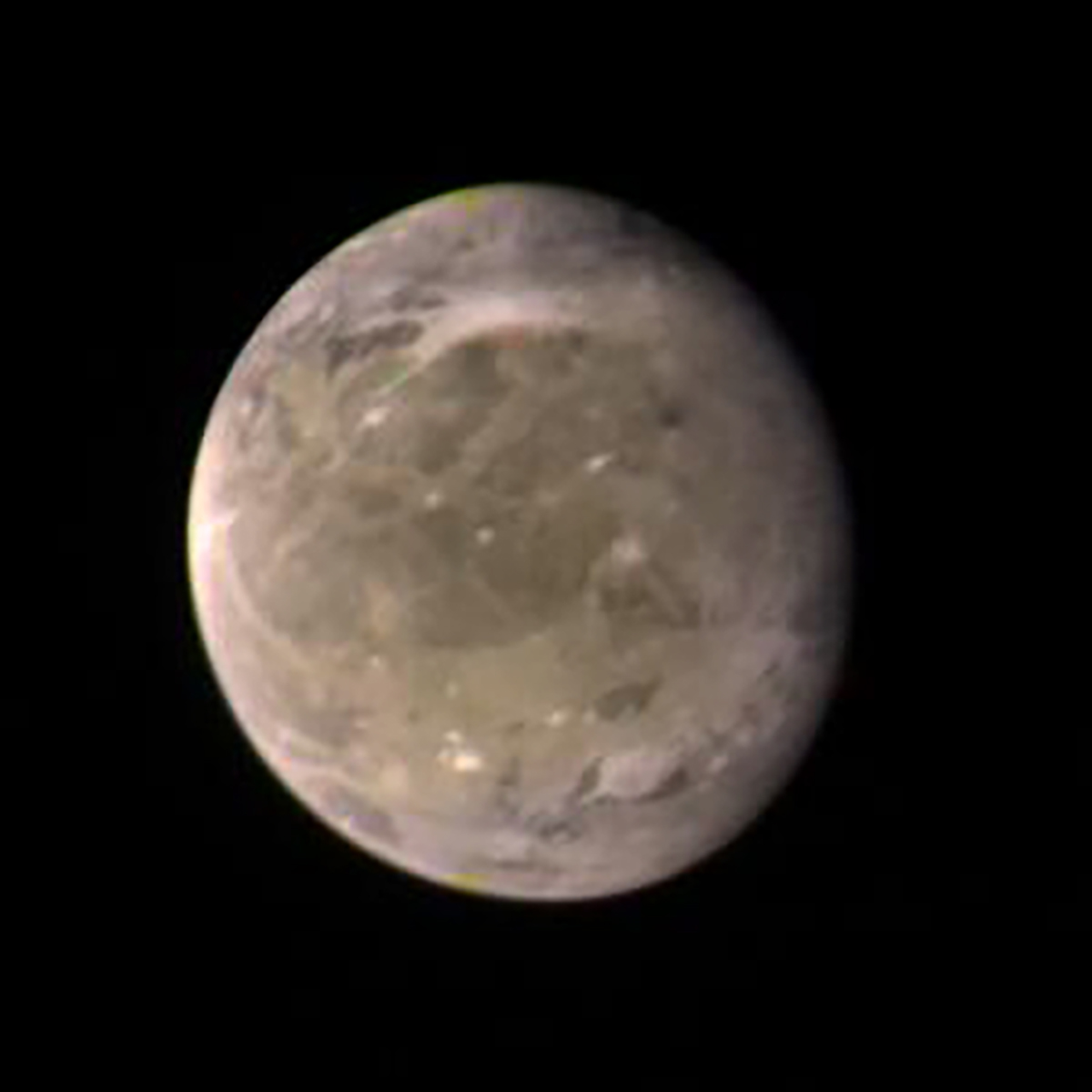
Giant Ganymede is the largest planetary satellite in the Solar System, with an equatorial diameter of 5,270km, slightly pipping Saturn’s moon Titan.
Voyager 1 uncovered the presence of a thin atmosphere on Ganymede with a pressure equivalent to just one billionth of the sea-level pressure on Earth.
Images taken by the probe showed a terrain split between dark, heavily cratered ancient areas and brighter, more youthful patches intersected by ridges and furrows.
The dominant feature on Ganymede’s surface is the Galileo Regio, a 4,000km-wide dark patch big enough to cover the 48 adjoining US states.
This vast oval-shaped remnant of Ganymede’s primordial crust is punctuated by craters nicknamed ‘palimpsests’, after pieces of reused medieval parchment that allow the original, partly erased work to show through the new writing.
The region and its craters offer a tantalising glimpse of Ganymede’s past tectonic upheavals. Elsewhere, younger craters exhibit dark rays, extending for hundreds of kilometres across the surface.
Callisto
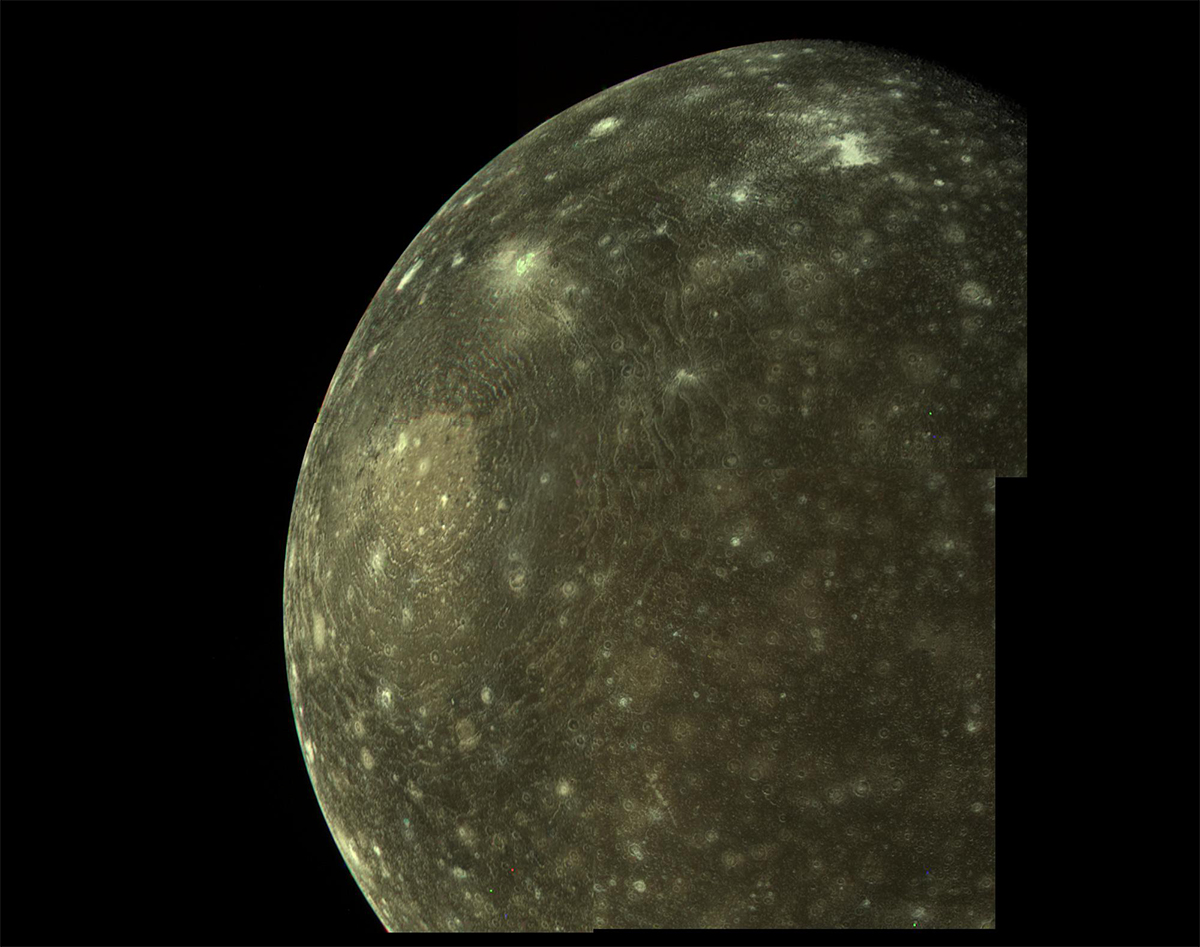
Callisto, although 8% smaller in equatorial diameter than Ganymede, was expected to be similar, as both moons are approximately half-water and half-rock and, unlike Io, are far enough from Jupiter to escape serious magnetospheric bombardment.
Voyager 1 saw Callisto on the outward leg of its journey and found a surface without high mountains or deep ravines but dominated by the 600km-wide bullseye of the Valhalla impact crater and its surrounding array of concentric rings.
Vast tracts of heavily pitted terrain revealed a world whose origin may stretch as far back as the accretional stages of the giant planets themselves, some 4.5 billion years ago.
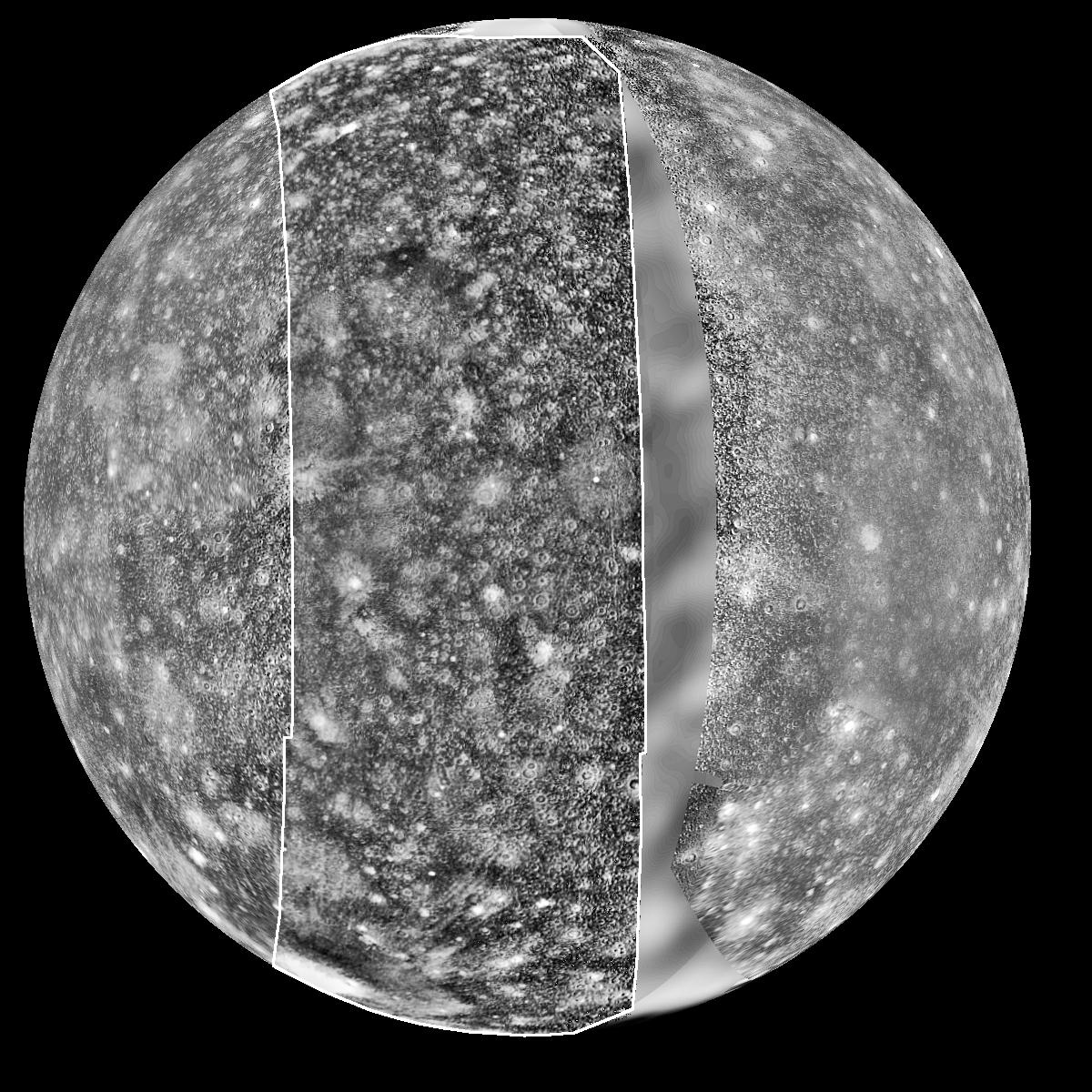
‘Large’ craters, exceeding 150km in diameter, were conspicuously absent, however, leading to theories that Callisto’s ice-rock composition had somehow altered the ability of its thin crust to support them.
Even at the time of the Voyager encounters, it was argued that ice floes over millions of years probably filled and obliterated craters of this size.
Europa
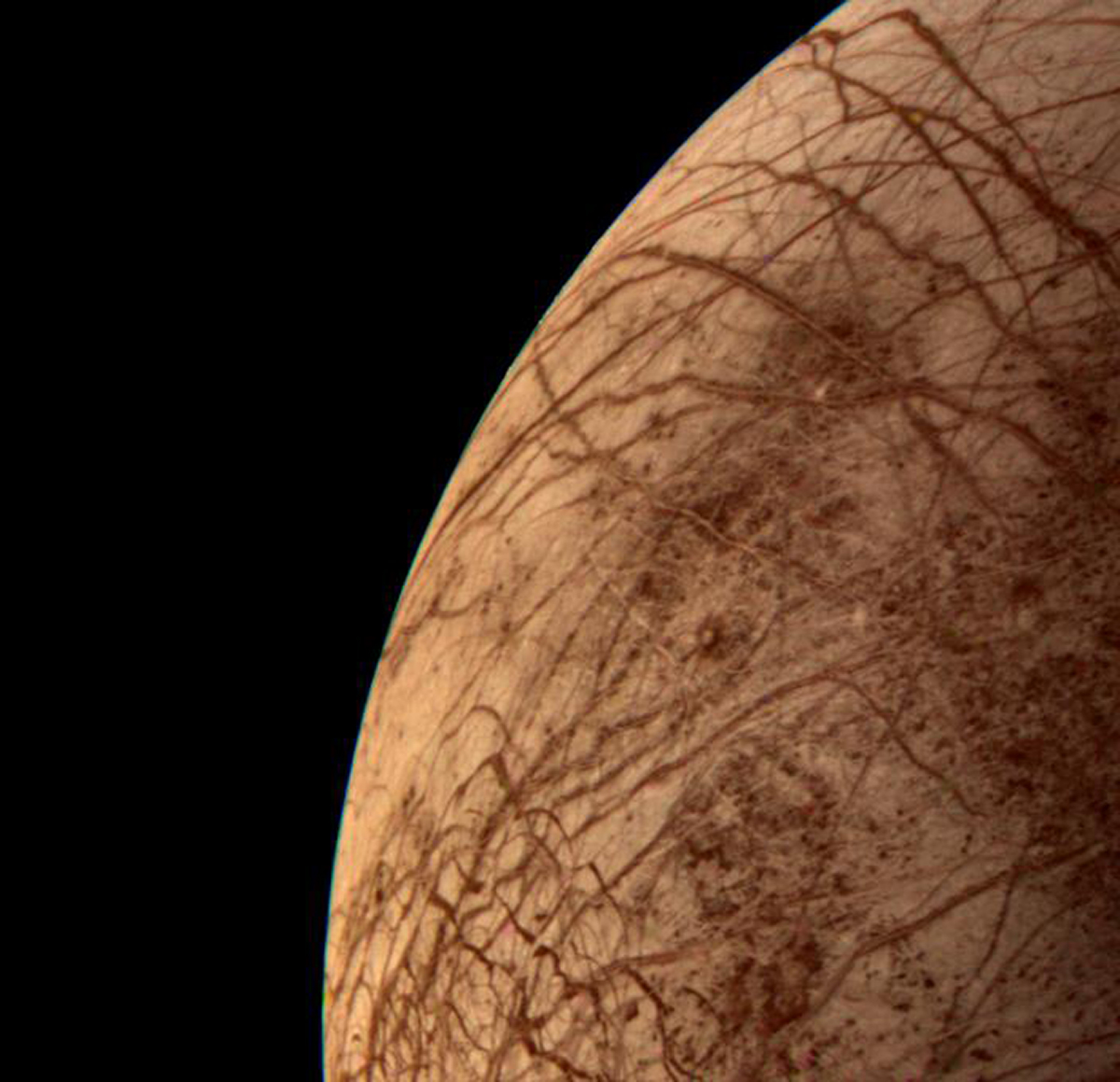
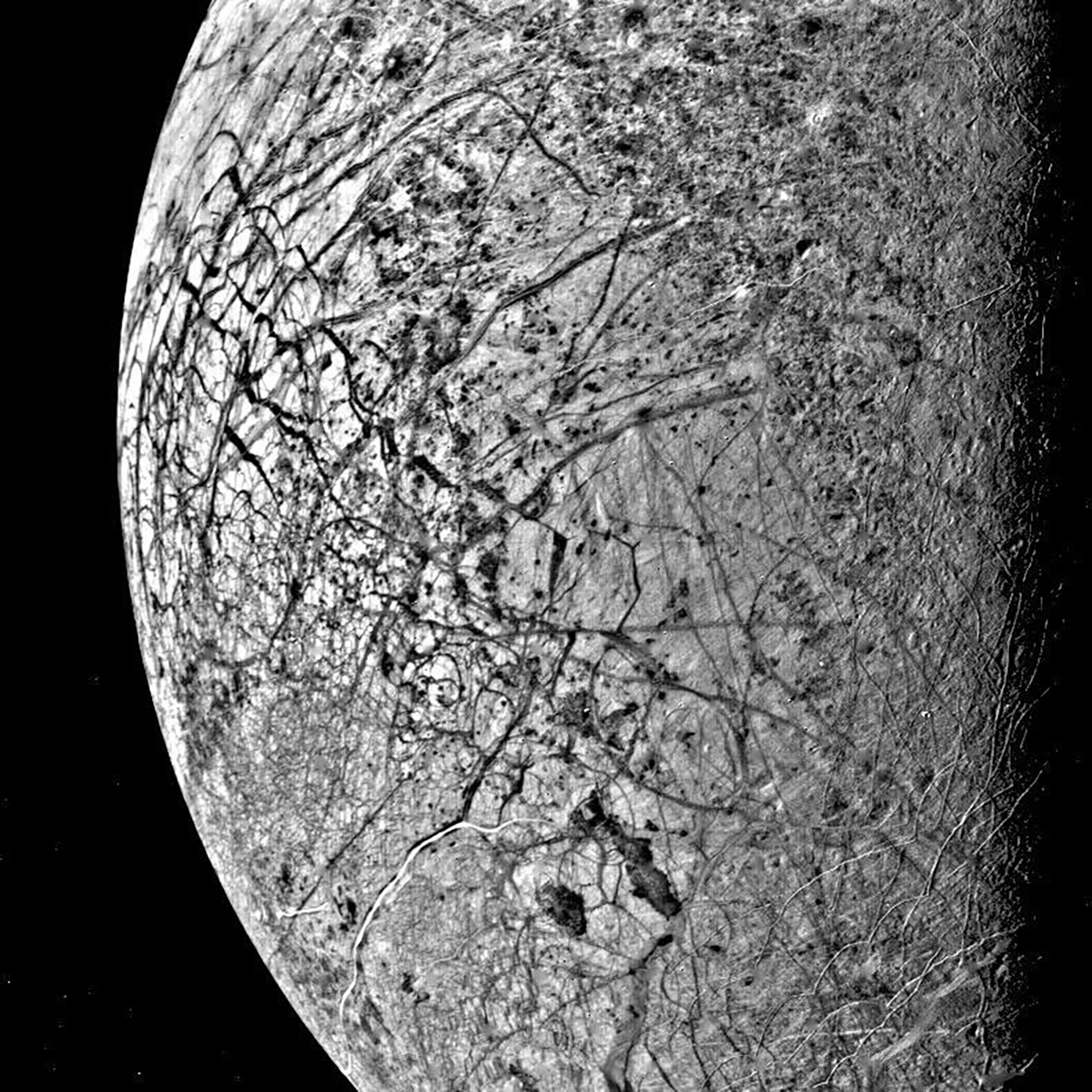
As for Europa, the two spacecraft saw the smallest Galilean moon as a highly reflective globe, reminiscent of a “string-wrapped baseball”.
It was a description inspired by the moon’s striking linear features, from its scalloped ridges to meandering dark stripes that crisscrossed the surface for thousands of kilometres, while mysterious ‘triple bands’ made up of two parallel ridges, separated by a depressed central gorge.
One of the few craters on Europa is 26km-wide Pwyll, which is surrounded by bright rays of ejecta that run for hundreds of kilometres out from its central basin.
Interestingly, the Pwyll impact seemed to have occurred on a particularly thin portion of the crust, for iceberg-shaped chunks of subsurface material protruded from its floor.
Dark areas, nicknamed ‘maculae’, were identified as potential upwellings from deep within Europa’s interior, while the side of the moon, which faces away from Jupiter was characterised by huge, wedge-shaped bands, many kilometres long.
More to discover
The Voyagers’ discoveries at Jupiter underlined the unpredictability of planetary exploration, for the largest planet in the Solar System had begrudgingly surrendered only a handful of the mysteries it held.
For the Voyager scientists, it had been a once-in-a-lifetime experience.
NASA’s associate administrator for space science Thomas Mutch likened it to “being in the crow’s nest of a ship during landfall and passage through an archipelago of strange islands”.
Volcanism on Io, colossal polar aurorae, along with unknown and unseen rings and moons could never have been confidently predicted before we turned our knowledge-gathering capabilities over to the Voyager robots, millions of kilometres from home; robots whose findings rewrote the textbooks on Jupiter for the next quarter of a century.
