Spoons don’t float in the air – and they don’t float on Mars, either!
Here’s a nifty little science experiment you can do right now. Take a spoon, hold it out in front of you and let it go.
You’ll notice that the spoon immediately falls to the ground, rather than floating unsupported in mid-air. It’s a very good piece of evidence for the existence of gravity.
Now, given that Mars has around 38% of Earth’s gravity, you’d expect a similar thing to happen there, wouldn’t you? And you’d be entirely correct.
More on Mars
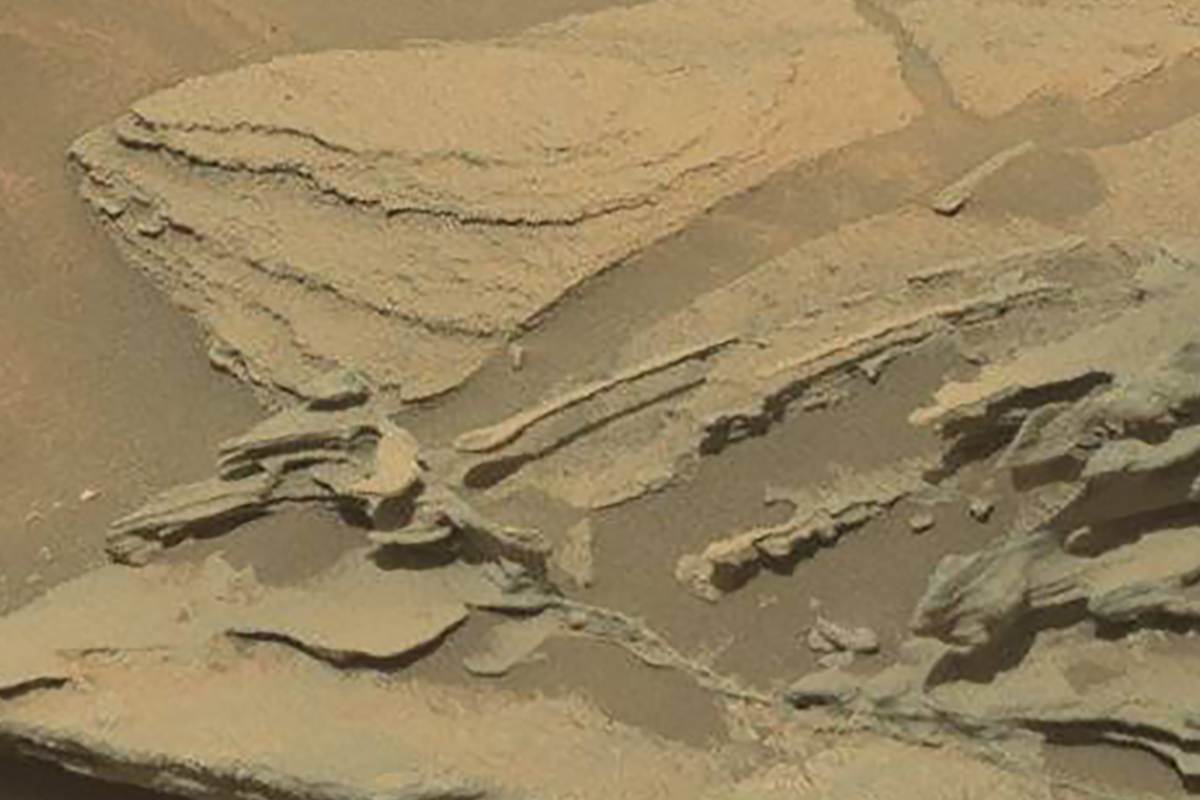
Somehow, though, this didn’t stop certain online communities getting very excited back in 2015, when pictures sent back by NASA's Mars rover Curiosity appeared to show a large spoon floating above the Martian surface.
This has since become quite well-known as the strange 'floating spoon' on Mars.
Some have even argued it's an artefact that proves intelligent life of some kind had once called the Red Planet home.
What the Martian floating spoon really is
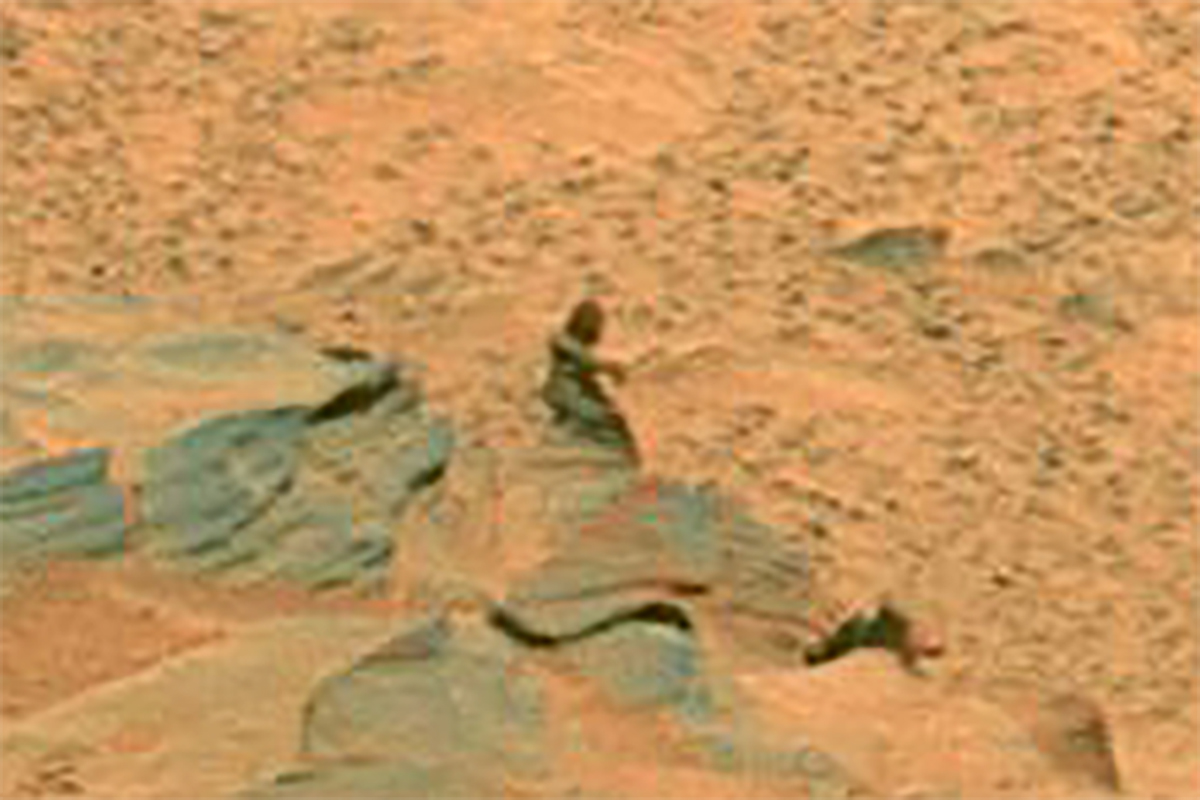
Clearly, the excited online commenters in question had never read our articles on the ‘robed figure’, the ‘doorway’ or the 'face' that have also been spotted on Mars, or they might have come up with a more sensible explanation!
For yet again, the truth turns out to be much more prosaic and straightforward.
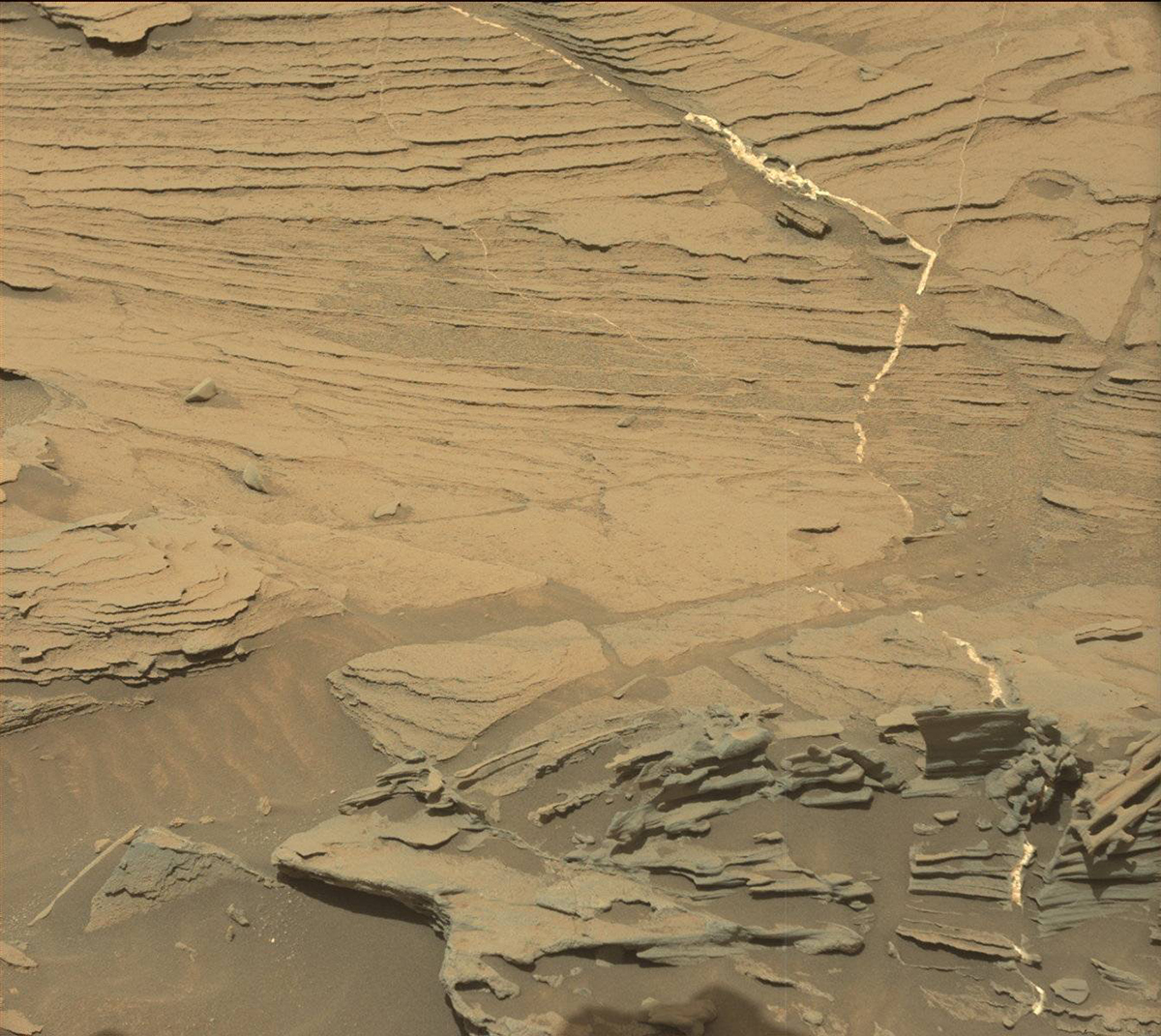
The alleged ‘spoon’ is simply a rather unusual rock formation that was photographed in Gale Crater on Mars during Sol 1,089 on 30 August 2015.
In this case, it's believed the formation was carved out of soft rock by Martian winds.
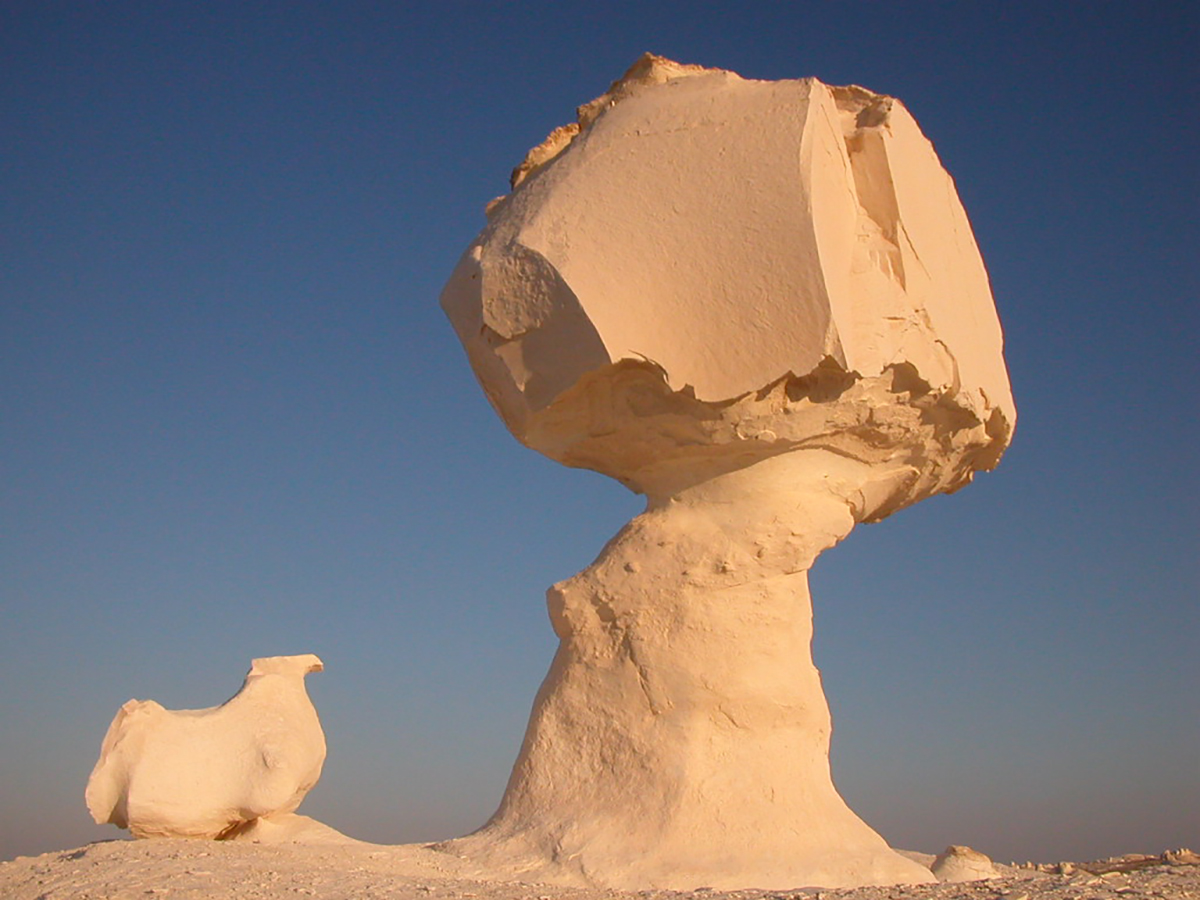
Scientists call such objects ‘ventifacts’ – the name coming from the Latin for ‘wind’ and ‘a thing that that has been made’ – and they can be found on Earth as well as on Mars.
Egypt’s White Desert National Park is home to a particularly fine example – a large outcrop of chalk that the wind has carved into a shape roughly approximating that of a mushroom.
Why we see strange objects on Mars
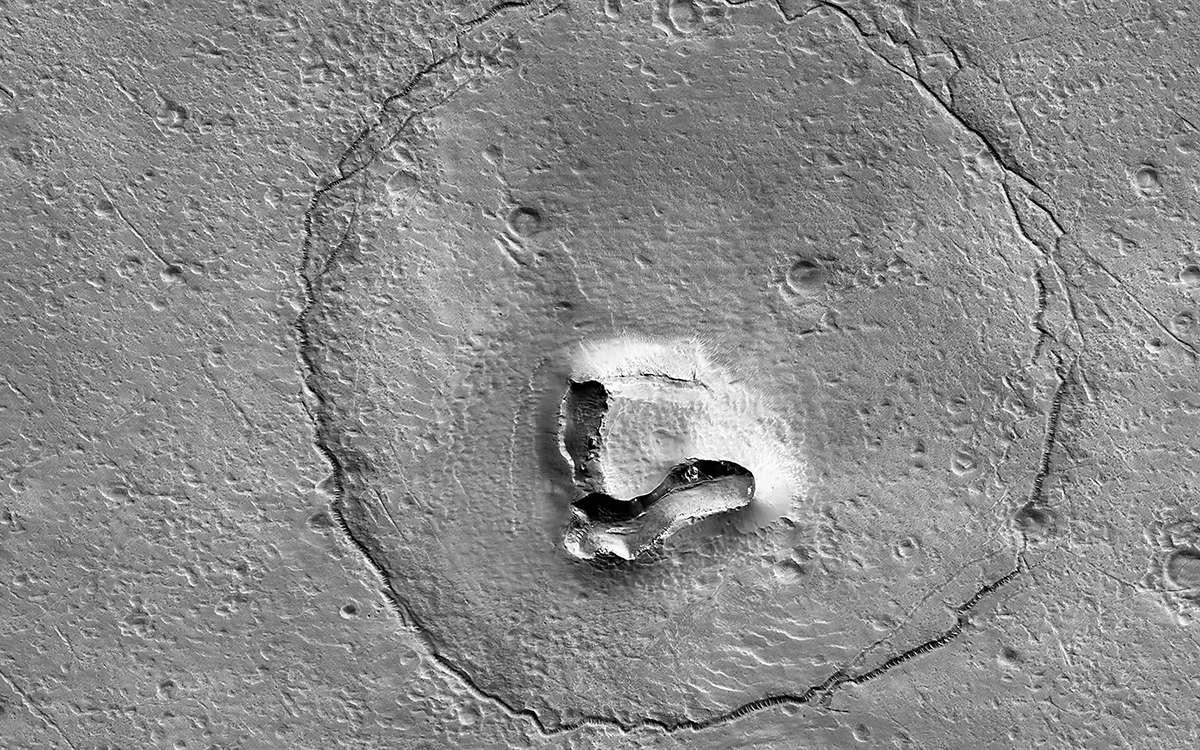
We’ve already mentioned the ‘robed figure’ and the ‘doorway’ that people have spotted in images of Mars, but those are just two of a long list that also includes faces (both a human face and that of teddy bear), a bunch of flowers, a crab, the Star Trek logo and a book!
These objects turned out to have a variety of real-world explanations: some were simple optical illusions, some could be explained by geological processes, some were a result of imaging artefacts.
But the reason we ‘see’ such objects is always the same: a perceptual phenomenon known as ‘pareidolia’.
Pareidolia is, in itself, a kind of artefact – a relic of humanity’s existence prior to the emergence of civilisations in the past 10,000 years or so.
For somewhere between 90,000 and 990,000 years before that, anatomically modern humans were living in the wild, and the ability to spot a predator’s face lurking in the bushes, or their feet sticking out from behind a rock, could mean the difference between life and death.
Accordingly, humans got very good at detecting patterns. But an inevitable corollary of that ability is that our advanced pattern detection systems sometimes throw up false positives.
If you’ve ever looked at an inanimate object (a litter bin, a radiator, the core of an apple or the knots in a tree trunk, for instance) and made out the pattern of a face – that’s pareidolia.
Pareidolia is not, it should be stressed, a delusion or an hallucination – it’s just part of the human condition.
So if you look at the picture above and see a spoon – don’t worry, it’s not a sign that you’re losing your senses, it’s just you being human.