
When the full Moon rises tonight, it marks the appearance of the 2026 Flower Moon, and looks ahead to the Blue Moon we'll get at the end of May.
'Flower Moon' is the name given to the May full Moon because it's visible at the height of spring, when nature is abloom.
Here are 9 facts and top tips for the 2026 Flower Moon for beginners, including how to see it and why it's not the only full Moon we'll get in May this year.
More on the Moon

Flower Moon is an apt full Moon nickname
Each of the monthly full Moons has acquired multiple informal nicknames throughout history, each of which reference key events occurring in nature during the month in question.
April's full Moon is known as the Pink Moon, for example, as a reference to the pink flowers that begin to appear as we enter springtime.

June's full Moon is the Strawberry Moon because June is the month when strawberries are typically abundant.
And May's full Moon is known as the Flower Moon because it appears during peak springtime, when flowers are blooming all around us.

Other nicknames commonly given to the May full Moon also reflect how it's visible during the height of spring, such as:
- Planting Moon: a reference to the sowing of seeds at this time of year
- Milk Moon: reflecting the heightened activity in farming and livestock
- Hare Moon: because hares are active during springtime
- Budding Moon: a nod to new growth appearing on plants and trees
It's worth pointing out, however, that these informal nicknames really are just nicknames, and don't indicate that the full Moon will look any different .
By and large, one full Moon is indistinguishable from the next. The Moon may look slightly bigger than usual if it's closer to the horizon, or can even sometimes look slightly redder (more on both of those points below).
But a Strawberry Moon is not strawberry-coloured and a blue Moon is not blue!
It rises in the southeast after sunset
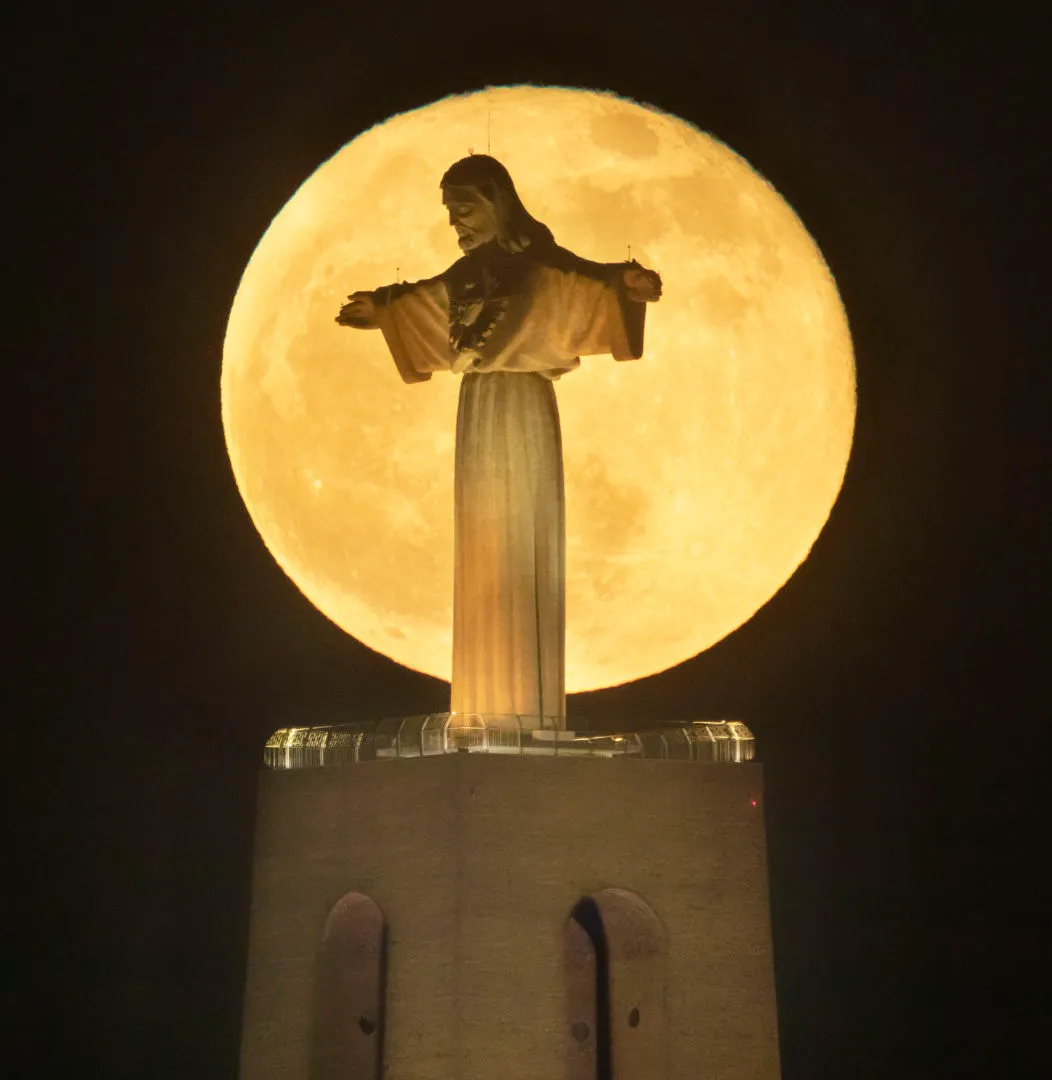
A full Moon occurs when the Moon is on the opposite side of Earth to the Sun, meaning the whole of the Earth-facing side of the Moon is basked in sunlight.
As a result, the Moon's path across the sky appears to mirror the Sun's path across the sky.
So, on 1 May as the Sun is sinking in the northwestern sky, the full Flower Moon will be rising in the southeastern sky.
Another effect of the full Moon mirroring the Sun is that, because the Sun rises quite high in the sky during springtime, the full Moon remains quite low.
This is in contrast to the winter months, when the Sun is low and full Moons are nice and high.
As a result, you'll need a relatively clear southern horizon to be able to watch the full Moon rise, then track it across the southern sky before it sets in the southwest as dawn breaks.
Flower Moon rise times across the globe
Key Flower Moon 2026 rise times for North America, UK and Ireland, Europe and Asia.
| Region | City | Moonrise (local time) |
|---|---|---|
| North America | New York City | 20:16 |
| Toronto | 20:48 | |
| Los Angeles | 20:03 | |
| UK & Ireland | London | 20:46 |
| Edinburgh | 21:21 | |
| Cardiff | 20:59 | |
| Belfast | 21:27 | |
| Dublin | 21:19 | |
| Europe | Paris | 21:24 |
| Berlin | 20:53 | |
| Madrid | 21:20 | |
| Australia | Sydney | 16:39 |
| Asia/Middle East | Dubai | 18:42 |
| Singapore | 18:46 | |
| New Delhi | 18:48 |
Watch it rise and it may look enormous
Every full Moon has roughly the same apparent size in the sky.
Some full Moons occur when the Moon is closest to Earth in its orbit around our planet, and when these 'supermoons' occur, the full Moon technically does have a bigger apparent size in the sky.
But in reality, the difference between a supermoon and a regular full Moon is indistinguishable with the naked eye.
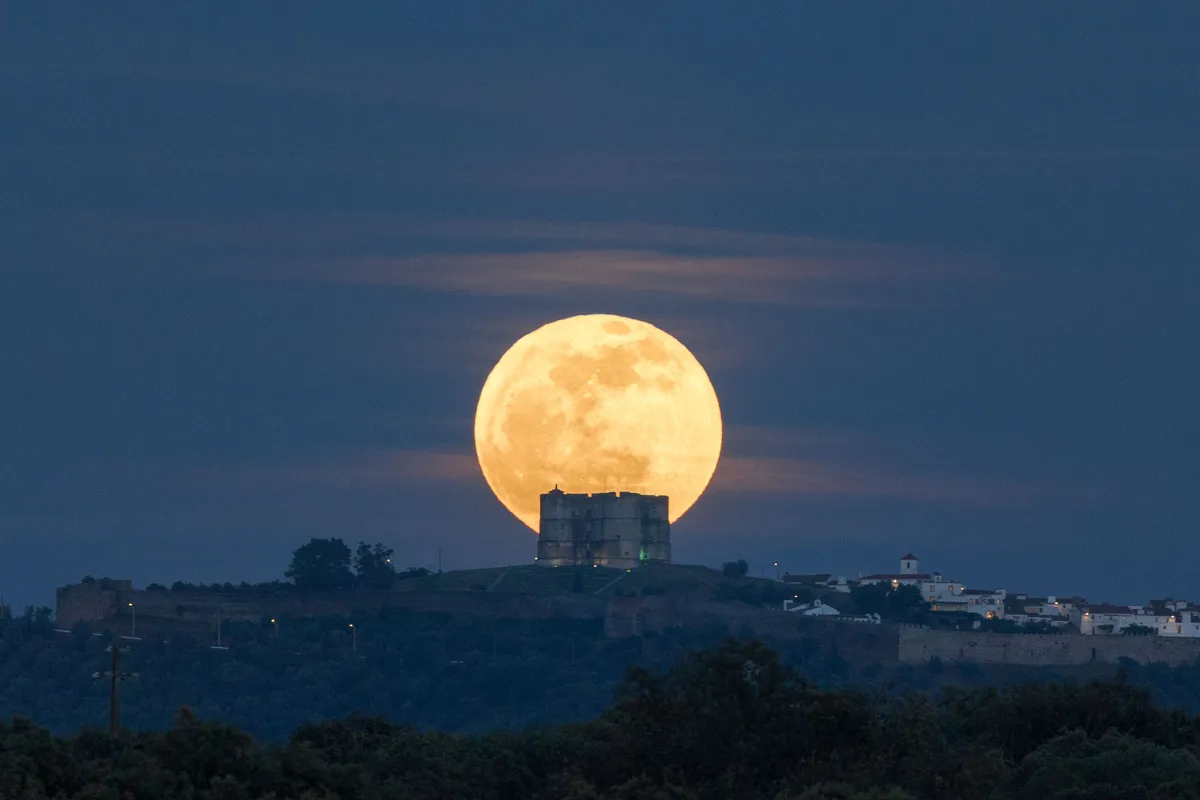
However, sometimes the Moon does look enormous when it's close to the horizon, and this is a well-known effect called the Moon illusion.

The 'Moon illusion' is the name given to how a low-down full Moon looks much bigger than normal.
If you've ever seen the Moon illusion in full effect, it can be quite startling. A full Moon perched on the horizon can look enormous.
But this is all just an optical illusion, and it seems no-one has been able to pinpoint exactly why it occurs.
One explanation is that it's a result of how we perceive the 'dome' of the night sky as a flat canvas above our heads, affecting our perception of objects on the horizon.
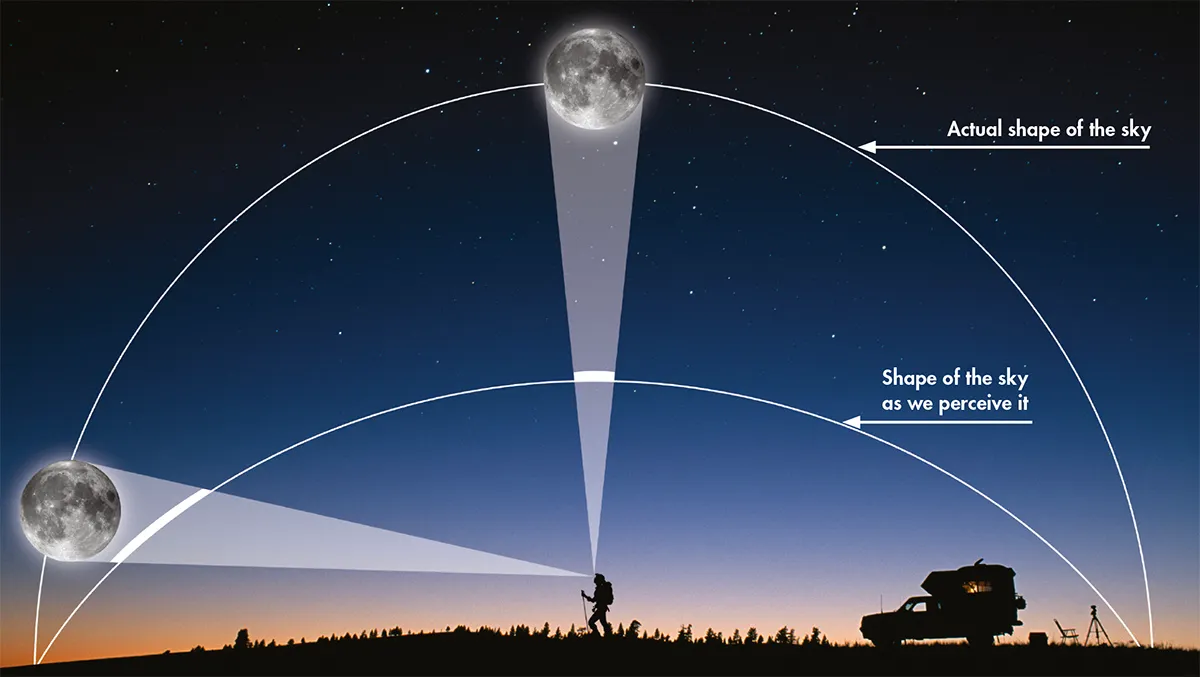
Another explanation is that a full Moon that's low-down appears to dwarf foreground objects like tall buildings and trees, making it seem like the Moon is bigger than normal.
Watch the Flower Moon 2026 rise above the horizon and ask yourself: "does it look bigger than normal?" If so, you've witnessed the Moon illusion!
If you have a digital camera, read our photography guide and find out how to photograph the Moon illusion.
The Moon may look orange or red

The Strawberry Moon will not look red, despite its name, just as the Pink Moon will not look pink.
But sometimes the Moon may appear slightly orange-hued when it's low on the horizon, standing in contrast to the bright, almost-white glow visible when it's high in the night sky.
A low-down Moon appears orangey-red for the same reason a rising Sun appears orangey-red.
It's because, when a celestial object is low on the horizon, its light needs to pass through a greater thickness of Earth's atmosphere before reaching us.
That means more more blue and violet light (shorter wavelengths of light) is scattered by Earth's atmosphere and, consquently, the light that does make it through the atmosphere is towards the red end of the spectrum.
Put this together with the Moon illusion, and a low-down Moon may appear both enormous and orange-coloured, making for a great observing and photographic opportunity.
This is the first of two May full Moons

From Earth, we see a full Moon roughly every 29.5 days. And because the 2026 Flower Moon rises on 1 May, that means there's enough time for another full Moon to appear within the same month, the second one occurring on 31 May.
That makes for two full Moons in May 2026, and makes the 31 May full Moon a so-called 'blue Moon'.
However, it isn't a true blue Moon in the astronomical sense.

The astronomical calendar is split into four seasons, which are defined as the periods between solstices and equinoxes.
Most of the time, we only get three full Moons within the three months of an astronomical season.
But sometimes there might be four full Moons in an astronomical season, and during such a season, the third of those four full Moons is an astronomical blue Moon.
Somewhere along the way, however, it was incorrectly stated that a blue Moon is a second full Moon in a calendar month.
And, presumably because this 'monthly blue Moon' definition is easier to understand, it's the one that seems to have stuck.
So, while the 31 May 2026 full Moon is a monthly blue Moon, it isn't a true blue Moon in the astronomical sense.
Look out for a halo around the full Moon

You might see a strange, fuzzy ring around the Flower Moon, and this is a relatively common optical effect at a full Moon.
The ring – known as a 'lunar halo' – is caused by the refraction of moonlight as it passes through ice crystals in Earth's upper atmosphere, creating a circular formation.
In effect, these ice crystals bend light like a camera lens, and the diameter of the lunar halo is always 22°, which is why you'll hear it referred to as a '22° halo'.
The most common explanation of this consistent diameter is because of the hexagonal shape of the crystals, which means they always refract light to the same extent.
Lunar haloes are best seen during cold weather and when there's a layer of thin cirrus or cirrostratus clouds high in the atmosphere.
Make the most of a weekend full Moon

The 2026 Flower Moon rises on Friday night and is visible past midnight, until the early hours of the Saturday morning.
That means, if you don't work at the weekends, there's ample time to stay up a bit later than normal and take in the full Moon spectacle.
And if you're a weekend early-riser, you might be able to spot the full Moon setting in the southwest as dawn is breaking.
The Moon will still be effectively full on Saturday evening, giving us two weekend nights to enjoy the full Moon.
If you do spot the Flower Moon in the very early hours on Sunday morning, you'll see a bright star to its left. That's Antares, the brightest star in Scorpius.
Scorpius is very low when seen from the Northern Hemisphere, so it can be quite a challenge to spot.
But you may be able to find Antares on Sunday 3 May before dawn by using the full Moon as a marker, giving you well-earned stargazing bragging rights!
Observe, sketch, photograph
Hopefully you'll have a clear night or two this weekend and be able to watch the Flower Moon 2026 rise above the horizon, then track it until it sets in the morning.
There are numerous ways to enjoy a full Moon, other than simply observing it with the naked eye.
You could observe it through binoculars to get a closer look at its surface.
Granted, full Moon isn't the best time to observe detail on the lunar surface, because its craters and seas are washed out, but lunar rays are visible when the Moon is full, and are worth seeking out.

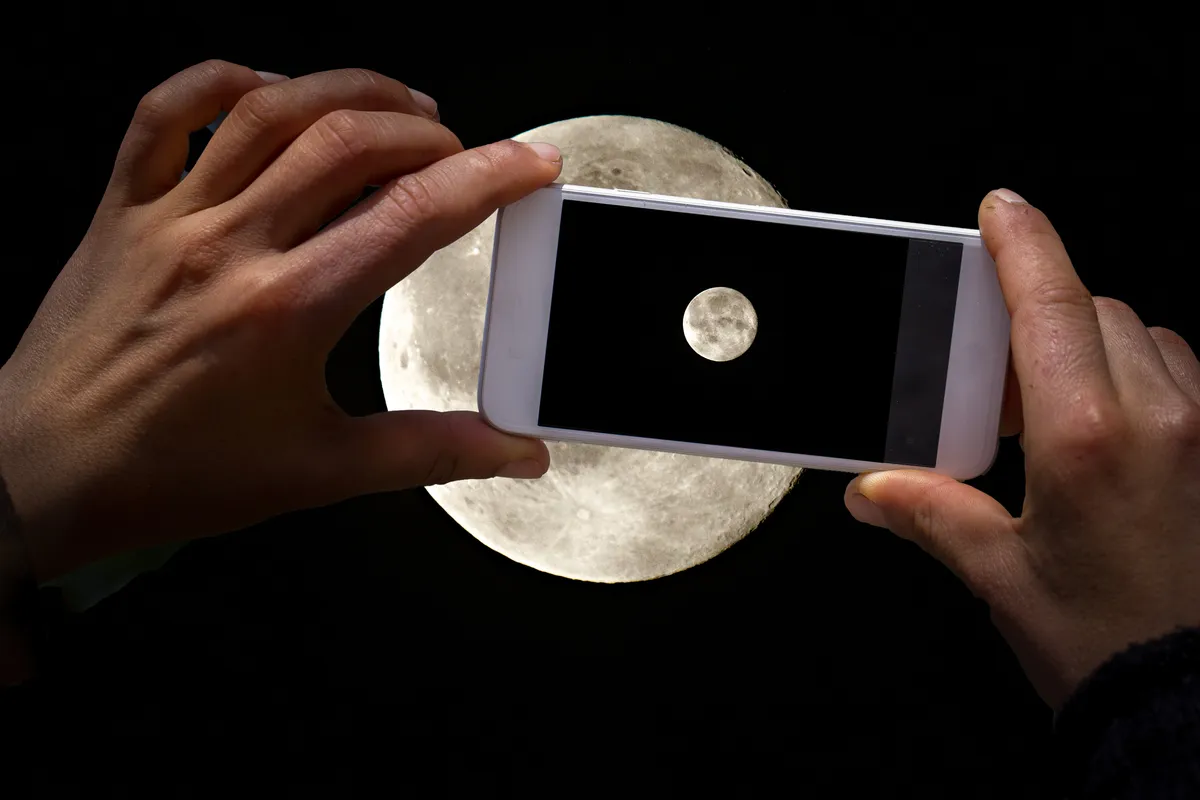
You could photograph the full Moon with a digital camera or even your smartphone. For advice, read our guides on how to photograph the Moon and how to photograph the Moon with a smartphone.
If you're observing with friends, have a go at sketching the Flower Moon and compare your efforts. Catch it low on the horizon near foreground objects to give your drawing a bit of context.
For more ideas, read our guide on how to make the most of a full Moon.
Share your observations, photos and sketched of the Flower Moon 2026 by emailing us at contactus@skyatnightmagazine.com

