
There's a full Moon visible this weekend, and it's something of a rarity.
This 'Blue Moon' or even 'Blue Micromoon' will be visible from sunset each night over the weekend, and will be visible at the same time as three Solar System planets.
That means there's a chance to see the Blue Moon at the same time as three bright planets, and they're all visible with the naked eye.
Here, we'll look at some of the key things to know about this weekend's full Moon and the best ways to enjoy it.
This is a Blue Moon
Because there was a full Moon on 1st May 2026, this 31st May full Moon is the second in the same month, making it a 'Blue Moon'.
However, this isn't a true Blue Moon in the astronomical sense. The true astronomical definition of a Blue Moon is the third full Moon in an astronomical season of four full Moons.
Nevertheless, a second full Moon in a calendar month has often referred to as a 'Blue Moon'.
But it's worth remembering its nickname is an indicator of its relative rarity. You shouldn't expect the Blue Moon to actually look blue!
It's a micromoon
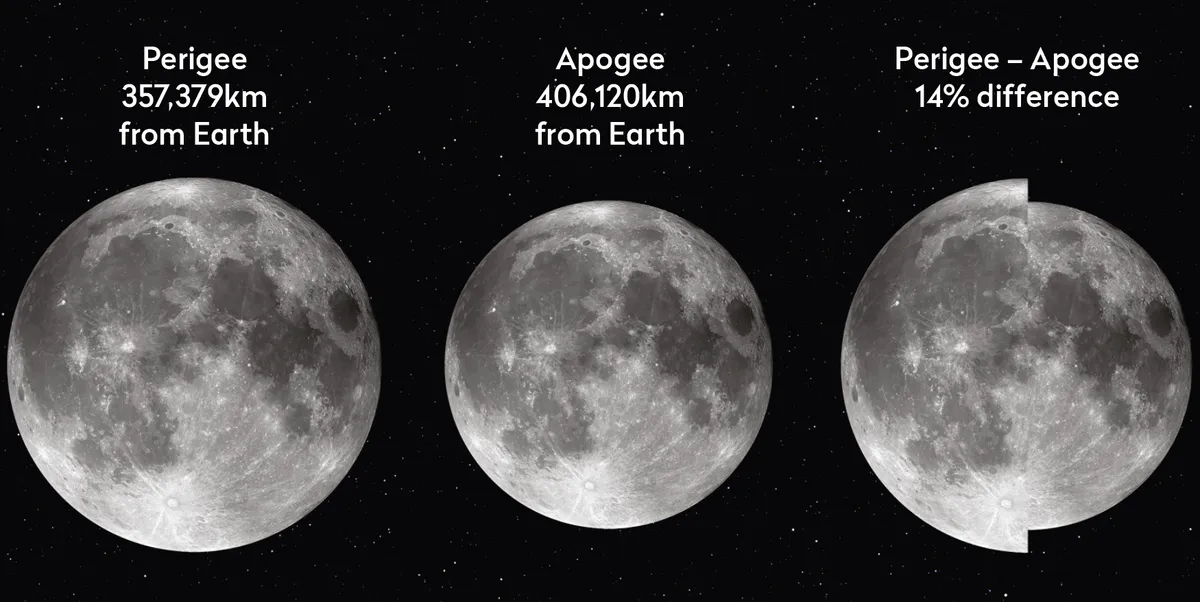
As well as being a Blue Moon, this weekend's full Moon is a micromoon.
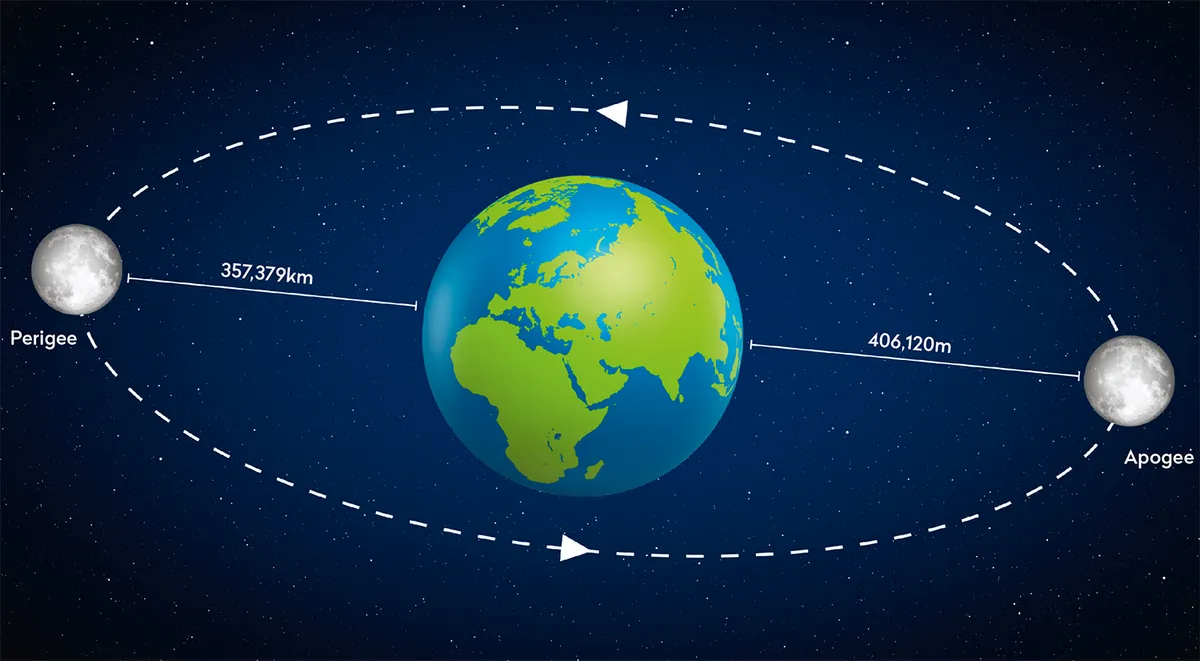
That's because the Moon's orbit around Earth isn't a perfect circle; it's elliptical or slightly oval-shaped.
And that means sometimes the Moon is closer to Earth than at other times.
When the Moon is at its closest point to Earth – known as perigee – it technically looks bigger and is known informally as a Supermoon.
When the Moon is at its furthest point from Earth – known as apogee – it technically looks smaller and is known informally as a micromoon.
That's why you'll hear this weekend's full Moon described as a Blue Micromoon.
However, in reality the difference between a 'regular' full Moon and a micromoon is imperceptible to the naked eye. You shouldn't expect it to look tiny!
See the full Moon rise at dusk
Because the full Moon is opposite the Sun in the sky, that means a full Moon will always rise as the Sun is going down, wherever you happen to be observing from.
Similarly, the full Moon will rise in roughly the opposite side of the sky as the Sun is setting.
That means the 31st May full Moon will rise in the southeastern sky around dusk. Find yourself a clear southeastern horizon and see if you can spot it rising.

See Mercury, Venus and Jupiter at the same time
Three planets will be visible in the evening sky at the same time the full Moon is rising, every night over the weekend 29–31 May.
If you're observing the full Moon in the southeast after sunset, turn round and look to the west-northwest, where you'll see Venus and Jupiter appearing like bright 'stars' in the evening sky.
Mercury is there too, but harder to observe. You'll need a clear, flat view to spot it right on the northwest horizon as soon as the Sun has set.
Be sure only to look once the Sun has fully set, to avoid accidentally looking at the Sun with your naked eye.
Observe the Moon with binoculars

While the sight of the full Moon rising is magnificent when viewed with the naked eye, even a modest pair of binoculars will get you a closer look.
If you have a pair of binoculars, give them a clean and get them ready for the full Moon.
Astronomers may tell you a full Moon is the worst time to observe the Moon, and that's because its surface features are lost in the lunar glare.
But if you've never pointed binoculars at the night sky before, a full Moon is a good target for complete beginners
You may be able to spot lunar rays on the surface. These are the scars of ancient impacts on the Moon, the easiest to see being those around crater Tycho and crater Copernicus.
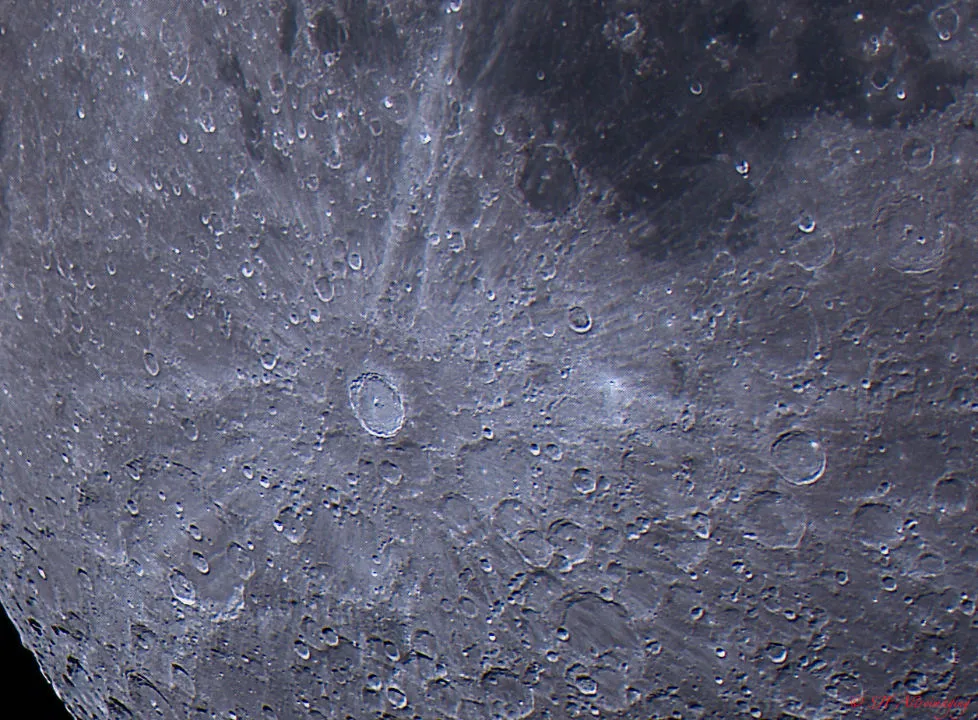
You may find yourself returning again and again, using your binoculars to track features on the Moon.
Keep observing the Moon over the coming days, as the waning phases will provide interesting shadows to spot on the surface.
Read our full Moon guide for advice on what to see.
If you do fall in love with observing the Moon, read our guide to the best features to observe on the Moon.
See the Moon illusion

Have you ever seen the Moon look enormous when it's close to the horizon? This is a well-known phenomenon known as Moon illusion.
There is no established reason as to exactly why the Moon illusion occurs, but it could be due to the Moon's position low on celestial sphere making it seem bigger, as shown in the diagram below.
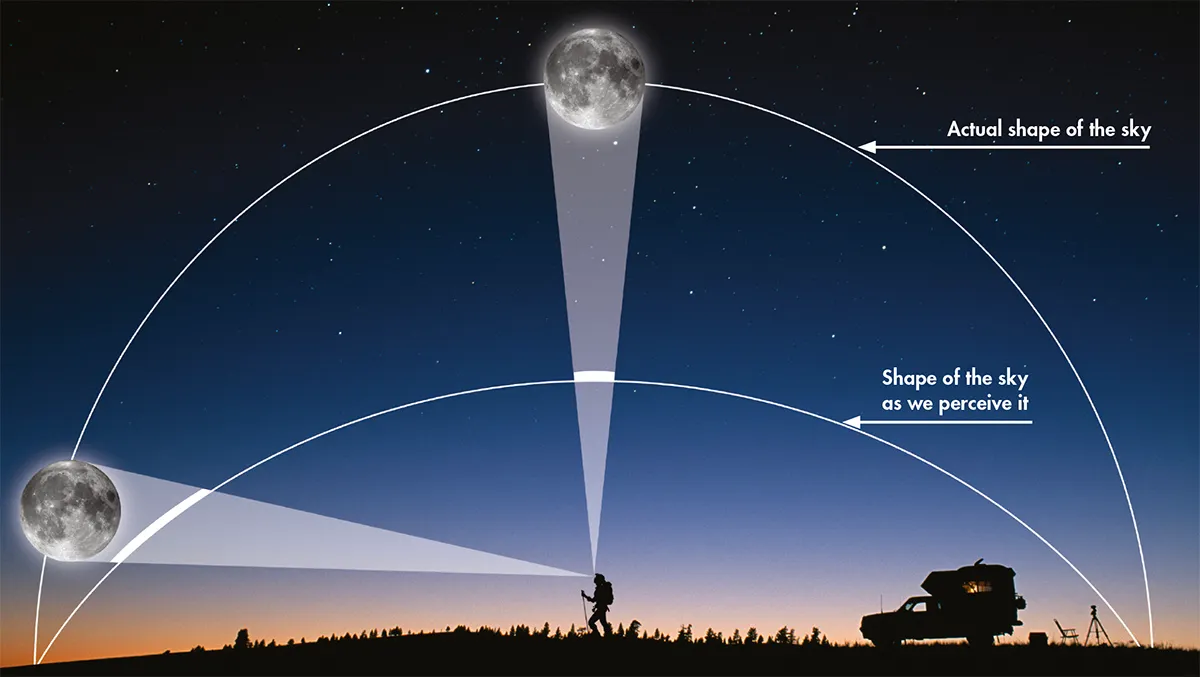
Or it could be because a low full Moon is often seen next to tall foreground objects like trees and buildings, making it appear bigger.
Get yourself a clear, southeastern horizon and observe the full Moon rise at dusk. Does it look bigger than expected?
Hold your arm outstretched and you'll find you can easily cover the Moon with just your thumb, thus breaking the illusion.
Photograph the Moon with a DSLR camera

A DSLR camera is a great way of photographing the Moon.
For advice on equipment and tips and techniques, read our complete guide on how to photograph the Moon.
Photograph the Moon with a smartphone

If you don't have a DSLR camera, it is possible to photograph the Moon with your smartphone's camera.
Find out more in our guide how photograph the Moon with your smartphone camera.
Sketch the Moon
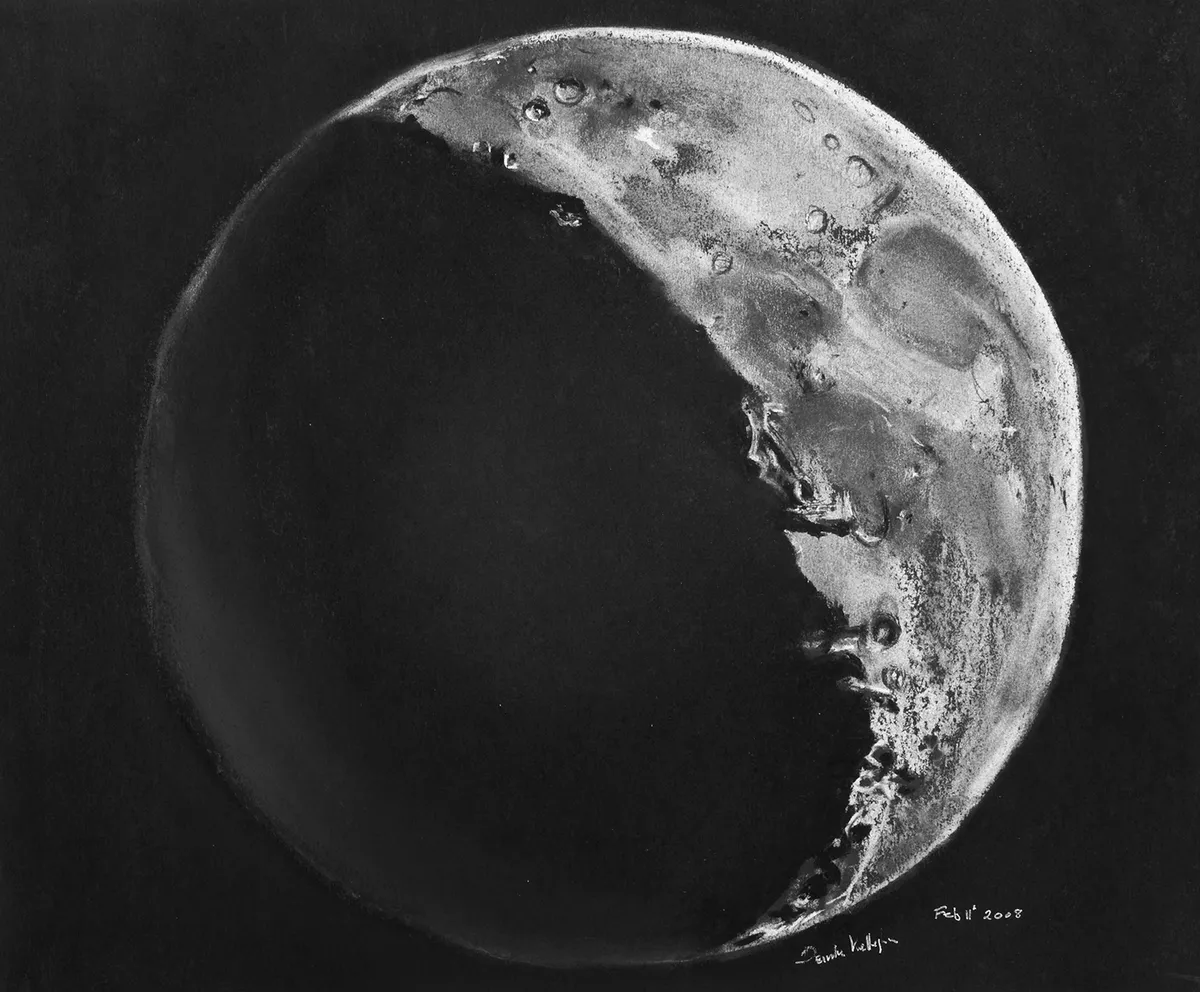
If you don't have a camera to hand, sketching the Moon is a great way to record what you can see on the lunar surface.
Find out more in our guide on how to draw the Moon
Share your full Moon observations, sketches and images with us by emailing contactus@skyatnightmagazine.com

