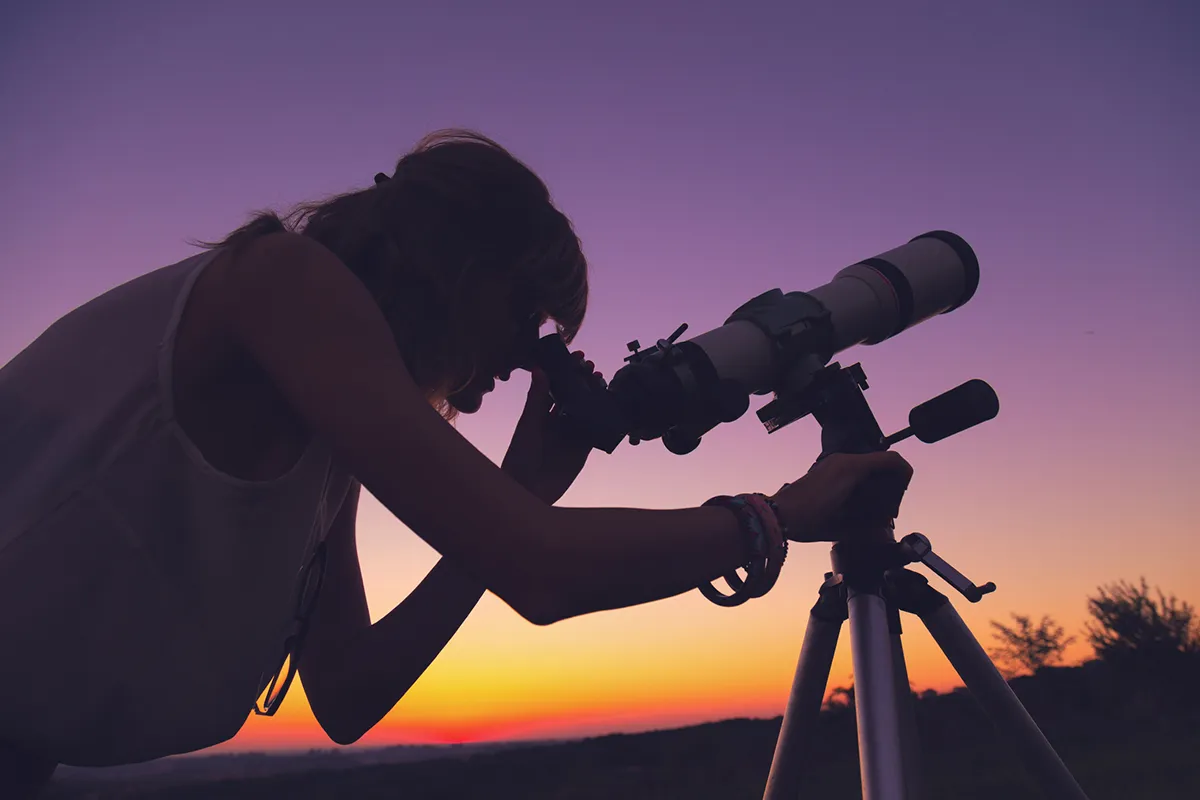
This week, many stargazers will be out observing the early evening sky in the hope of catching the six-planet alignment.
As of late February 2026, six planets are above the horizon at once: Mercury, Venus, Jupiter, Saturn, Uranus and Neptune.
However, this isn't an easy planet alignment to see.
Mercury, Venus and Saturn, while technically visible with the naked eye, are low down in the west at sunset, which means they're swallowed by the glare from the setting Sun.
And as well as the setting Sun making them tricky to see, there's also an element of caution needed, as accidentally looking at the Sun could damage your eyesight.
For weekly stargazing advice sent to your email inbox, sign up to receive our e-newsletter

Neptune is currently sharing the same patch of sky as Mercury, Venus and Saturn, and you always need a telescope to see Neptune from Earth.
Given its proximity to the setting Sun, we would strongly advise against trying to observe Neptune through a telescope at the moment, as observing the Sun through an unfiltered telescope could seriously damage your eyesight.
More planet-spotting tips

You can see just how tricky it will be to spot Mercury and Venus in the image below, captured by James M from Kent, UK on 22 February 2026 just after sunset, 18:30 local time.
Mercury is low down in the sky, but Venus is even lower! It was below the skyline at the time James took the photo.
"I was hoping to see Venus," he says, "but it was too low by the time the sky was dark enough to see Mercury and Saturn."
- Find out more in our guide to the February 2026 planet alignment.

If you are looking for an easy naked-eye stargazing event this week and one that involves the brightest planet in the alignment, follow the Moon instead.
You'll be able to see the Moon hopping across the sky night after night, visiting some of the best and easiest celestial objects currently visible along the way.
Here we'll go through this week's Moon-hopping spectacle, and what you'll see.
Monday 23 February – Moon and the Pleiades

Tonight, the large crescent Moon is close to the Pleiades in the night sky.
The Pleiades is a beautiful, blue star cluster that looks like a 'smudge' in the sky to the naked eye.
Binoculars easily reveal its individual stars and bright blue nebulosity.
The crescent Moon and Pleiades are in the southwest by the time the Sun has set, and will get closer together as midnight approaches.
To their left, you'll see the constellation Orion. Over the coming nights, the Moon will hop right-to-left across the sky, getting closer to Orion.
Tuesday 24 February – Moon, Pleiades and Hyades
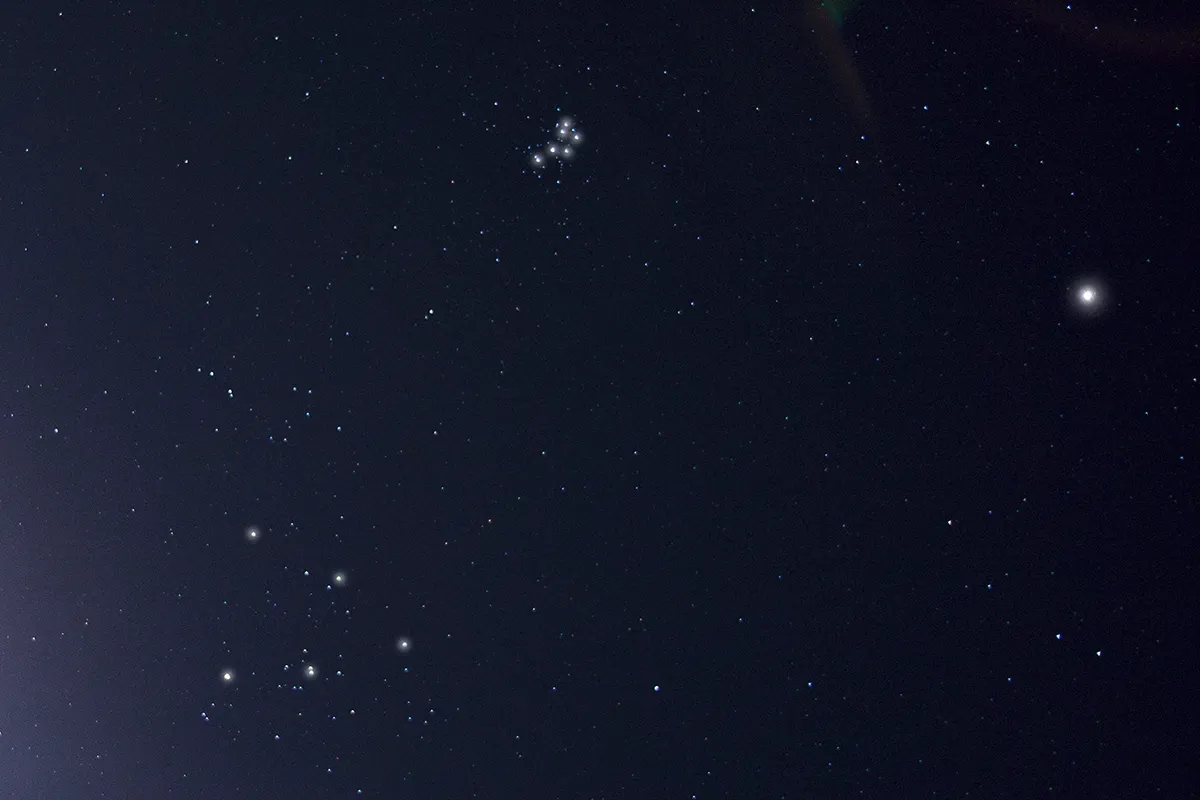
Tonight the Moon is a 'first quarter Moon', which means it's a quarter of the way through its cycle of phases. During this phase, the Moon appears half-lit from Earth.
This evening, the Moon is between the Pleiades and another star cluster, known as the Hyades.
The most prominent part of the Hyades is the reddish star Aldebaran, which is known as the 'red eye of the bull' because it's the brightest star in the constellation Taurus.
Aldebaran is a good marker for finding the Hyades because it sits within the cluster, from our perspective. It isn't actually part of the star cluster, but appears that way from Earth.
Wednesday 25 February – Moon and Orion
The Moon is now over half lit and right above the constellation Orion. We're getting closer to full Moon with each passing evening.
Look to the left of Orion and the Moon and you'll see a bright star high in the sky, beside two dimmer stars.
That bright 'star' is actually the planet Jupiter, which is the best planet to see in the night sky at the moment.
If you only see one planet in this six-planet alignment, it will likely be Jupiter. And if you have binoculars or a telescope, point them at Jupiter and see if you can observe any of its four brightest Moons.
The two dimmer stars to Jupiter's left are Castor and Pollux, the twin stars of Gemini.
Thursday 26 February – Moon and Jupiter

Tonight the Moon is big and beautiful and close to Jupiter.
You'll see the Moon and the planet in the western part of the sky after sunset.
Friday 27 February – Moon and Jupiter
Now the Moon is on the other side of Jupiter, compared to the previous night.
The Moon tracks eastward across the sky, night after night, and is currently making its way over to the east.
The Moon will be full Moon on 3 March 2026, and this is the so-called Worm Moon, which is a reference to the oncoming of spring and the re-appearance of earthworms as the ground begins to warm up.
Over the weekend, you'll be able to observe the Moon getting fuller and moving further east.
By 3 March, it will be opposite the Sun in the sky, rising in the east as the Sun sets in the west.
This is why we get a full Moon, because the Moon is on the opposite side of Earth from the Sun, so sunlight hits the Earth-facing side of the Moon full-on.
In some parts of the world, this will be visible as the 3 March 2026 total lunar eclipse.
Share your Moon observations and images with us by emailing contactus@skyatnightmagazine.com