A four-month run of supermoons kicks off this week with the rise of the November Beaver Moon.
The Beaver Moon reaches peak illumination on Tuesday, November 24, 2026 at 14:53 UTC / 09:53 ET, with the best evenings to watch it rise in the eastern sky being Monday, November 23 and Tuesday, November 24.
And the following supermoons are only going to get bigger and brighter.
This supermoon is the farthest from Earth of the four, with December’s Cold Moon (on December 23 and dubbed the 2026 Christmas Eve supermoon) being the biggest full Moon of the year.
That's followed by January’s Wolf Moon and February's Snow Moon in 2027, which are both supermoons too.
Here we'll reveal how to see the full Moon this week and why it's being called the Beaver Supermoon.
More on the Moon

Why it’s called the Beaver Moon
Each full Moon across the year has acquired informal nicknames that reference seasonal shifts in nature, like June’s Strawberry Moon or December’s Cold Moon.
November marks the moment when beavers are active building dams, digging winter dens and stocking up on food before the cold weather sets in.
However, there is a somewhat darker side to the Beaver Moon name.

Historically, November was also the time when beavers were sought for their pelts and hunted nearly to extinction.
However, reintroduction efforts have helped them make a comeback in recent years.
It's worth remembering that 'Beaver Moon' is just a nickname and doesn't indicate the November full Moon will look any different than normal.
Full Moon nicknames are really a reminder of how past societies and cultures used the lunar cycle as a natural clock to mark key moments in nature's calendar.

What Makes It a Supermoon
Because the Moon’s orbit around Earth is elliptical (slightly egg-shaped) rather than a strict circle, its distance from us constantly changes.
In true astronomical parlance, a supermoon is really a perigee syzygy Moon (or perigee full Moon).
- Perigee is the closest point in the Moon’s orbit to Earth (apogee is the farthest point)
- Syzygy is the alignment of three celestial bodies: here the Sun, Earth and the Moon.
At full Moon on November 24, 2026, the Moon will be around 360,765 km (224,168 miles) away from Earth, which is closer than its average distance of 384,400 km (238,855 miles).
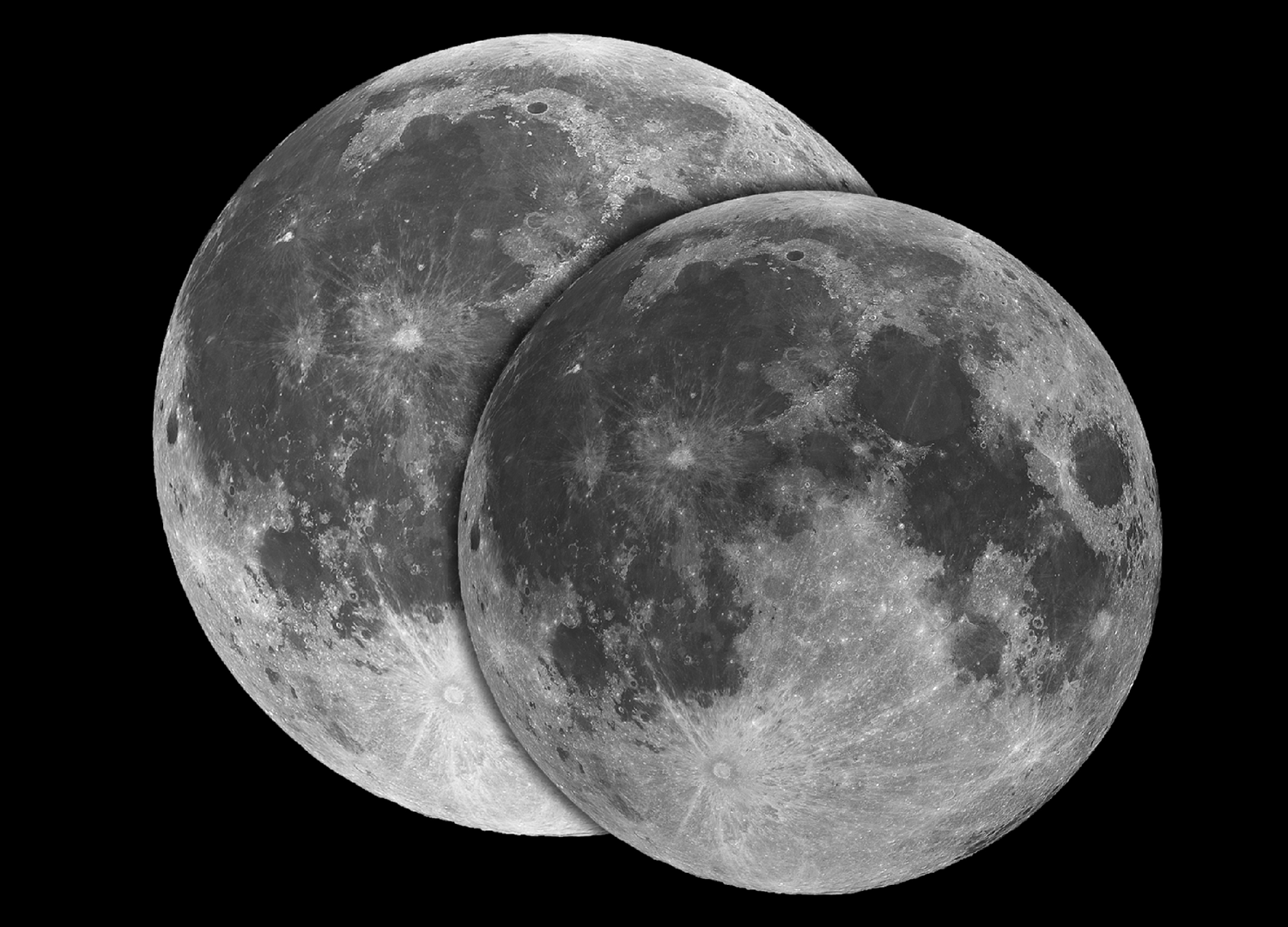
While a perigee full Moon can appear up to 14% larger and 30% brighter than an apogee full Moon, the size difference compared with an average full Moon is imperceptible to the naked eye.
Still, any full Moon is worth stepping outside for, especially if you can catch it rising in the eastern sky during the early evening twilight.
How to see it and what else to spot
You don’t need dark skies, a telescope or specialist gear to enjoy the Beaver Supermoon, though a clear eastern view will enable you to watch it rise above the horizon at dusk.
Look toward the east as the sky darkens on November 23 or 24. If you have trees, buildings or hills to the east, you'll need to wait a bit longer to see it rise above your horizon.
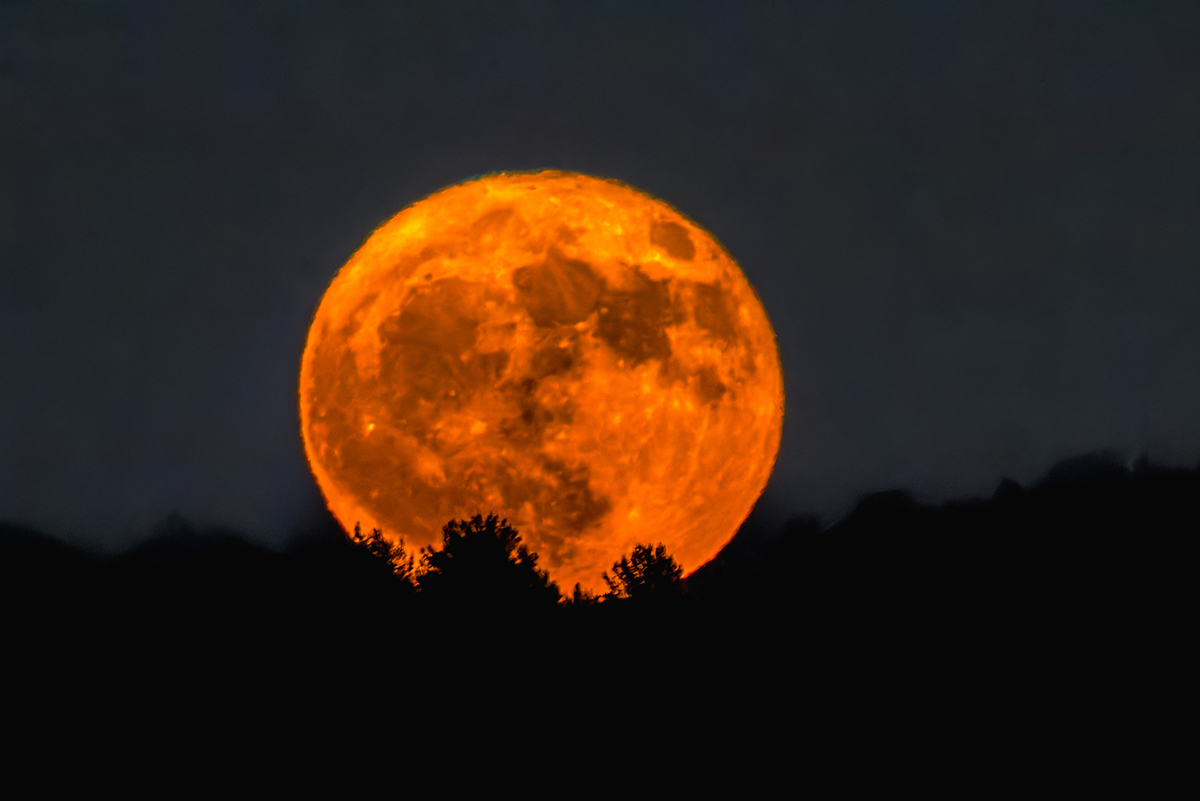
Low on the horizon, the Moon often looks giant next to foreground buildings and trees (known as the Moon illusion) and can take on orange or rusty-red tones as moonlight is scattered by the thicker part of Earth's atmosphere.
By around 22:00, the Moon will be climbing higher towards the southeast.
When the supermoon is high in the sky on November 23, look below and to the left and see if you can spot the Pleiades and Hyades star clusters.
They may be tricky to see, having to contend with that bright lunar glare, but they're there. Binoculars should help.
By November 24, the Moon sits between the two clusters.
Around midnight, Mars and Jupiter are rising in the east – following the path the Moon took earlier in the evening – while Saturn is setting in the southwest.
Binoculars or a telescope help pick out bright lunar ray ejecta systems radiating from ancient craters like Tycho and Copernicus.
Try capturing an image of the Moon with your smartphone, sketching the Moon or looking out for a lunar halo or moonbow.
Share your November 2026 supermoon images with us by emailing contactus@skyatnightmagazine.com