
Did you enjoy the meeting between the crescent Moon, Venus and Jupiter this week, mid-May 2026?
We've received lots of emails from stargazers who had managed to spot and capture images of the May 2026 Moon, Venus and Jupiter meeting.
It was a beautiful stargazing sight, but now the Moon is leaving those planets behind, tracking eastwards across the sky.

However, the Moon is currently waxing, meaning its illuminated portion is increasing night after night, growing from a crescent Moon to a half-lit Moon, approaching full Moon on 31 May 2026.
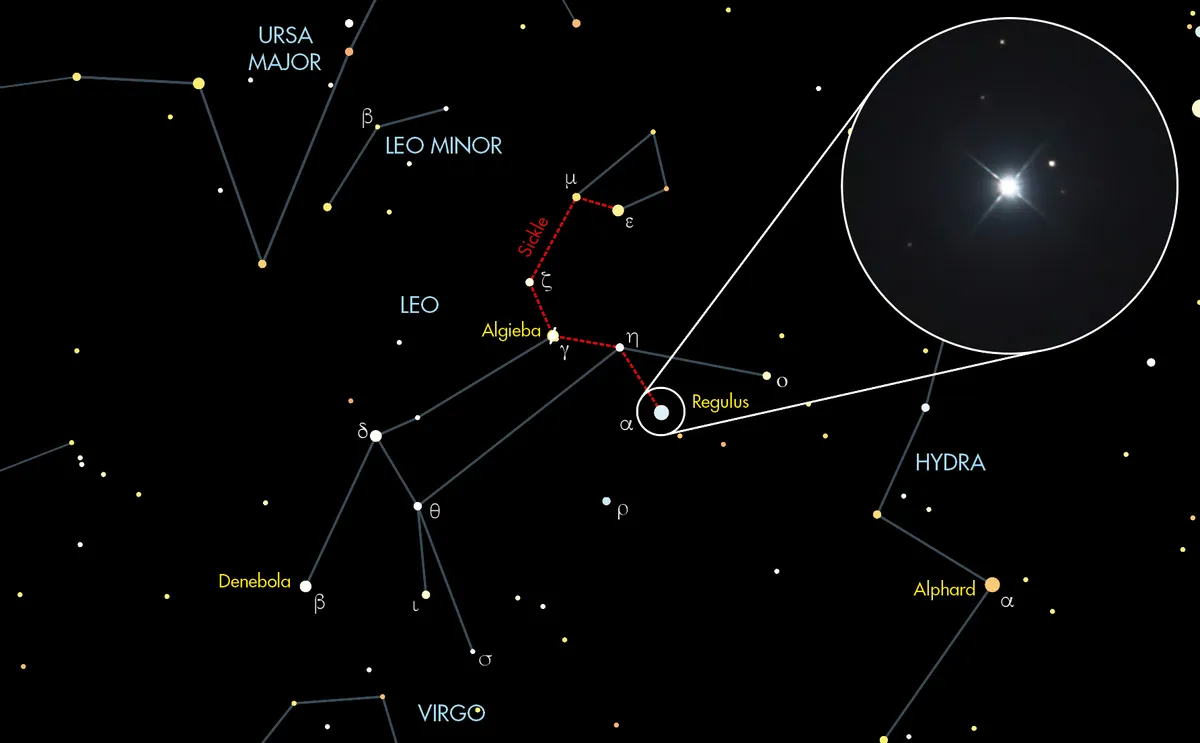
This weekend it will be close to Regulus, the 'heart' of Leo, the Lion constellation and one of the brightest stars in the springtime sky.
Also this weekend, 22–24 May, if you look towards the west after sunset, you may be able to see a planet parade of sorts.
Mercury, Venus, Jupiter and the Moon will form a beautiful alignment, stretching at an angle upwards from the northwest horizon to the western sky.
Here, we'll look at what you can see this weekend, night after night, with top tips to help you make the most of it.
More planet observing

First, a word on safety. Mercury and Venus are close to the western horizon around sunset, which means there's a danger of accidentally glimpsing the Sun with the naked eye. That could damage your eyesight.
To be completely safe, only look once the Sun has fully set. And if you're a beginner, you should not attempt to observe these planets with binoculars or a telescope, as glimpsing the Sun through unfiltered equipment could seriously damage your eyesight.

May 2026 planets at a glance
Mercury: The trickiest planet to see of the trio. Mercury will be visible above the northwest horizon immediately after sunset, but will be difficult to spot in the Sun's glare. You'll need a completely clear, flat west-northwest horizon to give yourself the best chance to see it.
Venus: The 'Evening Star' is really coming into its own. It's higher in the western sky – and for longer – after sunset with each passing evening. Look to the west once the Sun is set. Again, you'll need a relatively clear western horizon to find it.
Jupiter: You should have no problem finding Jupiter at the moment. It's visible high in the west after sunset, shining like a bright 'star'.

Friday 22 May
Find a flat, clear west-northwest horizon, free of buildings and trees, and you may be able to see Mercury as a tiny pinprick of light on the west-northwest horizon immediately after sunset. Be sure only to look after the Sun has set, to avoid accidentally catching a glimpse of the Sun.
At the same time, Venus is higher in the the sky and further west. If you do see Mercury, draw a line between Mercury and Venus and continue it upwards. You'll come to Jupiter, high in the western sky.
Stretch that line further and you'll come to the nearly-half-lit Moon. The bright star near the Moon is Regulus, the brightest star in Leo.
Regulus also forms the base of the Sickle star pattern, which is a familiar pattern in the spring sky.
Depending on your exact location, Regulus may be to the left of the Moon, or slightly above and to the left of the Moon
The two bright stars above Jupiter are Castor and Pollux, the twin stars of Gemini.

Saturday 23 May
Mercury is becoming easier to see as we approach the end of May, because it's climbing higher in the sky each evening. That means that, while the planets are largely in the same position as they were last night, you may have a slightly better chance of seeing Mercury tonight.
The Moon, meanwhile, is now half-lit, in its 'First Quarter' phase, so-called because it's a quarter of the way through its monthly cycle.
The Moon is further east of Regulus tonight, now leaving Venus and Jupiter well behind and making its way over to the southern sky as it approaches full Moon.
Sunday 24 May
The Moon has now left the patch of the sky where Mercury, Venus and Jupiter are located.
But look above and to the right of Venus. The bright star you can see is Capella, the brightest star in the constellation Auriga.
If you've enjoyed observing the Moon this week, keep looking up at it every night.
Its illuminated portion is increasing each night, and by Sunday 31 May it will be a full Moon.
Why planet parades happen

If you do manage to spot Mercury this weekend, you'll notice it forms a pretty-much straight line with Venus and Jupiter.
The reason the planets appear aligned in a straight line like this is because you're looking out across the plane of our Solar System.
Our Solar System began forming from a flat disc of cosmic dust and gas surrounding the new-born Sun, about 4.5 billion years ago.
That means the planets of the Solar System all orbit the Sun on roughly the same plane, and that's why when we look at the planets in the sky, they're always on or close to the same path the Sun traces across the sky. This is known as the ecliptic.
And when multiple planets are aligned together opposite Earth's night-time side, we see them as a 'planet parade' in the evening sky, stretching outwards across the Solar System.
Share your planetary observations and images with us by emailing contactus@skyatnightmagazine.com

