Venus and Jupiter finally met this month.
Following a beautiful approach throughout May 2026, Venus caught up with the gas giant on 9 June, appearing to pass just 1.6° to its north.
This was a spectacle that drew plenty of attention and we received loads of images of the 9 June Venus–Jupiter conjunction in our email inbox.
Here we'll reveal some key dates to see the planets throughout the rest of June 2026.
More planet advice

Venus, Jupiter and Mercury, June 2026

The spectacle doesn’t end with the conjunction, as those with a flat northwest horizon should be able to spot Mercury trying to join the party.
Located closer to the Sun and far dimmer than the main pair, Mercury will be shining at mag. +0.2 on 9 June, forming the Sunward-pointing tip of an extreme isosceles triangle.
After this, Venus heads east towards the twilight-stricken Beehive Cluster, M44, and the pattern of the planets changes quite rapidly.
By 15 June, the arrangement will show Venus, Jupiter and Mercury in a slightly kinked line, a bit like a wonky Orion’s Belt.
The next evening sees the Moon enter the scene. On 16 June, its 4%-lit waxing crescent hangs 1.7° above Mercury.
On the next evening, 17 June, the now 11%-lit waxing crescent Moon skips past Jupiter to sit very close to Venus.
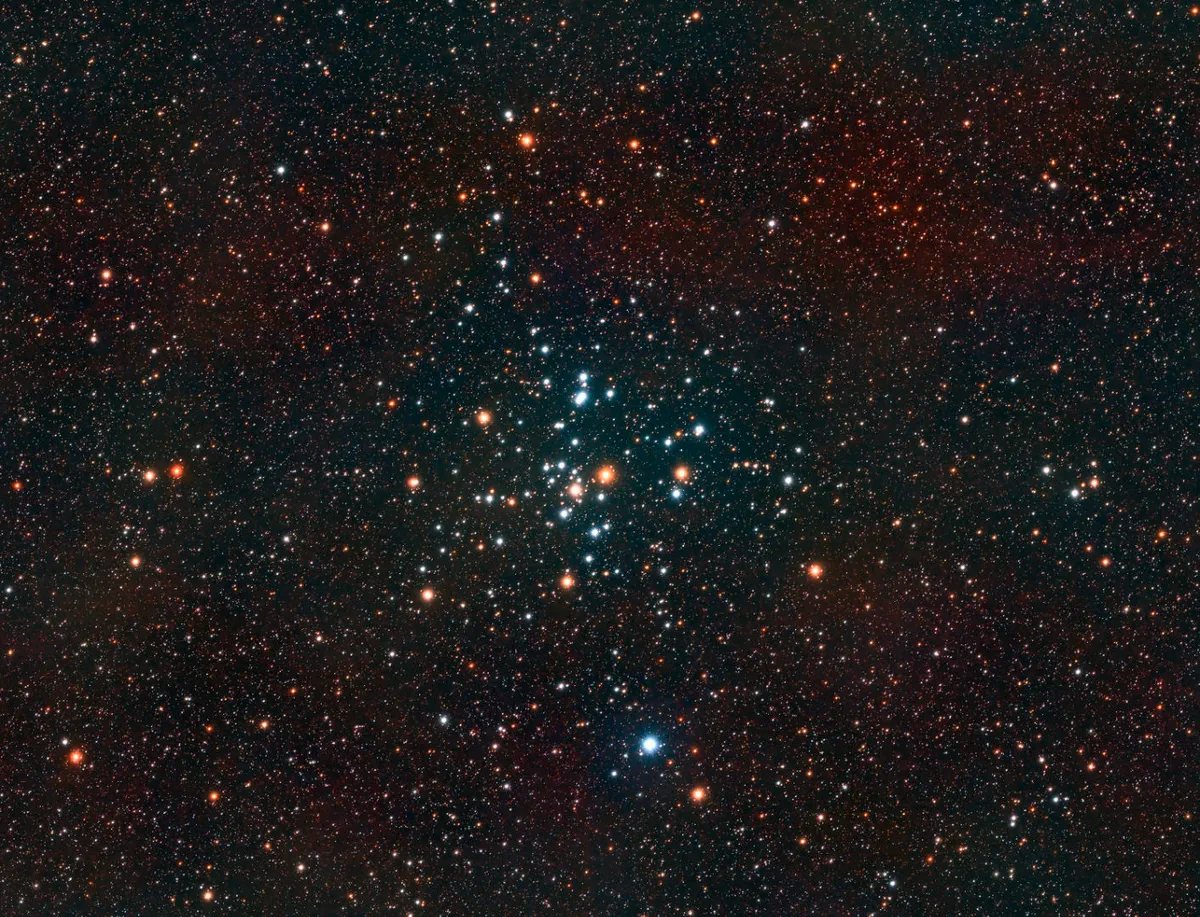
On 19 June, Venus crosses in front of the Beehive Cluster, but it’s unlikely you’ll be able to see this as the bright evening twilight will swamp the cluster’s stars.
As the end of the month looms, Venus will be approaching a position known as greatest eastern elongation, when its apparent separation from the Sun reaches a maximum.
Although this sounds like an ideal opportunity for observing the planet, the angle of the ecliptic to the western horizon at sunset is in decline and, despite its excellent separation from the Sun, Venus will appear very low.

Archive – observing the Venus–Jupiter conjunction
When Venus and Jupiter meet on 9 June 2026, Venus will be shining at magnitude –3.9, which is bright enough to cast shadows under the right conditions.
The conjunction occurs just 12 days before the June solstice (on 21 June), when the Sun reaches its most northerly point in the sky, with a declination of +23.4°.
At this time of year, the Sun’s passage beneath the northern horizon at night doesn’t take it low enough to completely darken the sky.
The period of evening and dawn twilight also seem to last forever because of the Sun’s shallow angle of apparent movement beneath the horizon.

For the conjunction on 9 June, this means that both bright planets – Jupiter shining at mag. –1.7 and Venus at mag. –3.9 – will have bright twilight sky to contend with, literally taking the shine off the event.
Even so, the pairing should still be a very impressive sight.
If you want to photograph it, find out how in our guide on how to photograph the Venus–Jupiter conjunction.
If you observe or photograph the Venus–Jupiter conjunction, get in touch and share your images with us.