This Saturday 26 September will see the rise of the 2026 Harvest Moon in the night sky after sunset – an event that no full-Moon fan will want to miss.
But why is the Harvest Moon so popular and how did the Harvest Moon get its name?
Unsurprisingly, the Harvest Moon is so-called because traditionally this time of year was when crops were harvested and a nice bright full Moon meant that you could work later into the evening.
What’s more, at this time of year, moonrise times vary very little.
More on the Harvest Moon
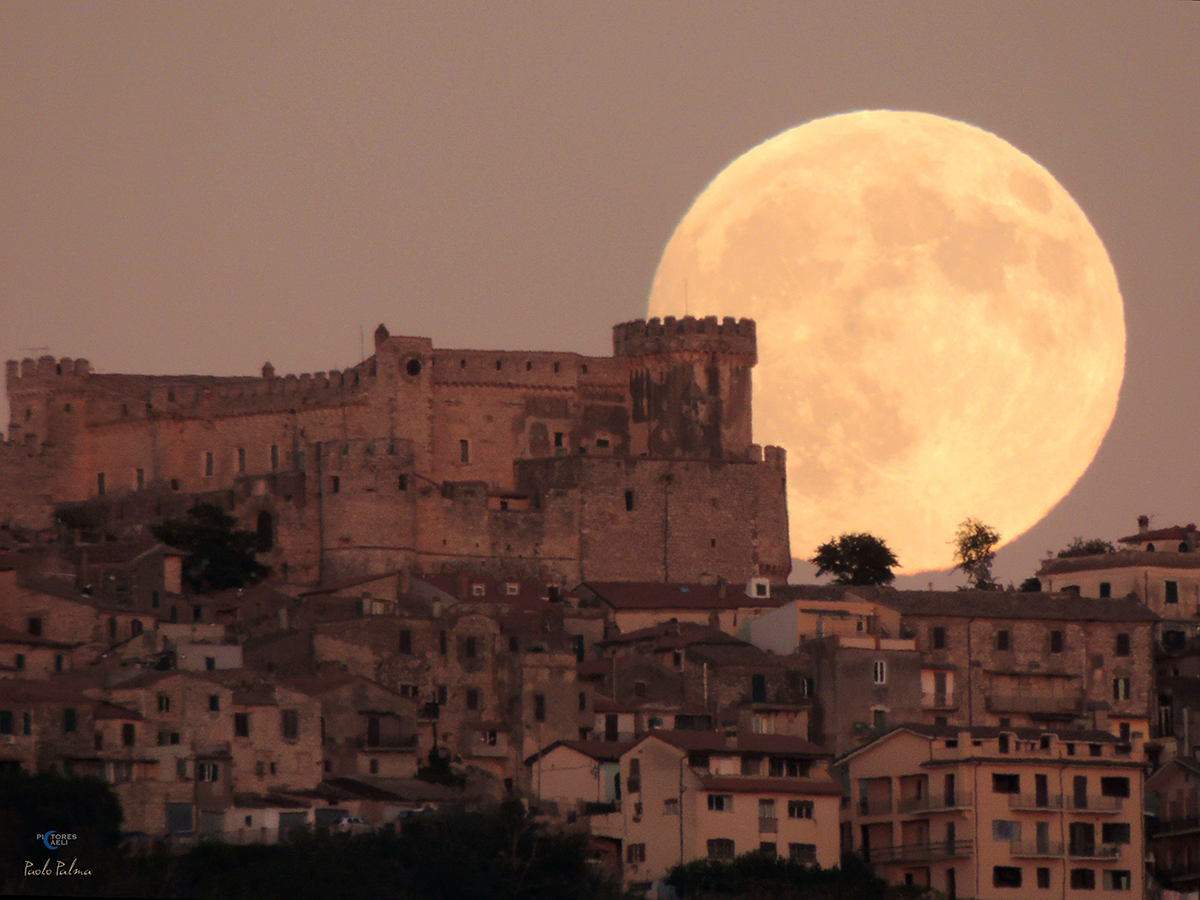
At other times of year, the Moon can rise as much as an hour later one day than the day before, but in September and October – when we’re so close to the autumn equinox – moonrise times stay fairly consistent, with just a few minutes’ difference from day to day.
So the Harvest Moon didn’t just mean one night of reliable brightness – it meant several at the same time over consecutive nights.
All of which was (and indeed still is) a serious bonus if you’re faced with the daunting task of harvesting acres and acres of ripe corn, potatoes or whatever else you’re growing before the winter rains and the rot set in.
So far, so simple and intuitive… but when it comes to the Harvest Moon, there’s a catch.
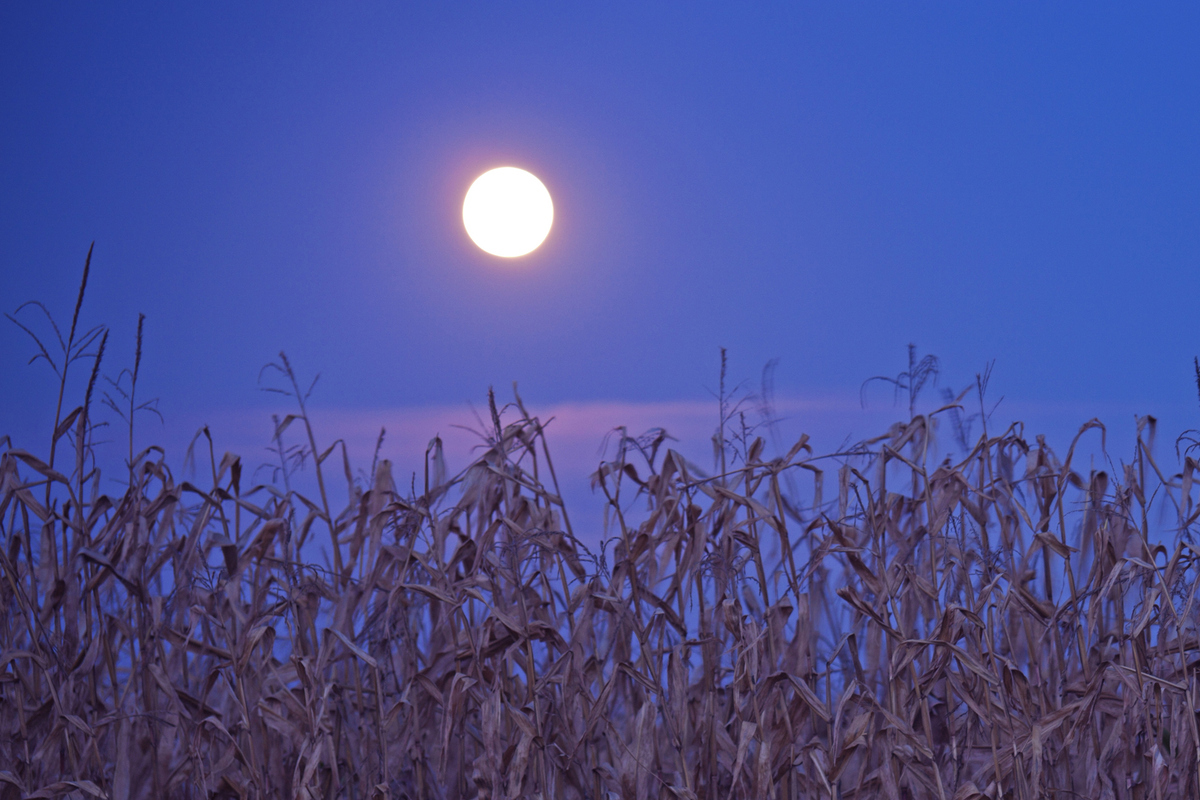
Why the Harvest Moon changes month
Different cultures around the world have, at different times in history, given all sorts of names to different months’ full Moons. We've compiled a long list of all the full Moon names.
But those names usually refer to a specific month.
For instance, if someone talks about the Pink Moon, they’re referring to the full Moon in April (because that’s when, in North America, the ground is blanketed by the wildflower mountain phlox, AKA ‘moss pink’).
If someone refers to the Buck Moon, they’re talking about the full Moon in July, because that’s when the antlers of newborn male deer (bucks) begin to show.
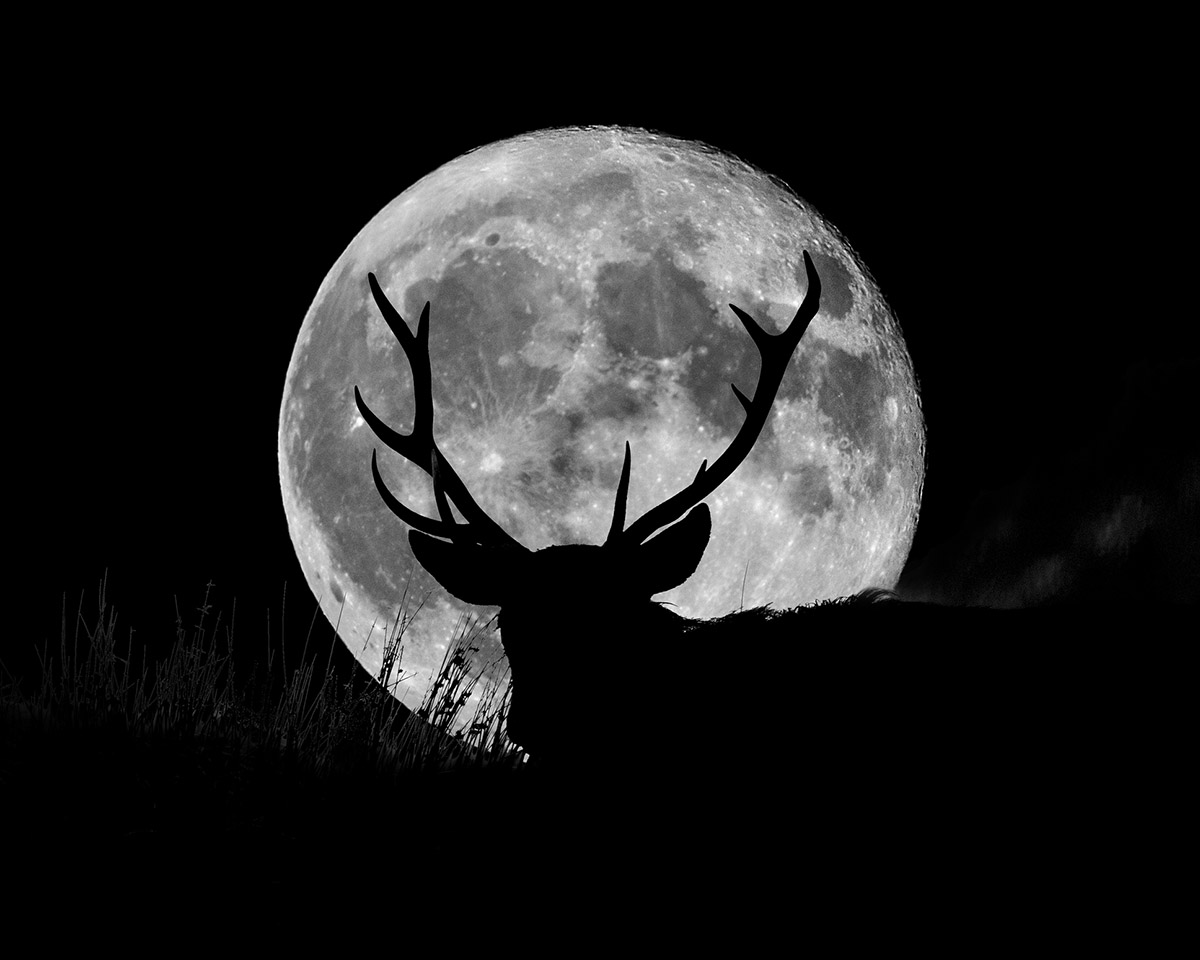
The Harvest Moon, however, is the exception to this rule. Some years it's the full Moon in September and other years it's the full Moon in October.
That’s because the name ‘Harvest Moon’ is given to whichever full Moon occurs closest to the autumn equinox.
Even so, that still means the Harvest Moon usually appears in September.
But not always: the Harvest Moons of 2001, 2020 and 2025 occurred on 2, 1 and 6 October, respectively.
Looking to the future, the years 2028, 2036 and 2043 will also see October Harvest Moons.
In contrast, the full Moon that occurs in September is always the Corn Moon (and the Corn Moon always occurs in September), while the full Moon that occurs in October is always the Hunter’s Moon (and the Hunter’s Moon always occurs in October).
These are not movable feasts – but the Harvest Moon is.
How to see it in 2026 and what to expect
If you want to take a look at the 2026 Harvest Moon, you can do so very easily: just look up on Friday, Saturday and Sunday evening!
Just like the Sun, the full Moon rises in the east and sets in the west, so here's where to look and when
- After sunset: look eastwards
- Around midnight: towards the south
- Between midnight and dawn: look westwards
If you’re in the UK, then the good news is that a mild night is forecast right across the country this Saturday, with only a slight breeze and a fairly low chance of rain (with Scotland and the north of England most likely to experience any).
So observing the Harvest Moon needn’t leave you cold and wet!
Unlike some other years, this year’s Harvest Moon is not a supermoon. Supermoons occur when the Moon is at perigee (i.e. closest to Earth), which it currently isn’t.
So don’t expect the Moon to look any bigger than normal, except possibly just after rising.
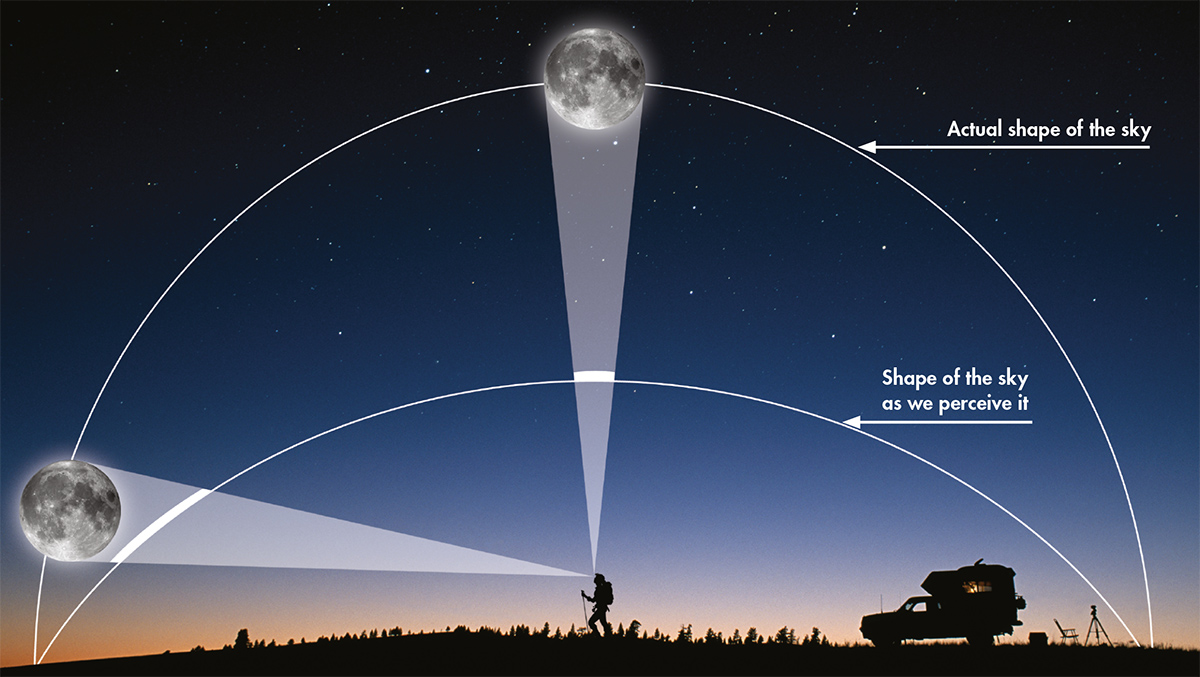
This is due to an effect called the Moon illusion, which makes the Moon look bigger when it’s low to the horizon.
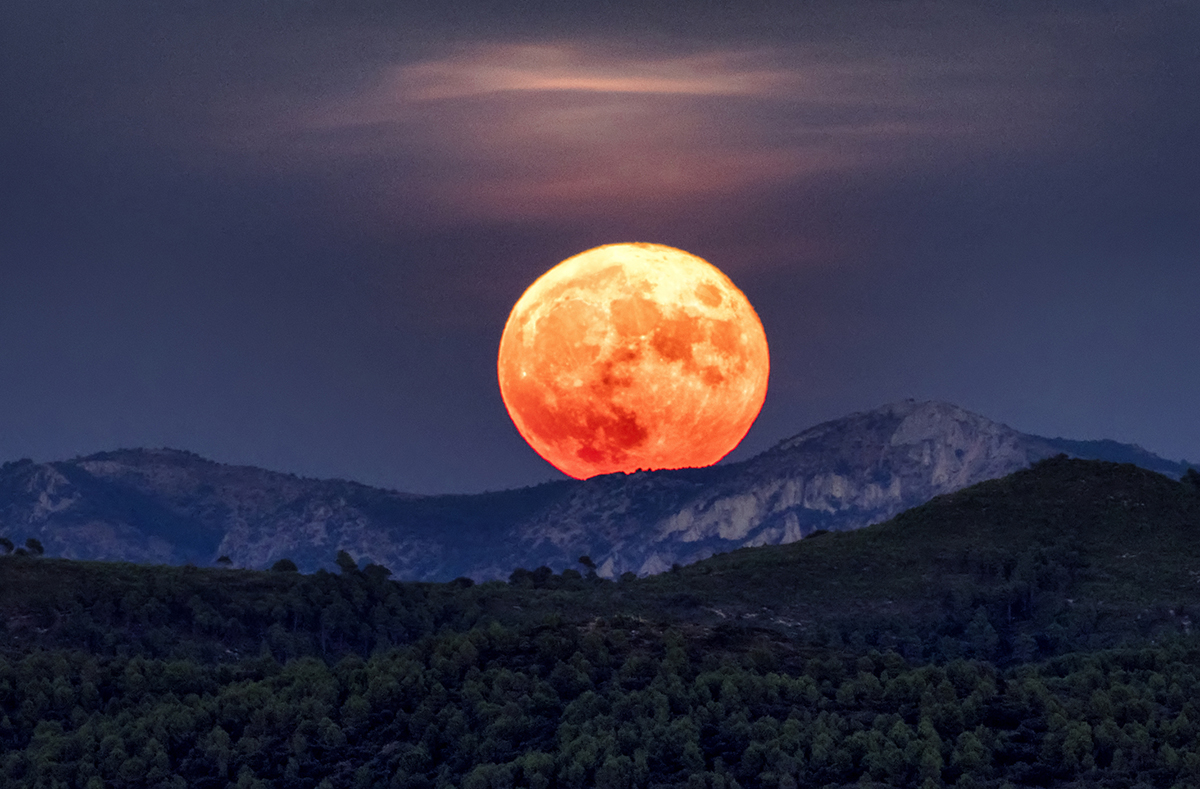
For similar reasons, while the Harvest Moon won’t be a ‘blood Moon’ – when it takes on a reddish appearance as it passes through Earth’s shadow – it may appear to have a slightly reddish or orange-y hue if you look at it just after sunset.
Again, this is due to the Moon’s low position relative to the horizon, and the effect will subside once the Moon rises a little higher.
So if you really DO have your heart set on seeing a big, red Harvest Moon, then find yourself a clear, flat eastern horizon and catch it rising around sunset.
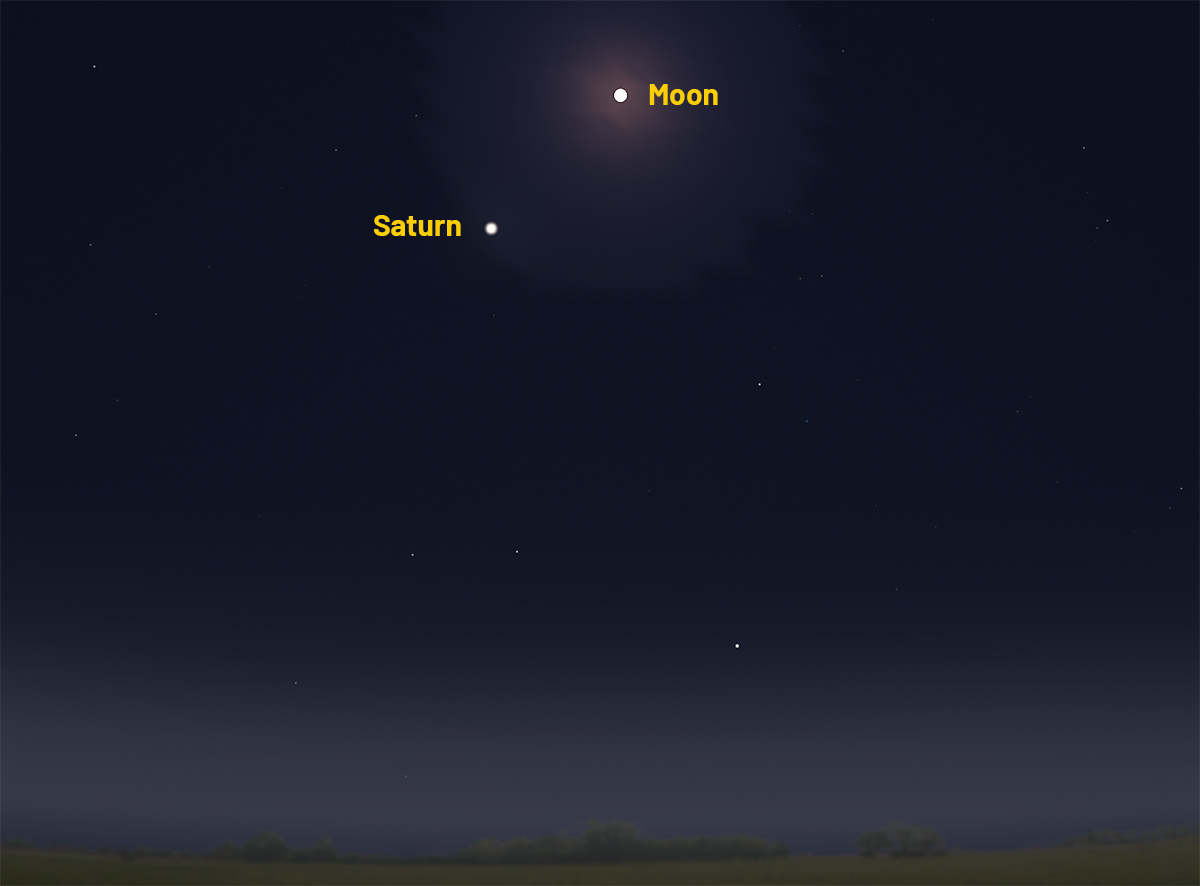
But while we can’t promise you big and red, this weekend’s full Moon does have one surprise in store, because it’s bringing a buddy along.
Saturn will rise in the east around an hour after the Moon does and the two will then (as seen from Earth) journey across the southern sky together over the course of the night, with Saturn just below and to the left of the Moon on Saturday, then to the right of the Moon on Sunday.
Share your Harvest Moon observations, images, sketches, drawings, poems and stories with us by emailing contactus@skyatnightmagazine.com