
This week could be a landmark week for Earth's Moon, if all goes to plan with the launch of NASA's Artemis II mission.
It's no April Fool – on 1st and 2nd April 2026, the full Pink Moon will rise above the horizon, and on either of those evenings, NASA may launch its first crewed mission to the Moon since the Apollo era.
That would make for quite a spectacle. If you're located close to the launch site on the east coast of the United States, you may be able to see four astronauts launch to the Moon at the same time as the full Moon rises.
If you're elsewhere in the world, you'll be able to witness the glory of the full Moon and mark that humanity has begun its return to the lunar surface for the first time since the Apollo missions.
See the Pink Moon rising
The Pink Moon is visible on 1st and 2nd April, rising in the southeastern region of the sky just after sunset.
But why is is called a Pink Moon? Will it really look pink?
More on the Moon and Artemis

Unfortunately not! Each monthly full Moon throughout the year has at least one informal nickname, and these full Moon nicknames reference key events in nature occurring during the month in question.
That's why the June full Moon is the Strawberry Moon – because strawberries are typically in abundance in June – and why the February full Moon is the Snow Moon – because it often snows in February.

The Pink Moon is the fourth full Moon of the year, rising in April, and the name is a reference to the coming of spring and the pink flowers that blossom in April.
This year's Pink Moon is also the Paschal full Moon, which determines when Easter falls, so you may hear some talk about this week's full Moon as being the Easter Moon.
But the Pink Moon won't actually look pink, although it may look a little orange or even red as it rises above the horizon.
Find yourself a low southeastern horizon and you'll see the Pink Moon rise as the Sun is setting.

The Moon is 'full' from our perspective because it's opposite the Sun in the sky, so the whole Earth-facing side of the Moon is illuminated by sunlight.
As a result, the full Moon mirrors what the Sun is doing in the sky. That's why, as the Sun is setting, the full Moon is rising.
Similarly, this Moon won't rise as high as winter full Moons. That's because, again, it's effectively mirroring the Sun, so in winter, the Sun is low and full Moons are high; in the lighter months, the Sun is high and full Moons are lower.

NASA's Artemis II could launch on the night of the full Moon
Imagine looking up at the full Moon at the same time as four astronauts are launching on their way to that very object.
That's what could happen this week, as NASA prepares to launch its Artemis II mission as early as 1st April 2026.
They won't get there the same night, however, as it will take Artemis II about four days to get to the Moon.
The 10-day mission will take the crew around the Moon and back, carrying them further into space than any human being before them.

A record-breaking mission
Artemis II will achieve a few 'firsts'.
It will be the first crewed mission of NASA's Artemis programme. Artemis I launched on 16 November 2022 and was an uncrewed test flight of the Space Launch System (the rocket) and the Orion capsule in which the astronauts will make their way to the Moon.
They'll fly around the Moon and back; a feat first achieved by the Apollo 8 mission in December 1968, making Artemis II a mission similar to Apollo 8.
But Artemis II will fly much farther from the Moon than the Apollo astronauts ever did.
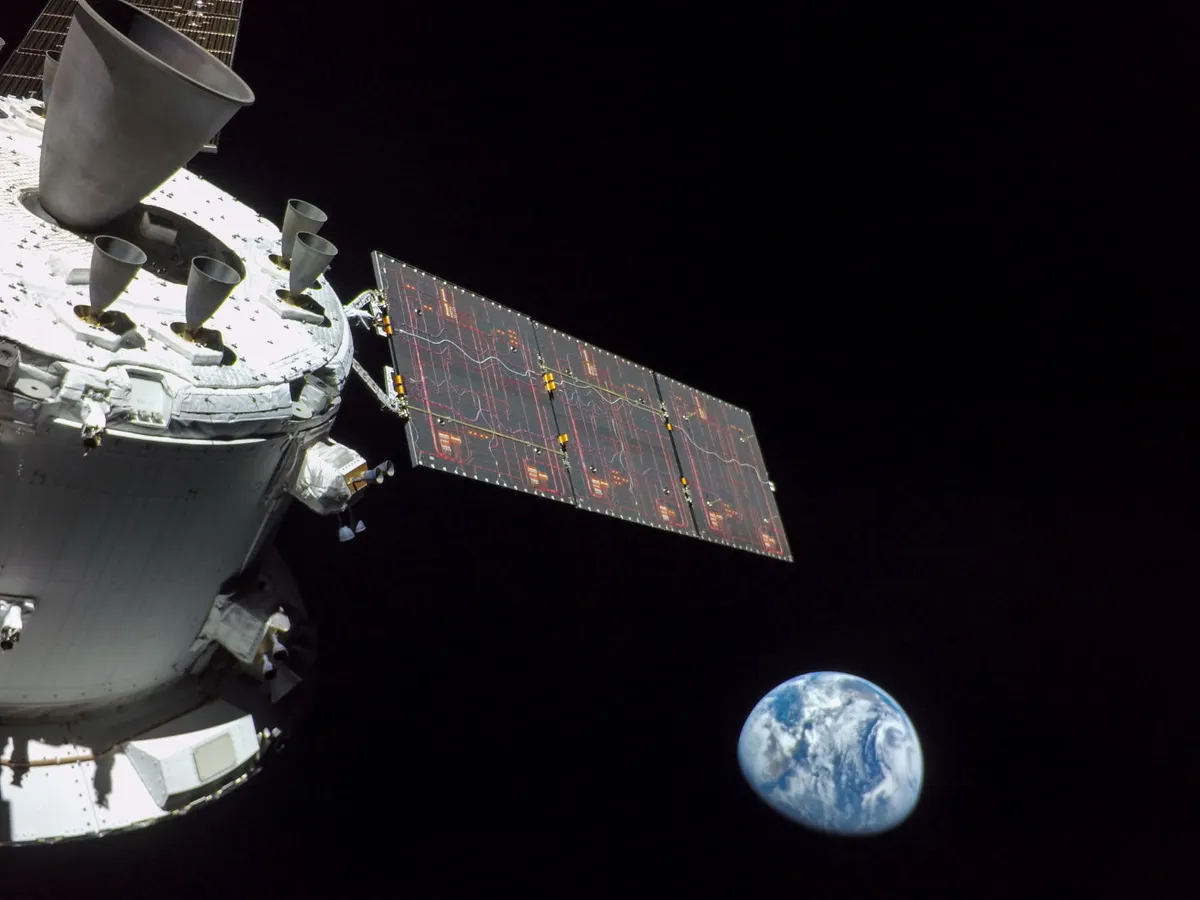
So much so that, while the Apollo astronauts saw the far side of the Moon bit-by-bit in close-up, the Artemis II astronauts will be able to see the entirety of the far side of the Moon in one view.
The Artemis II crew selection will mark a number of firsts, too.
Pilot Victor Glover will be the first person of colour to fly beyond low-Earth orbit, while Mission Specialist 1 Christina Koch will be the first woman, and Canadian Space Agency Mission Specialist 2 Jeremy Hansen the first non-US citizen, to achieve that feat.

Artemis II April launch windows
There are a few launch windows scheduled for April 2026, because there are a lot of variables that need to be checked before NASA engineers will give the go-ahead, including weather and various ground operations and tests.
Here are the potential Artemis II launch dates and times for this week.
| Local date | Local time EDT | Date/time UTC | Lighting | Duration (mins) |
|---|---|---|---|---|
| 1st April 2026 | 18:24 | 1st April, 22:24 | 1.28 hours before sunset | 120 |
| 2nd April 2026 | 19:22 | 2nd April 23:22 | 0.32 hours before sunset | 120 |
| 3rd April 2026 | 20:00 | 4th April 00:00 | 0.30 hours before sunset | 120 |
| 4th April 2026 | 20:53 | 5th April 00:53 | 1.17 hours after sunset | 120 |
| 5th April 2026 | 21:40 | 6th April 01:40 | 1.95 hours after sunset | 120 |
| 6th April 2026 | 22:36 | 7th April 02:36 | 2.87 hours after sunset | 120 |
| 30th April 2026 | 18:06 | 30th April 22:06 | 1.86 hours after sunset | 120 |

Seeing Artemis II and the Pink Moon at the same time
The Pink Moon will reach peak illumination – the time when the Moon is well and truly 'full' – at 02:12 UTC on 2nd April 2026.
That's 22:12 EDT on 1st April 2026, EDT being the local time zone at Kennedy Space Center in Florida, where Artemis II will be launching from.
That will happen right around the time the Pink Moon peaks.
Once launched, Artemis II may be visible in the sky to onlookers along the Florida coast and, weather depending, potentially a bit further across the Eastern Seaboard.
But views of Artemis II in the sky after launch will likely be limited to Florida and southern Georgia.
If all goes well, that means viewers situated in that part of the US may be able to see Artemis II roaring through the sky at the same time as the Pink Moon peaks.

Watch Artemis II launch live online
NASA has posted its dedicated Artemis II launch livestream, meaning that, once the mission lifts off, anyone can follow it online in real time.
You can watch NASA's Artemis II livestream below.
Top tips for observing the Pink Moon
Statistically speaking, you're unlikely to be able to see the Artemis II mission lift off at the same time as the Pink Moon peak, simply because only a small portion of the world will be in the right region to see Artemis II launch through the sky.
But if your skies are clear, you'll see the Pink Moon rise wherever on Earth you're located, and will be able to consider the fact that four human beings are on their way to that distant body at the same time as you're observing it.
Look to the southeastern portion of the sky to see the Pink Moon rise after sunset on 1st and 2nd April.
If you can, get to a place away from light pollution, as this will make for a better, clearer view.
Don't worry if you can't, however, as a full Moon is visible with the naked eye even from light-polluted cities.
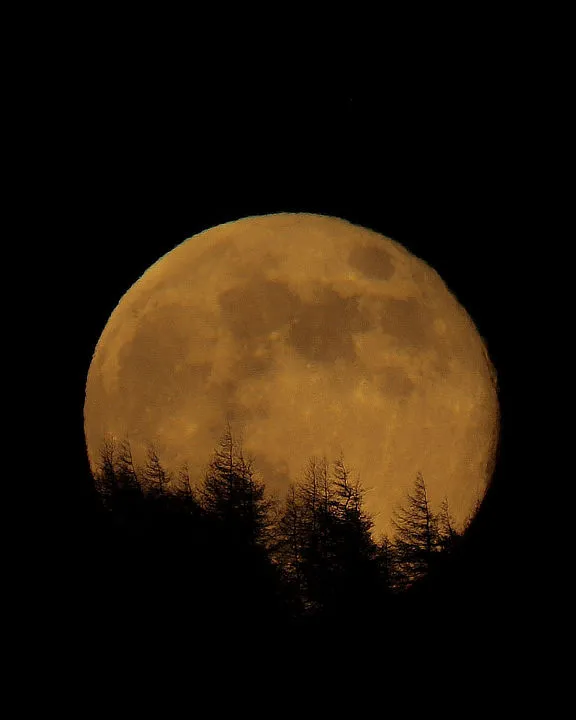
A clear southeastern horizon will be of benefit, though, as that will enable you to watch the full Moon rise.
When it's close to the horizon, the full Moon may look bigger than normal; this is a well-known optical effect known as the Moon illusion.
See if you can photograph the Moon with your smartphone. Use a smartphone tripod – or prop your phone against a wall – to keep it steady, then put your phone's camera in manual mode, so you can tweak the ISO and exposure to get the best results.
You might find your phone's video mode captures the Moon better, and you can isolate a frame from the video to get your final image.
You could also use a pair of binoculars to explore the lunar surface and sketch what you see.
However you observe or enjoy the Pink Moon, we could be in for a real treat this week, as NASA launches its Artemis II mission right at when the full Moon is at its best.
What a time to be an inhabitant of this small, rocky planet we call home.
Send us your Pink Moon or Artemis II images by emailing contactus@skyatnightmagazine.com


