At first glance, Jupiter’s moon Europa might look less like a cradle for life and more like a cracked, frozen ball in the freezing outer reaches of our Solar System.
Wrapped in a shell of solid ice almost 30 km (20 miles) thick, this distant moon of is blasted by intense radiation from its parent planet and its surface temperature never rises above –160°C (–260°F).
Yet, beneath this hostile exterior lies one of the most promising places in the search for extraterrestrial life.
Scientists believe that hidden under Europa's icy crust is a global, liquid water ocean containing more than twice the water of all of Earth’s oceans combined.
More Solar System facts
Warmed by the gravitational pull of Jupiter, which stretches and flexes the moon's interior through tidal heating, Europa's sub-surface ocean could possess the three key ingredients for life: liquid water, chemical elements and an energy source.
And with missions like NASA's Europa Clipper and the European Spacer Agency's Juice spacecraft en route to study this icy enigma up close, it feels like we're closer than ever to uncovering its secrets.
Let's explore some of the most fascinating mind-boggling facts about this captivating world of our Solar System.
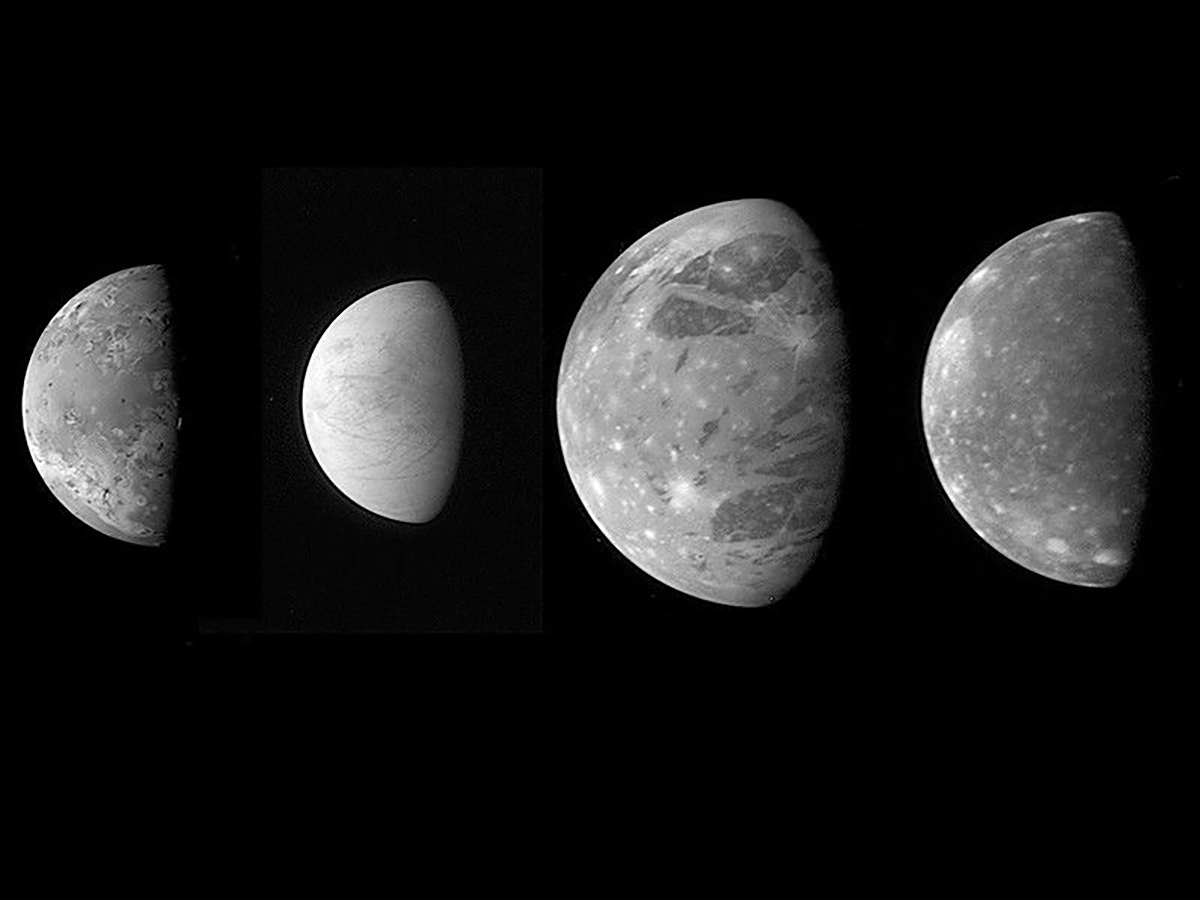
Europa is the smallest and least massive of Jupiter’s Galilean moons
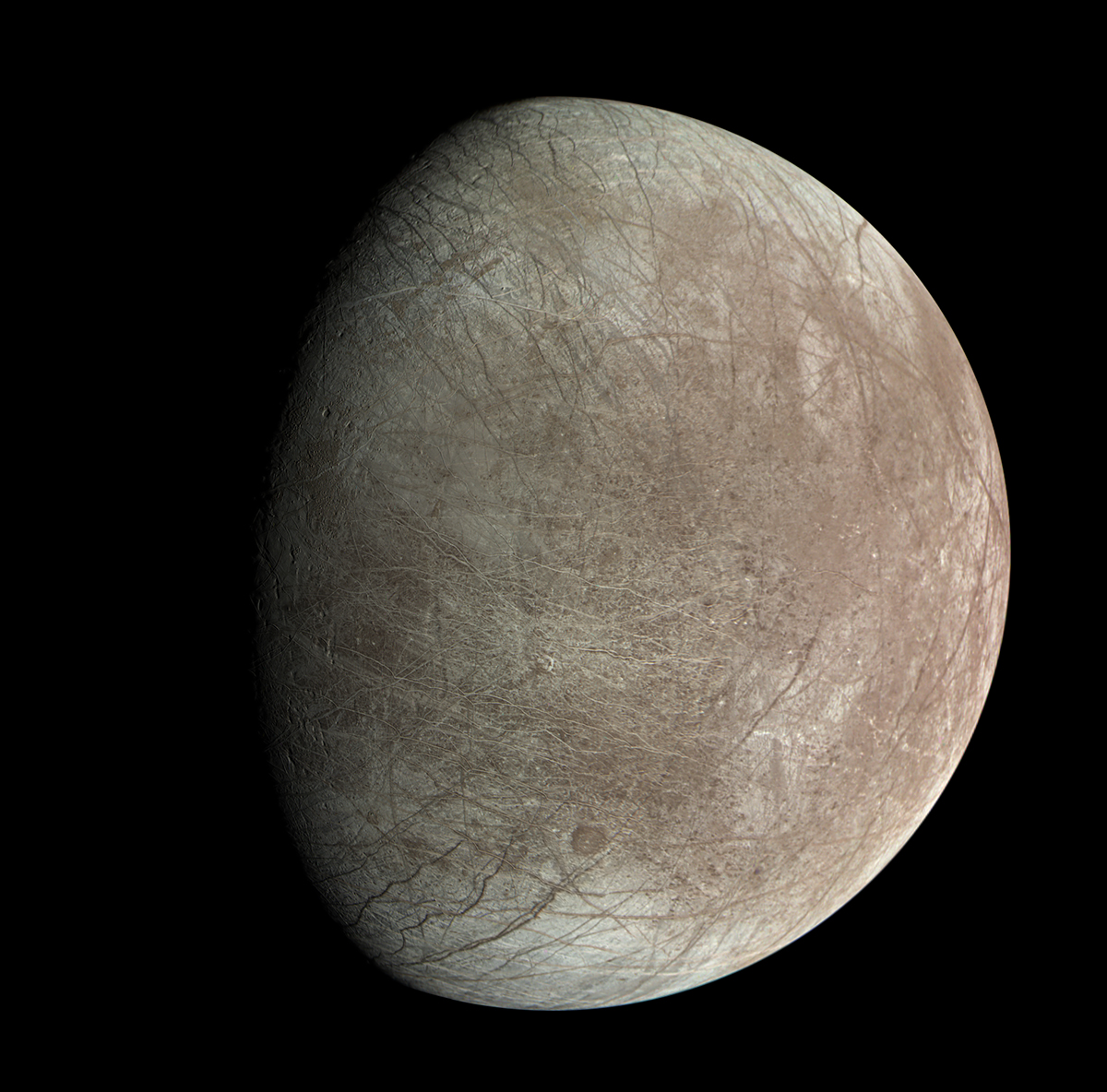
With a mean radius of around 1,500km (930 miles) and a mass of 4.7998 x 10²² kg, Europa is smaller and lighter than Ganymede, Callisto or Io, the other three of Jupiter's four large Galilean moons.
It’s about 90% of the size of our own Moon, making it the sixth-largest moon in the Solar System.
It’s too small to be seen with the naked eye
Europa isn’t a naked-eye object. But neither is it particularly hard to find.
hen Jupiter is at its best – at opposition, for example – you should be able to spot it easily enough with a pair of binoculars, or through a small telescope.
It’s covered in ice
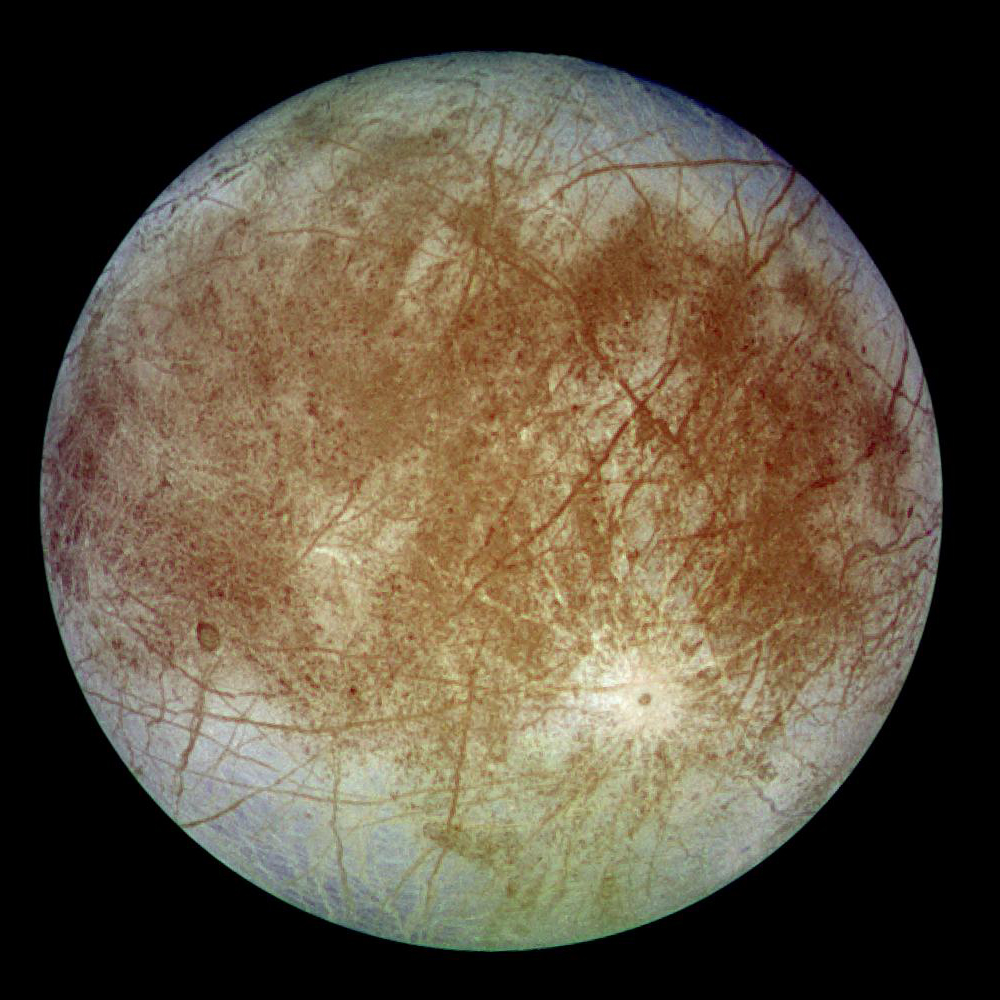
The outer surface of Europa is made entirely of water ice. This gives it a very high albedo (i.e. it reflects a lot of sunlight) – which is another reason it’s fairly easy for night-sky observers to locate.
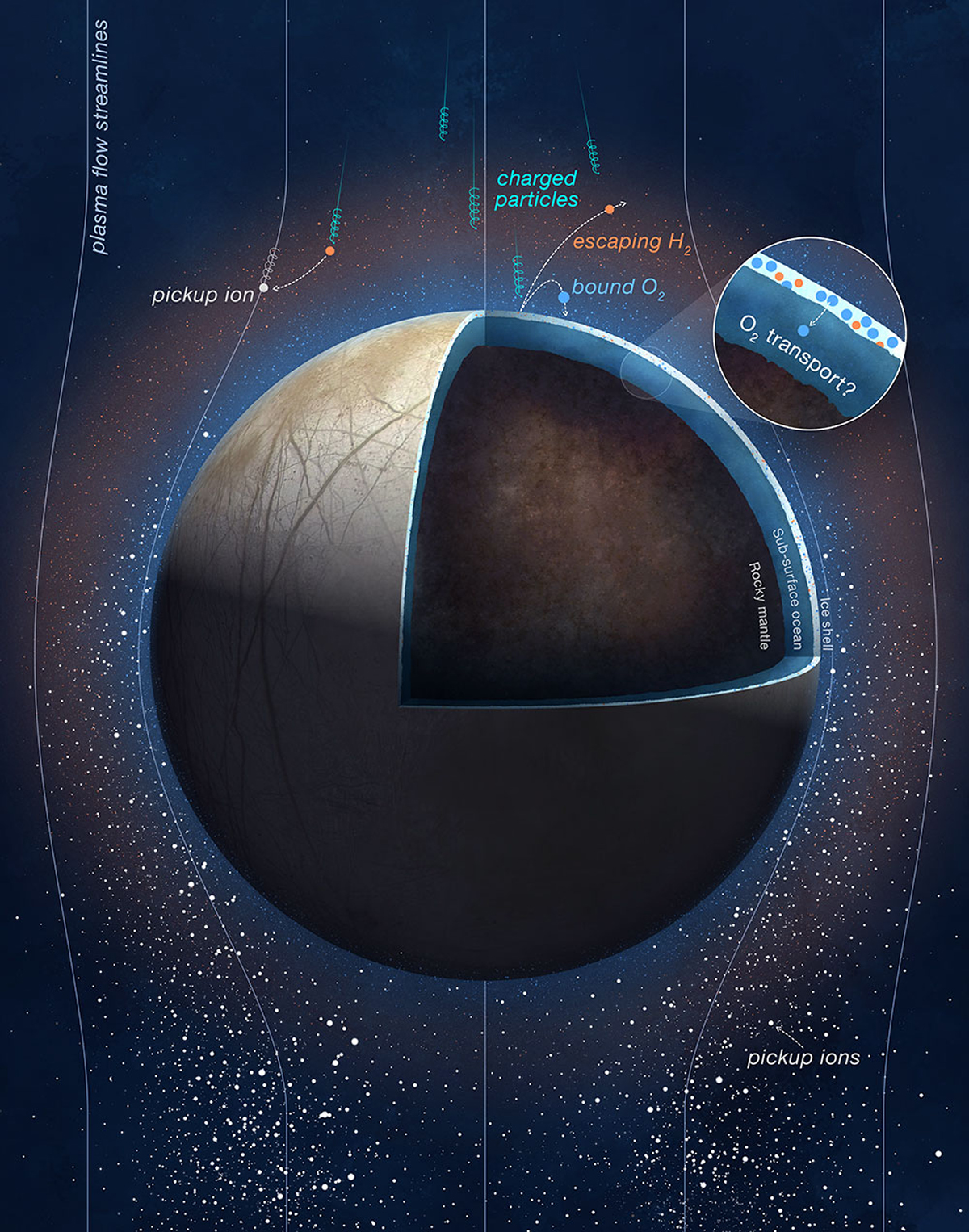
Like Earth, Europa has an iron core
At the heart of Europa lies an iron core. That’s surrounded by mantle of magma – mostly silicate rock, which is where most of the satellite’s mass comes from.
So far, so Earth-like, but where Earth is wrapped in rocky crust, with oceans of water above, on Europa the crust is made of ice, with a vast liquid ocean below.
The crust shows some evidence of plate tectonics
The plates that make up Earth’s rocky crust aren’t fixed: one plate can slide over or under another, which is why we have earthquakes.
Evidence suggests that the same thing may be happening at Europa, except in this case with giant plates of ice rather than rock.
It has a young, smooth surface
While Europa itself is around 4–4.5 billion years old (as is true of most large rocky objects in the Solar System), its surface is believed to be between 20 and 180 million years old.
We can tell this from its lack of impact craters. In fact, Europa has the smoothest surface of any solid Solar System object.
Europa orbits Jupiter once every 3.55 Earth days
As the Galilean moon with the second-smallest orbital radius (670,900km/416,878 miles), Europa whizzes around its host planet pretty speedily.
Only Io, with an orbital radius of 421,800km (262,094 miles), has a shorter orbital period (1.77 Earth days).
It’s cold… very cold
With an average temperature of –160°C (–267°F) at the equator and –220°C (–364°F) at the poles, Europa is extremely cold.
It’s far enough away that it receives 25 times less energy from the Sun than Earth does.
Most of its energy comes from tidal heating
Like many Solar System objects, Europa doesn’t sit bolt upright relative to its orbital path – its axis is slightly tilted.
And it has a slightly elliptical – or egg-shaped – orbit around Jupiter. This, combined with the gravitational pull of its fellow Galileo moons, means Europa is constantly engaged in a gravitational tug-of-war, being pushed and pulled as it orbits Jupiter.
That generates tidal currents inside the planet’s subsurface ocean and rocky mantle, which creates friction and so generates heat.

Europa was discovered by Galileo in 1610
Galileo Galilei famously discovered the four Galilean moons in early January 1610, although fellow astronomer Simon Marius is also believed to have spotted them around the same time.
It’s named after a lover of Zeus
In Greek mythology, Europa was the daughter of the Phoenician king of Tyre.
Zeus, entranced by her beauty, transformed himself into a white bull and in such guise lured her away to Crete, where she became queen and gave birth to King Minos.
Oh, and Europe is named after her as well!
It hasn’t been known as Europa for very long
Jupiter was the Roman equivalent of the Greek god Zeus, and so Simon Marius proposed naming the Galilean moons after lovers of Zeus soon after their discovery, apparently at the suggestion of Johannes Kepler.
But the idea never really caught on, and until the mid-20th century, Europa was more commonly known as Jupiter II.
Europa is tidally locked to Jupiter
In other words, the same face of Europa always faces Jupiter, just as the same face of our Moon always faces towards Earth.
This is, in fact, true of all large Solar System satellites: as a rule of thumb, if they’re large enough to have become rounded by gravity, they’re also tidally locked to their host planet.
It has a thin, tenuous atmosphere
Europa’s atmosphere extends up to 190km (120 miles) above the surface and mostly consists of molecular oxygen.
Radiation from Jupiter breaks down water ice at the surface into molecular oxygen and molecular hydrogen. The hydrogen, being lighter, dissipates into space, but the oxygen hangs around.
There’s still not enough of it for human beings to breathe there, though.
Europa is bombarded with radiation from Jupiter
Jupiter has a magnetic field that’s 20,000 times stronger than Earth’s. This generates a huge amount of radiation, and Europa – being so close-in – receives a lot of that.
If you spent a day on the surface of Europa, then – quite apart from the fact that you wouldn’t be able to breathe, and would freeze to death – you’d likely die from radiation exposure, or at least become very, very ill.
It has no weather to speak of
There are no winds on Europa. There are no clouds, there is no precipitation and its sky is completely colourless.
There simply isn’t enough of an atmosphere for such atmospheric phenomena to occur.
There’s much we don’t know about its surface
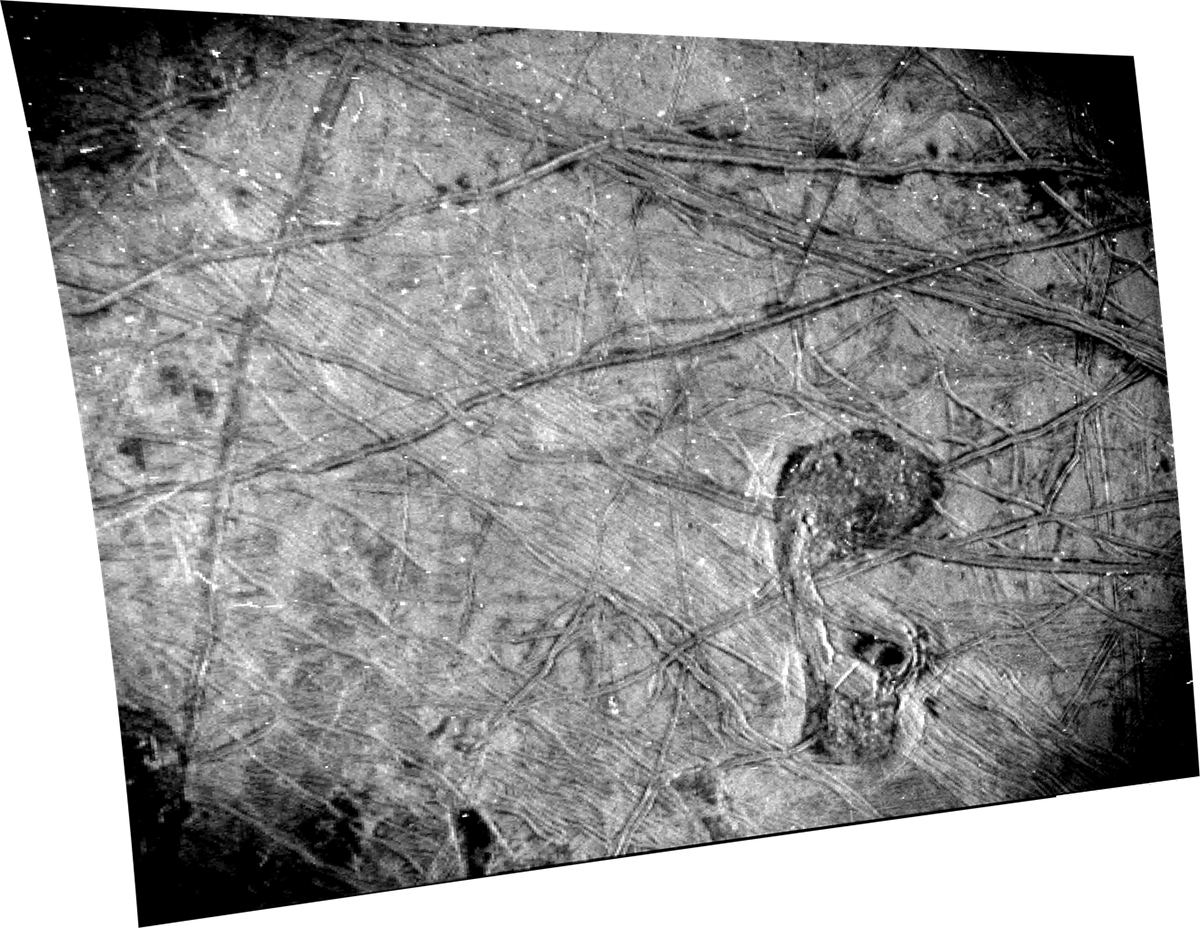
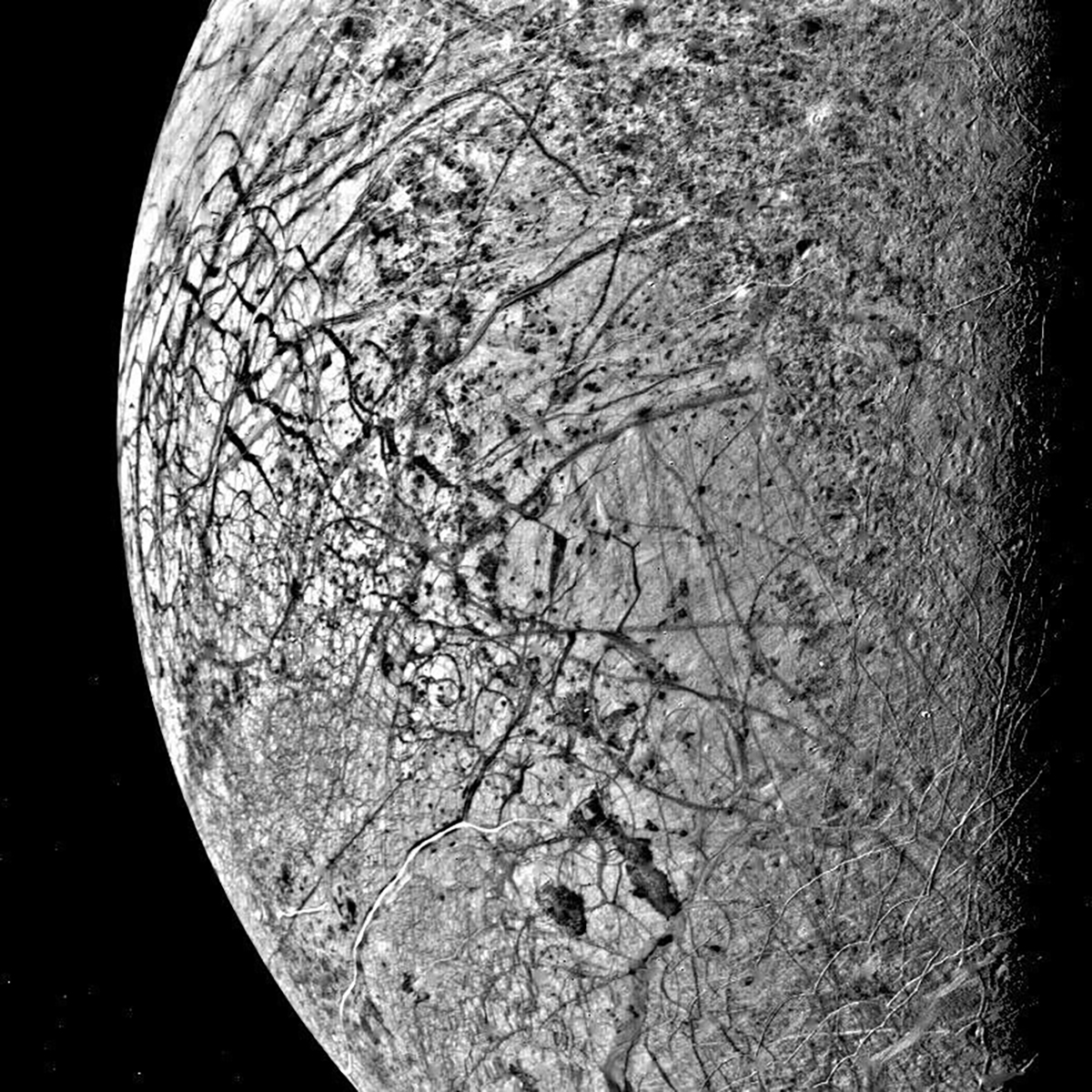
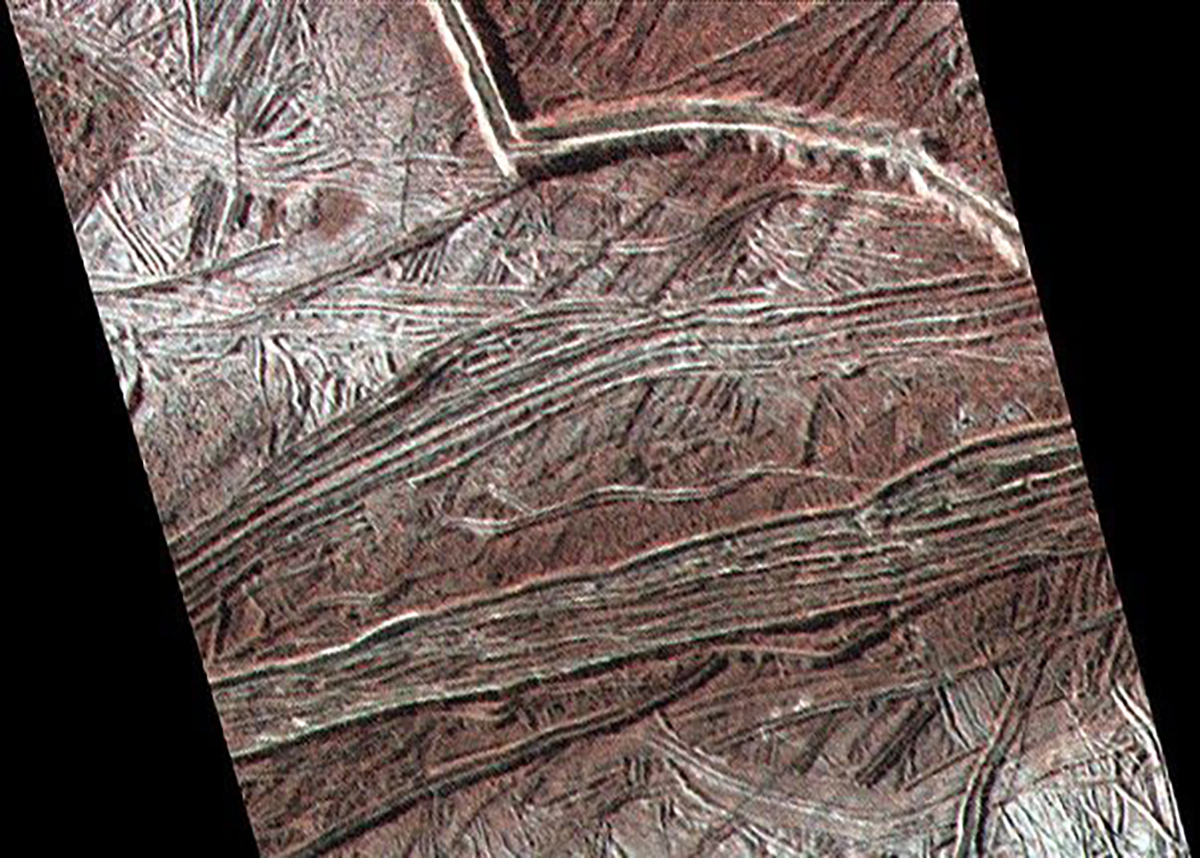
Although the Europan surface is relatively smooth and flat – there are very few craters and no tall mountains or deep valleys – it’s not entirely featureless.
Much of its surface is covered in large cracks (lineae) that form a criss-cross pattern, which is why some form of plate tectonics is believed to be at work.
These cracks have a reddish hue, which has yet to be fully explained – some suggest the colour may denote high levels of magnesium sulphate, while others point to a type of organic compound known as tholins.
There are also circular or elliptical features called lenticulae, which are thought to be domes or pits.
There are two competing theories regarding Europa's crust
The jury’s out on the precise nature of Europa’s crust, with ‘thick ice’ and ‘thin ice’ models vying for scientists’ favour.
The thick ice model suggests a crust thickness of 10-30km (6-20 miles) while the thin ice model says the crust should be just a few kilometres thick.
Its icy crust rotates
As Europa’s subsurface ocean covers the entire surface, the icy crust that sits on top of it isn’t bound to the rocky inner layers at all, and is free to rotate.
In fact, scientists believe the crust may, since its formation, have rotated by as much as 80°, relative to the satellite’s core.
It may nor may not give off plumes of water
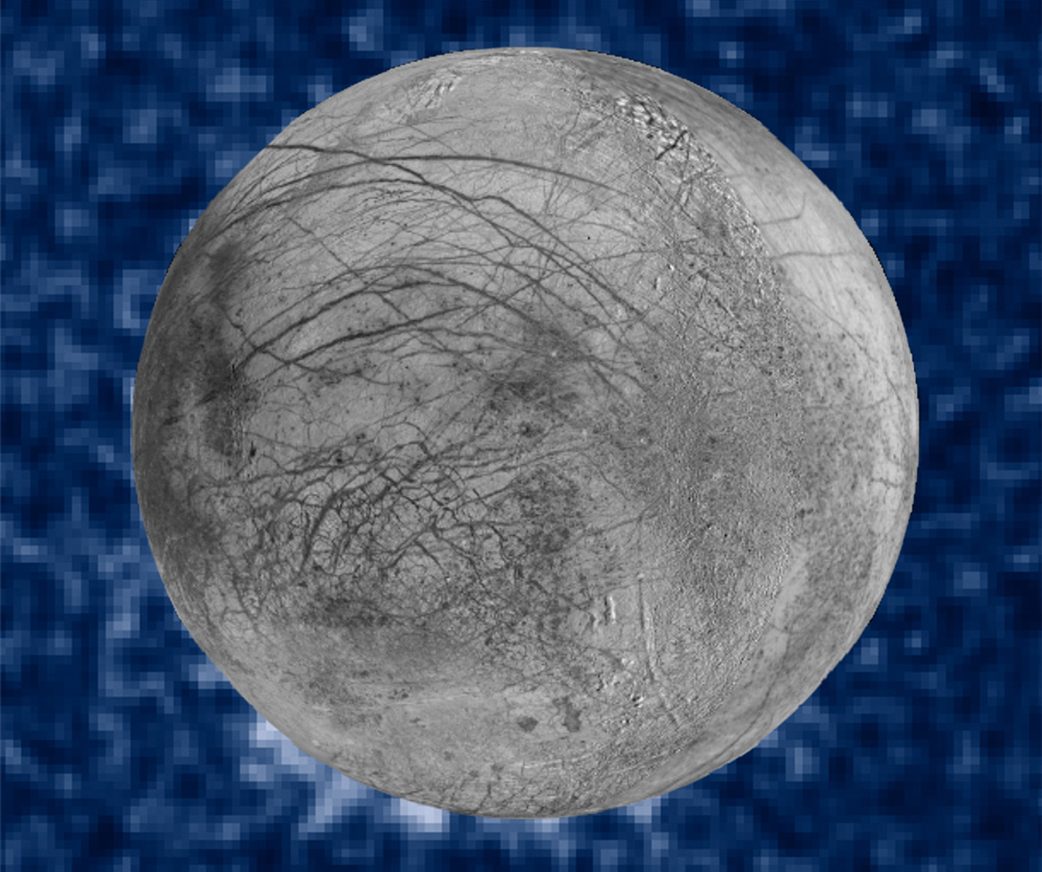
In 2012, there was much excitement when images from the Hubble Space Telescope appeared to show plumes of liquid water erupting from the Europan surface and reaching a height of up to 200km (125 miles).
And in 2018, scientists re-examined data from the earlier Galileo probe and found some evidence that the NASA craft may actually have flown through one of these plumes.
However, a more recent study published in 2026 has called the existence of such plumes into question, after scientists failed to detect more than trace amounts of water vapour in Europa’s atmosphere.
If water was routinely gushing 200km up into the air, you’d expect to find quite a lot of it.
There may be lakes of liquid water within the crust
Lakes of liquid water that sit within the frozen crust – entirely separate from the subsurface ocean below it – are one possible explanation for the lenticulae observed on the surface.
There may also be icy spikes at the equator
Another moot point is the presence (or otherwise), at the Europan equator, of icy spikes called penitentes.
These jagged, vertical features can be found at high altitudes here on Earth, and are caused by the action of solar radiation on ice.
The Pioneer and Voyager missions both flew by briefly
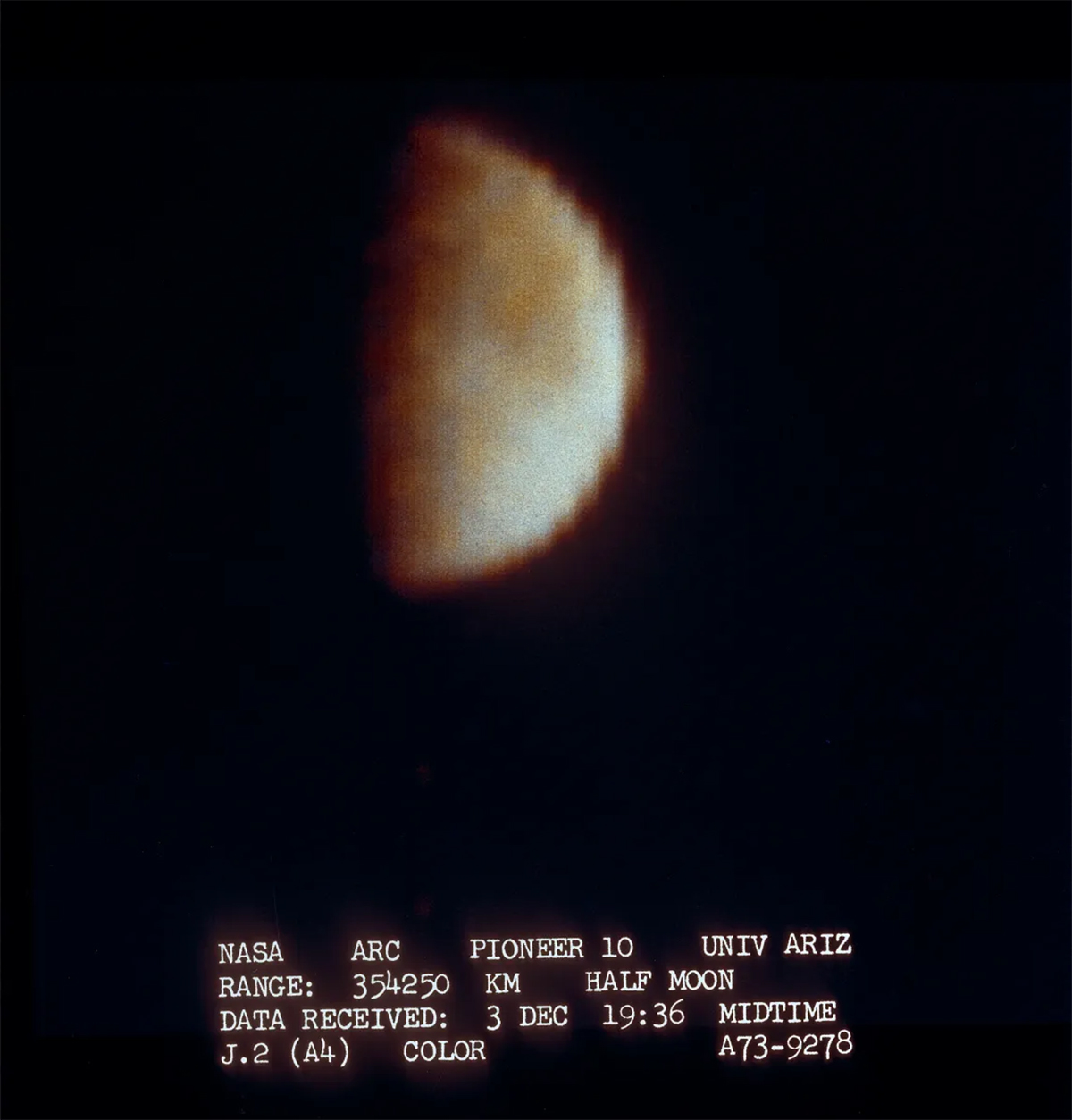
Pioneer 10 and 11 conducted flybys of Europa in 1973/74, while the two Voyager missions passed by the satellite in 1979.
The Pioneer craft sent back some very low-resolution images, while Voyager provided better imagery and, by way of detecting disruptions to Jupiter’s magnetic field, our first evidence of Europa’s subsurface ocean.
Most of what we know about Europa is thanks to the Galileo mission
NASA’s Galileo probe orbited Jupiter from 1995 until 2003 and made 12 close flybys of Europa during that time.
Those flybys provided most of the concrete information that we have about Europa – indeed, the data it sent back from Europa so intrigued scientists that NASA extended the mission for two years to learn more.
Two further missions have since visited
NASA’s New Horizons mission flew by Europa on its way to Pluto in 2007, while the Juno orbiter came within 352km (219 miles) of the Europan surface in 2022
Two current missions should tell us a lot more
The European Space Agency’s Jupiter Icy Moons Explorer – or JUICE, for short – launched in 2023 and is expected to arrive at the Jovian system in 2031.
Similarly, NASA’s Europa Clipper launched in 2024, and is expected to arrive in 2030 – although Europa Clipper will not orbit or land on its namesake.
Instead, it will orbit Jupiter, but conduct over 40 flybys of Europa while it’s there.
Europa is of great interest to astrobiologists
There is a good reason why NASA and ESA are so keen to find out more about Europa – it’s thought to be one of the most promising places in the Solar System to look for extraterrestrial life.
That’s largely because temperatures in the subsurface ocean can reach 0°C – still freezing, but positively balmy compared to most of the Solar System – and because of the large amounts of oxygen found in Europa’s atmosphere.
There is also some evidence, on the surface, of clay-like minerals that, on Earth, are associated with organic processes.
But don’t get too excited: if there’s life there, it’s likely to take the form of microorganisms, like bacteria here on Earth, rather than little green men!
If it does have plumes, that’s going to help a lot
If the putative water plumes spouting from Europa’s surface turn out to be real, that’s going to be a major boon in the hunt for extraterrestrial life.
That’s because a probe could simply fly through such plumes to take samples and readings, rather than having to attempt to peer below, or drill into, Europa’s icy crust.
What are your favourite facts? Let us know by emailing contactus@skyatnightmagazine.com