August 2026 is set to be a pretty good month for astronomy, the culmination of which occurs this week, 28 August, with a beautiful lunar eclipse.
On 12 August 2026, a total solar eclipse was visible across Spain, while observers in the rest of Europe, the UK and North America saw an impressive partial solar eclipse.
The 2026 solar eclipse occurred on the same night as the peak of the Perseid meteor shower – one of the year's best meteor showers – creating perfect conditions for seeing a shooting star.
And we're also getting a partial lunar eclipse – sometimes known as a blood Moon – two weeks later on the evening of 27 August, or the morning of 28 August 2026 – depending where you're observing from – visible across the UK, Europe, Africa, North and South America.
Key timings for the August 2026 lunar eclipse
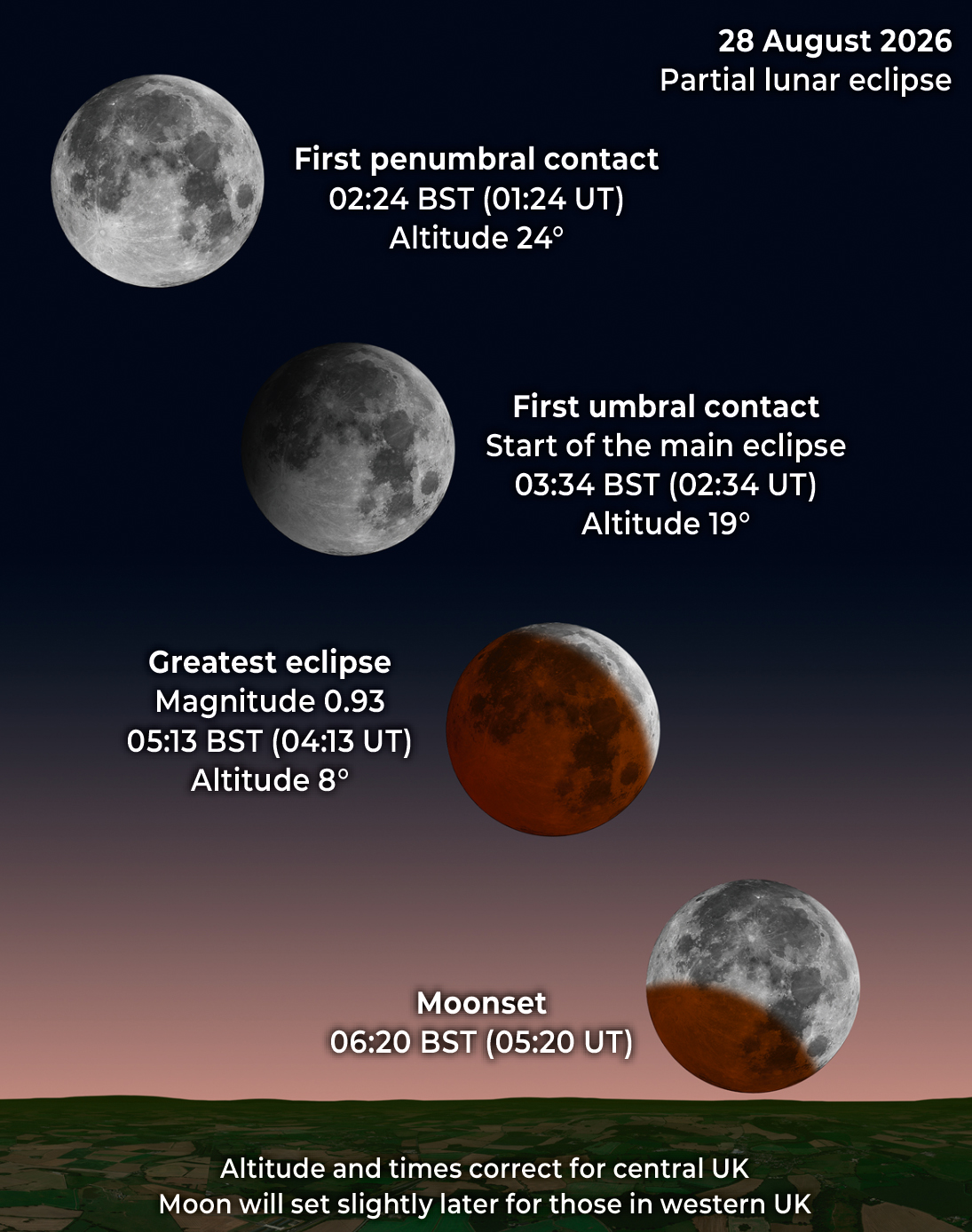
The partial solar eclipse on 12 August 2026 is followed by a significant partial lunar eclipse two weeks later on the evening of 27 August / the morning of 28 August.
The timing for this event from the UK isn’t perfect, with the Moon approaching setting as the eclipse gets going, but given clear skies it could still be quite a spectacle.
A lunar eclipse has several parts.
At 02:24 BST (01:24 UT) on 28 August, or 21:24 EDT on 27 August, the Moon enters the outer part of Earth’s weak penumbral shadow.
A penumbral shadow represents the region where, if you were observing the Sun from the Moon’s distance, you’d see part of the Sun’s disc being clipped by Earth.
The outer part of the penumbral shadow is so weak, you’ll struggle to see any effect at this time.
However, as time passes, the Moon moves deeper into the penumbra – from the Moon’s perspective, more of the Sun’s disc is gradually covered by Earth – and you will start to see a subtle darkening on one side of the Moon.
This will get increasingly darker until at 03:34 BST (02:34 UT) on 28 August, or 22:34 EDT on 27 August, the Moon enters the dark umbral portion of Earth’s shadow, where the Sun is completely blocked by Earth.
Rather than being entirely dark, the umbral shadow is infilled by light refracted by our planet’s atmosphere.
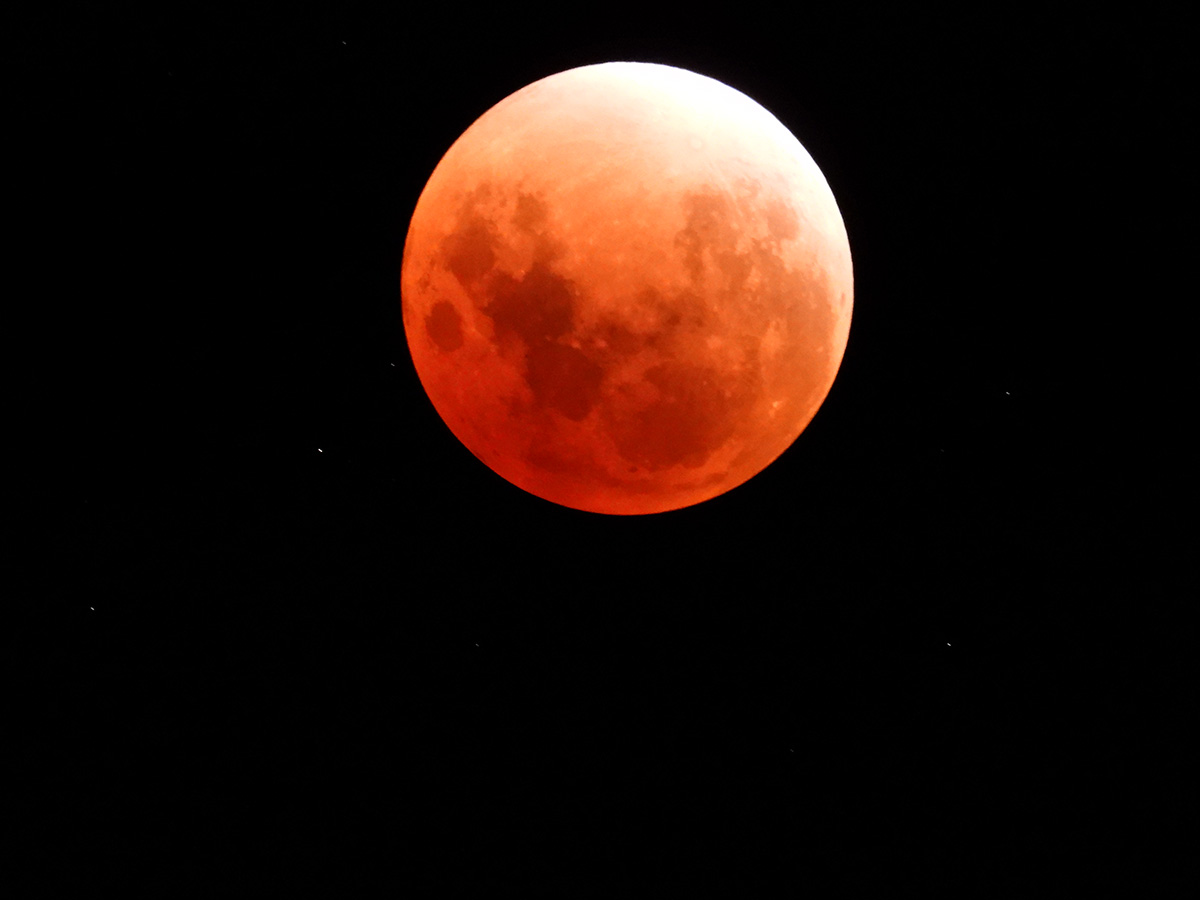
The blue component of this light is scattered by Earth’s atmosphere, leaving the infilling light as a shade of yellow-red, varying in darkness depending on the clarity of Earth’s atmosphere.
From the UK, maximum eclipse occurs at 05:13 BST (04:13 UT), or 00:13 EDT on 28 August, when 93% of the Moon’s diameter is covered by the umbral shadow.
This happens when the Moon is low in the west-southwestern sky under brightening dawn twilight conditions.
In the UK, the Moon sets around one hour later, before the partial phase has had time to complete.
Why lunar eclipses happen
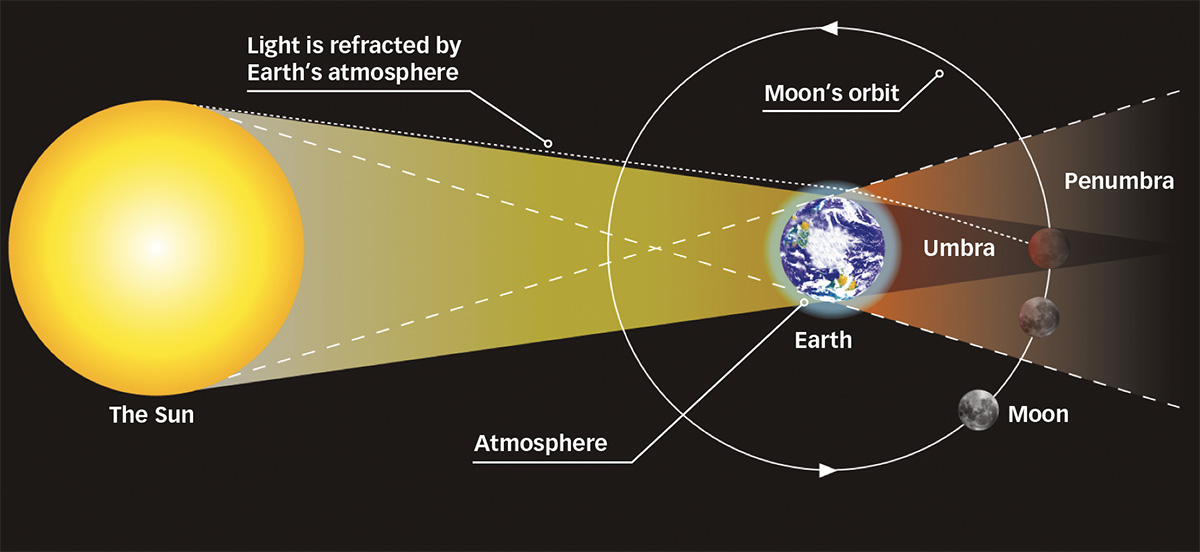
Lunar eclipses happen when the Sun, Earth and the Moon are aligned, causing the lunar surface to take on a rusty-red colour that leads to it often being named a 'blood Moon'.
This reddening of the Moon's surface happens because Earth is blocking and distorting sunlight on its way to the Moon.
Only sunlight that has been refracted by Earth’s atmosphere reaches the Moon and we get two zones of shadow on the lunar surface.
The penumbra is where some of the Sun is always seen from the surface of the Moon. The umbra is where the Sun is completely hidden by the Earth
Why lunar eclipses are called a Blood Moon
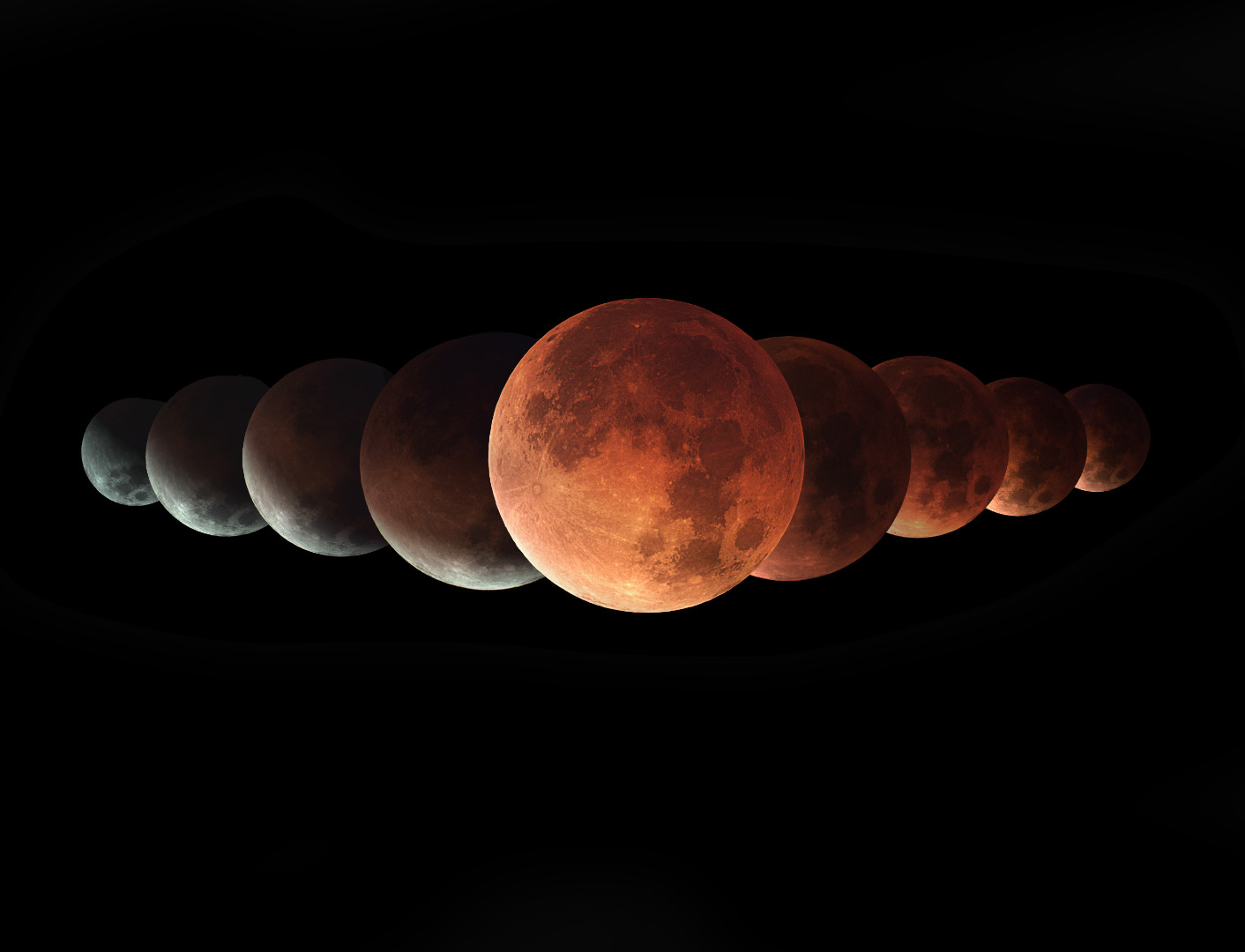
When the Moon is in the umbra, only light that has been bent by the Earth’s atmosphere can make it to the lunar surface.
Earth's atmosphere filters out blue light, but leaves red light, which is why the Moon takes on a reddish hue.
That's why some call a lunar eclipse a 'blood Moon'.
The good thing about a lunar eclipse is you don't need eclipse glasses to view it. They're perfectly safe to observe with the naked eye and a pair of binoculars will get you a closer view.
For more lunar observing and imaging, read our guides on how to photograph the Moon, how to observe the Moon and how to draw the Moon.
And don't forget to send us your images. You can also share them with us via Facebook, Twitter and Instagram.